The Friction Ceiling: Engineering the Next-Gen Tesla Roadster and the SpaceX 'A71' Package
An analytical deep dive into the production-ready Tesla Roadster, deconstructing the 'A71' SpaceX cold-gas thruster kit, the physics of sub-one-second acceleration, and the 48V steer-by-wire architecture.

Executive Summary: The production-validation showcase for the next-generation Tesla Roadster, originally slated for October 1, 2026, at SpaceX’s McGregor test facility, has been rescheduled to October 15 due to convective weather risks. After years of developmental silence, the focus has shifted from conceptual promises to the engineering reality of the “A71” SpaceX cold-gas thruster package, the convergence of tri-motor propulsion, and the finalization of order-locking protocols ahead of the 2027 delivery window.
I. Meteorological Windows and Acoustic Safety: Why McGregor Paused
Tesla and Elon Musk have confirmed that the dynamic demonstration of the next-generation Roadster at the SpaceX Rocket Development and Test Facility in McGregor, Texas, is delayed by two weeks.
Unlike a standard automotive reveal held in the controlled environment of a convention center, this event centers on high-velocity outdoor thrust testing. The McGregor site is an open-air proving ground susceptible to the thunderstorms and erratic wind gusts common to Central Texas. The “A71” cold-gas thruster system involves the transient atmospheric release of high-pressure gas—a process highly sensitive to crosswinds. Adverse weather does not merely threaten the spectacle; it compromises the precision of acoustic telemetry and aerodynamic sensors, introducing unacceptable variables into the data collection.
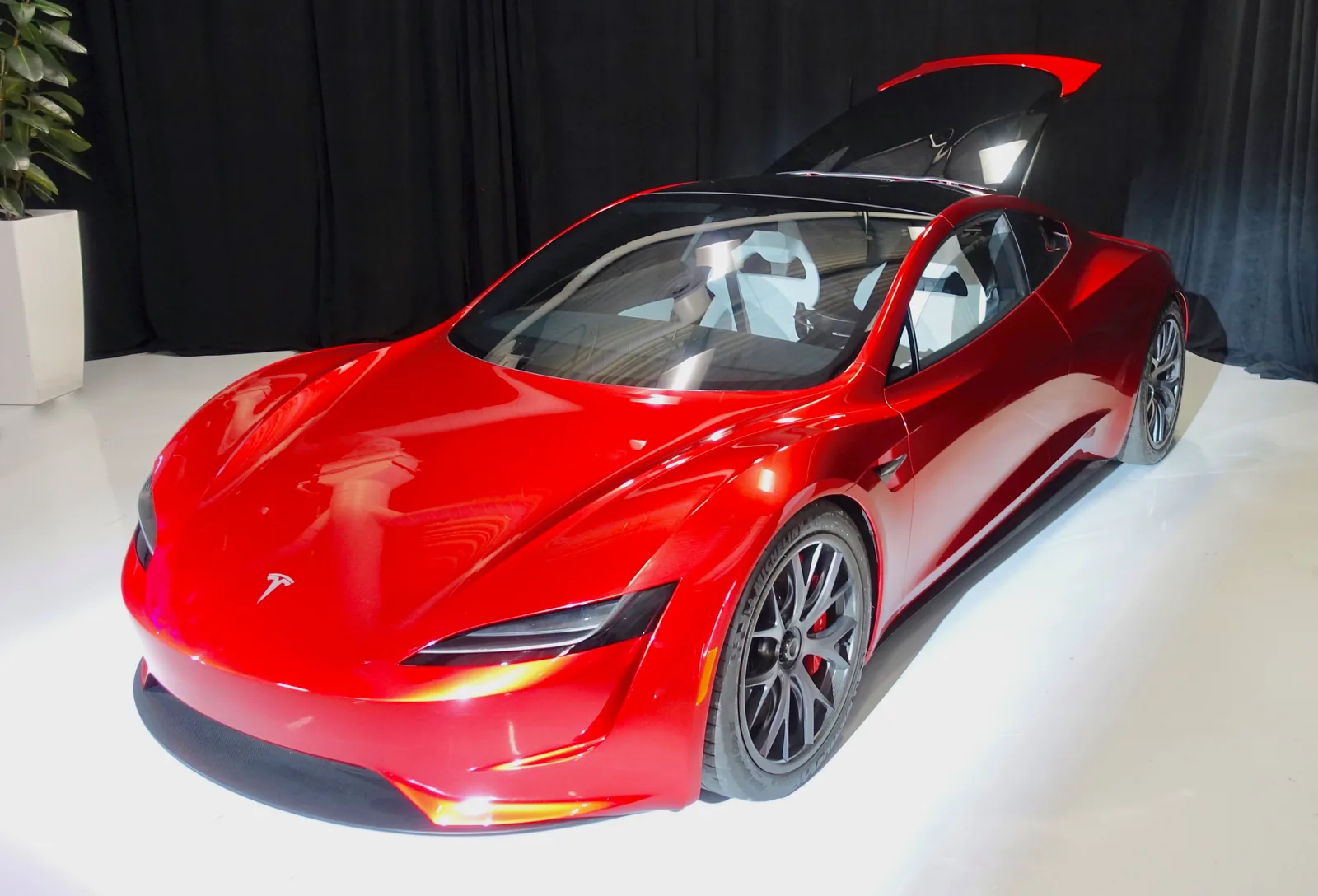 Figure 1: Production-spec exterior architecture and aerodynamic body design of the next-gen Tesla Roadster.
Engineering protocols dictate that this demonstration will be conducted via “wireless remote operation” without a human driver. The instantaneous pulse of the high-pressure valves generates sound pressure levels capable of causing permanent auditory damage to unprotected personnel in the immediate vicinity. The two-week delay represents a calculated decision by the engineering team to prioritize safety and data integrity over marketing timelines.
II. The ‘A71’ Package: Transcending the Limits of Tire Friction
In traditional automotive engineering, acceleration is a prisoner of the coefficient of static friction between rubber and asphalt. Even with advanced torque vectoring and bespoke racing slicks, the physical ceiling for 0–60 mph is effectively pinned between 1.7 and 1.9 seconds—the point where tires simply lose purchase against 1G of gravitational force.
The “A71” package, a cross-pollination of Tesla’s powertrain expertise and SpaceX’s orbital dynamics, seeks to bypass the friction ceiling entirely:
| Technical Dimension | Base Tri-Motor Production Spec | SpaceX Thruster Package (A71) |
|---|---|---|
| Power Source | Front-1, Rear-2 Electric Drive System | Tri-Motor + Carbon Overwrapped Pressure Vessels (COPV) |
| 0–60 mph (Theoretical) | ~1.9 Seconds (Tire Limit) | Sub-1.0 Second (Direct Vector Thrust) |
| Cabin Configuration | 2+2 Seating with Cargo Capacity | Rear seats removed for gas storage and manifolds |
| Attitude Control | Active Aero & Adaptive Suspension | Launch thrust, high-G braking assist, and lateral vectoring |
| Special Capabilities | High-speed cruising and track cornering | Millisecond gas pulses; transient “hopping” capability |
| Compliance | Fully road-legal globally | Road use restricted by local noise/pressure regulations |
The core of this system involves the removal of the rear seats to accommodate ultra-high-pressure COPVs—the same technology used in the Falcon 9 rocket. These tanks, filled with compressed air at several thousand PSI, feed a series of micro-nozzles distributed around the chassis. These nozzles provide horizontal counter-thrust during launch, act as reverse-thrusters for emergency braking, and apply lateral force to counteract body roll during high-speed cornering.
The most provocative claim remains the “hopping” capability—the use of downward-facing pulses to achieve momentary lift. While physically sound, the trade-off is stark: the high-pressure reserves are depleted after a few maximum-effort pulses, requiring the onboard electric compressor several minutes to recharge the system while managing the resulting thermal load.
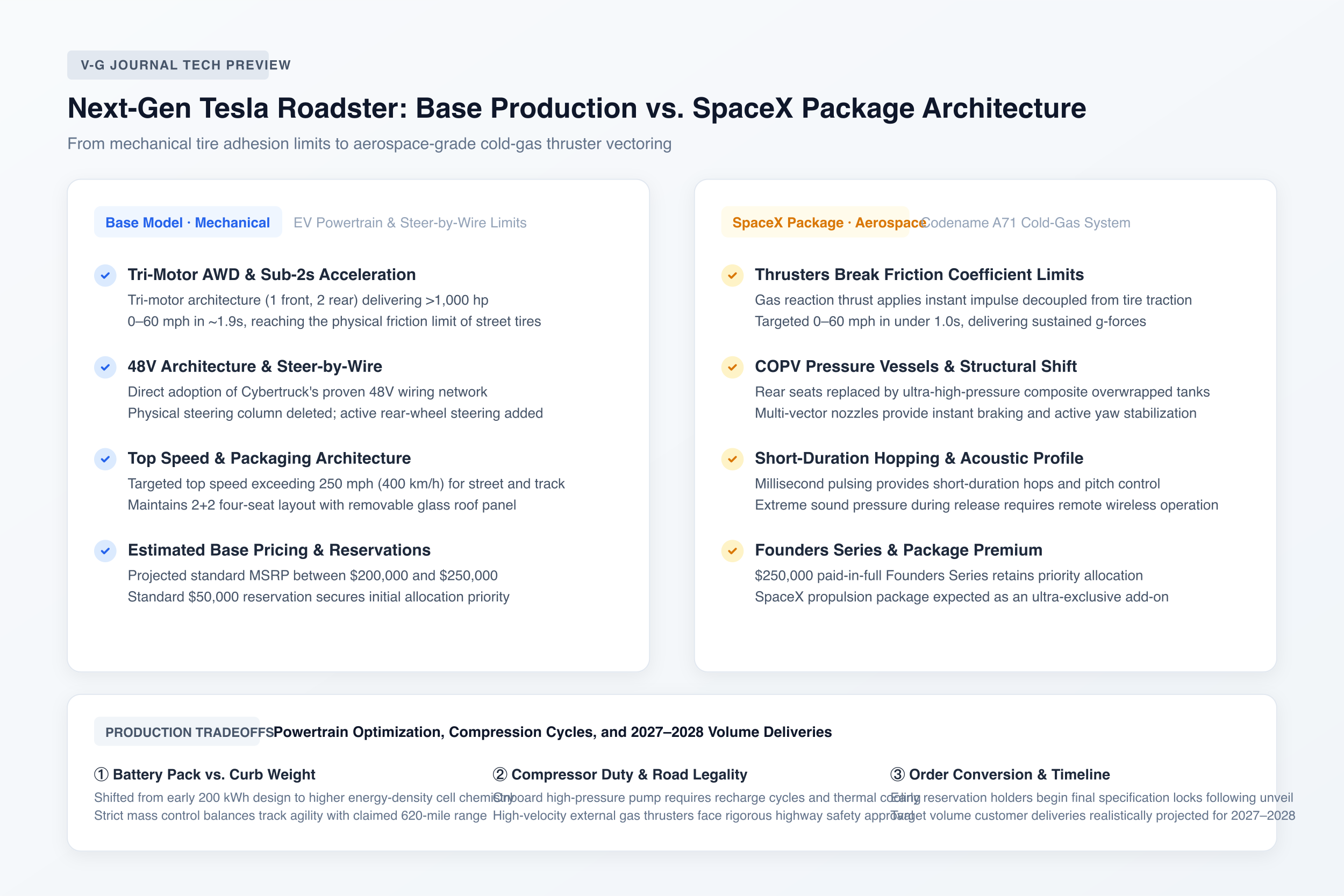 Figure 2: Comparative architecture matrix: Base Production vs. SpaceX Performance Package.
III. 48V Architecture and the Steer-by-Wire Evolution
Beyond the aerospace novelties, the Roadster serves as the ultimate repository for Tesla’s recent architectural breakthroughs.
The powertrain has converged on a tri-motor, all-wheel-drive setup with a combined output exceeding 1,000 horsepower and a top speed north of 400 km/h. As explored in our previous analysis of Tesla’s engineering integration, the use of high-frequency Silicon Carbide (SiC) inverters and advanced oil-cooling systems is critical here to mitigate thermal throttling during sustained high-load track sessions.
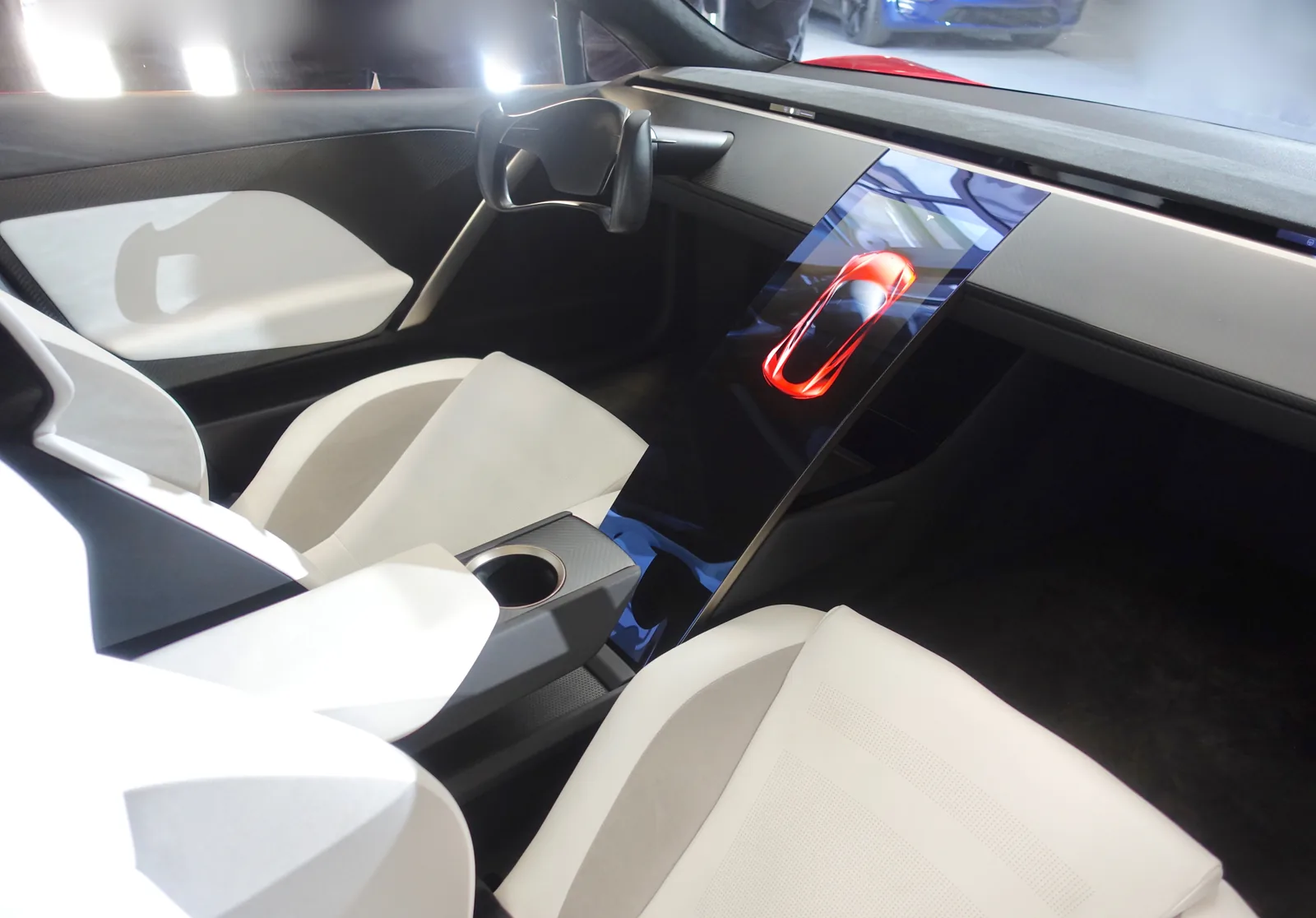 Figure 3: Minimalist cockpit featuring the steer-by-wire Yoke and floating center console.
Crucially, the Roadster has abandoned the legacy 12V low-voltage system in favor of the 48V architecture pioneered in the Cybertruck and Tesla Semi. This shift reduces the wiring harness mass by approximately 75% and provides the transient power necessary for Steer-by-Wire. By eliminating the mechanical steering column, Tesla utilizes variable steering ratios via the Yoke, allowing for precision at 400 km/h and ease of maneuverability at low speeds without the need for hand-over-hand turning.
However, the most significant engineering compromise lies in the battery. While the 2017 prototype promised a 200 kWh pack and a 1,000 km range, modern track engineering suggests such a battery would be prohibitively heavy. The production version likely utilizes a higher energy-density cell chemistry, opting for a smaller, lighter pack that maintains range through a class-leading drag coefficient (~0.20 Cd) and aggressive energy management rather than raw capacity.
IV. Capital Conversion and the Reality of Delivery
With the October 15 validation event, the window for converting decade-old reservations into firm orders will finally open.
Tesla has held significant capital from early adopters for years, ranging from $50,000 deposits for the standard model to the full $250,000 upfront for the 1,000-unit “Founders Series.” The commercial focus of the upcoming reveal will likely center on:
- Base Pricing: Expect the final MSRP for the tri-motor version to land between $200,000 and $250,000.
- The A71 Premium: The SpaceX package, given its aerospace-grade components and specialized manifolds, will likely be a high-margin add-on, potentially restricted to Founders Series owners or vetted track-use applicants.
- Production Timeline: Given the high degree of manual assembly and calibration required, mass production is targeted for the 2027–2028 window, with priority given to those who provided full upfront funding.
The next-generation Roadster has evolved from a 2017 blueprint into a test-bed for the limits of terrestrial physics. The McGregor demonstration is more than a fulfillment of a long-standing promise; it is an exploration of whether automotive performance, having hit the ceiling of mechanical grip, must now look to fluid dynamics and aerospace propulsion to find its next second of speed.
Related Research & Topics
Tello Mobile eSIM
SafetyWing Nomad Insurance
* Disclosure: This post contains affiliate links. If you make a purchase through these links, V-G Journal may earn a small commission at no additional cost to you. We only recommend services we independently evaluate and trust.
FIRE and Golf:自由旅居之路
专注于为追求 FIRE 与品质生活的人群提供特惠打球权益与候鸟微度假。不持一砖一瓦,运营品质生活。