The Cold Calculus of Freight: Tesla Semi and the Divergent Paths of Heavy-Duty Electrification
A quantitative analysis of the Tesla Semi’s TCO, from energy consumption to the 'dead weight' of batteries. We deconstruct the strategic divergence between the US megawatt-charging model and China’s battery-swapping ecosystem.

Core Thesis: The heavy-duty truck is a pure instrument of production. It possesses zero emotional premium; it is governed solely by the cold, hard reality of Total Cost of Ownership (TCO) per ton-mile. As the Nevada Gigafactory scales production, the Tesla Semi is forcing long-haul logistics into a high-capex era of electrification. However, the “invisible wall” of grid capacity required for megawatt charging has created a profound industrial schism between Tesla’s vertical integration and China’s mature battery-swapping ecosystems. Understanding these divergent engineering trade-offs is essential to deciphering the future of global freight.
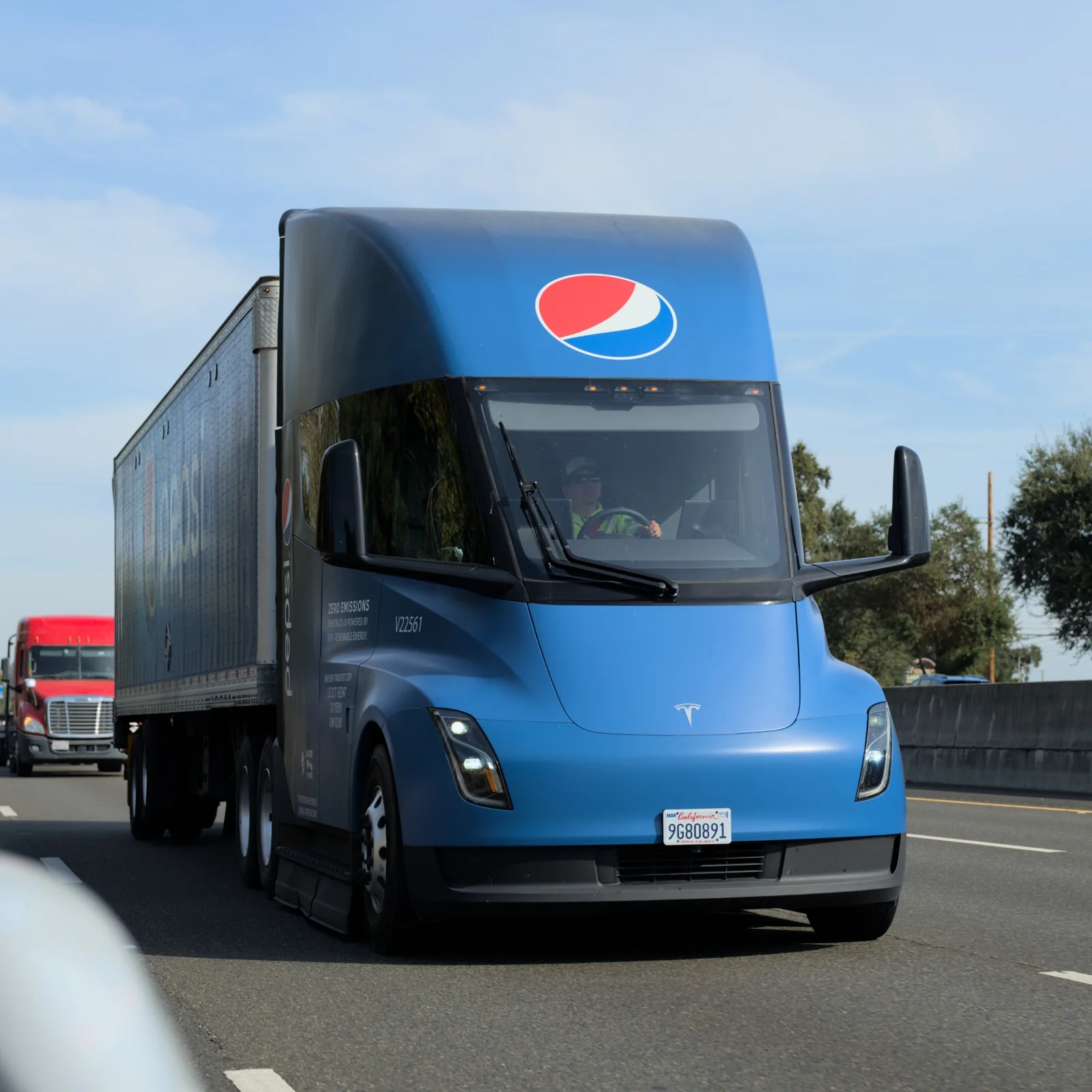
Figure 1: A Tesla Semi performing commercial haulage on a California highway (PepsiCo fleet).
To analyze the impact of the Tesla Semi’s mass production—and its friction with Chinese competitors—one must strip away the PR rhetoric and return to the fundamental physical and financial metrics of logistics: dead weight loss, energy consumption per 100km, grid expansion Capex, and the ultimate arbiter of fleet survival: Total Cost of Ownership (TCO).
Commercial trucking is not a lifestyle choice. Every kilometer the wheels turn is a calculated battle between razor-thin margins and operational overhead.
I. The Widening “Scissors Gap” in Energy Costs
In the North American long-haul market, a typical Class 8 truck covers 150,000 to 200,000 kilometers annually. Diesel fuel consistently accounts for 30% to 35% of total operating costs. Even minor price fluctuations can evaporate a carrier’s net profit.
Real-world data from PepsiCo’s Sacramento distribution center reveals a “scissors gap” in energy costs that is becoming existential for traditional diesel fleets:
- Traditional Class 8 Diesel: Typically consumes 32–38 liters per 100km. At current North American diesel prices, fuel costs range from $0.60 to $0.70 per mile.
- Tesla Semi (Fully Loaded): Under a gross vehicle weight (GVW) of 82,000 lbs (approx. 37.2 tons, including the 2,000 lb “green” allowance provided by US federal law), the Semi consumes roughly 105–125 kWh per 100km, or less than 1.7 kWh per mile.
- Negotiated Hub Electricity Rates: Utilizing industrial off-peak rates at major logistics hubs (calculated at $0.08–$0.12/kWh), the Semi’s energy cost drops to $0.15–$0.20 per mile.
Energy Cost Comparison:
Traditional Diesel: ~$0.65/mile ➔ Tesla Semi: ~$0.18/mile ➔ Savings: $0.47 per mile (~70% reduction in energy expenditure).
For a typical long-haul route covering 150,000 km (approx. 93,000 miles) per year, a single truck saves $40,000 to $45,000 in fuel alone. While the Tesla Semi carries a significant price premium ($180k–$250k vs. $120k–$150k for diesel), this gap is fully amortized within 3 to 4 years. Every mile thereafter is pure incremental cash flow. This is why giants like Walmart, PepsiCo, and FedEx remain committed to their orders despite delivery delays.
II. The Stratification of Cargo: The Physical Divide of “Dead Weight”
Despite the technological prowess, electric trucks cannot bypass the laws of physics: the high energy density of batteries comes at the cost of payload capacity.
Heavy trucking operates under a rigid maximum weight limit. The Tesla Semi’s massive 850–900 kWh battery pack results in a curb weight of approximately 10.5 tons—roughly 2 to 3 tons heavier than a lightweight diesel tractor. This “dead weight” splits the logistics world into two distinct economic realities:
- The Paradise of “Volume-Limited” Light Goods:
For snacks, apparel, e-commerce parcels, and light electronics, the trailer volume is filled long before the weight limit is reached. In this “cube-out” scenario, the battery’s weight has zero impact on billable payload. The low energy cost of the electric truck is realized at 100% efficiency. This is why PepsiCo prioritizes the Semi for its Frito-Lay (chips) division. - The Failure of “Weight-Limited” Heavy Haulage:
For steel, construction materials, grain, or bulk liquids—where billing is done by the ton—a 2-to-3-ton loss in payload represents an 8% to 12% reduction in revenue per trip. This loss is often enough to completely negate the savings gained from cheaper electricity.
Physics defines the Semi’s territory: It is not currently designed to disrupt all road freight, but rather to devour high-turnover, brand-name retail and light-load logistics.
III. From “Road Nomads” to “Hub-and-Spoke”: The Invisible Wall of the Grid
Traditional diesel trucks are “road nomads.” As long as there is a gas station, a driver can take a load anywhere. The Tesla Semi, however, is forcing a regression toward “Hub-and-Spoke” logistics.
While the Semi boasts a 500-mile range, matching the mandatory 30-minute rest period for US drivers requires Tesla’s 750 kW to 1 MW “Megachargers.” These can replenish 70% of the battery in 30 minutes. However, the infrastructure cost is staggering:
- A medium-sized depot housing 30 Semis with simultaneous high-power charging would require a peak load of 20–25 MW.
- This load is equivalent to the peak demand of a small town with tens of thousands of residents.
- Logistics parks seeking this capacity must apply for dedicated substation expansions, involving multi-year approval cycles and millions in upfront Capex.
This infrastructure barrier means that for the foreseeable future, the Tesla Semi cannot roam freely. It is tethered to a closed-loop system between specific “A” and “B” points equipped with Megacharger stations.
IV. The Great Schism: Tesla’s Big Battery vs. China’s Swapping Ecosystem
In China, New Energy Trucks (NETs) are already mature, with tens of thousands of units operating in steel mills, ports, and coal hubs. However, as the battle moves to long-haul trans-regional freight, two distinct engineering philosophies have emerged.
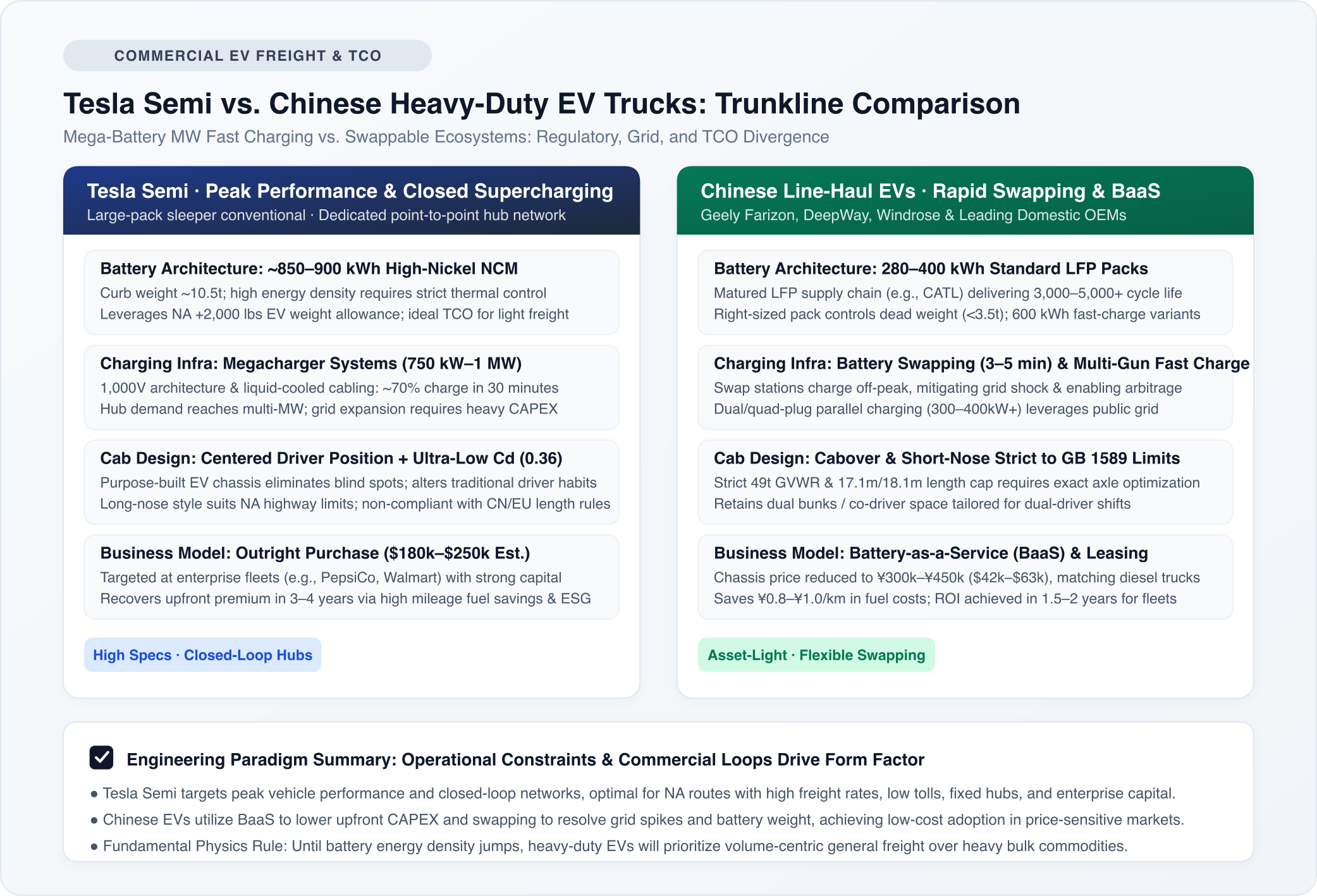
Figure 2: Comparison of Tesla’s closed-loop Megacharging vs. China’s Battery-Swapping/Multi-Gun charging models.
| Engineering Dimension | Tesla Semi (North American Path) | Chinese Long-Haul EV Trucks (Local Solutions) |
|---|---|---|
| Energy Replenishment | Large Battery + Megawatt Charging (750kW+) | Battery Swapping / Multi-Gun Fast Charging |
| Battery Chemistry | ~850–900 kWh High-Nickel Ternary (NMC) | 280–400 kWh LFP (Swappable) / 500–600 kWh (Fixed) |
| Platform Design | Native EV chassis, central driver seat, Cd ~0.36 | Native low-drag flat-front/short-nose, Cd ~0.35–0.41 |
| Full-Load Range | ~800 km (500 miles) | Swappable: 200–350 km; High-capacity: 450–600 km |
| Grid Impact | Massive peak load at single points; high Capex | Swapping stations act as storage; buffers grid load |
| Asset Ownership | Full vehicle purchase ($180k–$250k) | BaaS (Battery as a Service); vehicle price ~$45k–$65k |
1. The Gamble on Battery Chemistry
- Tesla’s High-Nickel Bet: To fit 900 kWh into a chassis without sacrificing all cargo space, Tesla must use high-nickel ternary batteries. This provides the energy density for an 800km range but introduces higher thermal runaway risks and sensitivity to nickel/cobalt price volatility.
- China’s LFP Pragmatism: Chinese manufacturers (Geely, DeepWay, Windrose) rely on the local LFP (Lithium Iron Phosphate) supply chain. LFP is cheaper, safer, and has a longer cycle life (3,000–5,000+ cycles). However, its lower density means a 900 kWh LFP pack would weigh over 5 tons, rendering the truck commercially useless. Consequently, Chinese engineers have opted for “medium-capacity batteries + high-frequency replenishment.”
2. Infrastructure: Single-Point Breakthrough vs. Distributed Solving
Tesla follows the Silicon Valley “brute force” approach: pushing 1000V platforms and liquid-cooled cables to the physical limit of a single plug.
The Chinese solution is more characteristic of “infrastructure-led” development:
- Battery Swapping: Stations charge spare batteries slowly during off-peak hours, acting as grid storage. A truck swaps its battery in 3–5 minutes—comparable to diesel refueling.
- Multi-Gun Charging: Utilizing existing national standard (GB/T) chargers, Chinese trucks often use two or even four plugs simultaneously to achieve 300–400 kW charging without requiring a proprietary “Megacharger” network.
3. Regulatory Constraints
Road regulations fundamentally dictate the “silhouette” of the truck:
- US Flexibility: Federal laws allow for “long-nose” tractors with ample crumple zones and aerodynamic tapering. Furthermore, the US grants a 2,000 lb GVW exemption for EV trucks, providing a “cushion” for the Semi’s heavy battery.
- China’s GB 1589 Rigidity: Chinese standards for 6-axle semi-trailers are strictly capped at 17.1 meters (flat-front) and 49 tons total weight. There is no “weight bonus” for EVs. A long-nose design would directly reduce the cargo trailer’s length. Thus, Chinese EV trucks must balance aerodynamics within a flat-front or “short-nose” form factor to maximize volume.
V. The Business Ecosystem: Payback Cycles
The divergence is further shaped by labor costs and road toll structures:
- The North American Logic: High Labor & ESG Premiums
In the US, driver wages and insurance account for 35%–40% of TCO. Interstate highways are generally toll-free (funded via fuel taxes). Large shippers like Walmart have the balance sheets to absorb $200k+ upfront costs. The Semi’s central cockpit improves driver retention in a labor-short market, while the “zero-emission” status earns ESG premiums in capital markets. - The Chinese Logic: Toll Sensitivity & Liquidity
In China, road tolls account for 30%–35% of TCO. The market is dominated by individual drivers and small fleets who are extremely sensitive to initial Capex. By using the “Battery as a Service” (BaaS) model, the upfront cost of an EV truck is lowered to match diesel trucks. Fleets rely on the $0.12–$0.15 per kilometer “fuel-to-electric” price gap to achieve a 1.5 to 2-year payback.
VI. Conclusion: The Cruel Arithmetic of Production
The mass production of the Tesla Semi validates a high-dimensional engineering loop: with extreme design and ternary battery tech, an electric truck can handle 800km long-haul routes. It is the clarion call for the electrification of global retail logistics and has forced incumbents like Daimler and Volvo to accelerate their high-voltage platforms.
However, this does not mean the Tesla model is a universal solution.
Chinese EV trucks are not “behind” Tesla; they are an evolutionary adaptation to different regulatory, grid, and financial environments. Tesla pursues extreme single-vehicle performance through vertical integration and massive batteries. China pursues commercial liquidity through LFP supply chains, battery-swapping flexibility, and distributed charging networks.
Freight is a cold game of arithmetic. When the technological halo fades, the architecture that wins will be the one that finds the optimal balance between dead weight, infrastructure bills, and the relentless pressure of the payback cycle.
Related Research & Topics
Tello Mobile eSIM
SafetyWing Nomad Insurance
* Disclosure: This post contains affiliate links. If you make a purchase through these links, V-G Journal may earn a small commission at no additional cost to you. We only recommend services we independently evaluate and trust.
FIRE and Golf:自由旅居之路
专注于为追求 FIRE 与品质生活的人群提供特惠打球权益与候鸟微度假。不持一砖一瓦,运营品质生活。