The Singapore Backdoor and the Loyalty Audit: Inside Washington’s Scrutiny of Jensen Huang
Leaked intelligence memos alleging ties between Nvidia’s CEO and a Singaporean compute executive have triggered a tri-committee congressional briefing. Beneath the tabloid spectacle lies a cold institutional reality: Washington’s penetration audit of Southeast Asian compute arbitrage routes and a structural loyalty test for transnational tech leaders.

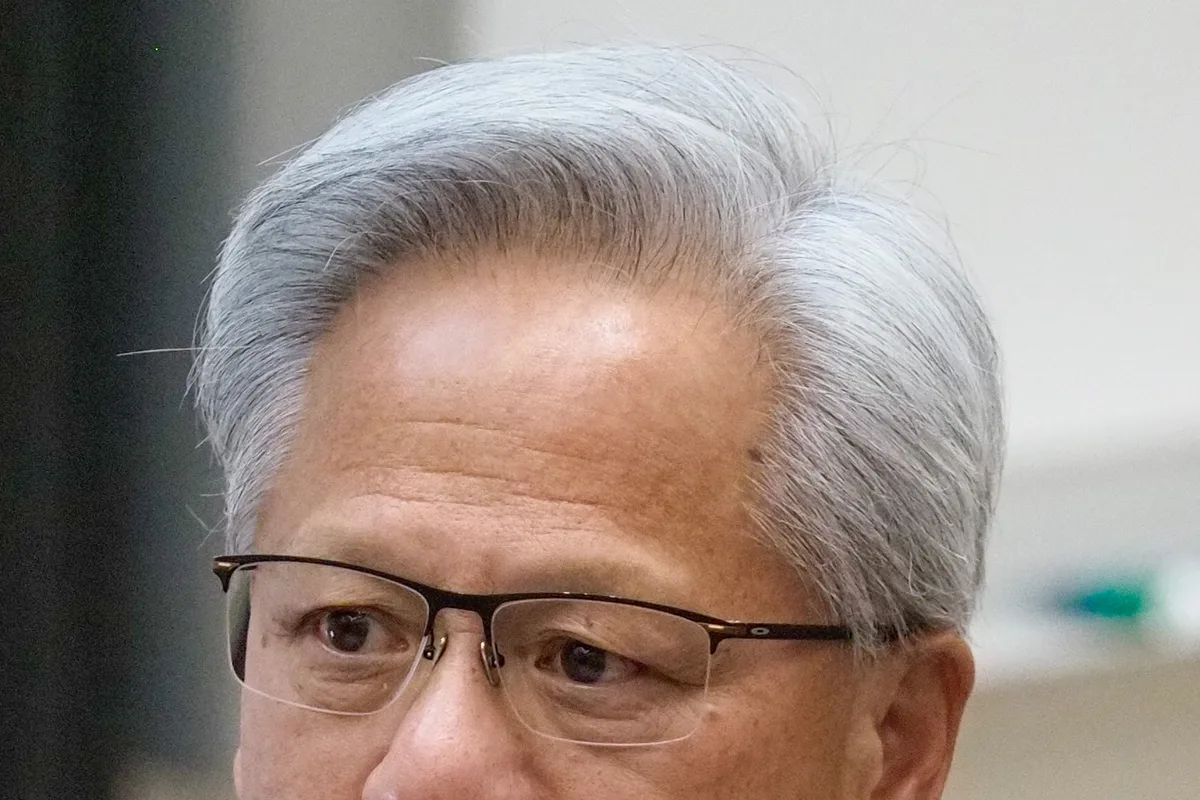
Figure 1: Nvidia Founder and CEO Jensen Huang delivering a keynote address at an international technology summit.
In early November 2026, reports of a classified U.S. intelligence memorandum surfaced across mainstream media. The documents alleged that Alice Huang, a former executive at Singapore-based compute provider Megaspeed, had been recruited by foreign intelligence services to probe Nvidia’s advanced AI technology pipeline and influence U.S. export policy. Crucially, the leaks claimed that Jensen Huang, Nvidia’s co-founder and CEO whose net worth hovers around $200 billion, had maintained an uncomfortably close personal relationship with her.
Within days, three powerful U.S. House committees issued a joint letter summoning Huang to a closed-door briefing, while his daughter, Madison Huang, abruptly canceled a high-profile executive delegation to Seoul.
While online commentators swiftly reframed the story into sensationalist tabloid gossip surrounding a tech billionaire, the episode represents something far more calculated. Beneath the personal intrigue lies a deliberate geopolitical move: Washington is leveraging strategic leaks to dismantle the gray market for compute transshipment across Southeast Asia, while subjecting cross-border semiconductor titans to an uncompromising institutional loyalty audit.
I. The Ignition Point: From Intelligence Leak to Congressional Subpoena
The storm began with coordinated coverage in The Financial Times and The New York Times, referencing an unredacted intelligence assessment circulating among senior defense officials in Washington. According to the disclosures, counterintelligence agencies had spent over a year monitoring Alice Huang, a former executive at Megaspeed—a Singaporean data-center operator. The intelligence assessment posited that her mandate included cultivating access to Nvidia’s executive suite, monitoring the deployment schedules of next-generation AI accelerators, and assessing potential policy flexibilities within U.S. export regimes.
Sensationalist interest spiked when reporting cited intelligence assessments indicating that Jensen Huang and Alice Huang had developed personal ties during her tenure, putting their interactions under U.S. surveillance. Official records have consistently confirmed that Alice Huang shares no familial relation with Jensen Huang. Nevertheless, algorithmic content networks rapidly combined “billionaire CEO,” “intelligence memo,” and “personal scandal” into a viral narrative that dominated international media.
Beyond the headlines, the political machinery moved with remarkable speed:
- Joint Congressional Summons: On November 5, 2026, Representative John Moolenaar (Chairman of the House Select Committee on the CCP), Representative Brian Mast (Chairman of the House Foreign Affairs Committee), and Representative Rick Crawford (Chairman of the House Permanent Select Committee on Intelligence) signed a joint letter ordering Jensen Huang to attend a closed-door multi-committee briefing on November 18, 2026. The subpoena demands a comprehensive accounting of his interactions with Alice Huang, alongside a review of Nvidia’s internal counter-espionage protocols.
- Executive Disruption: On November 8, 2026, Madison Huang, Nvidia’s Senior Global Director and Jensen Huang’s daughter, abruptly canceled her keynote appearance at “NVIDIA AI Day Seoul 2026” and withdrew from bilateral meetings with South Korean tech leaders, signaling the operational distress within Nvidia’s leadership core.
Nvidia responded decisively to the escalating pressure. Company spokespeople emphasized that as the CEO of a global enterprise, Huang meets annually with thousands of corporate executives, industry partners, and commercial representatives as part of standard business operations. The official statement reiterated that Huang had never shared sensitive national security intelligence with external clients, noting that an internal supply-chain audit of Megaspeed revealed zero compliance violations. As of this writing, neither Jensen Huang nor Alice Huang faces any criminal charges from the Department of Justice.
II. The Gray Springboard: Southeast Asian Compute Arbitrage and the Limits of Export Control
To understand this intelligence controversy, one must look beyond personal interactions and examine the structural shifts underway in global semiconductor trade.
Megaspeed is far from an ordinary IT service provider. Public corporate registries show that the company, headquartered in Singapore with historical roots in a spun-off Chinese gaming conglomerate, specializes in high-density AI server hosting and raw compute leasing. It has historically provided cross-border infrastructure services to major Chinese enterprises, including Alibaba. Operating vast clusters of high-performance Nvidia GPUs out of Singapore, Megaspeed has long resided on the radar of the U.S. Department of Commerce’s Bureau of Industry and Security (BIS).
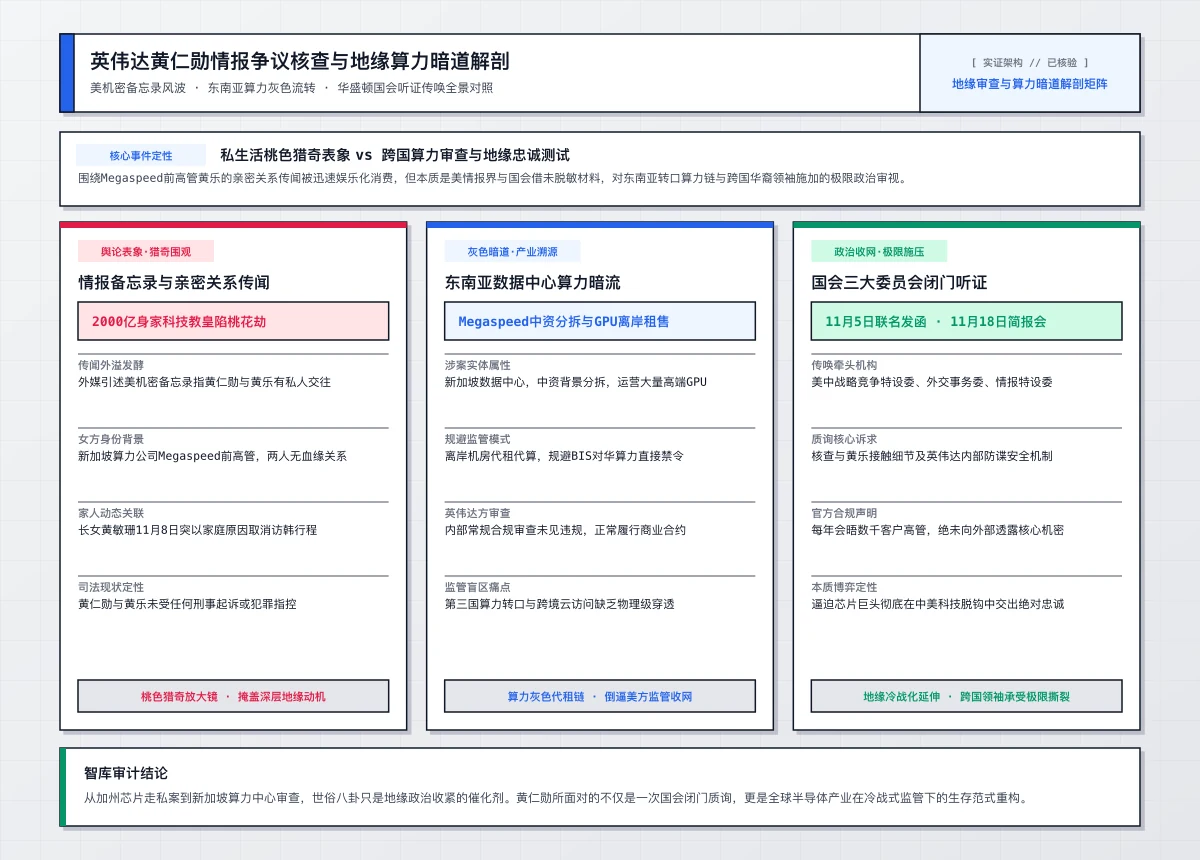
Figure 2: Analytical matrix dissecting Nvidia’s intelligence audit, export controls, and Southeast Asian compute transshipment routes.
As U.S. restrictions on direct semiconductor exports to China tightened, Southeast Asia—specifically Singapore and Malaysia’s Johor region—emerged as a major hub for global AI infrastructure. Transnational capital and technical entities established offshore data centers across the region, acquiring compliant, high-performance Nvidia servers to lease raw compute power via low-latency fiber networks to global clients. Under this model, physical hardware never crosses restricted customs borders, yet high-end compute capability remains accessible globally via the cloud.
As explored in our analysis of The $300M California AI Chip Smuggling Case: Anatomy of Bonded Port Washing and Export Control Blindspots, traditional export control frameworks face inherent enforcement lag when confronted with modular, highly globalized digital supply chains. Whether through transit-port trade laundering or remote cloud-compute leasing in Southeast Asia, Washington’s inability to fully seal these digital backdoors has translated into targeted political pressure on supply-chain leaders and intermediary brokers.
III. The Trust Deficit: The Shrinking Middle Ground for Transnational Tech Executives
As technological containment strategies tighten, leaders of global semiconductor firms are increasingly caught in a double-bind regarding their geopolitical alignment.
At the helm of a multi-trillion-dollar enterprise, Jensen Huang has long maintained that Nvidia should operate with maximum commercial openness within the boundaries of international law. China’s vast developer ecosystem and commercial market remain critical components of the global AI monetization model. In Washington’s security posture, however, any commercial channel connecting hardware to Asian markets is scrutinized as a potential risk.
As we argued in The Real Weaponization of Frontier AI Safety: Regulatory Capture and the Incumbent Moat, advanced technology regulation rarely revolves around technical safety alone; it functions as a mechanism for redefining industrial spheres of influence through administrative compliance. Within this framework, selective leaks of raw intelligence data combined with rapid congressional subpoenas constitute a sophisticated enforcement strategy:
- Personalization and Public Deficit: Reframing intricate supply-chain dynamics into a personal controversy creates immediate reputational friction, forcing corporate leadership into a defensive posture.
- Politicization of Compliance: Standard corporate engagements and international client relations are reinterpreted through a national security lens, compelling executives to divert focus toward defensive compliance over global expansion.
- Elimination of the Moderate Middle: The upcoming November 18 congressional briefing sends a clear signal to technology executives navigating the U.S.-China dynamic: under a security-first policy environment, global operational latitude can quickly become subject to political review.
IV. Fact-Checking Matrix: Disentangling Sensationalism from Structural Friction
Separating sensationalist media coverage from verified facts helps clarify the structural realities driving this escalation:
| Scrutiny Dimension | Media Narrative | Verified Evidentiary Chain | Structural Characterization |
|---|---|---|---|
| Personal Relationship | Allegations of personal intimacy and romantic involvement. | Unredacted intelligence memo leaked to media; no familial link confirmed. | Re-characterization of standard client management as a security liability. |
| Congressional Subpoena | Speculation of imminent criminal charges against Huang. | Joint letter from three House committees requiring closed-door testimony on Nov 18. | Executive branch and legislative oversight of supply-chain exposure; zero criminal indictments filed. |
| Corporate Security | Claims that proprietary GPU architecture secrets were compromised. | Official Nvidia statement denying any unauthorized disclosure; internal audit clean. | Compliance protocols maintained; no judicial findings of intellectual property theft. |
| Infrastructure Entity | Framing Singapore data centers as singular intelligence outposts. | Megaspeed operates as an offshore host for high-density AI infrastructure serving global clients. | Southeast Asian compute hubs prompting targeted U.S. regulatory enforcement. |
From domestic smuggling prosecutions to regional compute leasing networks, personal controversies are often the visible surface of deeper geopolitical friction. For Jensen Huang, the upcoming briefing on Capitol Hill will test his ability to navigate Washington’s strict policy environment. For the broader technology sector, the episode underscores a stark reality: in a re-shored semiconductor ecosystem, pure commercial neutrality is rapidly giving way to strategic alignment.
Related Research & Topics
Tello Mobile eSIM
SafetyWing Nomad Insurance
* Disclosure: This post contains affiliate links. If you make a purchase through these links, V-G Journal may earn a small commission at no additional cost to you. We only recommend services we independently evaluate and trust.
FIRE and Golf:自由旅居之路
专注于为追求 FIRE 与品质生活的人群提供特惠打球权益与候鸟微度假。不持一砖一瓦,运营品质生活。