The Endgame of Physical Arbitrage: Geopolitical Closures and the Fragmented Fates of Border-Crossing Influencers
An anatomy of the total collapse of the illegal Latin American migration route to the U.S. by 2026, examining how geopolitical friction, border enforcement, and systemic economic realities dismantled the myth of desperate physical arbitrage.

Executive Summary: Between 2022 and 2023, the trek through Latin American jungles to the U.S. border—popularly known in Chinese digital circles as Zouxian—became a viral phenomenon. By mid-2024, Ecuador revoked visa-free access for Chinese citizens while the U.S. and Panama clamped down on the Darién Gap. By 2026, under the second Trump administration’s militarized border regime and multi-national deportation protocols, this clandestine corridor has been physically extinguished. As the transit route froze solid, the content creators who built digital empires on this migration wave experienced a stark bifurcation of fate: some harvested engagement from the safety of legal clearance and stepped back intact; others pulled off improbable algorithmic survival out of sheer bottom-tier hustling; while the most delusionally speculative devolved into public psychological ruins. This transcontinental exodus ultimately yielded a brutal liquidation of unhedged physical arbitrage against modern sovereign barriers.
I. The Collapse of the Corridor: From Latin American Springboard to Physical Enclosure
To understand the present reality of these border-crossing content creators, one must first trace how the macro-geopolitical pipeline that sustained them was methodically dismantled over three short years.
At its peak in 2022 and 2023, the northbound route starting from Quito, Ecuador, was packaged by human smugglers (coyotes) and short-video algorithms as a streamlined, low-friction turn-key corridor. Armed only with smartphones, social media tutorials, and tens of thousands of RMB in smuggler fees, thousands rushed into the jungle without basic objective risk awareness. Yet geopolitical tolerance operates on strict structural cycles:
| Timeline | Policy & Geopolitical Shifts | Border Capacity & Ground Reality |
|---|---|---|
| The Gold Rush (2022–2023) | Ecuador maintains visa-free entries for Chinese nationals; Darién Gap guide services industrialize; U.S. asylum policies remain loosely enforced. | Thousands cross monthly; social feeds fill with myths of quick fortunes and easy physical arbitrage. |
| The Friction Phase (Mid-2024) | Ecuador terminates visa-free policy on July 1, 2024; U.S.-Panama joint initiatives block key Darién trails. | Low-cost entry points vanish; transit costs spike while interception rates soar across Central America. |
| The Great Freeze (2025–2026) | The second Trump administration enforces zero-tolerance immigration; military assets fortify walls alongside streamlined mass deportations. | Catch-and-release is replaced by immediate removal; illegal border crossings drop near zero; the Latin American route is effectively extinguished. |
By 2026, the migration hype orchestrated by digital influencers and coyotes has reached a definitive physical and legal dead end. U.S.-Mexico border patrols stand at their highest post-Cold War density, backed by real-time intelligence sharing and normalized deportation flights across multiple transit nations. Sporadic attempts to reroute through the Balkans or Eastern Europe have similarly collapsed against Western Europe’s systemic rightward shift on border security. The illusion that “crossing the wall guarantees a fresh start” has burned out completely.
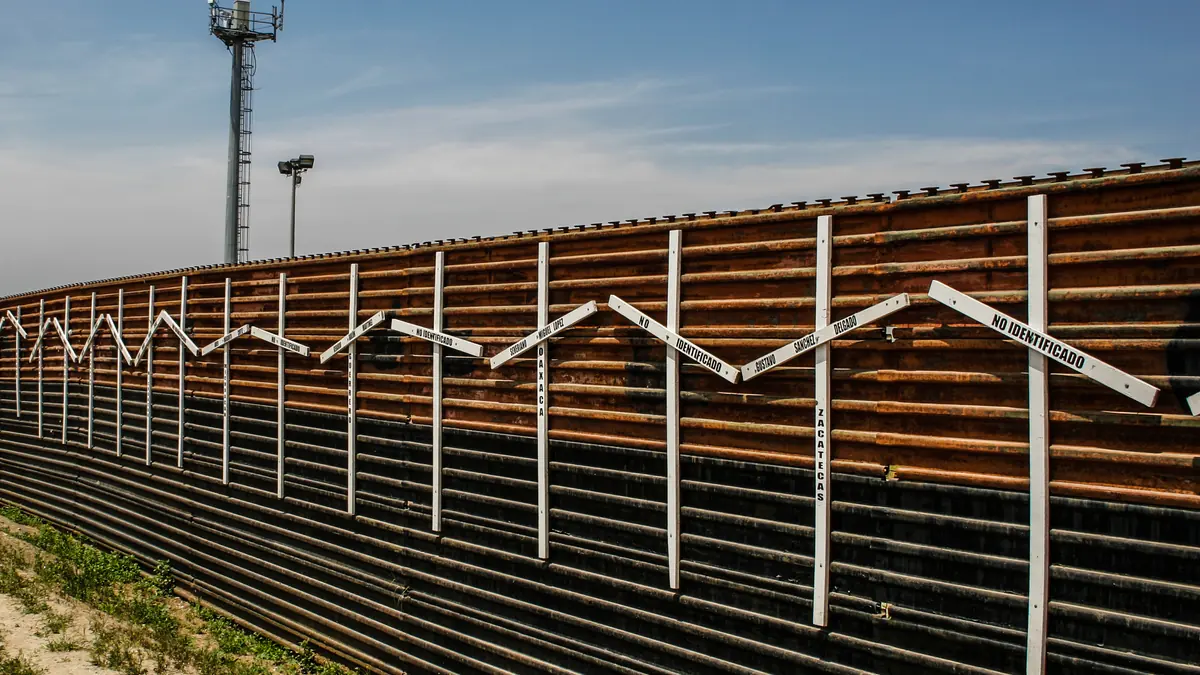
Figure 1: The reinforced steel barriers and patrol facilities along the San Diego sector, signaling the complete physical closure of irregular entry corridors.
II. The Algorithmic Spectacle: Content Harvesters, Street Hustlers, and Digital Spectacles
When the geopolitical tide receded, the influencers who once rode the algorithm’s high water found their fates dictated entirely by their initial capital, cognitive baseline, and real-world leverage.
1. The Safe-Zone Monetizer: Zhou Lifeng (“Feng Ge”)
While frequently linked to the Zouxian phenomenon in online searches, Zhou Lifeng (“Feng Ge”) operated under fundamentally different mechanics than actual border-crossers. Holding a valid Chinese passport and legal tourist visas, he never engaged in unlawful transit.
A veteran content strategist who understood the media algorithm, Zhou traveled to Ecuador and Colombia around 2023 to document the illegal migration infrastructure as an exercise in “spectacle sociology.” Spotting an extraordinary media arbitrage opportunity, he captured the surreal ecosystem of Quito’s Chinese enclaves, coyote safe houses, and jungle entry points, accumulating tens of millions of views and lucrative ad revenues.
Once filming wrapped, he returned home through official channels. Though his content sparked intense domestic debate and suffered sporadic platform censorship, his personal balance sheet in China remained completely insulated. In 2026, he remains an active media commentator, transitioning seamlessly to urban exploration, food commentary, and sports narrative. For Zhou, the migration wave was merely high-yield raw material; he stood behind bulletproof glass throughout, harvesting algorithmic premiums without ever risking his personal solvency.
2. The Bottom-Tier Hustler: Lei Sen (“Gold Medal Lecturer”)
If Zhou Lifeng was an arm’s-length observer, Lei Sen—a native of Luzhou, Sichuan, widely known as the “Gold Medal Lecturer”—built a bizarre, resilient niche directly out of the gutter.
Having suffered personal bankruptcy and mounting debt in China, Lei crossed illegally into the United States via South America in 2023. Arriving at Los Angeles’ Ding Pangzi Plaza—a infamous transit hub for undocumented Chinese labor—he immediately encountered intense, unregulated exploitation from local informal employers. Rather than submitting quietly to below-market wages without legal protections, Lei pulled out his phone and initiated a counter-culture media campaign: under the banner of “begging with pride,” he documented himself claiming free meals from street pantries while publicly reporting non-compliant employers to labor regulators.
His catchphrase, “Brothers, got food again!” transformed street-level homelessness in Los Angeles into an absurd digital comedy, gaining millions of followers within weeks. Though domestic Chinese social media platforms eventually banned his accounts, his income model adapted. Lei migrated his audience to YouTube and X, catering to overseas Chinese and global spectators.
His permanent turn occurred through a bizarre legal stroke: after becoming the victim of an armed street robbery in California, he cooperated fully with local police investigations, qualifying him to apply for a U-Visa (designated for victims of qualifying crimes). By 2025, he obtained a legitimate temporary work authorization (EAD).
By 2026, Lei has abandoned tent living entirely, relocating his family to a lower-cost metropolitan area on the East Coast. Balancing rideshare driving, street distribution vlogs, and cross-border logistics initiatives, his trajectory remains an anomalous statistical outlier—an survival route forged not through traditional labor, but through performative personality traits intersecting with chance legal mechanics.
3. Total Psychological and Physical Collapse: Wang Weiheng (“Donut”)
Standing in stark contrast to Lei Sen’s survival pivot is Wang Weiheng, known online as “Donut.” Wang’s journey presents a textbook case of speculative desperation degrading into total systemic ruin.
A former military veteran who once owned property and maintained a stable household in a lower-tier Chinese city, Wang suffered complete financial ruin after levering heavily into cryptocurrency markets. Fueled by online echo chambers and mounting debts, he liquidated his remaining assets, took out short-term loans, and crossed the U.S. border illegally. In a dramatic show of burning bridges, he publicly destroyed his Chinese passport upon entry, convinced he could force a reset.
Reality offered no cushion for an individual lacking English proficiency, specialized trade skills, or psychological resilience. Following a brief phase of post-detention euphoria—captured in a viral video where he praised a $10 donut shop handout—the structural pressure of unhedged living set in. While working as an uninsured delivery worker, he suffered a traffic collision, incurring medical and property liabilities that resulted in the impoundment of his vehicle. Deprived of his sole income generator, he retreated to long-term encampments in public parks across California.
Compounded by malnutrition and external volatility, Wang’s psychological stability fractured completely over the next two years into severe persecutory paranoia. His public videos devolved into incoherent accusations that random passersby were clandestine agents, while his physical environment deteriorated. By 2026, amid intensified municipal sweeps of homeless encampments in California, his makeshift shelters were repeatedly dismantled by local authorities for unlawful occupation.
Lacking legal status, a valid passport, basic work capacity, or mental health support, Wang can neither integrate into the legal U.S. economy nor easily return home. He has become a tragic caution sign on the Chinese internet—an individual whose physical, financial, and mental capital were completely consumed by the mechanics of unhedged displacement.

Figure 2: The class liquidation and ideological divergence matrix of the four key migrant cohorts from 2022 to 2026.
III. Information Cocoons vs. The Ground Ledger: Why Border Crossings Fail to Reset Asset Execution Lines
Analyzing these polarized outcomes reveals a fundamental cognitive error common among irregular migrants: confusing geographical relocation with the reconstruction of personal economic leverage.
Under the influence of algorithmic echo chambers, many succumbed to a mystical belief that physically stepping across an international boundary would automatically erase systemic debts, poor skills, and structural disadvantages. Modern legal and economic systems, however, operate on cold logic: institutional structures do not grow lenient simply because you entered without authorization; rather, forfeiting your native legal protections exposes you to maximum economic extraction.
This systemic squeeze operates across three distinct dimensions:
1. Unregulated Labor Competition and the Zero-Sum Trap
The vast majority of undocumented migrants who lack public visibility concentrate in informal ethnic enclaves such as Monterey Park or Flushing. Within these closed labor loops, an oversupply of undocumented labor drives compensation down relentlessly for manual roles like dishwashing, kitchen assistance, and basic construction.
Because both employers and workers operate outside official regulatory frameworks, basic labor rights do not exist. This dynamic rapidly degrades into an underclass infighting and zero-tolerance trap. Wage theft, internal extortion, and anonymous reporting to immigration enforcement become common tactics, plunging individuals into a high-friction survival environment with even lower signal-to-noise ratios than the ones they fled.
2. Radical Fragility and the Immediate Execution Line
Most irregular migrants carry debts ranging from 100,000 to 300,000 RMB ($14,000–$42,000 USD) incurred to fund their journey via high-interest informal loans. Consequently, their personal balance sheets operate at a deficit from day one. Meanwhile, living expenses—housing, basic food, and local transit—remain high in inflationary Western economies.
Under such compressed cash-flow models, personal risk tolerance drops to zero. An acute medical emergency, a minor traffic accident without commercial insurance, or an unexpected encounter with law enforcement can wipe out modest emergency reserves in days. Without legal status or liquidity buffers, this unhedged physical gamble inevitably collides with the financial execution line and systemic illiquidity collapse, dragging entire families into compound insolvencies.
3. Language Barriers and Irreversible Cultural Capital Depreciation
Language is not merely a means of communication; it is the sole interface for navigating legal, financial, and administrative frameworks in a host nation. Unable to converse fluently in English, most irregular migrants remain permanently confined to the bottom tier of native-language informal economies, cut off from upward mobility.
Without specialized skills or recognized credentials, blind physical relocation into a mature rule-of-law society triggers severe cultural capital depreciation and dimensional de-skilling. Social networks, professional context, and residual assets built in one’s home country evaporate instantly at the border wall, reducing the individual to easily replaceable, low-margin labor.
IV. The Endgame Lesson: Sovereignty Built on Compliance, Skill, and Cold Realities
Looking back at the turbulent migration wave from 2022 to 2026, it stands revealed as a period of collective irrationality—ignited by transient geopolitical frictions, asymmetrical information, and algorithmic amplification.
By 2026, every regulatory loophole and policy arbitrage window has been closed. The fortified U.S.-Mexico border marks the formal end of the “clandestine gold rush” narrative, while the sensational media figures of the era have lost their novelty, leaving behind cold structural realities.
The enduring lesson for individuals navigating an uncertain global environment is clear: true personal security and operational sovereignty can never be built on breaking institutional rules or fleeing baseline realities. Whether seeking capital accumulation, personal autonomy, or improved living standards, lasting success requires real productive skills, fully compliant legal frameworks, and liquid defensive capital capable of absorbing structural shocks. Attempting to gamble one’s physical body against modern state machinery and economic laws yields little more than temporary algorithmic noise—and ultimate systemic liquidation.
Related Research & Topics
Tello Mobile eSIM
SafetyWing Nomad Insurance
* Disclosure: This post contains affiliate links. If you make a purchase through these links, V-G Journal may earn a small commission at no additional cost to you. We only recommend services we independently evaluate and trust.
FIRE and Golf:自由旅居之路
专注于为追求 FIRE 与品质生活的人群提供特惠打球权益与候鸟微度假。不持一砖一瓦,运营品质生活。