The Arithmetic of Labor: Tesla, BYD, and the Divergent Ledgers of Global Manufacturing
Beyond the surface-level debate over corporate benefits lies a rigid mathematical divide: a 7x gap in revenue per employee. An analysis of 2024 financials reveals why Tesla’s 'Engineering Minimalism' and BYD’s 'Vertical Human Sea' operate on two incompatible economic planes.

Executive Summary: Public discourse regarding labor practices in the New Energy Vehicle (NEV) sector often devolves into binary moralizing. On one side, Tesla’s Shanghai Gigafactory is lionized as the “gold standard” for foreign enterprise—offering top-tier social security contributions, comprehensive family medical insurance, and a 16-to-17-month salary structure. On the other, domestic Chinese giants are criticized for a reliance on overtime and base-pay-indexed benefits.
However, shifting the lens from moral judgment to microeconomic reality reveals that this disparity is not a matter of “conscience,” but a collision of rigid arithmetic: gross margin structures, global pricing power, automation density, and the sheer scale of the labor pool. Using audited 2024 financial reports, we deconstruct the gap between these two manufacturing paradigms.
I. The Financial Reconciliation: Efficiency and the Per-Capita Chasm
Before evaluating benefits, one must examine the capital pool that funds them and the denominator—the headcount—standing over that pool. The following table compares the 2024 core financial and per-capita metrics for Tesla, BYD, and China’s leading “New Force” players.
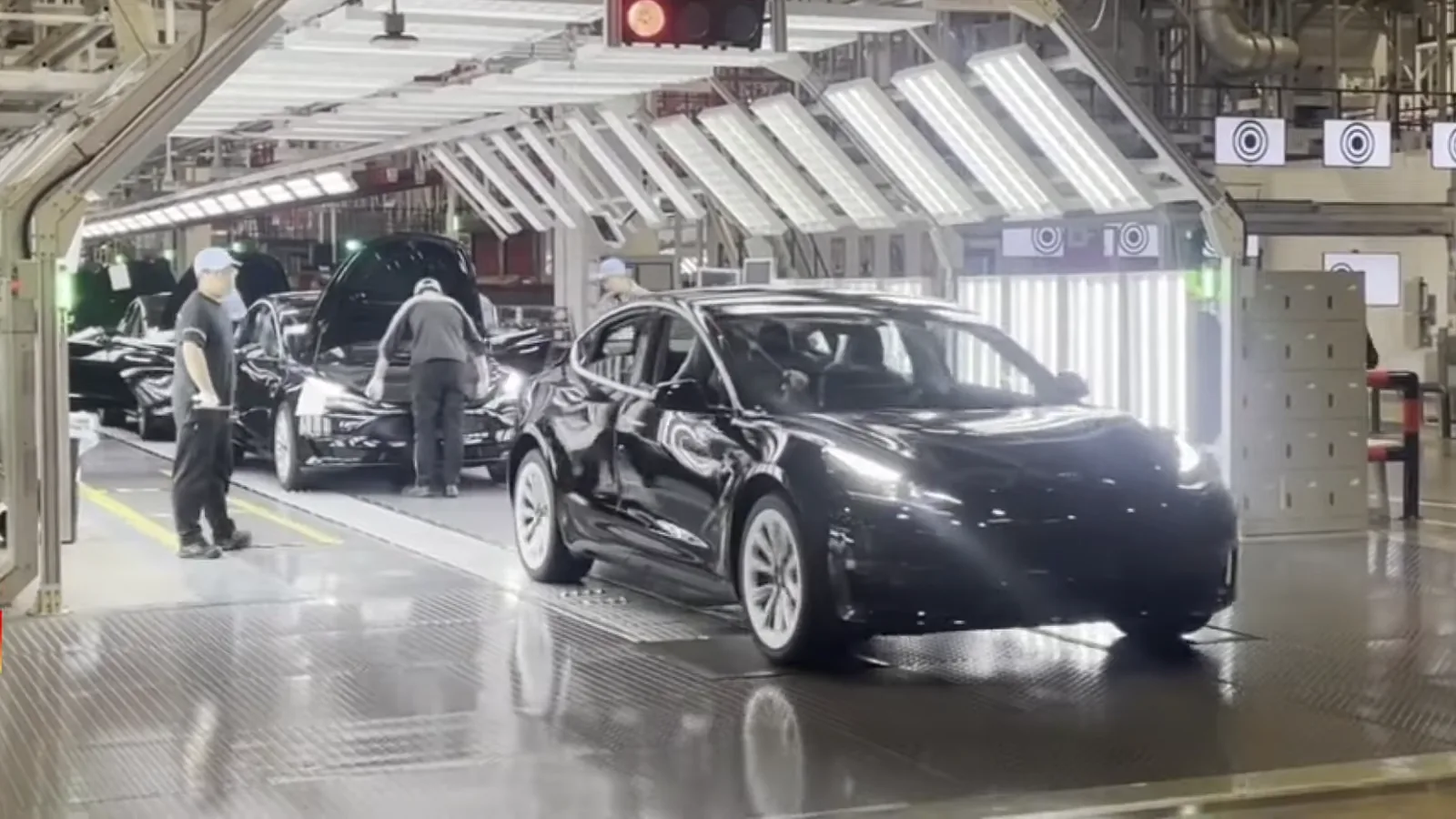
Figure 1: Tesla Shanghai Gigafactory inspection and assembly line. Through giga-casting and high-density robotics, manual assembly stations are compressed to the physical limit.
| Core Metric (FY2024) | Tesla | BYD | Li Auto | NIO |
|---|---|---|---|---|
| Total Revenue | ~$97.69B (¥708.7B) | ¥777.1B | ~¥144.5B | ~¥65.7B |
| Net Profit (Attributable) | ~$7.09B (¥51.4B) | ¥40.25B | ~¥8.04B | Net Loss ~¥20.8B |
| Total Deliveries | ~1.79M (BEV) | 4.27M (BEV+PHEV) | ~501k | ~222k |
| Net Profit per Vehicle | ~$3,960 (¥28.5k) | ~¥8.5k–¥9.4k | ~¥16k | Negative |
| Global Headcount | ~125,000 (Post-optimization) | ~968,000 | ~32,000 | ~33,000 |
| Revenue per Employee | ~¥5.6M ($770k) | ~¥0.8M ($110k) | ~¥4.4M | ~¥1.98M |
| Profit per Employee | ~¥410k | ~¥41.5k | ~¥250k | Negative |
| Vehicles per Employee | ~14.3 | ~4.4 | ~15.6 | ~6.7 |
Three objective realities emerge from these figures:
1. Revenue Parity vs. Profit Disparity
In 2024, BYD’s total revenue officially surpassed Tesla’s, with delivery volumes 2.38 times higher. However, Tesla’s net profit per vehicle (approx. ¥28,500) remains more than triple that of BYD (approx. ¥8,500–¥9,400). Every Tesla sold generates significantly more free cash flow to buffer comprehensive employee benefits than a domestic vehicle sold in a high-volume, low-margin price war.
2. The 7x Productivity Gap
Tesla manages a nearly $100 billion operation with roughly 125,000 employees globally. BYD, by contrast, approached a headcount of one million by the end of 2024. Tesla’s revenue per employee is seven times that of BYD; its profit per employee is nearly ten times higher.
3. The Divergence of the “New Forces”
Li Auto, through a streamlined product matrix and high-margin Extended-Range EVs (EREVs), has achieved per-capita productivity approaching Tesla’s levels. Meanwhile, NIO and XPeng remain burdened by heavy R&D, infrastructure depreciation (charging/swapping stations), and high channel expansion costs, keeping their income statements under immense pressure.
II. Granularity of Compensation: The Blue-Collar and White-Collar Ledger
The efficiency gap in financial reports inevitably manifests in the factory floor pay stub and the fine print of labor contracts.
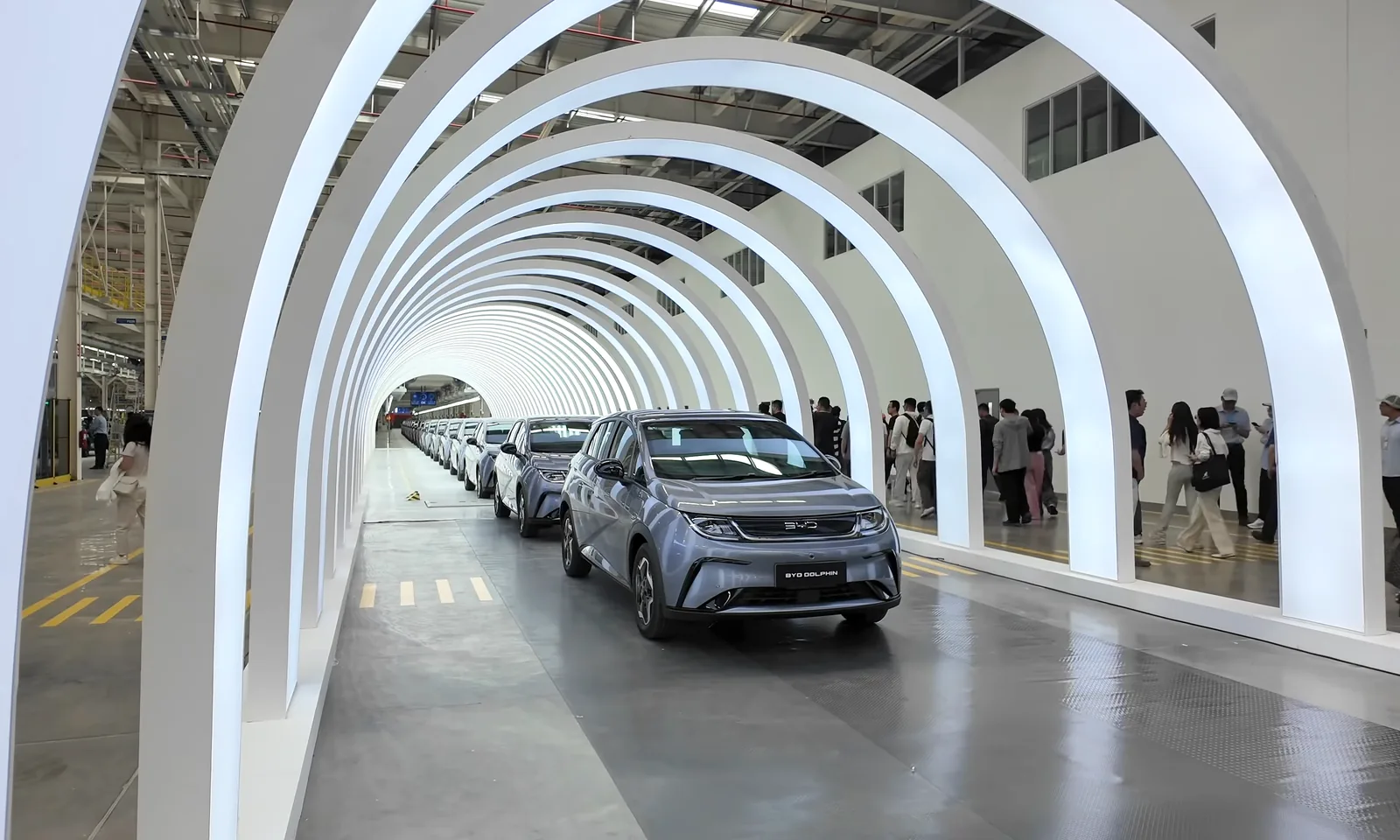
Figure 2: BYD’s modern vehicle assembly gallery. An army of nearly one million workers supports a vertically integrated chain, from batteries and motors to wire harnesses and molds.
1. The Blue-Collar Reality
Tesla (Shanghai Gigafactory Example)
- Base Pay & Shifts: Base salary for operators ranges from ¥5,300 to ¥5,500/month. The standard is a “4-on, 2-off” 12-hour shift rotation (including meals and breaks).
- Total Annual Compensation: A 16-to-17-month salary system (including quarterly bonuses, shift allowances, and year-end bonuses). Combined with statutory overtime, a skilled worker’s gross annual income stabilizes at ¥110k–¥120k (averaging ¥9,000–¥10,000+ per month).
- Social Security & Housing Fund: Contributions are made at the maximum statutory rate based on actual total income, not the minimum base salary.
- The “Moat” Benefit (Family Insurance): Beyond statutory requirements, Tesla provides supplemental commercial medical insurance that covers the employee, their spouse, and their children. This high-reimbursement coverage effectively eliminates the systemic risk of a family falling into poverty due to illness.
- Equity Incentives: While universal stock options for new blue-collar hires have been phased out, employees still have access to the Employee Stock Purchase Plan (ESPP) at a discount.
Domestic Automakers (Traditional Large-Scale Manufacturers)
- Base Pay & Overtime Dependency: Base salaries often sit close to the local statutory minimum (typically ¥2,000–¥2,600/month in hubs like Zhengzhou or Xi’an). Actual take-home pay is highly dependent on overtime hours and piece-rate output.
- Cyclical Volatility: During peak seasons, monthly income can reach ¥6,000–¥8,000. During off-seasons or model transitions, it can drop to ¥3,000–¥4,000. Annual income generally ranges between ¥60k and ¥85k, with low resilience to production cycles.
- Contribution Baselines: While listed companies comply with the law, contributions are often calculated based on the minimum base salary rather than total earnings, and commercial insurance rarely extends to family members.
- The “Campus” Model: Domestic firms focus on “low-cost living floors”—providing dormitories for a nominal fee, subsidized canteens, and factory shuttles to minimize the worker’s rigid urban living expenses.
2. R&D and Management
- Tesla: Cash base is globally competitive, with the primary lever being Restricted Stock Units (RSUs). The structure is extremely flat with minimal middle management, favoring a “Hardcore” result-oriented culture with high turnover and zero redundancy.
- Domestic Giants: These firms absorb China’s massive “engineer dividend” (BYD’s R&D team exceeds 100,000). They utilize a rigid administrative hierarchy. Bonuses are tied to group sales and business unit margins; core talent receives equity, while the rank-and-file rely on stable cash compensation.
III. The Underlying Logic: Constraints, Not Morality
Irrational discourse often attributes these differences to a “lack of conscience” or “social responsibility.” However, in the face of microeconomic discipline, the disparity is dictated by the production function and rigid financial constraints.
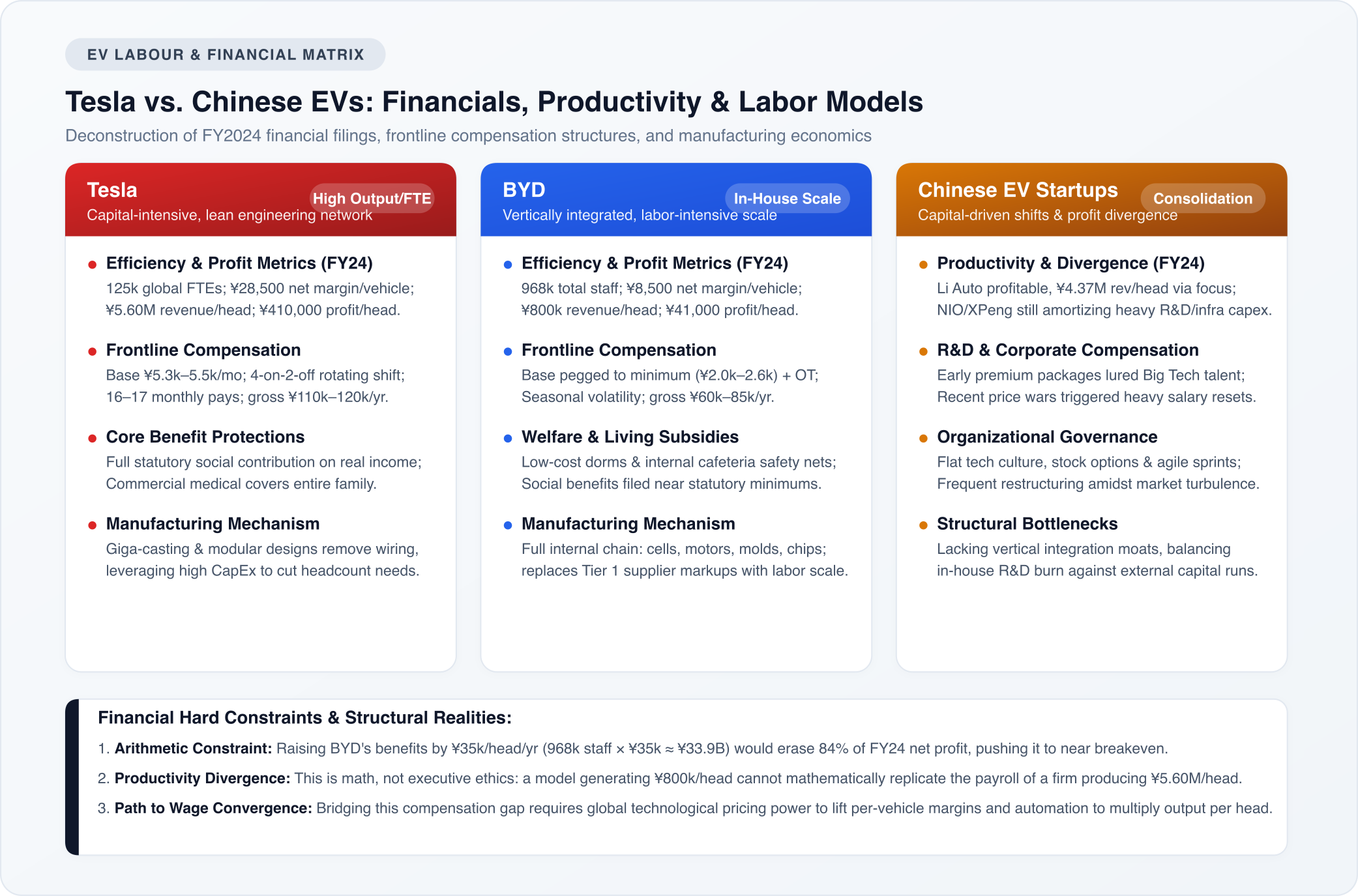
Figure 3: Matrix of financial efficiency, labor protection granularity, and underlying constraints.
1. The Sensitivity of Scale
BYD employs nearly 970,000 people. Tesla employs 125,000.
Consider a rigorous financial sensitivity test:
If BYD were to increase its per-capita labor cost (including full social security adjustments, family insurance, and salary) by just ¥35,000 per year to match the standards of Tesla Shanghai:
968,000 employees × ¥35,000/year ≈ ¥33.88 Billion/year
Compared to BYD’s 2024 net profit of ¥40.25 billion, this single adjustment would swallow 84% of its annual profit. The company would instantly slide toward the break-even point, and its capital for R&D and global expansion would vanish.
A company generating ¥800k in revenue per employee cannot, mathematically, adopt the compensation model of a company generating ¥5.6M per employee.
2. “Engineering Minimalism” vs. “Vertical Human Seas”
- Tesla’s Solution: Capital and Engineering to Eliminate Labor
From giga-casting (eliminating hundreds of stamped parts and manual welding) to centralized E/E architecture (eliminating kilometers of wiring and manual threading), Tesla’s core logic is to “delete the part” and “delete the step.” It compresses cycle times to 40 seconds, using high upfront Capital Expenditure (CapEx) in automation to minimize the headcount of general laborers. - The Domestic Solution: Vertical Integration to Capture External Margins
BYD develops and manufactures everything from battery cells and motors to semiconductors and light clusters in-house. By doing so, it captures the 15%–20% margin typically held by Tier 1 suppliers like Bosch or Continental. However, this self-sustaining ecosystem requires hundreds of thousands of highly disciplined workers. The “cost moat” built by Chinese firms over two decades is fundamentally anchored in the country’s abundant, high-discipline manufacturing labor dividend.
3. Profit Buffers and Pricing Power
Tesla Shanghai is not just a domestic supplier; it is a high-margin export hub for Europe and the Asia-Pacific. In overseas markets, Tesla enjoys a premium that grants it a ¥30,000-per-car profit buffer. Domestic Chinese EVs, conversely, are locked in a brutal price war. When a car’s profit margin is only ¥8,000—or negative—the financial margin for error is non-existent. Cost pressure is inevitably passed down to the supply chain and the workshop floor.
IV. Conclusion and Implications
Stripped of moralizing rhetoric, the gap in benefits between Tesla and Chinese automakers is a structural divergence between a high-automation, engineering-minimalist, high-margin multinational and a vertically integrated, labor-dense, scale-driven industrial flagship.
Tesla uses capital and engineering innovation to push individual productivity to the limit, creating the financial elasticity to absorb top-tier benefits. Domestic firms use a massive human network to build unmatched manufacturing resilience and response speed.
For Chinese NEV firms to close the compensation gap, they cannot rely on emotional or moral pressure. They must follow two hard paths:
- Extracting Premium via Innovation: Increasing global brand power and market share in high-margin overseas territories to thicken the profit buffer.
- Efficiency via Intelligence: Using robotics and automated workflows to take over high-load, repetitive tasks, thereby increasing revenue and profit per capita.
Only when the numbers on the corporate ledger grow can the comfort on the factory pay stub find a sustainable material foundation.
Related Research & Topics
Tello Mobile eSIM
SafetyWing Nomad Insurance
* Disclosure: This post contains affiliate links. If you make a purchase through these links, V-G Journal may earn a small commission at no additional cost to you. We only recommend services we independently evaluate and trust.
FIRE and Golf:自由旅居之路
专注于为追求 FIRE 与品质生活的人群提供特惠打球权益与候鸟微度假。不持一砖一瓦,运营品质生活。