The Hostage Ledger: Musk’s Starlink Brinkmanship Across India and China
Elon Musk attacks India's domestic telecoms while honoring Beijing's absolute ban on Starlink. The divergence is not hypocrisy; it is the cold calculus of asset exposure, regulatory permeability, and sovereign red lines.

Executive Summary: In October 2026, Elon Musk took to X to openly challenge Mukesh Ambani, asking whether the billionaire tycoon was the “real boss of India” as domestic commercial interests continued to stall Starlink’s commercial landing rights. Yet across the Himalayas, facing a Chinese market that has enacted an equally total ban on Starlink, Musk has remained quiet, never applying for an operational license and repeatedly reaffirming his pledge to keep satellite terminals off the mainland. Attributing this asymmetry to commercial volume—Tesla’s negligible sales in India versus its market dominance in China—captures only the surface. Behind the erratic outbursts and the calculated silences sits a cold game of collateral exposure, regulatory permeability, and sovereign leverage.
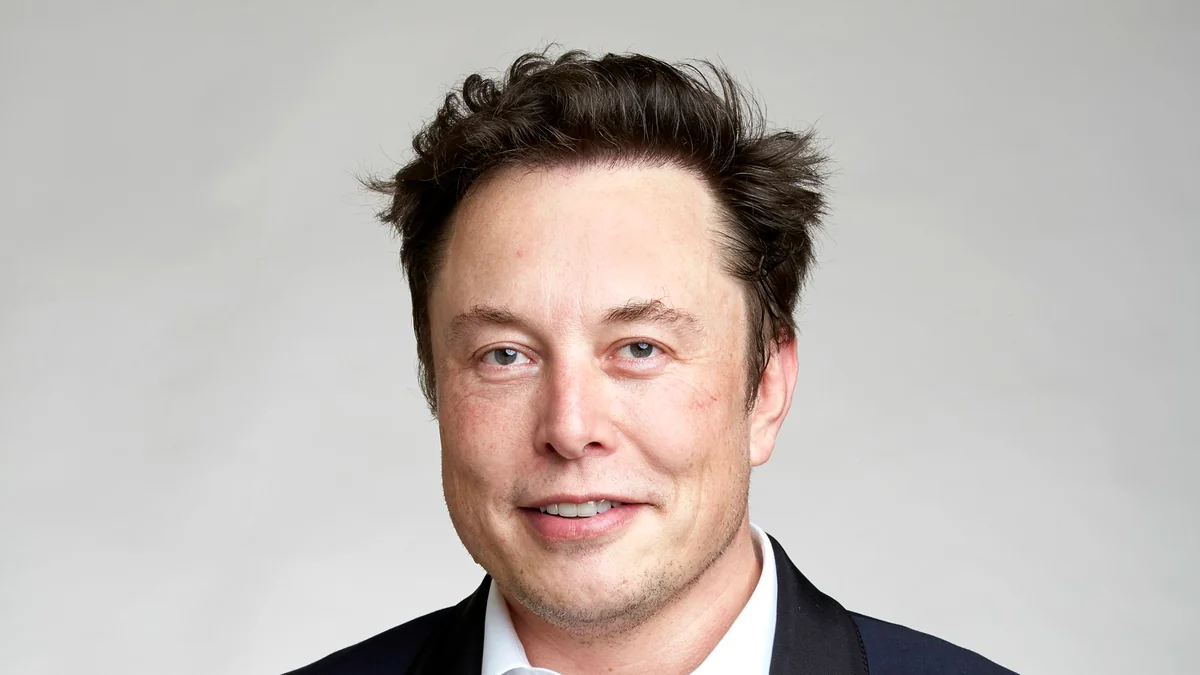
Elon Musk: Transnational enterprise, physical collateral, and the calculus of sovereign leverage.
I. Physical Collateral: Asset Exposure and the Hostage Effect
In classical game theory, confrontation without leverage is mere venting; provocation with exposed flanks is suicide.
Musk in India: The Unencumbered Challenger
For years, the Modi administration pressed Tesla to commit to a domestic Gigafactory before granting tariff concessions on fully built imports. Musk countered that New Delhi must lower its import barriers first to test genuine market appetite. The resulting multi-year stalemate ensured that Tesla never installed a single assembly line on Indian soil.
Compounded by import duties ranging from 70% to 100%, Tesla’s local annual deliveries remained largely nominal. Musk holds no irrevocable physical capital inside the country, no critical supply chain dependencies, and no material revenue base. His asset exposure is zero. Hurling public accusations at Indian telecom regulators and taking aim at domestic oligarchs carries virtually no marginal downside. When there is nothing to seize, defiance is cheap.
Musk in China: The Balance Sheet as Hostage
Giga Shanghai accounts for more than half of Tesla’s global delivery volume. It is the company’s highest-margin production base and its primary export conduit. Beyond the assembly floor, Tesla’s core manufacturing ecosystem—from lithium battery chemistry to high-precision die-casting—is embedded deep within the Chinese industrial hinterland.
These are immovable, capital-intensive physical assets. In the Chinese theater, public friction carries immediate systemic risk: regulatory inspections, supply chain friction, or factory shutdowns. This concentration of capital creates a structural hostage dynamic. A rational operator does not imperil a trillion-dollar manufacturing spine to fight for a satellite communications permit that will never be granted.
II. Expectation Management: Permeable Arenas vs. Sovereign Red Lines
The contrasting nature of satellite regulatory regimes in both jurisdictions dictates whether public pressure serves any rational utility.
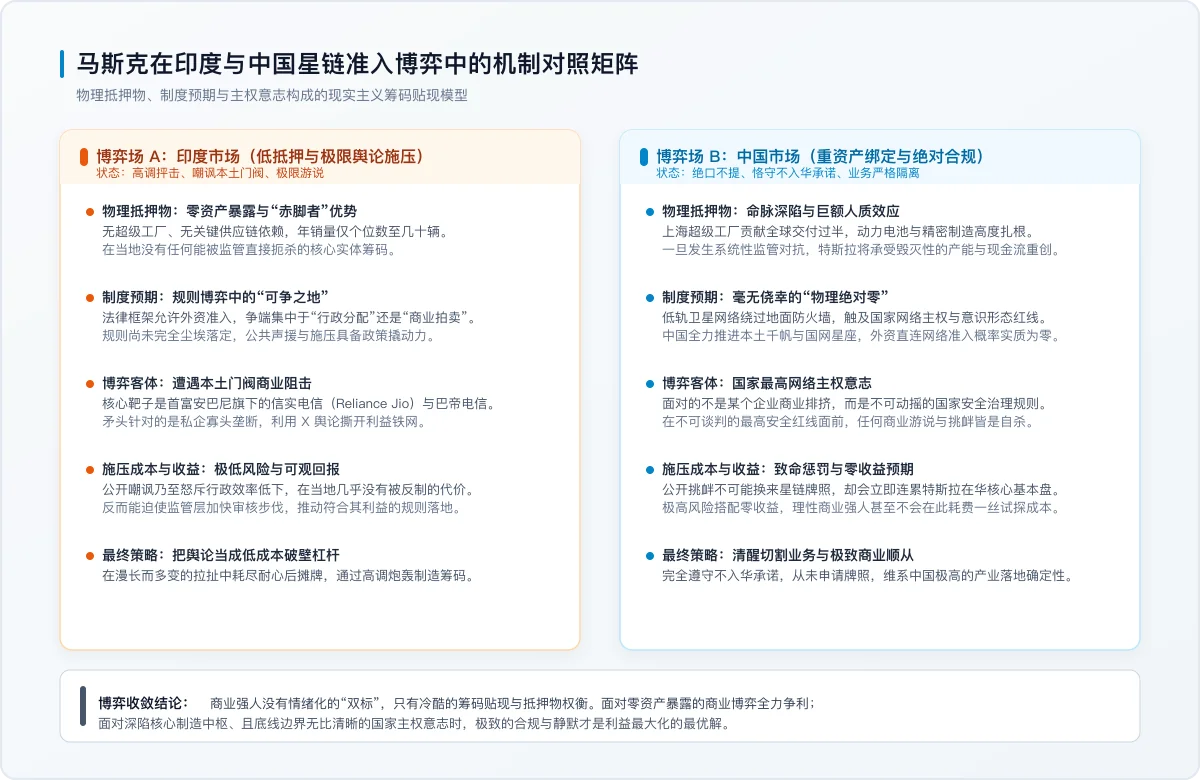
Figure 1: Mechanism comparison matrix: Starlink’s regulatory positioning across India and China.
India: A Contested, Permeable Frontier
India does not ban foreign satellite infrastructure as a matter of constitutional doctrine. The Modi administration wants low-Earth-orbit (LEO) coverage to bridge rural broadband deficits, but it operates within a web of domestic industrial lobbying.
The dispute turns on spectrum allocation mechanics: Musk advocates for administrative assignment in line with International Telecommunication Union (ITU) norms to minimize market entry costs; Mukesh Ambani’s Reliance Jio and Sunil Bharti Mittal’s Airtel demand commercial spectrum auctions, leveraging their domestic balance sheets to raise the financial barrier to entry.
Because India’s policy framework is contested rather than closed, regulatory outcomes remain negotiable. Musk’s broadsides on X are calibrated leverage: an effort to mobilize public scrutiny and force political arbiters to bypass domestic telecom cartels before policy solidifies.
China: The Structural Absolute Zero
Low-Earth-orbit networks bypass terrestrial core nodes and pierce sovereign firewalls by design. Their operational deployment in modern conflict zones has demonstrated that commercial satellite constellations function as de facto defense infrastructure during geopolitical crises.
For Beijing, which views cyberspace sovereignty and critical information infrastructure as existential security matters, unregulated foreign satellite communication is a non-starter. China is actively deploying its own sovereign orbital architectures, notably the G60 (“Thousand Sails”) and Guowang constellations. Under these structural constraints, foreign private operators have zero probability of securing direct-to-consumer licenses without routing traffic through state-controlled terrestrial gateways.
As analyzed in the context of 5G commercialization narratives and the LEO landscape, satellite megaconstellations represent high-stakes strategic assets rather than routine consumer hardware. Musk acknowledged as much in an interview with the Financial Times, noting that Beijing had explicitly warned him against deploying Starlink within Chinese borders and sought assurances to that effect. Where the probability of success is zero and the issue touches core national security doctrine, testing the boundary yields only catastrophic downside.
III. Institutional Feedback: Velocity vs. Attrition
Beyond capital exposure and state security, both markets deliver radically different institutional experiences to foreign enterprise:
- China offers industrial execution certainty: Shanghai expedited land allocations, municipal permits, and low-interest state-backed credit at unprecedented speed. Crucially, regulators waived the mandatory joint-venture requirement, allowing Tesla to operate as a wholly foreign-owned enterprise. The factory was built, certified, and operational within twelve months, rescuing Tesla from manufacturing insolvency and anchoring its multi-billion-dollar valuation.
- India presents chronic administrative friction and protectionism: Foreign manufacturers routinely confront prohibitive tariffs, shifting statutory requirements, and entrenched domestic conglomerates. Having endured years of inconclusive negotiations, Musk’s escalation on social media reflects standard brinkmanship born of institutional exhaustion.
| Analytical Dimension | The Indian Theater (Confrontation with Ambani & Regulators) | The Chinese Theater (Compliance and Non-Entry Commitments) |
|---|---|---|
| Physical Collateral | Zero manufacturing footprint; negligible local sales | Giga Shanghai anchors global output; deep supply chain integration |
| Regulatory Trajectory | Fluid; spectrum allocation mechanisms remain open to leverage | Fixed; network sovereignty constitutes an absolute red line |
| Opposing Counterparty | Domestic telecom cartels (Reliance Jio, Bharti Airtel) | State security apparatus and national infrastructure planners |
| Downside Cost of Friction | Negligible; no local operating assets subject to retaliation | Existential; threatens core manufacturing cash flow |
| Expected Upside of Friction | High; mobilizes public pressure to accelerate licensing | Zero; provoking sovereign red lines yields no commercial path |
| Strategic Equilibrium | Public brinkmanship, regulatory lobbying, non-auction demands | Structural separation of concerns, absolute regulatory compliance |
IV. The Realist Merchant
The divergence in Elon Musk’s conduct across New Delhi and Beijing is neither ideological contradiction nor personal caprice. It is the rational optimization of a transnational enterprise operating under disparate geopolitical architectures.
When facing an opponent where capital exposure is absent and regulatory rules remain permeable, aggressive public posturing functions as an efficient negotiation tactic. But when facing a sovereign power that holds physical custody over an enterprise’s manufacturing core—and whose state security boundaries are non-negotiable—deference, silence, and strict operational division are the only rational moves on the board.
Related Research & Topics
Tello Mobile eSIM
SafetyWing Nomad Insurance
* Disclosure: This post contains affiliate links. If you make a purchase through these links, V-G Journal may earn a small commission at no additional cost to you. We only recommend services we independently evaluate and trust.
FIRE and Golf:自由旅居之路
专注于为追求 FIRE 与品质生活的人群提供特惠打球权益与候鸟微度假。不持一砖一瓦,运营品质生活。