The 0.81-Second Threshold: Deconstructing the Physics of the Tesla Roadster’s SpaceX Package
Tesla’s claim of a 0-60 mph sprint in 0.81 seconds—achieved via a SpaceX cold-gas thruster package—defies traditional automotive engineering. We analyze the physics of the 3.38G launch, the physiological limits of the human body, and why this vehicle is effectively a rocket masquerading as a supercar.

Executive Summary: Following successful thrust demonstrations at the McGregor test site in Texas, the new-generation Tesla Roadster’s reported 0–60 mph (0–96.6 km/h) time of 0.81 seconds has sent shockwaves through the automotive and aerospace industries. This metric is not a mere evolution of electric motor efficiency or chassis tuning; it is a violent mechanical experiment that bypasses the fundamental friction bottlenecks of terrestrial locomotion by leveraging aerospace dynamics.
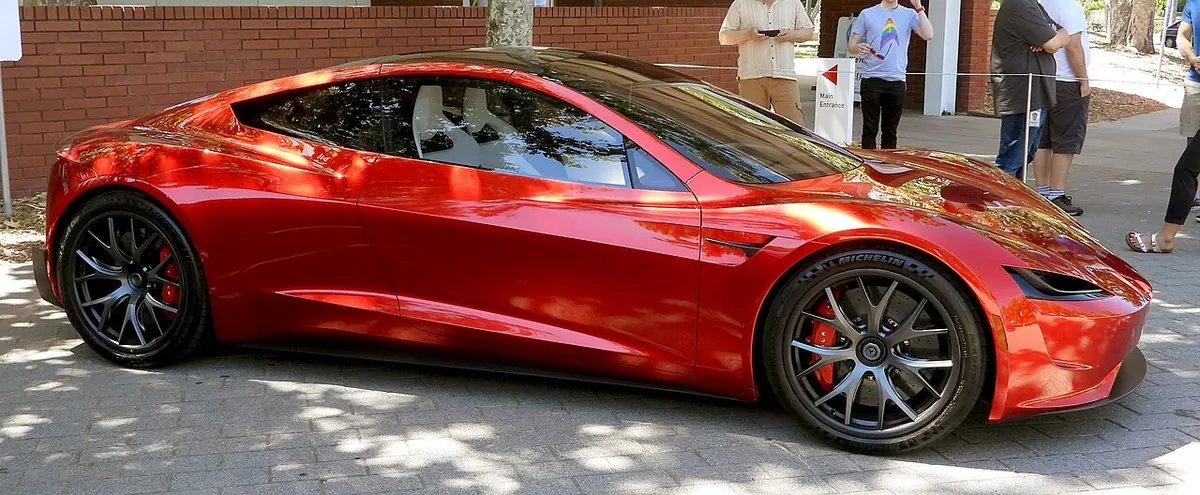
Fig 1: The production-intent design of the new-generation Tesla Roadster.
I. The Kinematics of 3.38G: A 10.8-Meter Sprint
To grasp the reality of 0.81 seconds, one must strip away the marketing and look at the raw kinematics. Assuming constant acceleration to reach 60 mph (26.82 m/s) in 0.81 seconds:
- Average Acceleration: a = Δv / Δt ≈ 33.11 m/s². This is approximately 3.38 times the force of gravity (g).
- Sustained Longitudinal Load: The occupants are subjected to a constant 3.38G force for the duration of the launch.
- Distance Traveled: Using the displacement formula s = ½ a t², the vehicle covers only 10.86 meters to reach 60 mph.
The Visual Reality: A human blink takes roughly 0.3 to 0.4 seconds. By the time you have blinked twice, the Roadster has already cleared the 60 mph threshold—having traveled a distance shorter than two standard compact cars parked end-to-end.
II. The Physiological Wall: Chest Compression and Grey-out
In conventional transport, human G-load tolerance is rarely tested to this degree:
- Commercial Aviation Takeoff: 0.3G – 0.5G.
- High-End Hydraulic Rollercoasters: 1.5G – 2.0G (transient).
- Formula 1 Launch: 1.2G – 1.5G. (F1 cars only reach 4.0G–5.0G during extreme braking, not acceleration).
When 3.38G of sustained longitudinal thrust is applied to an untrained occupant, the biological consequences are immediate:
- Thoracic Compression: For a 70kg adult, the chest and pelvis must withstand approximately 240kg of net mechanical pressure during those 0.81 seconds. The body is essentially hammered into the seat structure.
- Visceral Displacement: Inertia forces internal organs and blood flow toward the spine. The drop in perfusion pressure to the retina and brain can trigger immediate “grey-out” (a precursor to G-LOC).
- Cognitive Lag: Human reaction time—from visual stimulus to cognitive processing—is roughly 200–300 milliseconds. The Roadster hits 60 mph before the driver’s brain has fully registered the intent to launch.
III. Comparative Matrix: From Supercar to Carrier Deck
The Roadster no longer competes with consumer vehicles; it competes with military-grade launch systems.
| Vehicle/System | 0–60 mph (0–96.6 km/h) | Avg. G-Force | Engineering Context |
|---|---|---|---|
| Commercial Jet | 15–20s | 0.3G – 0.5G | Passenger comfort priority |
| Formula 1 | 2.4 – 2.6s | 1.2G – 1.5G | Limited by tire-to-track friction |
| Electric Hypercar | 1.74 – 1.99s | 1.4G – 1.6G | Torque vectoring/High-grip slicks |
| Carrier Catapult | 2.0 – 2.5s | 3.0G – 4.0G | External launch assist; G-suits required |
| Roadster (SpaceX) | 0.81s | ~3.38G | Electric torque + Cold-gas thrust |
| Top Fuel Dragster | < 0.8s | 4.0G – 5.0G | Nitromethane/Disposable tires |
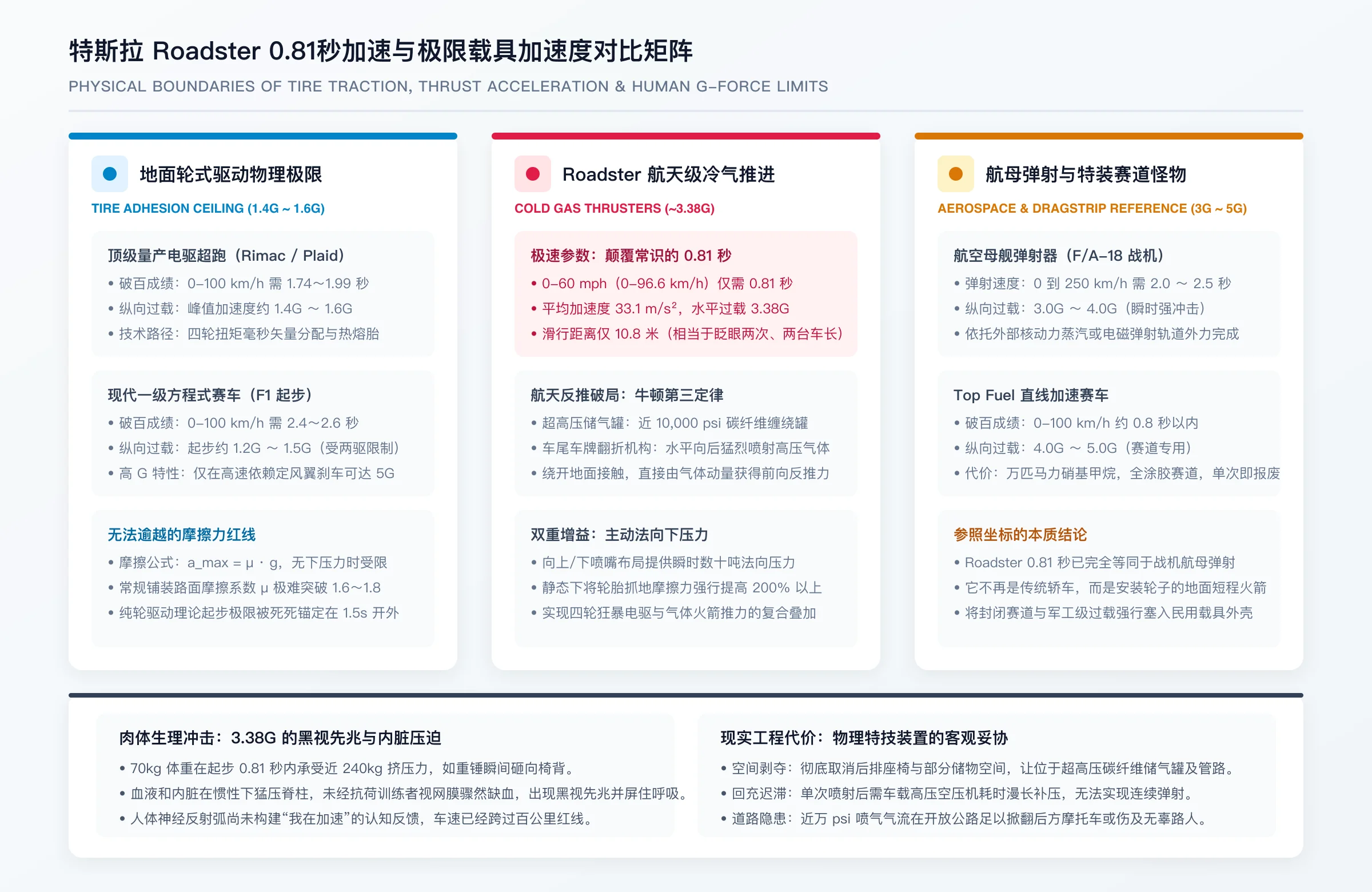
Fig 2: Engineering boundaries of terrestrial and aerial launch systems.
IV. The Friction Barrier: Why Wheels Have Limits
Traditional vehicles are bound by the “Friction Wall” defined by Newtonian mechanics:
Maximum Theoretical Acceleration: a_max = μ · g (Where μ is the coefficient of static friction between tire and road).
Even with the most advanced warm-compound racing slicks, the coefficient of friction (μ) on asphalt rarely exceeds 1.6–1.8. Consequently, any vehicle relying solely on wheel-to-ground traction is physically capped at an acceleration of roughly 1.6G–1.8G. Attempting to exceed this with more horsepower simply results in tire shear and uncontrolled wheel spin.
V. The Aerospace Solution: Cold Gas Thrusters
The Roadster’s “A71” architecture bypasses this wall through two parallel mechanisms:
- Cold Gas Thrusters: By utilizing high-pressure (10,000 psi) COPV tanks and Laval nozzles, the car generates thrust via Newton’s Third Law. This force is independent of the tires’ contact patch, effectively turning the car into a ground-based rocket.
- Active Downforce Gain: Vertical thrusters mounted on the chassis provide instantaneous downward force. By artificially increasing the normal load (the “N” in the friction equation), the tires can handle significantly higher torque without breaking traction.
VI. The Reality of the Trade-off
This engineering marvel comes with significant compromises:
- Payload and Space: The high-pressure tanks and valve assemblies displace the rear seating and luggage capacity, significantly increasing curb weight.
- Non-Steady State: Unlike electric motors, the compressed air is a finite consumable. Once the tanks are depleted, the system requires a lengthy recharge cycle via onboard compressors.
- Regulatory Hurdles: The high-velocity exhaust from the thrusters poses a legitimate safety risk to pedestrians and following traffic. It is highly probable that this “Rocket Mode” will be geofenced to closed circuits or private testing facilities.
Ultimately, the 0.81-second Roadster is not a car in the traditional sense. It is a physical stunt machine—a boundary-pushing synthesis of aerospace propulsion and electric torque that forces us to redefine the limits of what a “vehicle” can be.
Related Research & Topics
Tello Mobile eSIM
SafetyWing Nomad Insurance
* Disclosure: This post contains affiliate links. If you make a purchase through these links, V-G Journal may earn a small commission at no additional cost to you. We only recommend services we independently evaluate and trust.
FIRE and Golf:自由旅居之路
专注于为追求 FIRE 与品质生活的人群提供特惠打球权益与候鸟微度假。不持一砖一瓦,运营品质生活。