The Micro-Business Defense: What a $4 Rural Vet Exposes About Financial Independence
The viral rise of a low-cost, zero-equipment rural pet clinician exposes the structural limits of pure financial FIRE. By eliminating fixed-asset depreciation and payroll overhead, localized physical micro-enterprises offer digital nomads an unshakeable ground-level cash flow engine.

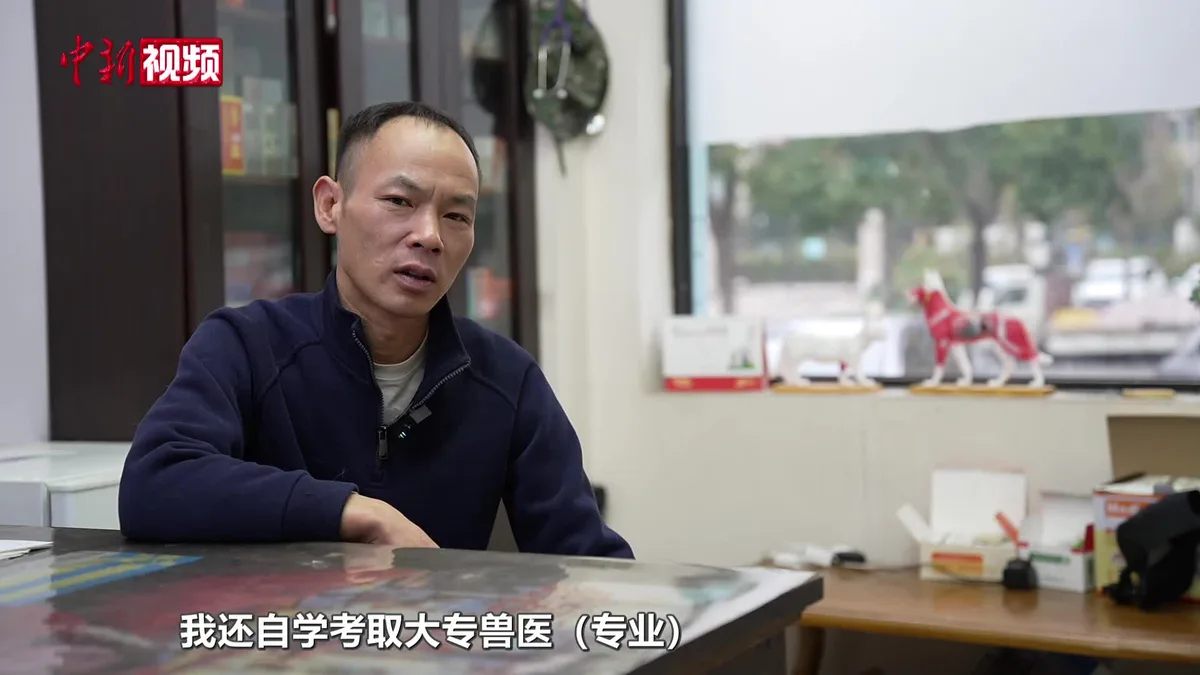
Figure 1: Rural veterinarian Qian Yong interviewed inside his Tangshan clinic, dismantling heavy-asset medical conventions through a modest 80-square-foot workbench and hands-on skill. (Source: China News Service)
Recent analytics tracking Chinese search indices revealed an unexpected phenomenon: Qian Yong—a rural veterinarian operating in the auto-repair district of Tangshan, Hebei, known online as “Old Qian”—has captured widespread public attention. His clinic features no multi-hundred-thousand-yuan biochemical analyzers, no registration counters, and no diagnostic fees. Prescription drugs are dispensed by the individual pill, and feline urinary catheterizations are performed for roughly $4 (30 RMB).
In tier-one metropolitan centers, pet care has been re-engineered into a high-ticket, capital-intensive healthcare consumer play. Inside Old Qian’s 80-square-foot shop, however, it remains a lean, essential service transaction. While digital nomads and FIRE (Financial Independence, Retire Early) practitioners struggle with portfolio drawdowns and safe-withdrawal-rate mathematics, Old Qian’s micro-enterprise—yielding modest margins backed by absolute operational certainty—presents an antifragile playbook for personal financial independence.
The 80-Square-Foot Workbench: Overcoming Heavy-Asset Enterprise Traps
Consumer market narratives long classified veterinary medicine as a high-margin, high-ticket sector. Yet a look at the typical pet hospital’s balance sheet reveals the structural fragility underlying this heavy-asset model.
Setting up a standard urban veterinary clinic requires satisfying strict regulatory hurdles: minimum floor space requirements (often exceeding 2,000 square feet), dedicated surgical suites, X-ray gear, full-panel blood and biochemistry analyzers, alongside certified veterinary surgeons and nursing staff. Initial capital expenditure regularly exceeds $50,000 to $100,000.
To offset high facility rent, equipment depreciation schedules, and payroll overhead, institutional clinics must maximize billing per visit. A pet brought in for minor symptoms is routinely funneled into broad-spectrum diagnostic screening, driving up consumer costs to maintain operational margins.
Old Qian’s model succeeds by stripping away fixed overhead entirely.
A veteran who spent eight years as a military dog handler, Qian later studied veterinary science and gathered extensive field experience in rural animal care. His clinic in Tangshan occupies 80 square feet furnished with weathered wooden counters, zero diagnostic machinery, and no staff.
Catheterization costs $4; minor ailments are resolved for under $2; prescription medications are sold per pill; and critical conditions like canine parvovirus are billed strictly at drug cost. Operating without debt service or payroll leverage, every transaction yields immediate net positive cash flow.
For sovereign operators seeking independent livelihoods, Qian’s operation offers an important lesson: startups rarely fail due to a lack of core market demand. They fail because founders take on fixed asset depreciation and payroll burdens prematurely, allowing operating leverage to devour marginal returns.
Secondary Market Volatility: The Fragility of Pure Financial FIRE
For over a decade, mainstream FIRE literature focused on a single asset class: liquid equity and bond markets. The established playbook dictated accumulating 25 times one’s annual cost of living in index funds, withdrawing a static 4% annually, and funding global living expenses entirely through capital gains and dividends.
This passive income framework relies on the assumption of steady asset appreciation—a premise that shows vulnerability during structural macroeconomic shifts.
As demonstrated in our analysis of the liquidity trap of multi-property rent-seeking, reliance on real estate yields can fail when rental income drops and illiquid assets lock up. Similarly, pure paper portfolios leave early retirees exposed to sequence-of-returns risk during extended drawdowns, causing safe withdrawal rate failures and dynamic rebalancing to become operational necessities rather than statistical outliers.
When baseline survival relies entirely on global market conditions, financial freedom can devolve into ticker-watching stress. Portfolio drawdowns generate existential friction, often forcing individuals to curtail living standards or sell underlying equities near market troughs.
Relying solely on financialized assets lacks a physical, real-world engine to absorb macroeconomic shocks.
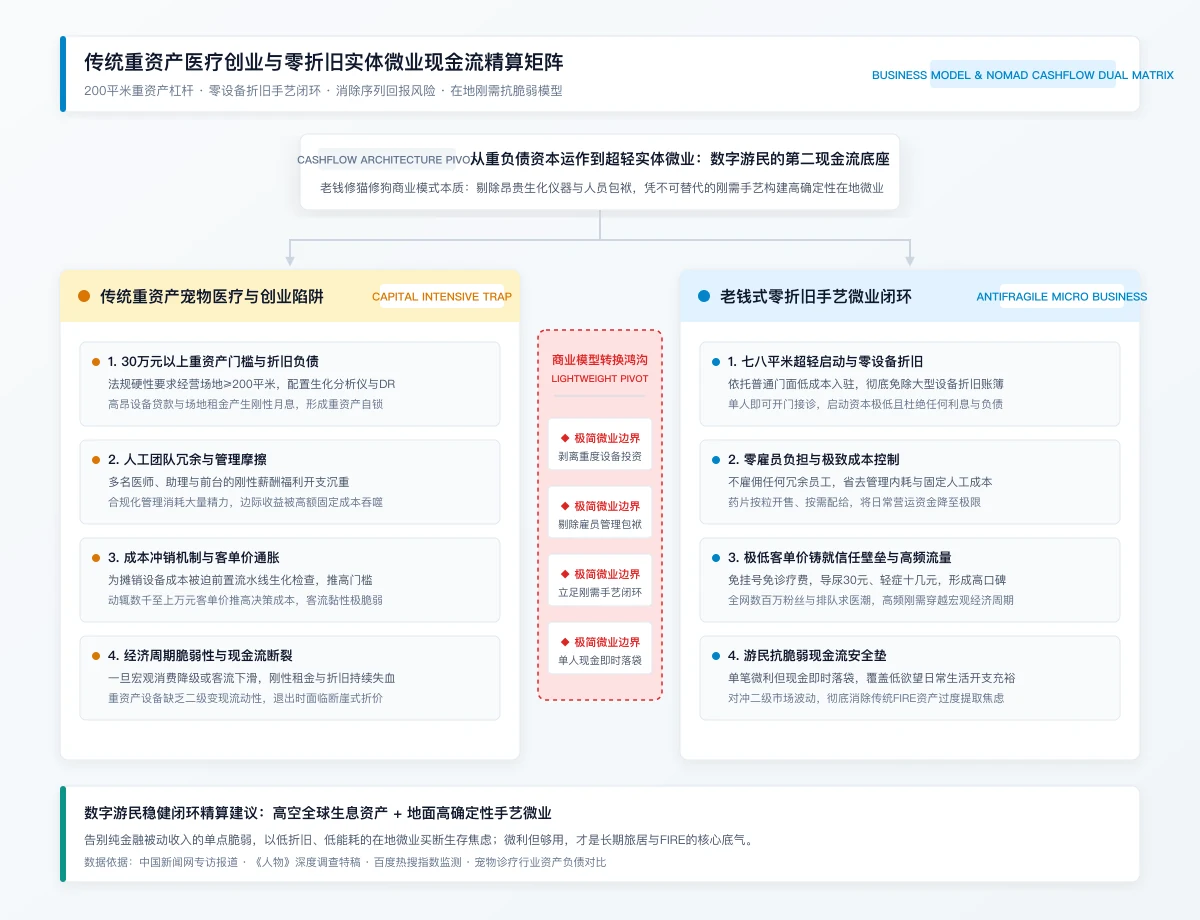
Figure 2: Balance sheet and cash flow comparison: Traditional heavy-asset business model versus Old Qian’s zero-depreciation physical micro-enterprise.
Low-Margin, High-Certainty: A Ground-Level Cash Flow Cushion
The core objective of location-independent living is not luxury consumption, but time sovereignty and operational autonomy.
As shown in our breakdown of the cost realities of Asian geo-arbitrage, a disciplined individual or couple living in secondary hubs across Southeast Asia or regional East Asia typically requires between $1,000 and $2,000 per month. Maintaining this lifestyle does not demand sudden windfall profits; it requires reliable, continuous baseline cash flow.
Old Qian’s operation aligns with this lean unit economics model across three dimensions:
- Zero Depreciation and Zero Payroll: Operating from an 80-square-foot space minimizes overhead. Running as a solo operator removes administrative drag, personnel liabilities, and fixed monthly burn rates.
- Unbundled Physical Competence: Whether diagnosing common animal ailments, repairing machinery, or delivering essential community services, practical real-world skills generate cycle-resistant demand immune to algorithmic changes or asset markdowns.
- Trust Accumulation via Low Entry Costs: Waiving consultation fees and selling individual medication units lowers client friction and creates strong local retention. Handling dozens of cases daily yields thin individual margins, but immediate, settled cash flow easily covers baseline personal expenses.
This model, however, cannot be naively scaled into a corporate chain. Its core strength lies in individual craftsmanship combined with tight cost control. Introducing external equity, expanding floor footprints, or adding middle management reintroduces the exact depreciation burdens and operational friction the model succeeds by avoiding. Qian’s own operational rule—“I will not accept clients who treat me like a miracle worker”—reflects a conscious effort to keep service demand within physical human capacity.
The Dual-Layer Defense Strategy: Paper Wealth Meets Physical Skill
Navigating volatile economic conditions requires sovereign operators to rebuild their defense architecture around a dual-layer balance sheet: combining high-altitude financial capital with ground-level practical execution.
- High-Altitude Tier: Low-cost, global broad-market indices serving as long-term capital preservation tools and inflation hedges.
- Ground-Level Tier: An asset-light, practical physical skill that can be activated locally to produce immediate, real-world cash flow.
During market expansions, portfolio appreciation builds long-term net worth. During market contractions or unexpected macro shocks, localized micro-enterprises generate immediate liquidity, covering baseline expenses without requiring forced sales of discounted equity positions.
The interest surrounding Old Qian’s practice reflects a practical shift away from hyper-financialized models. By avoiding heavy fixed assets and applying practical skill to everyday market demand, solo operators can establish reliable cash flow foundations built to withstand changing market cycles.
Related Research & Topics
The Phuket Fallacy: Air Quality Migration, Revenue Order Paw 161, and the Arbitrage Ledger of Thailand's Nomadic Class
Geographic Arbitrage at 31: The True Cost and Hidden Frictions of Ecuador's Dollarized Economy
Tello Mobile eSIM
SafetyWing Nomad Insurance
* Disclosure: This post contains affiliate links. If you make a purchase through these links, V-G Journal may earn a small commission at no additional cost to you. We only recommend services we independently evaluate and trust.
FIRE and Golf:自由旅居之路
专注于为追求 FIRE 与品质生活的人群提供特惠打球权益与候鸟微度假。不持一砖一瓦,运营品质生活。