The Maritime Insolvency of Lifetime Nomadism: Fuel Shocks, Contractual Illusions, and the Subordination of Unsecured Claims
When the residential cruise ship Villa Vie Odyssey defaulted in Cambodia, 200 retirees who liquidated their land holdings were given seven hours to evacuate. The disaster exposes the lethal legal gap between sovereign real estate ownership and unsecured maritime service contracts under runaway energy inflation.

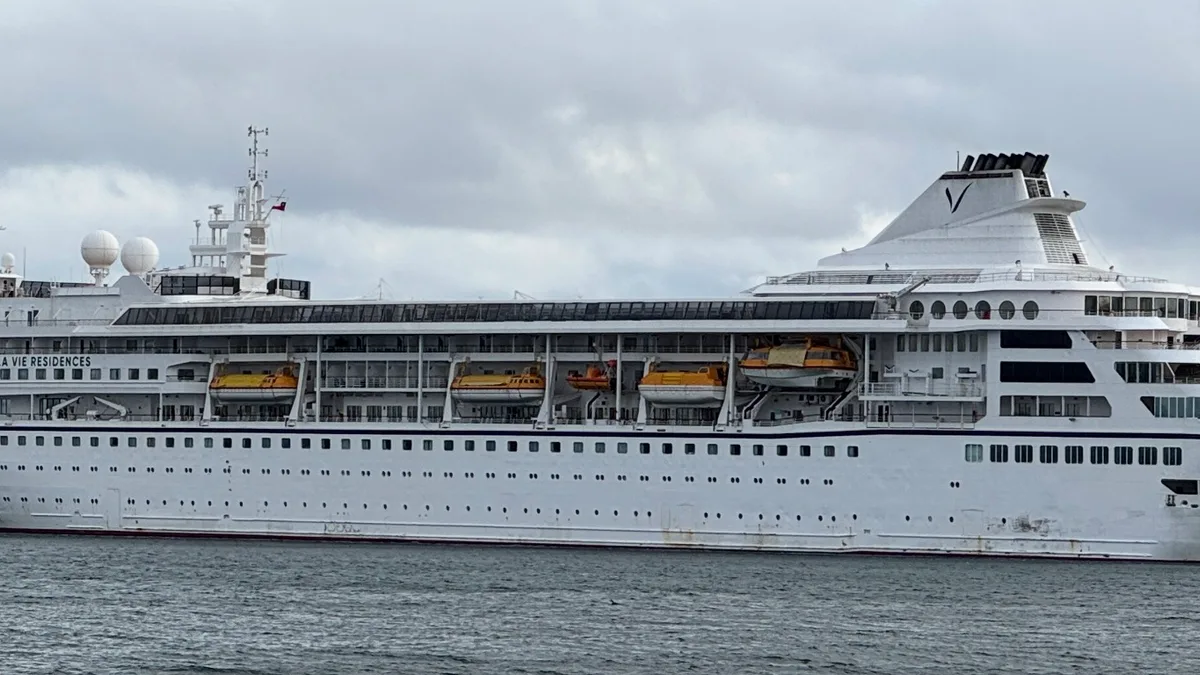
Figure 1: The Villa Vie Odyssey, built in 1993. Operations ground to a halt in Cambodia in October 2026 following a liquidity collapse triggered by soaring fuel costs, resulting in the forced eviction of over 200 permanent residents.
On October 26, 2026, while docked at the Sihanoukville Autonomous Port in Cambodia, the U.S.-backed residential cruise ship Villa Vie Odyssey issued a sudden notice of operational bankruptcy and vessel arrest. At 7:00 AM, management dispatched an urgent directive requiring all ~200 permanent residents and 156 crew members to pack their belongings and clear the ship by 2:00 PM that afternoon.
The immediate result: dozens of elderly retirees—many of whom had sold their land-based homes to buy $369,000 “lifetime ocean suites”—were left stranded on foreign soil.
The abrupt death of this self-styled floating retirement utopia was not an isolated force majeure event. Rather, it represents the inevitable structural clearing of unsecured consumer claims under admiralty law when macro energy inflation punctures a light-asset, highly leveraged operating model.
The Myth of Permanent Drift: A Seven-Hour Evacuation
For retirees pursuing global mobility, the sales pitch crafted by Villa Vie Residences was potent: pay a lump-sum buyout fee to turn a cruise ship into a permanent residence, circumnavigating 147 countries every three and a half years while jettisoning property taxes, home maintenance, and municipal friction.
Independent columnist Randy Cassingham and his wife Kit were emblematic of this cohort. They liquidated their real estate in Colorado, sold their vehicles, and surrendered nearly all physical possessions to pay $369,000 upfront for a lifetime lease on an entry-level cabin.
That romantic vision collapsed over the vessel’s public address system at sunrise on October 26. The captain and management announced that due to complete cash depletion, the ship was entering immediate technical lay-up and terminating all customer agreements. Residents had under seven hours to pack up what remained of their lives.
The operator offered minimal relief: a one-way shuttle bus into central Sihanoukville, where standing room was scarce. The company accepted no financial responsibility for subsequent hotel accommodation, emergency medical care, return flights to North America, or visa extension fees, leaving a vulnerable demographic isolated at a Southeast Asian commercial port.
| Dispute Vector | Promotional Marketing Narrative | On-Ground Reality (Cambodia Audit) |
|---|---|---|
| Tenure & Asset Title | “Endless Horizon” lifetime residential rights | Contractually capped by the physical hull life (1993 build); zero real property title |
| Sunk Capital Commitment | $369,000 lump-sum cabin buyout | Complete asset liquidation to enter; evicted in 7 hours with zero recovery prospect |
| Default Relief Protocol | Full concierge support & global security guarantees | One-way bus transfer into town; all international accommodation and transit self-funded |
| Energy & Voyage Security | Fully covered operational overhead, fuel, and port fees | Cash reserves exhausted in Singapore and Vietnam; residents asked to pool fuel funds |
| Capital & Corporate Control | Founder-managed, claiming robust treasury reserves | Senior mortgage lender exercised maritime lien, seizing control of the vessel for judicial sale |
Energy Inflation vs. Light-Asset Models: The 4x Fuel Spike
Company leadership framed the collapse as an external shock. Founder and Executive Chairman Mikael Petterson acknowledged to reporters that geopolitical volatility in the Middle East drove global marine fuel prices beyond sustainable thresholds, destroying the company’s operating ledger.
Under the original underwriting model, the monthly allocated cost for Very Low Sulfur Fuel Oil (VLSFO) was projected at roughly $1,800 per cabin. As maritime supply chains fractured, that figure escalated in Asian waters to between $6,000 and $8,000 per month—a three- to fourfold increase over baseline projections. For an operator carrying thin equity reserves and relying entirely on unearned revenue and modest monthly maintenance dues, multi-million-dollar monthly burn rates induced immediate liquidity shock.
Signs of distress had been visible long before Sihanoukville. Built in 1993, the vessel was delayed for four months at a Belfast shipyard in May 2024 due to rudder repairs and maritime safety recertification. By mid-2026, cash reserves were routinely depleted during port calls in Singapore and Vietnam. The operator went so far as to ask permanent residents for voluntary cash contributions to settle fuel bills, while crew wage arrears, diminished catering standards, and intermittent satellite connectivity became routine. When a final attempt at emergency equity financing failed in late October 2026, operational collapse became total.
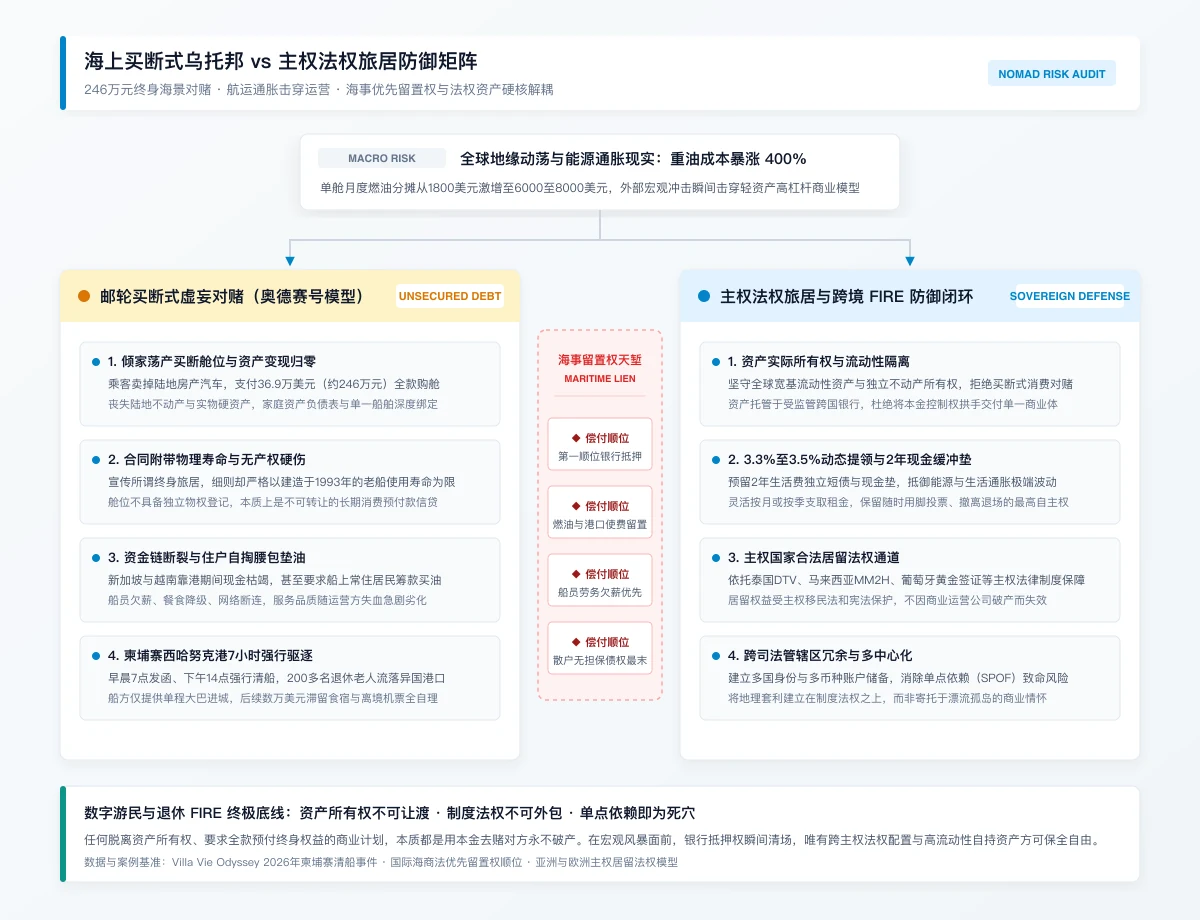
Figure 2: Structural comparison between unsecured residential cruise contracts and sovereign legal asset frameworks. Without underlying property rights, consumer capital is wiped out when senior maritime liens take control.
Admiralty Law Seniority: The Liquidation of Unsecured Claims
The primary vulnerability for affected passengers stemmed from a legal misconception: treating an unsecured maritime service agreement as equivalent to land-based fee-simple real estate ownership.
Under international admiralty law and cross-border insolvency frameworks, a ocean-going vessel is a single property asset registered in its flag state jurisdiction. Whatever marketed branding surrounded the $369,000 fee, the underlying document was not a property deed. It was an unsecured, term-limited consumer service contract subject to the physical survivability of the vessel and the solvency of its owner. Passengers held neither fractional ownership in the vessel nor a registered maritime mortgage.
When an ocean carrier defaults, the statutory waterfall under international maritime liens operates with absolute priority:
- First Tier: Special Maritime Liens & Custodial Costs. Port dues, pilotage fees, salvage claims, and expenses incurred in custodia legis (court-ordered vessel custody);
- Second Tier: Crew Wages & Personal Injury Claims. Statutory priority granted to unpaid wages and statutory protections for the ship’s crew;
- Third Tier: Preferred Ship Mortgages (Senior Lenders). Institutional lenders holding registered mortgages against the vessel for original procurement or retrofitting capital;
- Bottom Tier: General Unsecured Commercial Claims. Unpaid trade vendors, third-party suppliers, and retail passengers holding prepaid long-term service contracts.
When operational shutdown was announced, senior mortgage lenders exercised their rights to seize control of the Odyssey, initiating steps to tow the vessel to Singapore for judicial sale. Once port fees, crew back-pay, and primary mortgage balances are satisfied from the auction proceeds, the net asset value available to general unsecured creditors will be zero. The residents lost both their shelter and their legal recourse simultaneously.
This case illustrates the necessity of analyzing the legal architecture underpinning any residency strategy. Off-the-shelf commercial packages cannot replace sovereign protections. As examined in our analysis of Asia Digital Nomad Visas: Cost Comparison & Survival Ledger, official state-issued residence permits (such as Thailand’s DTV or Malaysia’s long-term visas) rest on statutory immigration frameworks with transparent legal remedies. Commercial floating utopias, by contrast, operate in international spaces outside land-based sovereign backstops.
Building Capital Defense Lines for Nomads and FIRE Practitioners
The default of the Villa Vie Odyssey offers clear structural lessons for those pursuing Location Independence and FIRE (Financial Independence, Retire Early).
Traditional retirement planning relies heavily on primary real estate as a balance sheet anchor. When transitioning to global mobility, however, some individuals overcorrect: liquidating all tangible property to purchase a single, bundled, commercial service agreement promising lifetime room and board. Financially, this converts an independent balance sheet into an illiquid, unsecured loan to a single private corporate counterparty.
As detailed in our framework on The Marginal Utility Inflection Point of Financial Freedom, asset control and capital preservation become significantly more critical than theoretical yields past a certain age threshold. The failure of lifetime cruise models highlights three imperative risk controls:
- Do Not Yield Asset Title to Commercial Counterparties: Long-term occupancy rights do not constitute property ownership. Any model requiring large upfront capital outlays to be amortized over decades of service delivery forces the individual to underwrite the counterparty’s long-term credit risk with uncollateralized capital;
- Maintain Independent Liquidity Cushions: As emphasized in our research on Household Wealth Structure and Liquidity Defense, macro inflation shocks transmit rapidly into micro enterprise economics. High-net-worth mobile individuals must retain self-directed, highly liquid reserves (broad-market indexes, short-duration sovereign debt, multi-jurisdictional cash) and settle operational living expenses on a monthly or quarterly basis;
- Eliminate Single Points of Failure (SPOF): Mobility relies on optionality—the freedom to exit a jurisdiction or provider cleanly. Committing one’s entire net worth to a single vessel, facility, or closed corporate ecosystem surrenders that mobility.
The abandonment of the Odyssey in Sihanoukville illustrates the limits of commercial guarantees under financial distress. In volatile macroeconomic cycles, private contracts offer little protection against the statutory realities of bankruptcy law. Sovereign legal rights and liquid, self-directed assets remain the only reliable anchors against systemic risk.
Related Research & Topics
Tello Mobile eSIM
SafetyWing Nomad Insurance
* Disclosure: This post contains affiliate links. If you make a purchase through these links, V-G Journal may earn a small commission at no additional cost to you. We only recommend services we independently evaluate and trust.
FIRE and Golf:自由旅居之路
专注于为追求 FIRE 与品质生活的人群提供特惠打球权益与候鸟微度假。不持一砖一瓦,运营品质生活。