Communication Compartmentalization: The Strategic Efficacy and Jurisdictional Limits of US-Based Fraud Defense
An analytical breakdown of using North American telecommunications as a defensive layer against fraud, exploring the technical arbitrage of cross-border protocols and the actual deterrent power of US federal agencies.

Executive Summary: Within the circles of digital nomads, offshore investors, and cross-border developers, the use of North American phone numbers—whether physical SIMs like Ultra Mobile PayGo and Tello or virtual VoIP services like Google Voice—is frequently cited as a “soft” defense against telecommunications fraud. In the practice of Red-Blue teaming, this logic holds ground, but it relies on the arbitrage of cross-border settlement rates, physical compartmentalization of digital identities, and specific authentication protocols rather than an absolute security moat.
When viewed through the lens of actual criminal supply chains and US federal jurisdictional realities, two facts emerge: this setup significantly raises the marginal cost for automated domestic attacks but offers no immunity against localized North American threats. Furthermore, once funds are siphoned, the US federal relief channels exhibit a “systemic asymmetry”—lethal toward domestic infrastructure, yet largely impotent against offshore actors.
I. Physical Compartmentalization: The Triple Logic of North American Number Defense
The core rationale for using a US-based number to mitigate fraud is not inherent legal immunity. Rather, it leverages the physical and commercial barriers of transnational communication to achieve physical information compartmentalization.
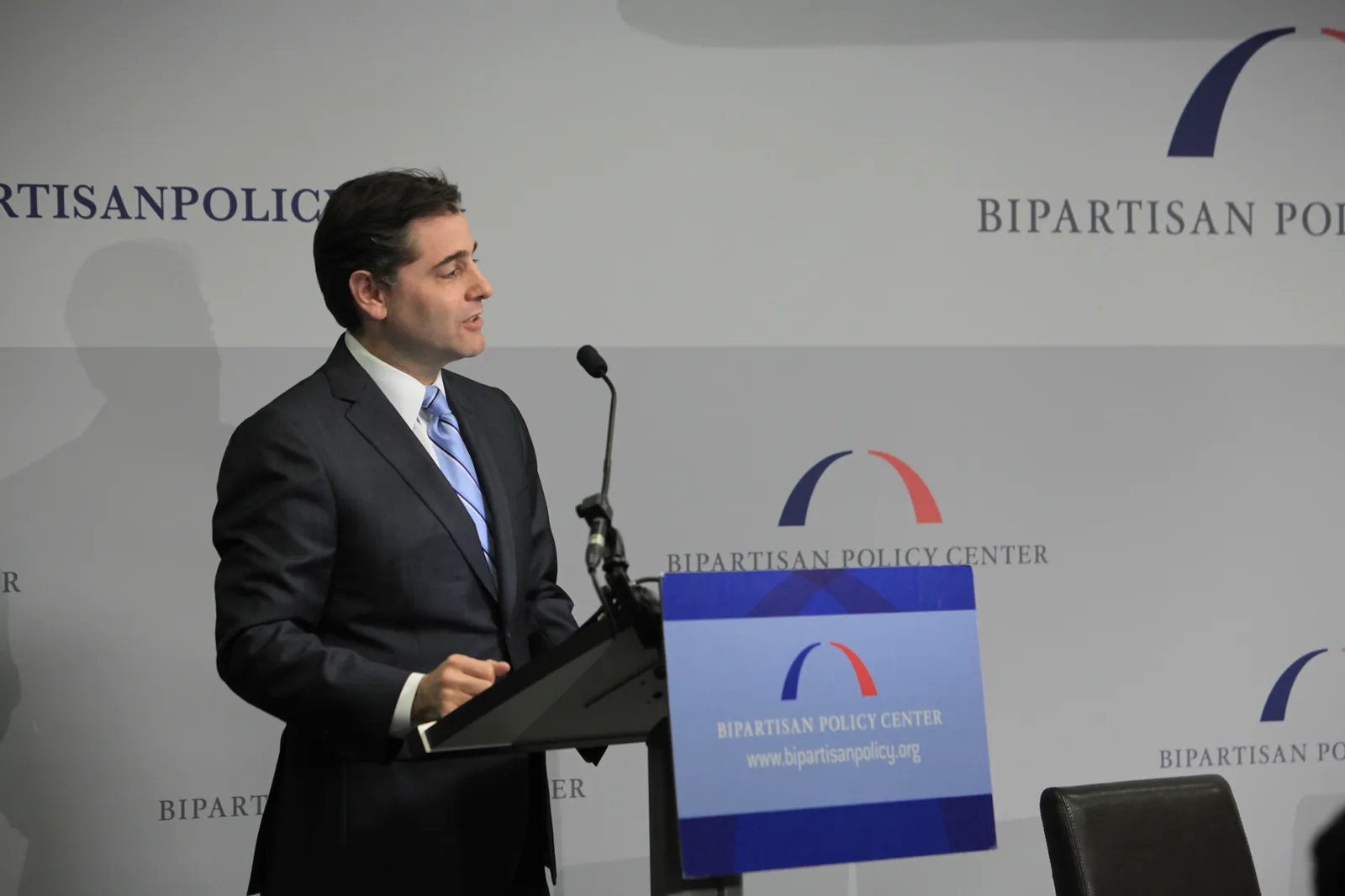
Figure 1: The Federal Communications Commission (FCC) in a public session on cybersecurity. The FCC has mandated the deployment of STIR/SHAKEN cryptographic authentication protocols to combat illegal spoofing at the gateway level.
1. Inverting the Marginal Cost of Mass-Dialing
Domestic fraud operations rely heavily on automated outbound systems (AI dialers and call center seats). These systems are optimized for local (+86) routing where bulk rates are negligible.
When an automated bot encounters a +1 (North American) number, most grey-market routes lack the requisite international permissions. Even if the relay supports international dialing, the high cross-border settlement fees increase the cost per “cast” by orders of magnitude. Fraudulent gateways typically filter out non-local targets in their primary rule set. This cost delta creates a natural, market-driven defensive barrier.
2. Severing the Link Between Phone Numbers and Physical Identity
Domestic phone numbers are tied to rigid “Real-Name” registration systems. In the arsenal of cyber-criminals, a phone number is a master key used to pivot through leaked databases (delivery logs, food apps, recruitment sites) to unmask a target’s real name, ID number, and home address. This allows for highly personalized “social engineering” scripts.
Using an offshore number—unlinked to one’s domestic identity—to register for non-core platforms and forums effectively severs the data chain. Even if the number is leaked in a credential stuffing attack, the attacker gains only an isolated communication node, failing to construct a precise psychological profile of the victim.
3. Protocol-Level Authentication (STIR/SHAKEN) and Edge Silencing
The FCC has mandated that major US carriers deploy the STIR/SHAKEN framework. Based on Public Key Infrastructure (PKI), this framework uses digital signatures to verify the authenticity of the calling number. Calls from spoofing software that fail this authentication are flagged as “Spam Likely” or blocked at the gateway.
When paired with native OS features like “Silence Unknown Callers,” all non-contact calls are routed directly to Voicemail. The high-pressure, immediate emotional manipulation favored by scammers fails against the asynchronous nature of a recorded message, providing the user with critical cognitive “buffer time.”
II. Practical Boundaries: The Cost of Defensive Tooling
Treating an offshore number as a weapon of defense requires a sober assessment of its limitations. Attempting to achieve total “insulation” through a single number inevitably hits institutional and technical walls.
1. Compatibility Fault Lines in Domestic Ecosystems
Most major domestic financial institutions (banks, brokerages) and core internet platforms (WeChat, Alipay) apply strict risk-control audits to foreign numbers. Many platforms implement blanket bans on VoIP ranges (like Google Voice), refusing to dispatch SMS verification codes. An offshore number can serve as an “isolation chamber” for peripheral accounts, but it cannot realistically manage the core communication needs of daily life.
2. The Shift, Not the Cessation, of Attack Vectors
Acquiring a US number mitigates low-level domestic fraud but places the user within the sights of sophisticated North American and global criminal syndicates:
- “Wrong Number” Pig Butchering: Baiting the user with a “misdirected” text or business inquiry to build rapport before pivoting to fraudulent crypto investments.
- Authority Impersonation: Spoofing the IRS claiming tax evasion, or the Chinese Consulate claiming the user is involved in a criminal case.
- Logistics Fraud: Impersonating DHL or FedEx, claiming a package contains contraband to initiate a “cooperative investigation.”
The form of the fraud changes, but the attack persists, evolving into a high-dimensional psychological game targeting individuals with specific offshore assets.
III. The Landscape of US Federal Complaint and Recovery Channels
When a US number, bank account, or cross-border transaction is compromised, the US federal government provides a relief matrix composed of civil regulation, infrastructure governance, and criminal justice:

Figure 2: The Federal Trade Commission (FTC) headquarters. The FTC aggregates civil fraud leads into the Consumer Sentinel database to launch massive civil litigation against non-compliant entities.
1. FTC (Federal Trade Commission)
- Portal:
ReportFraud.ftc.govandDoNotCall.gov. - Mandate: The primary civil consumer protection agency. It records corporate fraud, imposter scams, and illegal telemarketing.
2. FCC (Federal Communications Commission)
- Portal:
consumercomplaints.fcc.gov. - Mandate: The technical regulator of the telecom industry. It handles complaints regarding illegal robocalls, Caller ID spoofing, and carrier compliance failures.
3. FBI IC3 (Internet Crime Complaint Center)
- Portal:
ic3.gov. - Mandate: The FBI’s hub for cybercrime and fund tracking. It specializes in “Pig Butchering,” Business Email Compromise (BEC), and large-scale crypto laundering.
- Core Unit: The Recovery Asset Team (RAT), which specializes in the emergency interception of international wire transfers in progress.
4. CFPB (Consumer Financial Protection Bureau)
- Portal:
consumerfinance.gov/complaint. - Mandate: Administrative oversight of US financial institutions. When a victim disputes an unauthorized transaction (under the Electronic Fund Transfer Act / Regulation E) and the bank fails to investigate or shifts blame, the CFPB acts as a powerful administrative lever.
IV. Evaluating Real-World Efficacy and Deterrence
To evaluate the US anti-fraud system, one must distinguish between macro-infrastructure governance and individual asset recovery. Victims often mistakenly believe that filing a federal form triggers an immediate investigation; this misconception is costly.
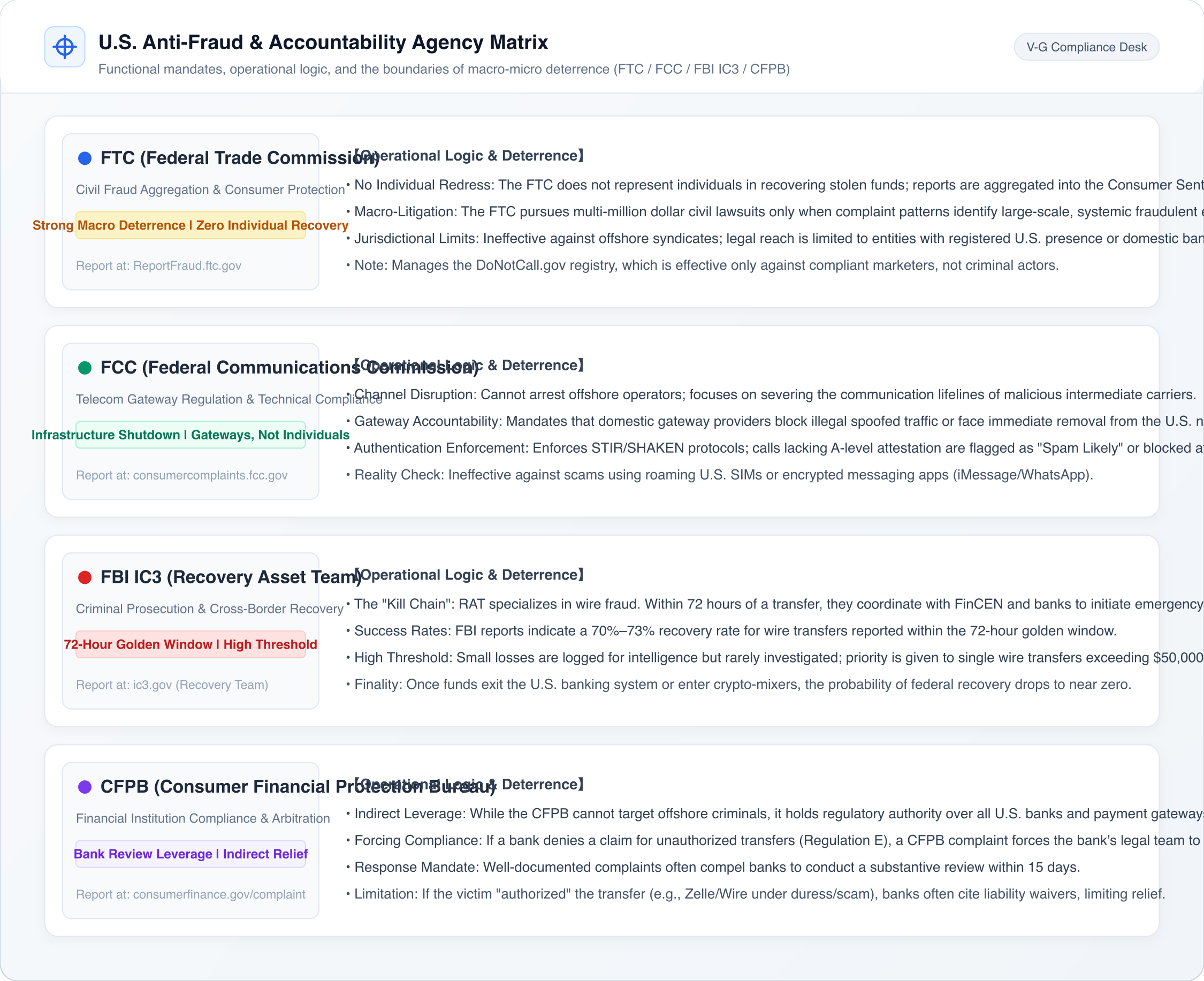
Figure 3: Efficacy matrix of the four major US agencies. There are distinct boundaries between macro-regulation, criminal freezing, and individual recourse.
| Agency / Channel | Core Function | Real-World Efficacy & Deterrence Rating |
|---|---|---|
| FTC | Civil Fraud Aggregation | Zero individual recovery; High macro deterrence (Domestic only). The FTC explicitly states it does not pursue individual losses. Complaints enter the Consumer Sentinel database for use by thousands of law enforcement agencies. Only when complaints reach a critical mass against a specific entity does the FTC launch multi-million dollar lawsuits. Zero deterrence against offshore actors. |
| FCC | Telecom Gateway Oversight | The “Infrastructure Death Penalty.” The FCC cannot arrest an offshore caller, but it can kill the intermediary. It issues orders to US-based gateway providers to block illegal traffic. Failure to comply results in the provider being delisted from the central industry registry—a corporate death sentence. |
| FBI IC3 (RAT) | Criminal Strike & Asset Recovery | High intervention in the 72-hour window; High threshold for entry. For petty fraud (hundreds or low thousands), the IC3 only archives intelligence. However, for wire transfers over $50,000 occurring within 72 hours, the RAT can initiate a “Kill Chain” via FinCEN. FBI data shows a success rate of 70%–73% within this window. Once funds hit offshore “boutique” banks or mixers, recovery probability drops to zero. |
| CFPB | Financial Compliance & Arbitration | Leverage for substantive review against US banks. The CFPB doesn’t chase scammers; it polices banks. If a victim’s account is drained via unauthorized access and the bank refuses to help, a CFPB complaint usually forces the bank’s compliance department to conduct a substantive review within 15 days. However, in “authorized” scams (where the victim is manipulated into sending the wire), banks can often successfully invoke liability waivers. |
V. The Final Line of Defense: From Tool-Dependency to Asset Stratification
Analyzing the underlying logic of US telecommunications and federal regulation leads to a clear set of micro-level self-defense principles:
1. Criminal Deterrence Stops at the “Jurisdictional Dead Zone”
Syndicates operating out of Southeast Asian compounds, Dubai, or West Africa are physically and legally beyond the reach of routine US law enforcement. Unless the case involves staggering sums that trigger DOJ long-arm jurisdiction and Interpol red notices, the average “operator” is indifferent to US civil or telecom complaints.
2. The Real Power Lies in “Infrastructure Accountability”
The “nuclear deterrence” of the US system is built on collective liability for the pipeline:
- If a US telecom relay permits spoofed calls to earn a fraction of a cent in fees, an FCC delisting order can kill their network overnight.
- If a US bank systematically fails at Anti-Money Laundering (AML) or Know Your Customer (KYC) protocols, regulators levy fines in the hundreds of millions.
This system forces carriers and banks to build defenses, but it is not a 24/7 insurance policy for individual negligence.
3. The Physical Laws of Emergency Mitigation
Using an offshore number is an exercise in “increasing the attacker’s initial filtering cost.” It uses cross-border tariffs to keep low-cost automated attacks at bay. It is a shield, not a suit of invincibility.
If fraud occurs and funds are moved, the most effective relief is never aimless form-filling on regulatory sites. It is initiating an emergency intercept through the fraud department of the originating bank in coordination with the FBI IC3 within the 24-to-72-hour window. Once that physical window closes—once the capital is offshore or washed through a chain-link mixer—a complaint form becomes nothing more than a data point in a macro-statistical report.
Related Research & Topics
Binance Security Breach and the $6.3B Liquidity Shock: Anatomy of an Exchange Crisis and Market Evolution
The Mirage of Japan’s Downturn Wealth: Structural Misalignments and the Reality of Balance Sheet Contraction
Tello Mobile eSIM
SafetyWing Nomad Insurance
* Disclosure: This post contains affiliate links. If you make a purchase through these links, V-G Journal may earn a small commission at no additional cost to you. We only recommend services we independently evaluate and trust.
FIRE and Golf:自由旅居之路
专注于为追求 FIRE 与品质生活的人群提供特惠打球权益与候鸟微度假。不持一砖一瓦,运营品质生活。