The Anatomy of 'Distant-Water Fishing': Maritime Sovereignty versus Predatory Cross-Provincial Policing
An institutional deconstruction of the rhetorical collision between physical maritime enforcement in the Taiwan Strait and China's domestic 'offshore fishing'—the weaponization of criminal justice by cash-strapped municipalities targeting private enterprise.

Executive Thesis: In contemporary Chinese economic and legal discourse, the phrase “distant-water fishing” (yuanyang bulao) occupies two fundamentally irreconcilable spheres. On one side lies the physical theater of the Taiwan Strait, where Taiwan Coast Guard vessels intercept, board, and detain mainland trawlers and sand dredgers. On the other lies a bitter domestic metaphor: the predatory practice of cash-strapped inland public security organs crossing provincial borders to freeze corporate bank accounts, detain private entrepreneurs, and pad local non-tax revenues.
Moving past the linguistic overlap reveals two entirely different institutional realities. The former is a tangible geopolitical contest over maritime boundaries, administrative safety, and jurisdictional friction. The latter is an institutional pathology—the mutation of criminal justice into an instrument of local fiscal extraction. Deconstructing this rhetorical conflation is not merely an exercise in legal taxonomy; it is an indispensable lens for understanding China’s internal property rights frontier, local fiscal deficits, and the battle for a unified national market.
1. Conceptual Origins: Administrative Boundary Control versus Judicial Rent-Seeking
In online discourse, the interception of trawlers at sea and the cross-provincial arrest of entrepreneurs are occasionally conflated under the catch-all moniker of “enforcement raids.” This conceptual pairing is an artifact of rhetoric rather than institutional logic.
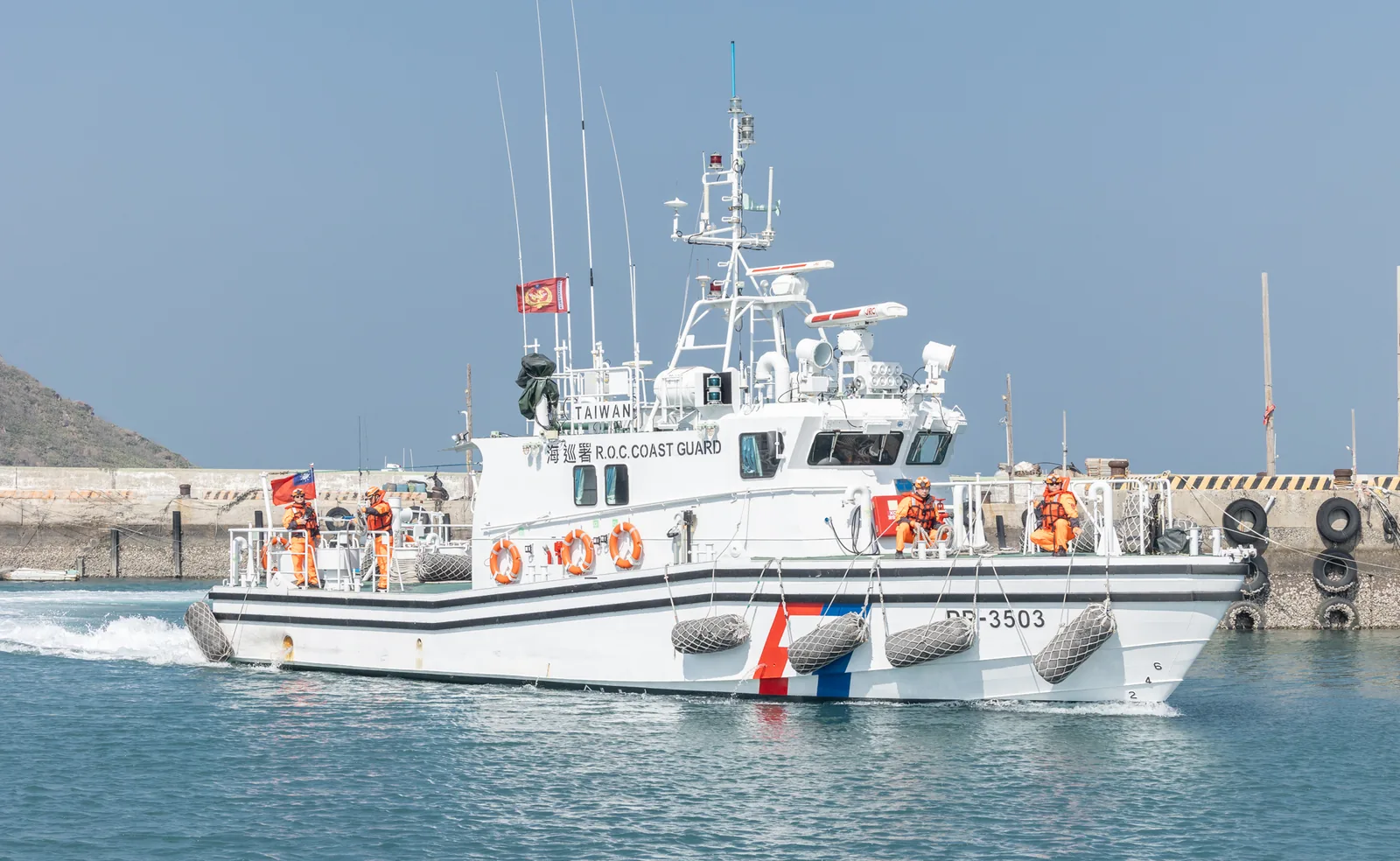
Figure 1: A Taiwan Coast Guard Administration patrol vessel operating in littoral waters—an exercise in administrative maritime border control and territorial security.
Examined through legal mandates and spatial domains, an unbridgeable divide separates the two phenomena:
1. The Physical Reality of Taiwan Coast Guard Operations: Public Safety and Maritime Administration
Maritime patrols conducted by Taiwan’s Coast Guard Administration (CGA) represent administrative law enforcement and security management within a tangible body of water:
- Jurisdictional Perimeter: Patrols are executed within unilaterally designated “restricted” and “prohibited” waters surrounding Kinmen, Matsu, Penghu, and the main island of Taiwan.
- Statutory Grounding: The Taiwanese authorities act pursuant to their Act Governing Relations between the People of the Taiwan Area and the Mainland Area and domestic fisheries legislation. Beijing explicitly rejects these unilateral demarcations, maintaining that both sides belong to one China and that traditional fishing grounds have been shared for centuries.
- Core Friction: A geopolitical contest fueled by overlapping claims and an absence of cross-strait institutional trust. The operational friction centers on administrative control: who exercises maritime policing authority, and under what legal architecture? It operates entirely within the realm of public maritime administrative order.
2. The Metaphor of Cross-Provincial “Distant-Water Fishing”: The Weaponization of Justice
Within mainland borders, “distant-water fishing” has become the legal and commercial community’s satirical moniker for predatory, extra-jurisdictional criminal policing driven by fiscal incentives:
- Operational Blueprint: Law enforcement from economically stressed interior provinces cross regional boundaries into prosperous coastal hubs—such as Guangdong, Zhejiang, and Jiangsu—to target private enterprises, seize assets, and detain corporate leadership.
- Jurisdictional Arbitrage: Exploiting elastic clauses in the Criminal Procedure Law governing cyber-crimes (e.g., claiming jurisdiction based on the location of a single victim or a decentralized server), interior agencies manufacture tenuous legal nexuses where legitimate territorial ties do not exist.
- Core Friction: The deployment of coercive criminal measures to arbitrate commercial disputes and bypass territorial jurisdiction. The core objective is asset expropriation: manufacturing jurisdiction to freeze and seize prime commercial capital. It marks an institutional breakdown, wherein the sovereign police power of the state is subcontracted for local balance-sheet repair.
| Analytical Dimension | Taiwan Coast Guard Enforcement | Domestic Predatory “Offshore Raids” |
|---|---|---|
| Legal Nature | Maritime administration, maritime policing, safety control | Distortion of criminal justice; predatory extra-jurisdictional rent-seeking |
| Operational Theater | Physical littoral waters and contiguous maritime zones | Corporate headquarters, multi-tier supply chains, digital banking systems |
| Source of Authority | Maritime administrative law and unilateral maritime claims | State criminal justice apparatus, localized and instrumentalized |
| Core Dispute | Administrative demarcation and sovereignty within overlapping waters | Evasion of territorial limits; weaponized procedural hooks to capture liquid assets |
2. Institutional Engines: Fiscal Ledger Separation versus Budgetary Hunger
The divergent evolutionary paths of these practices stem from their underlying financial mechanics: how their operational budgets are funded, and where the captured capital flows.
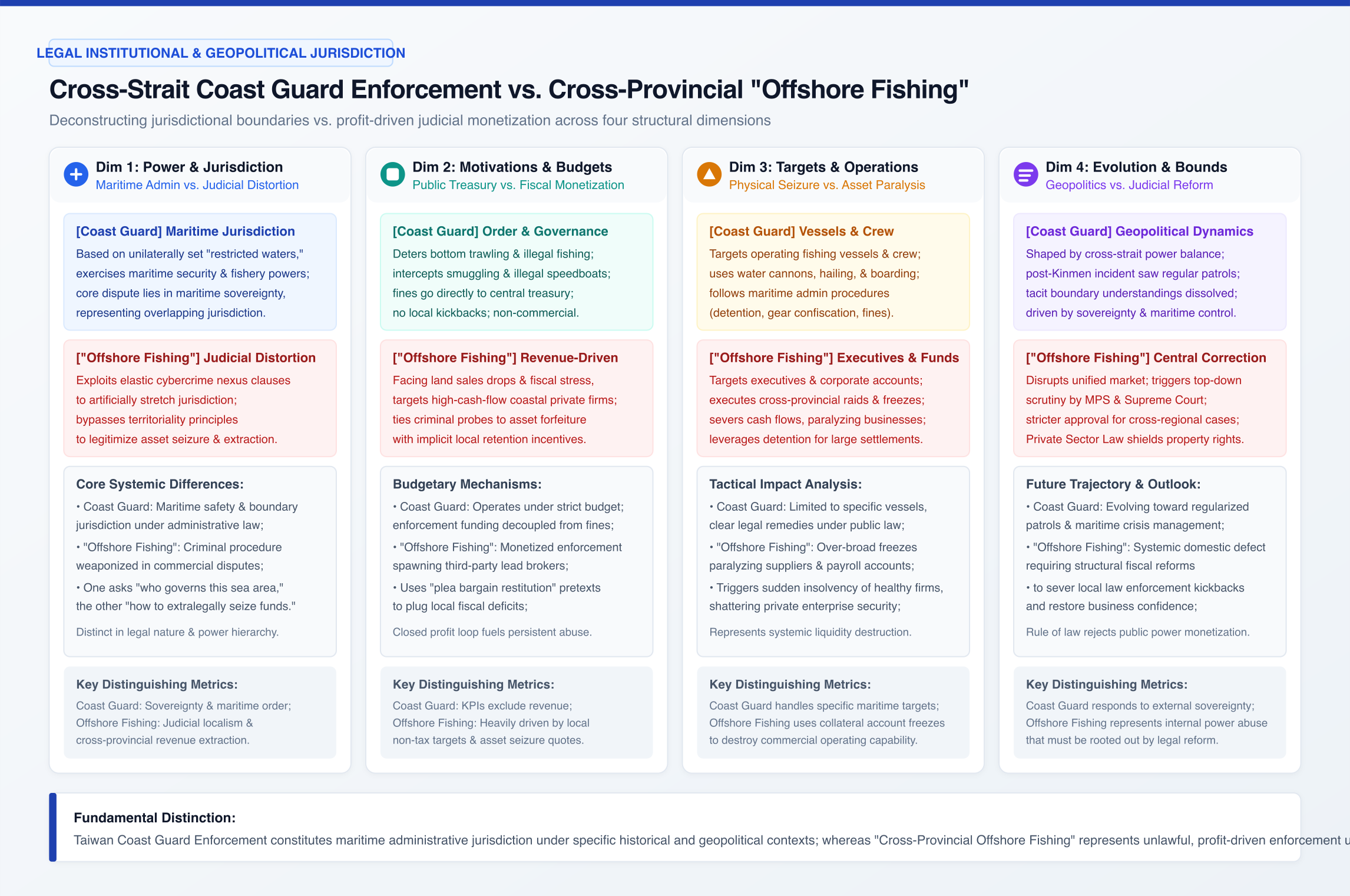
Figure 2: Comparative institutional matrix examining authority, accounting mechanics, operational chains, and systemic resolution.
1. The Maritime Ledger: Consolidated Treasuries and Fixed Appropriations
Coast Guard maritime operations are governed by fisheries management, public order, and cross-strait political posturing:
- Operational Drivers: Enforcing bans on bottom-trawling and electro-fishing, halting unregulated sea-sand extraction, intercepting maritime contraband, and policing unflagged, unregistered, and unlicensed vessels that pose navigational hazards.
- The Disconnected Ledger: CGA units operate on centralized, line-item government appropriations. Administrative fines levied against impounded vessels flow directly into the central public treasury. Local stations and individual officers receive no bounty, commission, or discretionary funding tied to enforcement tallies. Detaining an additional vessel yields zero fiscal upside for the patrol unit.
2. The Mechanics of Domestic Extraction: Non-Tax Revenue and Departmental Kickbacks
The proliferation of cross-provincial police raids is rooted in structural local government deficits. As explored in our analysis of China’s Shadow Debt Resolution and Structural Strains, the collapse of the land-finance model and mounting debt-repayment pressures have hollowed out primary-level municipal budgets in inland regions:
- The Non-Tax Safety Valve: Non-tax receipts—specifically asset confiscations and criminal fines—have been quietly leveraged to plug budgetary deficits. Enforcement agencies routinely target coastal private firms operating in high-cash-flow, regulatory-grey spaces, including e-commerce platforms, software services, gaming, micro-lending, and web3 technologies.
- Weaponized Procedures: Utilizing elastic catch-all charges such as “opening a casino,” “illegal business operations,” or “pyramid scheme operations,” inland agencies launch extra-provincial investigations. Confiscated corporate balances are swept directly into the seizing municipality’s coffers. In many locales, implicit incentives persist: informal kickbacks, bonus pools, and direct departmental subsidies calculated from seized funds. The result is an extractive industry where corporate balances are harvested to service local sovereign debt.
3. Operational Mechanics: Physical Interdiction versus Corporate Financial Thrombosis
At the micro-operational level, the objects of enforcement, tactical escalations, and second-order economic consequences diverge completely.
1. Maritime Interception: Physical Vessels and Direct Administrative Penalties
Coast Guard operations engage with visible, tangible maritime hardware and human crews:
- The Target: Specific vessels operating without authorization—trawlers, dredgers, and motorboats—and their onboard crew.
- The Tactical Escalation: Auditory warnings ➔ Water cannon deterrence ➔ High-speed interception ➔ Physical boarding and impoundment.
- Legal Remedies: Strictly bound by administrative maritime protocols. Sanctions encompass the confiscation of illegal netting, fixed administrative fines, and temporal impoundment. Once proceedings conclude, crews are repatriated and vessels are returned. The systemic damage is localized entirely to the operational unit; it does not trigger cascading systemic failure across an interconnected enterprise.
2. Predatory Corporate Raids: Financial Thrombosis and Supply Chain Hostage-Taking
In sharp contrast, cross-provincial judicial raids decapitate the corporate legal entity, paralyze executive leadership, and freeze the target’s financial infrastructure:
- The Target: The corporate entity, beneficial owners, executive directors, and critical technical personnel, cascading outward to include supply-chain partners.
- The Tactical Escalation: Coordinated dawn raids to detain corporate leadership, combined with indiscriminate asset freezes. Enforcement agencies target not only the specific operational accounts under review, but simultaneously freeze primary settlement accounts, payroll reserves, tax provision accounts, and vendor escrow accounts across multi-tiered banking networks.
- Coerced Settlement: By inducing sudden, absolute corporate liquidity arrest, normally solvent firms are forced into operational shutdown, immediate debt defaults, and counterparty litigation. Investigators then utilize criminal detention and prolonged pre-trial custody as leverage, coercing founders or distressed families into surrendering tens or hundreds of millions of yuan under the guise of “voluntary restitution” (tuidai) in exchange for bail or non-prosecution agreements. The structural trauma inflicted upon productive enterprise is catastrophic and permanent.
4. Systemic Evolution: Geopolitical Posturing versus Structural Legal Correction
The future trajectories of these phenomena obey completely different evolutionary drivers: maritime enforcement tracks geopolitical balances of power, while predatory policing is governed by domestic structural reforms.
1. Cross-Strait Maritime Order: The Shift in De Facto Control
The balance of power within the Taiwan Strait responds to shifts in relative operational strength:
- The Breakdown of Tacit Demarcations: The February 14, 2024 Kinmen boat collision marked a watershed moment. Following the incident, the mainland Coast Guard established regularized tactical patrols within the Xiamen-Kinmen maritime space, effectively dismantling Taiwan’s unilateral claim to “restricted” and “prohibited” boundaries.
- Structural Recalibration: From unilateral administrative control by Taiwan’s CGA to regularized presence and boarding checks by mainland maritime law enforcement, the operational landscape is driven by bilateral deterrence and strategic maritime capability.
2. Combating Predatory Enforcement: The Bedrock of Market Integration
Cross-provincial corporate raiding represents an existential threat to domestic capital formation and market integration. As outlined in The Structural Distortions of Chinese Macroeconomic Transmission, private investment requires stable property rights and predictable boundaries for state power:
- Central Remediation: Beijing has recognized the corrosive effect of revenue-driven policing on private enterprise and entrepreneurial confidence. The National Development and Reform Commission (NDRC), the Supreme People’s Court, the Supreme People’s Procuratorate, and the Ministry of Public Security have issued escalating directives prohibiting the deployment of criminal measures to settle economic disagreements.
- The Emergence of Four Institutional Firewalls:
- Strict Jurisdictional Approvals: Hardening cross-regional enforcement protocols by stripping primary-level public security units of the power to unilaterally execute cross-provincial seizures without higher-tier sign-off.
- Bifurcated Treasury Ledgers: Institutionalizing the absolute separation of fine revenues from municipal expenditure—funneling all confiscated proceeds into centralized national accounts to eliminate departmental profit-sharing.
- Asset-Freeze Restraints: Banning excessive, blanket freezes on corporate accounts to ensure that operational liquidity, payroll funds, and basic enterprise operations remain insulated from procedural inquiries.
- The Private Economy Promotion Law: Enshrining statutory protections for private enterprise property and executive liberty, establishing clear avenues for civil redress against predatory regulatory overreach.
5. Conclusion: Dispelling the Metaphor, Defending Property Rights
Colloquial language often groups both dynamics under the single umbrella of “offshore fishing,” but the similarity ends at the metaphor. Beneath the rhetoric lies a vital governance distinction:
The Fundamental Institutional Distinction
- Taiwan Coast Guard Enforcement ➔ A conventional administrative safety and border-patrol operation carried out within a contested geopolitical landscape, where friction is managed through cross-strait crisis hotlines and maritime operational protocols.
- Cross-Provincial Corporate Raids ➔ The commercialization of criminal coercion to harvest private capital, representing a direct rupture of constitutional principles, the rule of law, and domestic market cohesion.
Conflating predatory law enforcement with maritime jurisdiction is not just a semantic oversight; it obscures the real challenges facing private enterprise. For market participants, building regulatory safeguards, strict compliance boundaries, and multi-layered treasury management is a baseline necessity. For national policymakers, dismantling the financial pipelines that feed predatory cross-provincial policing and anchoring judicial power to the rule of law remains the primary condition for enduring economic vitality.
Related Research & Topics
Tello Mobile eSIM
SafetyWing Nomad Insurance
* Disclosure: This post contains affiliate links. If you make a purchase through these links, V-G Journal may earn a small commission at no additional cost to you. We only recommend services we independently evaluate and trust.
FIRE and Golf:自由旅居之路
专注于为追求 FIRE 与品质生活的人群提供特惠打球权益与候鸟微度假。不持一砖一瓦,运营品质生活。