The Dislocation of Fundamentals: Institutional Incentives and the Structural Imbalance of the Chinese Economy
An anatomical look at why China prioritizes production over consumption and hardware over ecosystems, tracing these distortions to the tax-sharing system, bank collateral preferences, and official evaluation cycles.

Executive Summary: The “putting the cart before the horse” frequently observed in current macroeconomic discussions is not a subjective moral judgment. It is a structural dislocation between policy focus and the objective laws of economic circulation, occurring against a backdrop of micro-level margin compression and macro-level pressure. Under a specific matrix of incentives, the rational choices of micro-agents have inversely amplified global imbalances. To deconstruct this misalignment, one must look past surface-level slogans and examine the underlying gears: the principles of the tax-sharing system, the collateral preferences of commercial banks, the tenure-based evaluation of local officials, and the dynamics of inter-regional competition.
In the framework of modern economics and systemic governance, the “root” (fundamentals) and the “branch” (derivatives) of economic circulation have clear boundaries and hierarchies:
- The Economic “Root”: This includes the business expectations of micro-entities, the actual disposable income and final consumption demand of the household sector, the autonomous flow of production factors, and a predictable business environment governed by the rule of law and property rights. This is the fundamental source of wealth creation and value realization.
- The Economic “Branch”: This includes fiscal subsidies, fixed-asset investment, industrial guidance funds, administrative rankings, and counter-cyclical macroeconomic tools. These are essentially paths, means, and derivative supports designed to serve the “root.”
However, over the past several years, the means have gradually mutated into ends. Visible administrative KPIs have overridden the foundational ecology of the economic system, resulting in a stark contrast: a hyper-stimulated supply side and a contracting demand side.
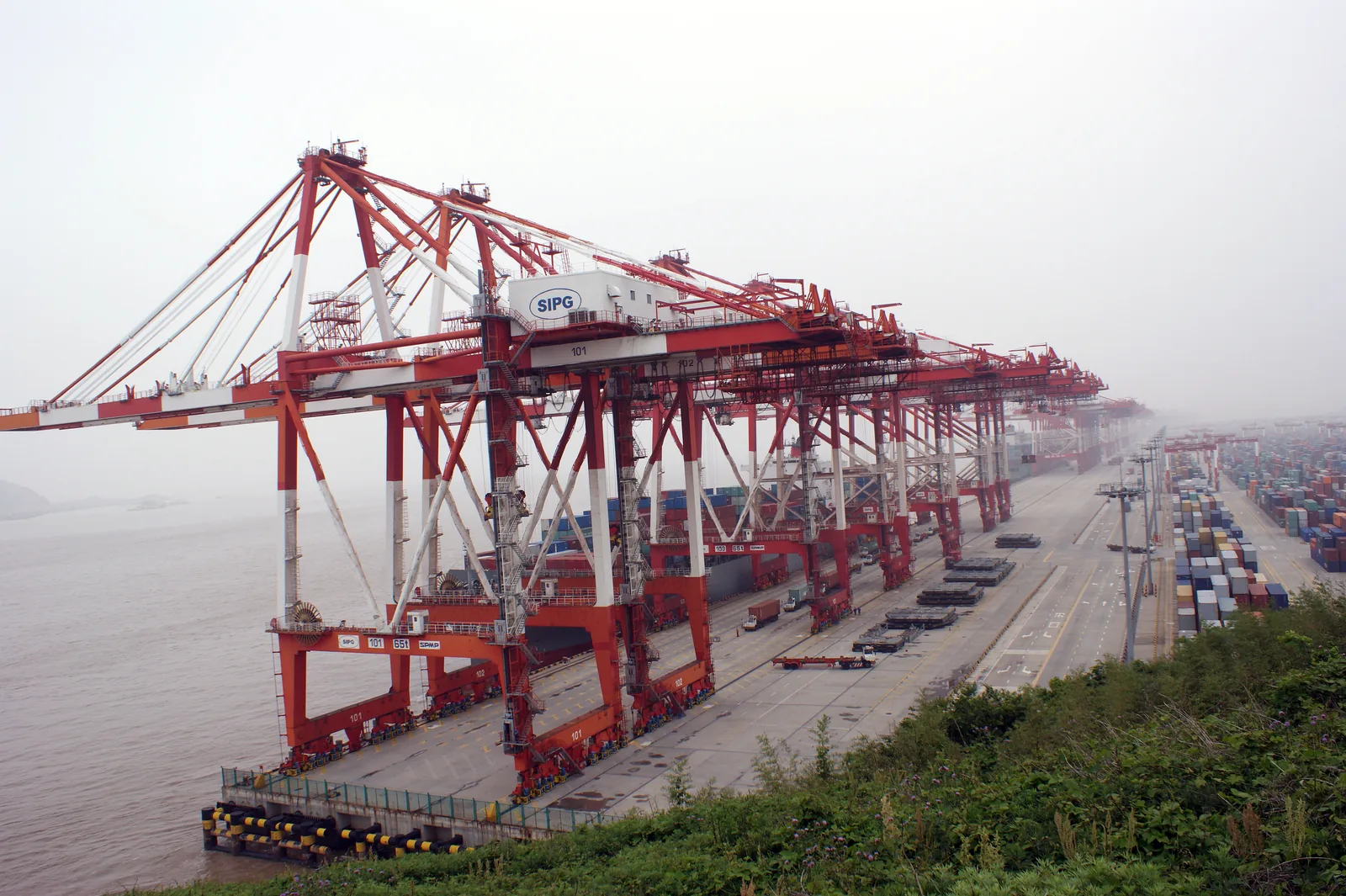
Figure 1: The automated container terminal at Yangshan Deep-Water Port exemplifies China's massive supply-side production and capital-intensive investment capabilities.
I. Manifestations: Five Dimensions of Dislocation
The current economic “preference for the branch over the root” manifests in five core areas where micro-profitability, supply-demand imbalance, and administrative intervention intersect.
1. Prioritizing “Supply-Side Investment” over “Household Consumption”
- The Root: The actual purchasing power and growth of disposable income for end-consumers. In the macro-loop, all manufacturing and technological iteration must eventually close the cash-flow cycle through real consumption. Without consumption, production is merely a sunk cost that drains liquidity.
- The Branch: Injecting credit, interest subsidies, and land-finance subsidies into the supply side. This expands production lines and inflates manufacturing investment by suppressing industrial land prices, electricity costs, and financing thresholds.
- The Distortion: The Producer Price Index (PPI) remains under prolonged pressure as mid-to-downstream enterprises are trapped in cutthroat price wars. Products that cannot be absorbed domestically due to weak consumption are pushed into overseas markets, where they quickly encounter anti-subsidy barriers and tariffs. As analyzed in our piece on the limits of the export engine, global trade capacity has a breaking point. The faster capacity expands, the heavier the micro-losses for the industry.
2. Prioritizing “Non-Tax Penalties” over “Long-term Tax Bases”
- The Root: A stable, transparent, and predictable legal environment. This is the bedrock upon which private enterprises dare to make long-term capital expenditures and R&D investments exceeding five-year cycles.
- The Branch: As land-sale revenues decline and local fiscal gaps widen, some regions have resorted to aggressive administrative fines, retroactive tax audits, and “extraterritorial asset freezing” (predatory jurisdictional overreach) to seize operating funds from businesses to balance short-term books.
- The Distortion: While these penalties may temporarily stabilize a quarterly local budget, they devastate the sense of security for private capital. Entrepreneurs respond by halting new investments, shrinking operations, or exiting the market entirely. Short-term liquidity gained by overdrawing institutional credit effectively cannibalizes the tax base of the future.
3. Prioritizing “Hardware Landscaping” over “Factor Market Ecosystems”
- The Root: The organic flow of market orders, efficient allocation of factors, vertical supply chain collaboration, and the spontaneous clustering of high-skilled talent.
- The Branch: Local governments blindly chasing buzzwords, rushing to build “Computing Power Centers,” “Low-Altitude Economy Zones,” or “Future Industry Incubators.”
- The Distortion: Standardized factories and high-end server rooms rise from the ground, funded by special bonds and guidance funds, yet utilization rates remain abysmal. Tenant companies often survive solely on rent exemptions and electricity subsidies. This premature physical infrastructure, lacking real commercial demand, inevitably settles as high-interest hidden debt and depreciating assets.
4. Prioritizing “Administrative Selection” over “Market Survival of the Fittest”
- The Root: A mechanism for clearing inefficient capacity based on Return on Invested Capital (ROIC) and free cash flow. The self-healing of a market economy depends on the cold, natural exit of low-efficiency players during cyclical troughs.
- The Branch: Local governments acting as venture capitalists, deeply binding specific technical routes to political performance, and providing low-interest bridge loans and implicit guarantees to loss-making enterprises.
- The Distortion: Administrative intervention warps market price signals. Capacity that should have been restructured or liquidated is kept on “life support,” dragging down industry price floors and squeezing healthy, tech-driven firms. This creates a structural trap where “bad money drives out the good.”
5. Prioritizing “Procedural Compliance” over “Micro-Vitality”
- The Root: Innovation, commercial trial-and-error, and the endogenous transactional vitality of micro-economic agents.
- The Branch: Lengthy pre-approvals, redundant inspections, and generalized accountability frameworks in finance and governance.
- The Distortion: In a high-pressure regulatory environment, “doing less means fewer mistakes” becomes the defensive strategy. Financial institutions, fearing accountability, avoid lending to asset-light SMEs and instead pile credit onto asset-heavy entities already at risk of overcapacity. The result is a system with perfect paperwork but paralyzed circulation.
II. Deep Causes: The Institutional Feedback Loop
The behavior of micro-agents and local officials is not a result of simple cognitive bias; it is a “rational choice” within the constraints of existing institutions. These dislocations persist because of four underlying systemic mismatches:
| Dimension | Manifestation of Dislocation | Underlying Institutional Mechanism |
|---|---|---|
| Fiscal | Production > Consumption | VAT “Origin Principle” (Tax follows the factory, not the buyer) |
| Financial | Supply-side Credit > Demand-side Credit | Collateral Preference (Banks favor “hard assets” over “soft services”) |
| Governance | Physical Landscaping > Institutional Building | Tenure Mismatch (Short official terms vs. long-term institutional ROI) |
| Industrial | Parallel Redundancy > Market Clearing | Security Narrative + Exit Failure (Fear of losing strategic ground) |
1. The Incentive Mismatch of the Tax-Sharing System
China’s current tax system relies heavily on indirect taxes, with Value-Added Tax (VAT) at its core, distributed between central and local governments based on the “Origin Principle”:
- Preference for Heavy Industry: As long as a factory is registered, land is leveled, and equipment is purchased within a jurisdiction, the local government secures VAT shares and Fixed Asset Investment (FAI) data immediately. Whether the company is profitable or its products are sold is secondary to the immediate fiscal inflow.
- Neglect of Consumption: Personal income tax is relatively small, and most domestic consumption taxes flow to the central government. If a local government invests in social security or household subsidies, the fiscal benefits do not necessarily stay local; instead, they increase the local burden for education, healthcare, and childcare.
2. Collateral Preference in Credit Transmission
Monetary policy relies on the commercial banking system, whose risk logic is inherently biased toward “hard assets”:
- State-owned enterprises (SOEs) and industrial parks possess vast tracts of land and machinery that serve as qualified collateral, backed by implicit government credit.
- The service sector and private SMEs are typically asset-light. In a risk-averse environment, they are naturally disadvantaged. When liquidity is released, it flows into the supply side and infrastructure, inflating the supply-side balance sheet while the demand side remains parched.
3. Time Mismatch: Evaluation Cycles vs. Institutional Cultivation
Local officials typically serve three-to-five-year terms. Within this window, they must produce quantifiable, rankable results:
- Optimizing the rule of law or increasing the labor share of income are “slow burns” that take a decade to bear fruit. Furthermore, these benefits are “leaky”—high-quality talent and consumption cultivated locally can easily migrate to Tier-1 hubs.
- In contrast, signing a multi-billion dollar industrial project or building a massive industrial park provides an immediate, visible boost to GDP and FAI. In the “evaluation tournament,” physical landscaping is the safer bet for promotion.
4. Horizontal Competition Under the Security Narrative
In the context of geopolitical friction, “supply chain security” has become the primary driver of industrial planning:
- As security directives trickle down, every province and city rushes to build parallel capacity in the same sectors (from polysilicon and batteries to semiconductors and low-altitude economy).
- Without a cross-regional exit mechanism, “national coordination” devolves into redundant construction across hundreds of cities. Local protectionism prevents the bankruptcy of loss-making firms, as no one wants to be the first to lose their local industry, leading to a “race to the bottom” in profitability.
III. The Path Forward: Reconfiguring the Gears
Reversing this dislocation cannot be achieved through rhetoric; it requires a fundamental reconfiguration of the incentives driving governments, banks, and firms.
1. Tax Reform: From “Origin” to “Destination”
VAT and consumption tax collection must be overhauled. Shifting a portion of VAT shares to the “Destination Principle” (where the product is consumed) and allocating more consumption tax to local governments would change everything. Only when every dollar spent by a local resident translates into local fiscal revenue will governments shift their focus from “serving factories” to “serving people” and optimizing the business environment.
2. Fiscal Transition: From “Hardware” to “Social Safety Nets”
Fiscal resources must be diverted from subsidizing redundant industrial parks toward a “public service-oriented” budget. Investing in universal childcare, basic pensions, and healthcare will lower the “precautionary savings” of households. By strengthening the social safety net, the government can unlock the labor income currently trapped in savings, converting it into active domestic demand.
3. Judicial Oversight: Severing the Profit-Driven Enforcement Link
A high-level cross-regional review mechanism for administrative and criminal enforcement must be established. Strict limits on the jurisdictional authority to freeze or seize corporate funds across regional lines are necessary to stop “predatory enforcement.” Severing the link between fines and local budgets is the only way to restore the foundational trust of private capital in property rights and the rule of law.
4. Hardening Budget Constraints: Restoring Market Clearing
Implicit guarantees and low-interest bridge loans for chronically loss-making industrial projects must be terminated. Public funds should no longer be used to sustain “zombie enterprises.” By allowing the natural clearing of inefficient supply, resources will spontaneously flow toward more productive and innovative entities, restoring the industry’s ROIC.
Conclusion: Returning to a Human-Centric Economy
The most basic axiom of economics is this: Production is the means; consumption is the end. Asset investment is the path; micro-vitality and human welfare are the destination.
As China moves past the era of high-speed expansion driven by land finance and heavy industry, any attempt to solve liquidity issues by overdrawing legal credit or doubling down on supply-side stimulus will only worsen the structural blockage.
Only by addressing the deep-seated dislocations in the tax system, credit logic, and evaluation mechanisms can China escape the “overcapacity-weak demand” trap and complete its transition to a resilient, consumption-led economy.
Related Research & Topics
Tello Mobile eSIM
SafetyWing Nomad Insurance
* Disclosure: This post contains affiliate links. If you make a purchase through these links, V-G Journal may earn a small commission at no additional cost to you. We only recommend services we independently evaluate and trust.
FIRE and Golf:自由旅居之路
专注于为追求 FIRE 与品质生活的人群提供特惠打球权益与候鸟微度假。不持一砖一瓦,运营品质生活。