The Vanlife FIRE Delusion: Auditing Depreciation, Off-Grid TCO, and Liquidity Traps
While mobile early retirement is sold as cheap freedom, an RV is a rapidly depreciating liability. With a 60% value loss over five years and monthly TCO topping 7,000 RMB, uncalculated Vanlife FIRE easily shatters off-grid financial security.

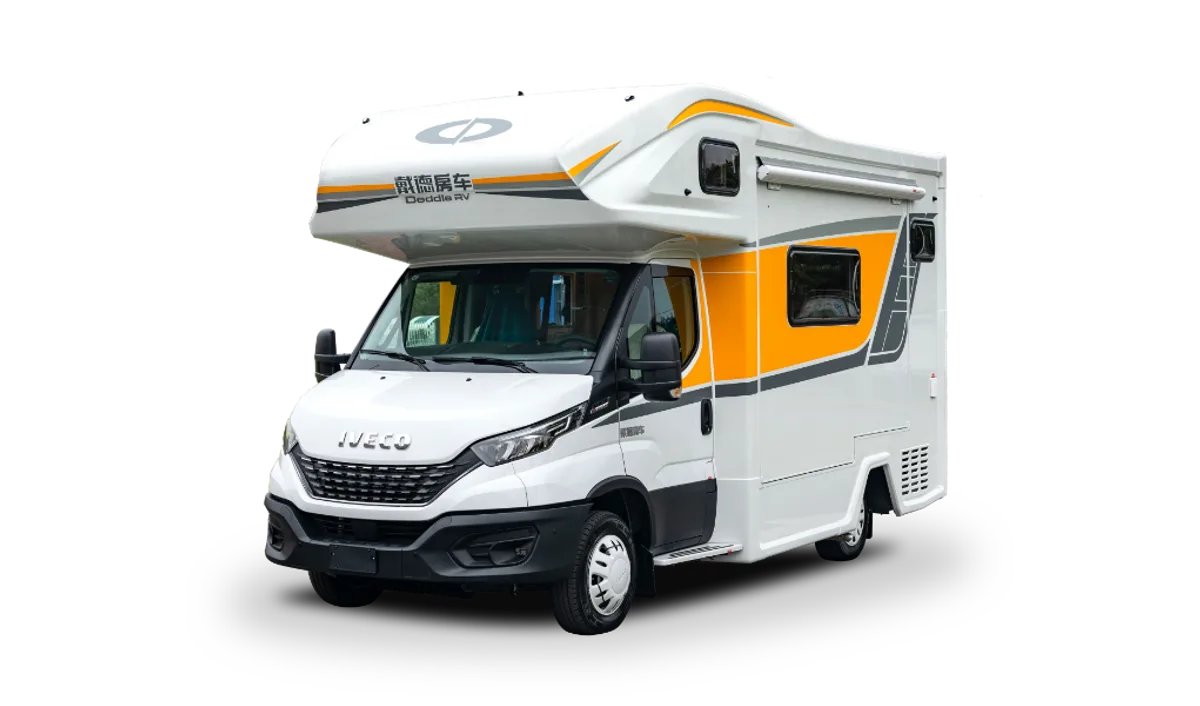
Figure 1: Mass-produced motorhomes in wild and campsite environments. Beneath the romanticized mobile lifestyle lies a heavy, complex system of mechanical and off-grid energy maintenance.
With China’s flexible retirement policy taking effect on January 1, 2025—allowing voluntary early retirement by up to three years—and the first cohort of the 1980s generation entering mid-life transitions (ages 40 to 46), “buying an RV to retire early on the road” (Vanlife FIRE) has surged across public discourse as a blueprint for low-cost, minimalist freedom.
However, romantic narratives detached from financial fundamentals conceal a brutal balance-sheet reality: an RV is an accelerating depreciating consumer durable, not an asset. Year-one depreciation routinely hits 30% to 40%, with cumulative net value loss exceeding 200,000 RMB over five years. Combined with heavy-vehicle fuel consumption, off-grid lithium and solar degradation, and premium commercial insurance, the full-scope Total Cost of Ownership (TCO) for a comfortable vanlife setup easily exceeds 6,000 to 7,000 RMB per month. Blindly purchasing into this dream risks locking capital into illiquid assets while causing a steep cliff in long-term quality of life.
The Depreciation Cliff Behind the Nomad Fantasy: Durable Goods Are Not Yield-Generating Assets
On social media feeds, vanlife is framed as a effortless life hack: “Open your window to the sea; press the gas pedal to save millions in real estate.” Burnt-out professionals in their 40s often attempt to convert hundreds of thousands of RMB in liquid cash into a Class B or Class C motorhome, treating it as a permanent physical sanctuary for geographic arbitrage.
Viewed through an accounting lens, an RV is never a capital-preserving or dividend-yielding asset; it is a complex consumer good with a steep depreciation curve.
According to used vehicle market data and real-world transactional audits, mass-produced motorhomes follow a severe depreciation trajectory:
- Year 1 Cliff: The moment a new RV is registered, its valuation drops by 30% to 40%. Because motorhomes combine complex chassis mechanics with bespoke living quarters, many impulse buyers sell after a few long trips due to operational fatigue. The market is flooded with low-mileage “near-new” units sold at massive discounts.
- Year 3 Benchmark: By year three, residual value compresses to 45%–60% of original purchase price (a 40%–55% loss). While standardized models from major manufacturers retain roughly half their value, non-standard, custom-built electrical modifications often see depreciation exceed 60%.
- Year 5 Floor: By year five, mechanical wear, interior joint looseness from vibration, water/electrical system aging, and appliance obsolescence drag residual value down to 30%–40%—representing a cumulative capital loss of 60% to 70%.
Consider a 40-year-old buying a mainstream motorhome for 350,000 RMB. Over a 5-year holding period, net depreciation losses will reach 210,000 to 245,000 RMB—an invisible capital drain of 42,000 to 49,000 RMB per year. This silent erosion of principal not only cancels out rent savings, but mirrors the dynamic analyzed in our audit on the frozen real estate trap in Changsha: holding a physical asset while watching underlying equity bleed out inside an illiquid vessel.
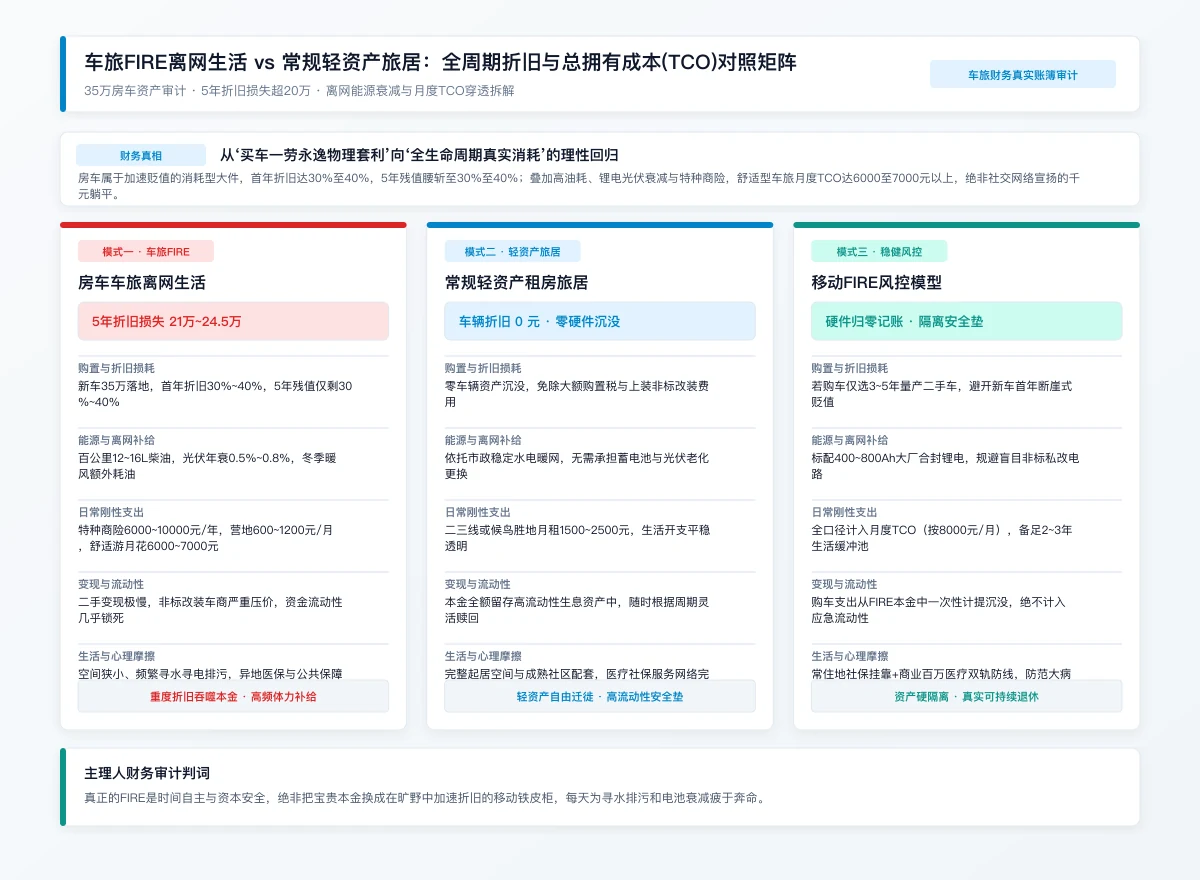
Figure 2: A multi-dimensional comparison of full-lifecycle depreciation, off-grid energy degradation, and emergency liquidity between Vanlife FIRE and light-asset nomadic rentals.
The True Off-Grid Ledger: Fuel, Thermal Control, and Operating Friction
Influencer claims of “minimalist vanlife on 1,000 RMB per month” deliberately restrict their ledgers to grocery bills, ignoring the rigid Total Cost of Ownership (TCO) required to keep a mobile habitat operational.
True off-grid living relies on a heavy-duty triad: chassis fuel, stationary energy reserves, and external campsite infrastructure.
1. High Curb Weight and Aerodynamic Drag
Mainstream Class C and Class B motorhomes carry curb weights between 3.5 and 4.5 tons with massive frontal surface areas. Diesel consumption on highways and rural roads ranges between 12 to 16 liters per 100 kilometers. At a moderate migration pace of 2,000 to 3,000 kilometers per month, fuel alone demands a predictable outlay of 1,500 to 2,500 RMB.
2. Rigid Climate Control Expenses
Wilderness and high-altitude microclimates exhibit extreme diurnal temperature swings. In northern regions or autumn/winter months, diesel parking heaters—though relatively efficient (consuming 0.1 to 0.3 liters per hour)—burn through 30 to 60 liters of fuel per month when run continuously, generating 200 to 450 RMB in heating costs. Crucially, heater fans require low-voltage DC power; if battery reserves run dry, heating cuts off regardless of fuel levels.
3. Energy Storage Physics and Replacement Capex
Off-grid living relies on LiFePO4 (lithium iron phosphate) battery banks and roof-mounted solar arrays. Living quarters typically carry 400Ah to 800Ah (roughly 5 kWh to 10 kWh) of storage. Given current replacement costs of 1,000 to 1,500 RMB per kWh, replacing a degraded battery system after several years of harsh charge-discharge cycles costs between 6,000 and 20,000 RMB. Meanwhile, roof solar panels experience a 2% to 3% efficiency drop in year one, followed by a linear decline of 0.5% to 0.8% annually, dropping to ~80% of original capacity after 8 to 10 years. Prolonged rain or snow forces reliance on paid campsites or engine idling to recharge.
4. Commercial Insurance and Campsite Overhead
Due to non-standard body structures and high repair cost ratios, annual commercial and compulsory vehicle insurance totals 6,000 to 10,000 RMB. Even with frequent wild camping, water refills, black tank dumps, and severe weather necessitate campsite stays. Standard campsites charge 30 to 80 RMB per day, while long-stay winter campsites in southern regions run 600 to 1,200 RMB per month for utility hookups.
Accounting for fuel (~1,800 RMB), campsite utilities (~600 RMB), daily living expenses (~2,500 RMB), and amortized insurance and maintenance (~800 RMB), a comfortable Vanlife FIRE baseline consumes 6,000 to 7,000 RMB per month in direct cash outlays. Factoring in an amortized monthly depreciation of 3,500 to 4,000 RMB brings the true full-scope TCO close to 10,000 RMB per month. For early retirees relying on a conservative Safe Withdrawal Rate (SWR) to fund a 30-year horizon, this is far from low-friction survival.
Systemic Disconnects and Psychological Friction: Frozen Capital and Spatial Fatigue
Beyond financial ledgers, mobile living introduces systemic frictions that test the viability of early retirement.
Authentic geographic arbitrage—as explored in our case study on the geographical arbitrage mechanics out of high-cost cities—is built on capturing yield spreads using a light-asset framework, not dragging heavy, depreciating hardware across geography.
Anchoring retirement entirely to an RV forces exposure to three non-financial break points:
- Illiquidity and Capital Lock-in: RVs are non-standard, niche goods. If a retiree faces a sudden health crisis or family emergency requiring significant cash, a used motorhome cannot be liquidated instantly like index funds or equities. Non-standard or heavily customized vehicles face steep dealer buyback haircuts or months of sitting listed on secondary markets.
- Cross-Regional Public Safety-Net Fractures: Nomadic retirees face operational friction regarding healthcare access and insurance reimbursement. Managing chronic conditions or sudden hospitalizations across provincial borders introduces reimbursement penalties, paperwork overhead, and a lack of primary care continuity. By contrast, light-asset rental strategies outlined in the comparative audit of Asian digital nomad visas leverage established urban medical infrastructure to maintain a stronger baseline defense.
- Micro-Space Psychological Decay: Living within a few square meters of interior space eventually translates into repetitive physical labor—daily water sourcing, grey/black tank management, and battery voltage monitoring. Prolonged detachment from established social networks and physical communities frequently generates isolation during middle age.
Risk Mitigation for Mobile FIRE: Rebuilding Asset Architecture Beyond Utopia
Highlighting the depreciation traps and TCO realities of vanlife is not a dismissal of mobile exploration, but a call to strip away uncalculated romanticism when planning the second half of life. A resilient risk-management framework requires clear financial boundaries:
- Treat Hardware Capex as 100% Sunk: If you choose to pursue Vanlife FIRE, treat the vehicle purchase price as a fully amortized consumer expense (write down residual value to zero on your personal balance sheet). Never treat an RV as a liquid emergency reserve.
- Target 3-to-5-Year-Old Pre-Owned Mass-Market Models: Avoid the 30% to 40% initial depreciation cliff of brand-new vehicles. Select standardized models with widely available chassis parts and factory electrical systems, letting the original owner absorb the heavy initial depreciation and manufacturing bug-fixes.
- Maintain Tiered Liquid Reserves: Based on a conservative full-scope TCO of 8,000 RMB per month, hold 2 to 3 years of risk-free cash liquidity in your primary accounts. Keep core retirement principal deployed in low-friction, liquid yield-generating assets, ensuring an uncompromised exit ramp to return to settled housing whenever desired.
The essence of early retirement is sovereign control over one’s time and long-term financial safety—not spending energy off-grid managing battery degradation, body leaks, and steep asset depreciation. Only when numbers replace narrative does the open road remain a choice rather than a financial trap.
Related Research & Topics
Tello Mobile eSIM
SafetyWing Nomad Insurance
* Disclosure: This post contains affiliate links. If you make a purchase through these links, V-G Journal may earn a small commission at no additional cost to you. We only recommend services we independently evaluate and trust.
FIRE and Golf:自由旅居之路
专注于为追求 FIRE 与品质生活的人群提供特惠打球权益与候鸟微度假。不持一砖一瓦,运营品质生活。