The Mirage of the Collective: Structural Property Flaws and the Architecture of Individual Defense
A deep dive into the structural failures of public ownership regarding property definition, economic calculation, and bureaucratic alienation. Drawing on Hayek, Mises, and Djilas, this essay outlines a defensive framework for individual wealth through jurisdictional arbitrage and digital sovereignty.

Executive Summary: When the means of production and wealth are christened in the name of “society as a whole,” the absence of exclusive entitlements and authentic price signals triggers an inevitable collapse. This structural void—characterized by the “Economic Calculation Problem” and a fractured agency chain—ensures that what belongs to everyone belongs to no one, eventually devolving into a rent-seeking tool for a bureaucratic elite. Private property is not merely a ledger of numbers; it is the physical boundary that shields individual autonomy from external erosion. By synthesizing modern property economics with political philosophy, this essay argues that the micro-individual must secure their sovereignty through cross-jurisdictional allocation, digital privacy firewalls, and independent cash-flow moats.
I. Deconstructing the Myth: The Endogenous Flaws of Public Ownership
In the lineage of political economy, “public ownership” is often painted as a sublime blueprint for transcending greed and achieving universal prosperity. However, through the lens of institutional economics, the removal of exclusivity creates three incurable systemic pathologies.
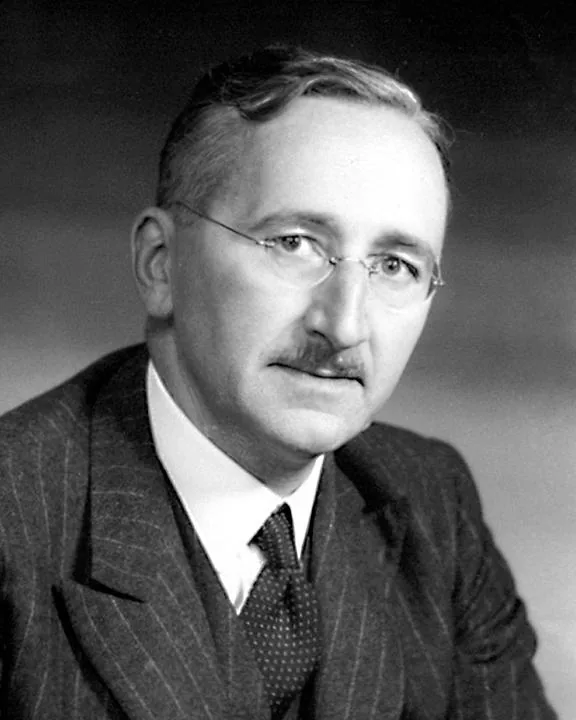
Figure 1: Friedrich Hayek, whose work demonstrated that private property and price mechanisms are the bedrock of individual liberty.
1. The Vacuum of Exclusivity and the “Tragedy of the Commons”
Ecologist Garrett Hardin, in his seminal Tragedy of the Commons, revealed a brutal truth: any asset open to all without exclusive property rights is destined for depletion.
When a pasture is “common” to all villagers, every herdsman is rationally incentivized to maximize his flock. The gain from an additional animal is captured entirely by the individual, while the cost of overgrazing is socialized across the entire community. This structural mismatch—internalized gains and externalized costs—is the DNA of public ownership:
- When production means belong to “the people,” no specific individual bears the ultimate financial liability for the asset’s long-term maintenance or depreciation.
- Assets become “ownerless” in practice; everyone scrambles to extract current output, while no one invests in long-term capital preservation.
2. The Terminal Fracture of the Agency Chain
The indispensability of private property lies in the strict unification of the decision-maker and the risk-bearer. A property owner’s commercial decisions result in personal profit or personal insolvency. This “skin in the game” is the most potent risk-management discipline in a market economy.
Under public ownership, ownership is abstracted into a collective ghost. Millions of citizens cannot simultaneously manage a factory or a plot of land; thus, the exercise of rights must be delegated downward:
- The Phantom Principal: The nominal owners (the public) lack the professional capacity and the incentive to monitor the assets.
- Agent Power Inflation: The bureaucrats and managers who wield actual control neither suffer personal wealth loss from deficits nor can they legally claim the massive appreciation of capital.
This decoupling of ultimate right from ultimate risk breeds profound moral hazard. Agents gravitate toward short-term administrative “achievements,” wasteful vanity projects, or the covert hollowing out of public assets. As noted in our analysis of Ancient Minben Thought and Modern Human Rights, any system that abstracts individuals into grand concepts eventually alienates them in the execution chain.
II. The Intellectual Conflict: Austrian Critiques and Political Philosophy
The critique of public ownership is not an emotional grievance but a rigorous intellectual edifice built on epistemology, price theory, and ethics.
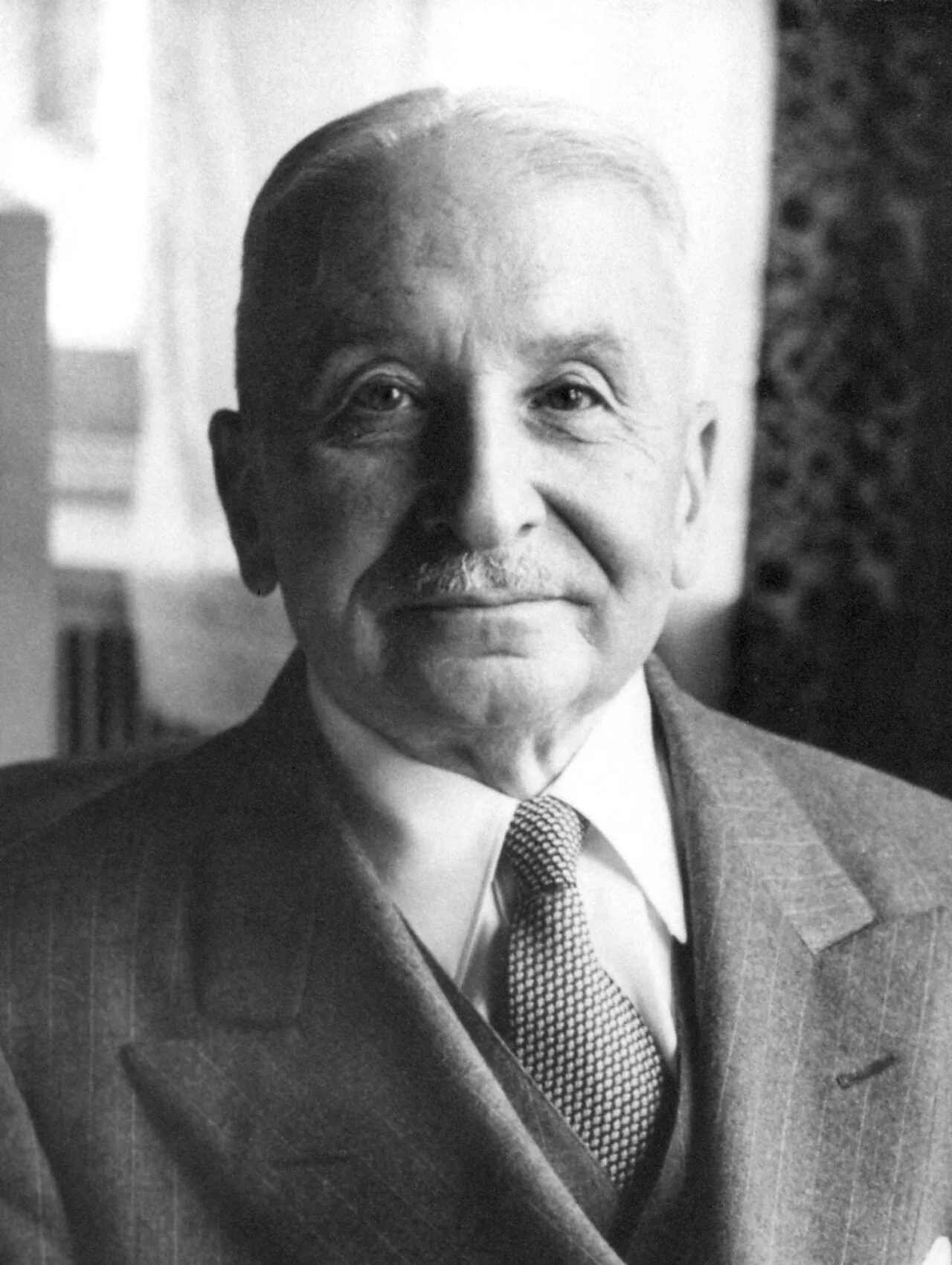
Figure 2: Ludwig von Mises, who in the 1920s first identified the insurmountable “Economic Calculation Problem” of public ownership.
1. Mises and the “Economic Calculation Problem”
In his 1922 masterpiece, Socialism: An Economic and Sociological Analysis, Ludwig von Mises delivered a fatal blow: Public ownership is economically irrational because it cannot calculate.
Mises argued that complex industrial cooperation relies on a “relative price system” formed through free exchange:
- Prices are condensed information codes reflecting real-time shifts in supply and demand.
- Once the state abolishes private ownership of the means of production, capital goods (machinery, land, factories) are no longer traded.
- Without trade, there are no authentic prices for capital goods.
- Without prices, a central planner cannot know if building a canal or a factory creates value or wastes wealth. Resource allocation becomes “a blind man riding a blind horse,” and systemic collapse is merely a matter of time.
2. Hayek’s “Fatal Conceit” and Dispersed Knowledge
Friedrich Hayek, Mises’s protégé, deepened this critique in The Fatal Conceit. He argued that the attempt to centrally direct all resources stems from a “rationalist hubris.”
Most knowledge required to run a society is not found in scientific formulas but is “tacit knowledge”—fragmented bits of information held by millions of individuals regarding specific times and places (e.g., a merchant’s intuition about a street corner’s demand). No supercomputer can aggregate this fleeting data. Only a spontaneous order based on private property allows society to self-correct at the lowest cost.
In The Road to Serfdom, Hayek warned that economic centralization is the precursor to total loss of liberty:
“Economic control is not merely control of a sector of human life which can be separated from the rest; it is the control of the means for all our ends.”

Figure 3: Milovan Djilas, whose book “The New Class” exposed how total public ownership creates a privileged bureaucratic caste.
3. Djilas and the “New Class”
While the Austrians focused on economic logic, Milovan Djilas, a former high-ranking Yugoslav official, provided a chilling empirical account in The New Class.
Djilas dissected the alienation of public ownership in practice:
- Property nominally belongs to “the people,” yet “the people” cannot command a single inch of land or draw dividends from a single machine.
- While legal ownership is abolished, the rights of possession, management, and distribution fall 100% into the hands of the administrative and party bureaucracy.
- This group, having liquidated the old bourgeoisie, uses its monopoly over the state apparatus to transform into a “New Class” with exclusive privileges, special supply chains, and hereditary interests.
4. Pipes and Rand: Property as the Physical Bedrock of Freedom
Historian Richard Pipes, in Property and Freedom, concluded that the stability of private property determines the survival of the rule of law. In common-law nations like England, the protection of private estates birthed parliamentary limits on royal power. Conversely, where private property is absent, the state’s arbitrary seizure of wealth becomes the breeding ground for totalitarianism.
Philosopher Ayn Rand, in Atlas Shrugged, dismantled the hypocrisy of collectivism:
“To deprive a man of the right to the product of his labor is to deprive him of the physical means of his existence. When society claims the collective interest is superior to individual rights, it grants a moral license to looters.”
III. Institutional Paradigms: From Utopia to Bureaucratic Alienation
To understand how different property regimes operate in reality, we can compare three typical paradigms:
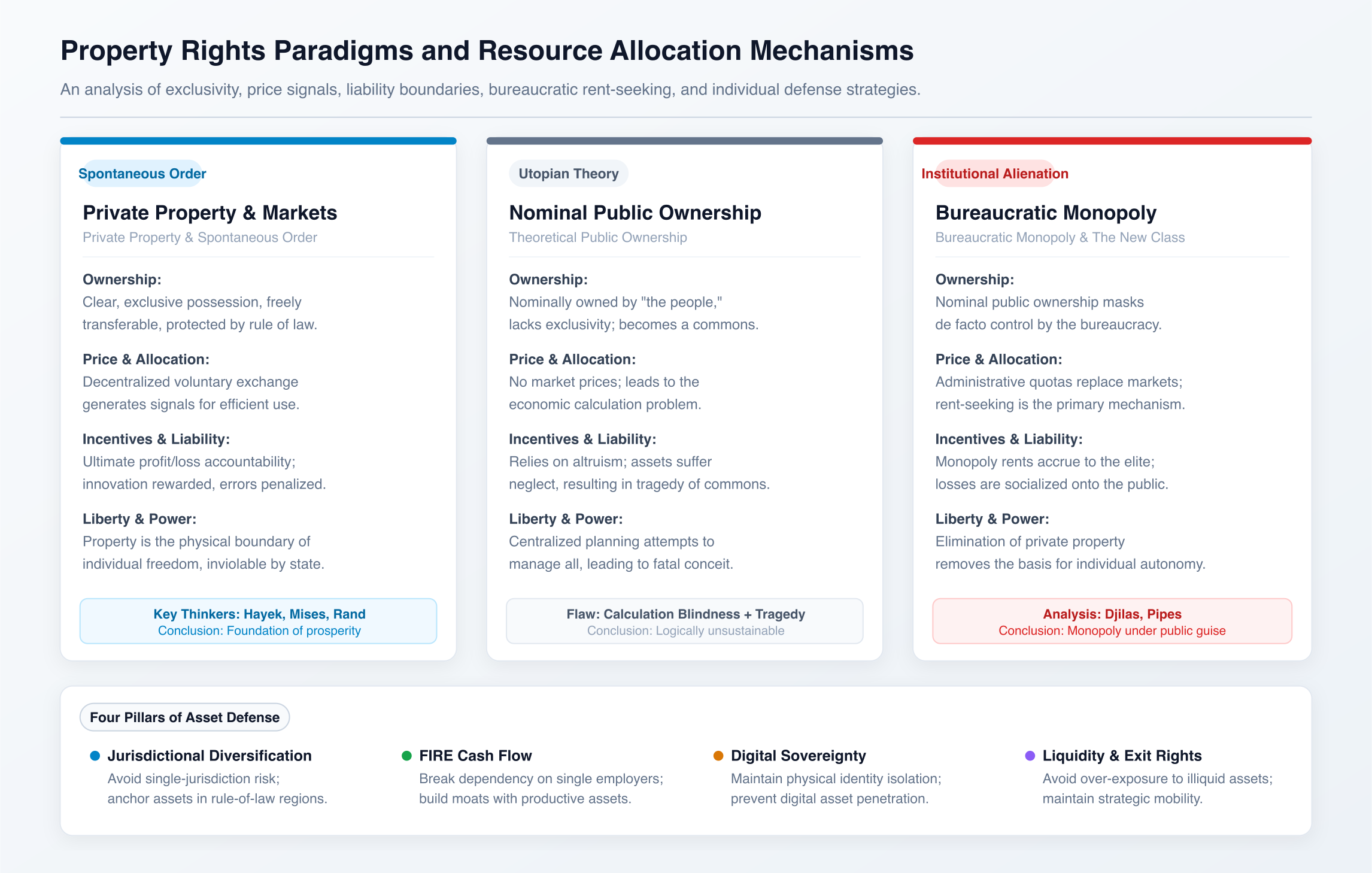
Figure 4: Comparative Matrix of Property Rights and Resource Allocation
As shown below, when exclusive rights are dissolved, “public ownership” rapidly slides into bureaucratic monopoly and rent-seeking:
| Dimension | Private Property & Spontaneous Order | Nominal Public Ownership (Theoretical) | Bureaucratic Monopoly & The New Class (Reality) |
|---|---|---|---|
| Ownership Definition | Clear, exclusive, and legally protected. | Nominally “the people’s”; non-exclusive. | De facto possession by the bureaucratic class. |
| Price & Signals | Real relative prices via decentralized trade. | Abolished markets; distorted signals; calculation chaos. | Administrative approval replaces markets; systemic rent-seeking. |
| Incentives | Profit/loss responsibility; strict symmetry. | Reliance on moralizing; the Tragedy of the Commons. | Monopoly rents for the elite; losses socialized. |
| Power Constraints | Private rights limit public power. | Assumes omniscient, benevolent servants. | Absolute monopoly; institutionalized rent-seeking. |
| Individual Freedom | Property as the basis of independence. | Livelihood depends on distribution; loss of leverage. | Total dependency; loss of the “exit option.” |
As analyzed in China’s Macroeconomic Distortions, when fiscal incentives are tied to bureaucratic will rather than market demand, individual welfare is systematically sacrificed for grand investment metrics.
IV. Defending Against “Public” Predation: A Four-Dimensional Moat
Faced with the dilution of wealth under grand narratives, emotional venting is useless. The sovereign individual must build a rational defense, using institutional literacy to construct an impenetrable moat.
The Iron Law of Individual Wealth Defense
The core of defense is not a frontal assault on the leviathan, but systemic decoupling. By diversifying jurisdictional exposure and establishing independent cash flows, you make your life’s work difficult for any single system to capture or erase.
1. Geographic Diversification (Cross-Jurisdictional Allocation)
Concentrating 100% of net worth in a single currency or sovereign system is the ultimate Single Point of Failure (SPOF):
- The Rule of Law Premium: Allocate liquid capital to mature offshore jurisdictions where private property is enshrined in the constitutional core and protected by centuries of judicial independence.
- Global Hard Assets: Invest in globally diversified productive assets (e.g., broad-market index ETFs, multinational equities) to decouple from the redistribution cycle of any single nation.
- Compliant Channels: Utilize international brokerage accounts and multinational banking networks to build a compliant firewall.
2. Severing Dependency via FIRE and Passive Cash Flow
In environments lacking property protection, the most common control mechanism is the threat to one’s livelihood. When a person’s survival depends on a single employer or state system, they have no room to refuse unreasonable demands.
- The FIRE Lifestyle: Practice extreme consumption discipline to achieve Financial Independence and Retire Early.
- Productive Asset Generation: As discussed in the Pippi Longstocking FIRE Sample, the “hardness” of an asset lies in its ability to provide cash flow without needing to please anyone. A self-sustaining portfolio provides the “f-you money” necessary to resist institutional mobilization.
3. Digital Sovereignty and Privacy Firewalls
In the information age, data is property, and digital footprints are handles for control. Transparent digital assets are vulnerable to one-click freezing:
- Physical and Digital Segregation: Establish clear boundaries for personal information. Separate devices, communications, and identities for domestic daily life versus global offshore business.
- Sovereign Digital Assets: Understand and allocate to censorship-resistant, “code-is-law,” decentralized assets as a hedge for extreme scenarios.
- Digital Nomadism: Deliver value globally via remote skills to decouple income sources from physical residency.
4. Liquidity and the “Exit Option”
Illiquid assets (e.g., commercial real estate, heavy physical industry) are the easiest targets for administrative lock-ups and heavy taxation. In periods of increasing uncertainty:
- Reduce Fixed Asset Exposure: Lower the leverage on immovable property to avoid becoming a stationary target for tax extraction.
- Maintain High Liquidity: Hold assets that can be liquidated and wired globally within hours. Always retain the “call option” on your own life: a plane ticket and a globally portable skill set.
V. Conclusion: Property is the Physical Boundary of Civilization
The line between civilization and barbarism is not drawn with slogans, but by whether a person’s bowl of rice is protected from seizure, and whether a creator’s sweat can be transformed into legally shielded capital.
Public ownership is no panacea for scarcity. As long as we live in a world of finite resources, exclusive property rights and free price mechanisms remain the only historically proven path to rational prosperity. The greatest clarity an individual can possess is not to chase illusions, but to anchor themselves in economic reality: Secure your privacy, build cross-border defenses, and use a solid financial moat to win the ultimate prize—freedom and dignity.
Related Research & Topics
Tello Mobile eSIM
SafetyWing Nomad Insurance
* Disclosure: This post contains affiliate links. If you make a purchase through these links, V-G Journal may earn a small commission at no additional cost to you. We only recommend services we independently evaluate and trust.
FIRE and Golf:自由旅居之路
专注于为追求 FIRE 与品质生活的人群提供特惠打球权益与候鸟微度假。不持一砖一瓦,运营品质生活。