The Arithmetic of Shelter: Price-to-Rent Ratios and the Financial Logic of Residency
An analysis of the price-to-rent ratio and its inverse, rental yield, as the ultimate financial anchors for real estate valuation. We explore the 'landlord subsidy' phenomenon and the decision matrix between debt-fueled ownership and strategic leasing.

Executive Summary: In an era of structural asset repricing and stagnant growth, the choice between buying and renting has transcended sentimental notions of “nesting” or the existential anxiety of “paying a landlord’s mortgage.” It has become a cold-blooded game of balance sheet optimization dictated by endogenous cash flow. The Price-to-Rent Ratio and its inverse, the Rental Yield, serve as the ultimate quantitative litmus tests for property valuation. When urban rental yields collapse into the 1.5%–2.0% range, landlords are effectively providing a massive subsidy to tenants by absorbing interest costs and physical depreciation. Only when yields climb toward the 3.5%–5.0% corridor does homeownership regain the safety margin necessary to cover liabilities and achieve self-sustaining equity growth.
I. Defining the Anchor: Real Estate as an Asset P/E Ratio
From a financial perspective, real estate is an interest-bearing asset capable of generating consistent rental cash flow. The property price represents the present value of the asset, while the net annual rent constitutes its endogenous cash flow.
Consequently, the price-to-rent ratio and rental yield are two sides of the same coin, directly mapping to standard financial valuation metrics:
Price-to-Rent Ratio (The Asset’s P/E Ratio): Price-to-Rent Ratio = Total Property Price ÷ Annual Rent
Gross Rental Yield (The Cash Dividend Rate): Gross Rental Yield = (Annual Rent ÷ Total Property Price) × 100%
Case Study: If an urban apartment priced at $2,000,000 generates $40,000 in annual rent (approx. $3,333/month), the Price-to-Rent ratio is 50x. This implies a static payback period of 50 years—essentially purchasing a low-growth asset at a 50x P/E multiple. The corresponding gross rental yield is 2.0%.
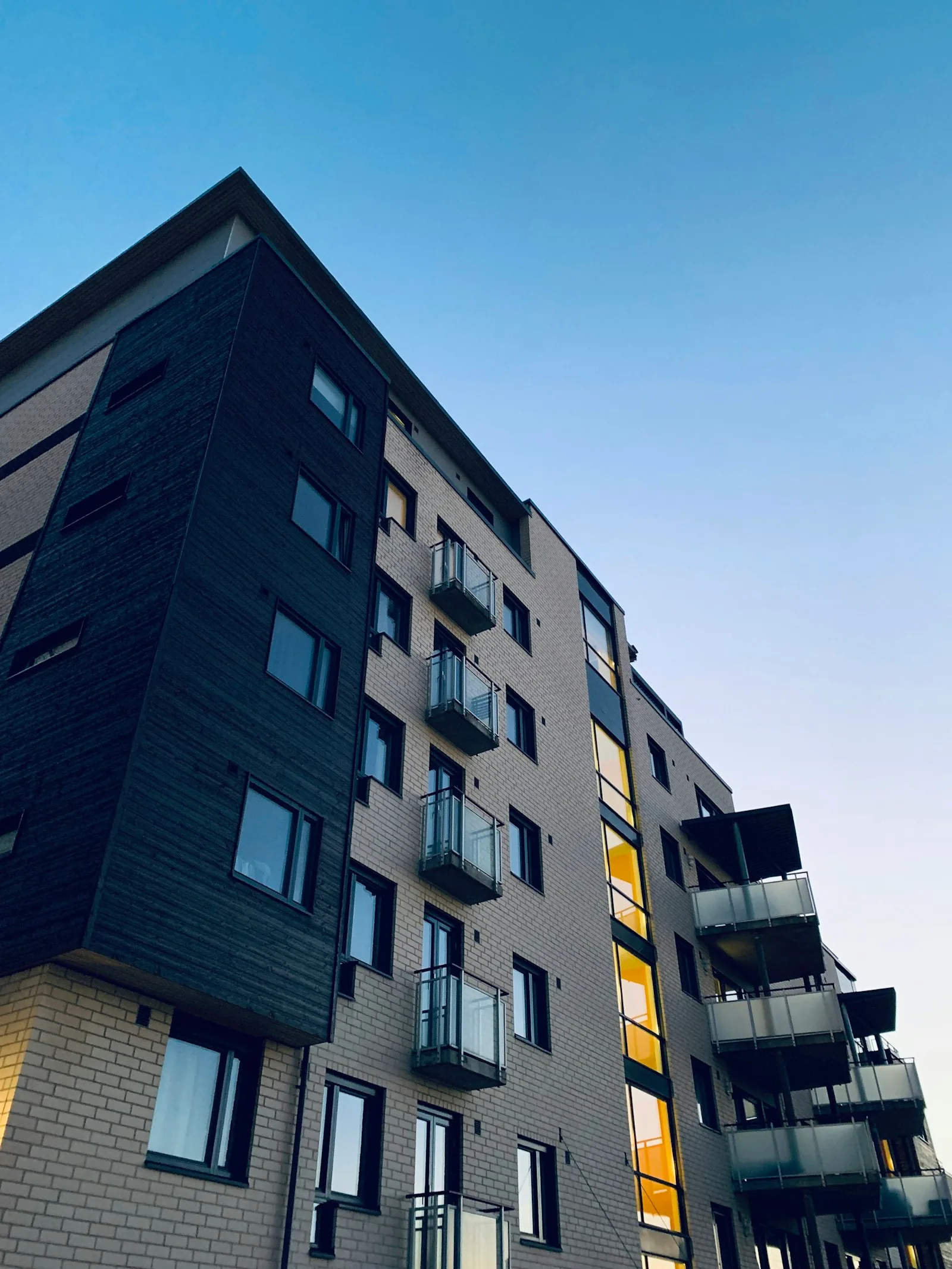
Figure 1: The valuation logic of high-density urban housing based on endogenous cash flow.
In mature global markets, the following benchmarks generally dictate the boundary between value and speculation:
- The Equilibrium Zone (Ratio: 200–300x; Yield: 4.0%–6.0%): Valuation is aligned with fundamentals. Cash flow effectively covers mortgage interest, maintenance, and taxes, providing a robust defensive cushion.
- The Speculative Bubble Zone (Ratio: >400–600x; Yield: <2.0%–2.5%): Valuation has decoupled from the reality of local wages and rental demand. Holding costs exceed yields, leaving the owner entirely dependent on aggressive capital gains (price appreciation) to avoid a net loss.
II. The Underlying Mechanics of the Buy-vs-Rent Game
The price-to-rent ratio is not merely a static statistic; it governs the redistribution of wealth and the fragility of individual balance sheets.
1. The Skew of Unrecoverable Costs: When Landlords Subsidize Tenants
A rigorous assessment of housing costs must move beyond a simple comparison of monthly mortgage payments versus monthly rent. One must calculate the Unrecoverable Costs of homeownership.
The pure cost of holding real estate rests on three pillars:
- Mortgage Interest: The cost of debt leverage.
- Opportunity Cost of Equity: The foregone returns of the down payment if invested in stable, income-generating assets.
- Physical Depreciation & Maintenance: The natural decay of the structure and the cost of upkeep.
In current economic environments, these three factors typically aggregate to an annual unrecoverable cost of 3.5% to 4.2% of the property’s total value.
- When Rental Yields are Sub-Cost (e.g., 1.5%–2.0%):
- The Tenant is Subsidized: The landlord pays 3.5%–4.2% in interest and depreciation while collecting only 1.5%–2.0% from the tenant.
- Strategic Implication: The tenant effectively “cashes out” the utility of a high-quality residence at a 50% discount, transferring all risks of price volatility, liquidity lock-up, and physical decay to the landlord. In this scenario, holding cash or liquid assets is the dominant strategy.
- When Rental Yields Exceed Costs (e.g., >4.5%):
- The Buyer Gains the Edge: Annual rent payments exceed the pure cost of ownership. Renting becomes a “pure bleed” of cash flow, whereas buying serves as a hedge, locking in residency costs and capturing the yield surplus.
2. The “Carry Trade” and Self-Sustaining Assets
The spread between the rental yield and the prevailing mortgage rate determines whether a property is a “wealth generator” or a “liability parasite” requiring external infusions of salary to survive.
- Negative Carry (Yield < Mortgage Rate):
- Scenario: A 2.0% rental yield against a 3.5% mortgage rate.
- Mechanism: The rent fails to cover the interest. The owner must divert monthly income to “feed” the asset. This is pure speculation; if the property does not appreciate faster than the cost of carry, the balance sheet suffers a slow-motion collapse.
- Positive Carry (Yield > Mortgage Rate):
- Scenario: A 5.0% rental yield against a 3.5% mortgage rate.
- Mechanism: The asset’s endogenous cash flow covers all interest and contributes to principal repayment. The asset is self-liquidating and possesses internal de-leveraging power, requiring no external support.
3. Mean Reversion and the Reality of the Real Economy
There is a fundamental fracture between how rent and prices are determined:
- Rent is anchored in the Real Economy: It is limited by local industry structures, real disposable income, and net migration. Rent is a non-leveraged consumption act; it cannot be inflated indefinitely by credit. Thus, rent represents the fundamental floor of an asset’s value.
- Price is anchored in Liquidity: Asset prices are driven by credit availability, land supply constraints, and speculative fervor. They are prone to high-multiple bubbles.
When a region’s price-to-rent ratio exceeds 500x (yield < 2%), the asset is suspended precariously above the reality of local purchasing power. Once the credit cycle turns, assets lacking the support of high inflation or population growth inevitably face mean reversion. This correction usually manifests as a “grind down” in prices or a multi-year stagnation until yields catch up with reality.
III. The Decision Matrix: Yield-Based Scenarios
For the pragmatic investor or resident, the following matrix provides a framework for action based on the actual rental yield of a target property:
| Rental Yield Range | Price-to-Rent Ratio | Market Characteristics | Strategic Recommendation |
|---|---|---|---|
| < 2.0% | > 500x | Severe Capitalization Premium. Common in Tier-1 “superstar” cities. Prices are decoupled from cash flow and rely entirely on future expectations. | Prioritize Renting. Unless tied to non-fungible institutional benefits (e.g., elite school districts), buying is a massive financial drain. Renting while holding liquid core assets is the superior move. |
| 2.0% – 3.5% | 300 – 500x | Moderate Premium / Transition Zone. Typical of mature districts in secondary cities or areas undergoing price correction. | Neutral / Cautious. Depends on residency duration. If staying for 10+ years with low leverage, buying is acceptable. If the horizon is <5 years, rent to preserve liquidity. |
| 3.5% – 5.0% | 200 – 300x | Equilibrium / Fair Value. Yields cover interest and depreciation. Aligns with the valuation of mature global real estate. | Rational Bias Toward Buying. Monthly rent is now equal to or higher than unrecoverable costs. Renting becomes a net loss; buying offers a solid fundamental floor. |
| > 5.0% | < 200x | High Cash Flow / Undervalued. Found in industrial hubs, high-demand micro-apartments, or oversold core assets. | Strong Buy. The asset is self-sustaining (Positive Carry). Even with zero capital gains, the yield outperforms most risk-free financial instruments. |
IV. Breaking the Narrative Illusion
The price-to-rent ratio is the quantitative antidote to emotional narratives like “real estate always beats inflation” or “renting is throwing money away.”
- Low Yields (< 2.5%) signify a “Landlord Subsidy”: The landlord absorbs the volatility, interest, and decay. The tenant enjoys the utility of the space at a steep discount. In this phase, liquidity is the ultimate form of freedom.
- High Yields (> 4.0%) signify a “Rental Penalty”: When rent is high enough to cover all debt and maintenance, the tenant is the one losing wealth. At this stage, utilizing reasonable leverage to acquire the asset is the only way to lock in residency costs and begin the long-term accumulation of net equity.
Related Research & Topics
Tello Mobile eSIM
SafetyWing Nomad Insurance
* Disclosure: This post contains affiliate links. If you make a purchase through these links, V-G Journal may earn a small commission at no additional cost to you. We only recommend services we independently evaluate and trust.
FIRE and Golf:自由旅居之路
专注于为追求 FIRE 与品质生活的人群提供特惠打球权益与候鸟微度假。不持一砖一瓦,运营品质生活。