Defending the 'Kill Line': Strategic Reserves, Frugality, and Survival Margins in FIRE
Over-compressing desires in FIRE weakens your survival buffer, while chasing inflated asset targets turns you into corporate fuel. Analyzing real ledger data across Tier-1, Tier-2, and Tier-3 Chinese cities, this essay deconstructs 'kill line' mechanics to reveal how to build a resilient, high-optionality exit strategy.

Executive Summary: In mainstream discussions of Financial Independence, Retire Early (FIRE), practitioners frequently reduce early retirement to a static spreadsheet exercise: mechanically accumulate 25 times your annual expenses, apply a 4% withdrawal rate, and exit the workforce. Real-world economic dynamics, however, rarely unfold in clean linear projections. They are riddled with ruthless “kill lines”—thresholds where squeezed margins trigger systemic failure. When your tolerance for error is compressed to zero, minor exogenous shocks can forcefully liquidate your lifestyle. Choosing between shrinking consumption and expanding capital reserves is not merely a preference; it is a game of strategic depth and survival resilience.
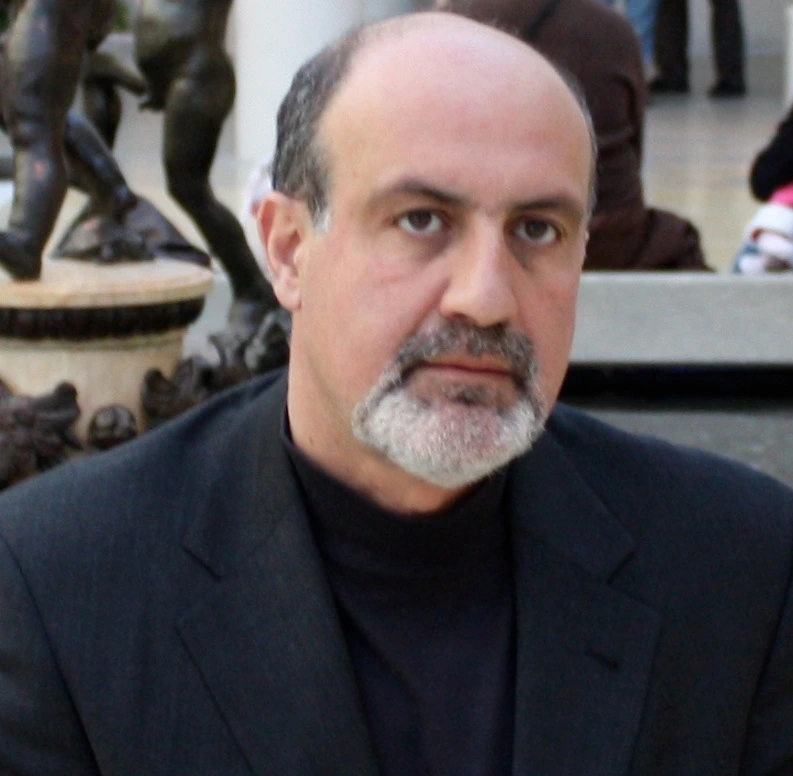
Figure 1: Nassim Nicholas Taleb, author of The Black Swan and Antifragile. His framework of non-linear vulnerability under extreme events and the “barbell strategy” provides the analytical foundation for defending the “kill line” and securing safety margins in FIRE.
I. Two Defensive Traps: The Ascetic and the Hamster Wheel
In the pursuit of early retirement, dogmatically worshipping extreme minimalism (Lean FIRE) or obsessively chasing endless capital accumulation (Fat FIRE) both lead directly into systemic cognitive traps.
1. Ascetic Frugality: A Fragile Equilibrium on the Blade’s Edge
A pervasive narrative glorifies radical frugality: moving to remote, decaying neighborhoods, calculating every meal down to the cent, eliminating non-essential socializing, and squeezing baseline living expenses to the absolute floor. The goal is to reach a lower net worth target as fast as possible.
While this logic appears detached from worldly desires, it actually strips away your survival buffer:
- Zero Tolerance Physically and Financially: A sudden root canal, a medical emergency involving an aging parent, an abrupt lease termination by a landlord, or localized inflationary spikes can instantly vaporize a fragile cash surplus.
- Psychological Backlash: Forcibly suppressing human desires is not living in harmony with nature; it is internal policing. As explored in Time Sovereignty and Mental Safe Havens in FIRE, freedom secured through extreme self-deprivation often metastasizes years later into compensatory psychological breakdowns.
Reducing desires to the absolute floor does not eliminate risk; it simply offloads all systemic economic pressure directly onto your physical body and nervous system. You have not escaped the rat race—you have voluntarily entered a vacuum chamber vulnerable to the first sudden shock.
2. The Hamster Wheel of Capital Accumulation: The Illusion of Eternal Security
Other practitioners fall into the opposite loop: accumulating ¥5 million feels insufficient for catastrophic illness; reaching ¥10 million brings anxiety over long-term fiat inflation; touching ¥20 million leaves them terrified of macroeconomic asset re-valuations.
This risk aversion carries a steep double penalty:
- Infinite Surrender of Life Sovereignty: To reach an illusory “absolute safety number,” individuals mortgage their most mentally agile and physically vibrant years to high-pressure corporate systems. As revealed in Depreciation of Energy and Exit Risk Management for Corporate Workers, physical or mental burnout (the “physiological kill line”) often strikes long before the financial moat is finished.
- Nominal Asset Numbness: In an era of fiat expansion and shifting institutional rules, relying solely on static account balances is a passive, fragile defensive posture.
If buying your freedom requires turning yourself into perpetual fuel for the economic engine, net worth becomes nothing more than a ransom note paid with your life experience.
II. Deconstructing the Mechanics: Desire as the Threshold, Reserves as the Depth
Deconstructing an individual’s risk management system reveals that desire and reserves serve distinct structural functions:
- The Function of Lowering Desire (Lowering the Kill Line): By stripping away status signaling and consumerism, you eliminate irreversible rigid liabilities, suppress monthly cash burn, and eradicate the vulnerabilities that external systems use to capture you.
- The Function of Increasing Reserves (Extending Safety Margin): By building a high-liquidity asset stack capable of supporting 3 to 5 years of zero-income living, you cultivate skills that convert to cash outside corporate platforms. Preserving your physical health serves as your highest-yield tail-risk defense, widening your strategic room to maneuver.
True independence is not about enduring austerity; it is about retaining steering control over your life. As noted in Why Humans Need Freedom: Survival Defense, Asymmetric Costs, and the Real Rules of the Exit Right, only asymmetric defense provides the real leverage required to say “no” to unreasonable rules.
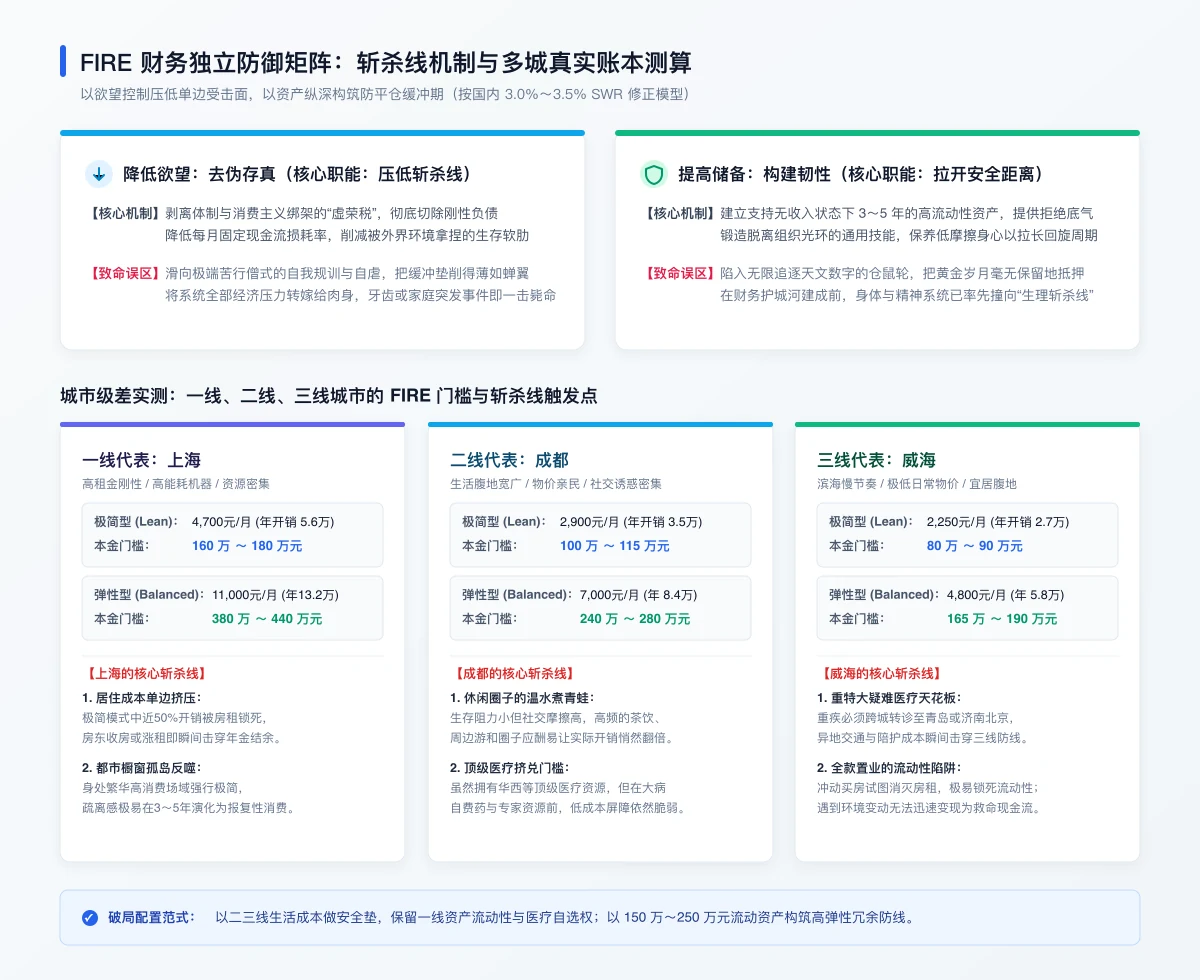
Figure 2: The FIRE Defense Matrix across three city tiers: A multi-dimensional comparison of “kill line” trigger mechanisms between extreme Lean FIRE and balanced elastic models.
III. Chinese Ledger Data Across Three City Tiers and “Kill Line” Calculations
Before running specific projections, we must establish a macro assumption tailored to the current economic environment:
The classic Western 4% Safe Withdrawal Rate (SWR) relies on long-term historical real returns and stable inflation metrics in mature overseas capital markets. In a low-interest-rate environment where domestic conservative assets (sovereign bonds, large CDs, high-dividend equities) yield lower returns, a realistic SWR benchmark should be adjusted downward to 3.0% – 3.5%.
The following models assume a single individual in good health, without the financial burden of elite private education for children. We evaluate Tier-1 (Shanghai), Tier-2 (Chengdu), and Tier-3 (Weihai) cities, comparing a “Lean FIRE” model against a “Balanced FIRE” model to isolate where each system reaches its “kill line.”
1. Tier-1 City: Shanghai (High Rent & Rigid Friction)
A Tier-1 city operates as a high-speed resource allocation machine. The vast majority of living costs consist of “spatial access rights” and “implicit service premiums.”
| Expense Category | Lean FIRE | Balanced FIRE | Structural Breakdown & Notes |
|---|---|---|---|
| Housing | ¥2,200 | ¥5,000 | Lean: shared flat past outer ring; Balanced: quality solo studio near middle ring |
| Food & Groceries | ¥1,200 | ¥2,500 | Lean: home cooking from wet markets; Balanced: quality ingredients + casual dining |
| Utilities & Telecom | ¥300 | ¥500 | Fixed costs for power, water, gas, fiber, and mobile data |
| Healthcare & Insurance | ¥650 | ¥1,200 | Lean: public flexible employment insurance; Balanced: added commercial critical insurance |
| Transport & Discretionary | ¥350 | ¥1,800 | Lean: public transit only; Balanced: local leisure, short trips, cultural events |
| Total Monthly Spend | ¥4,700 | ¥11,000 | Baseline single-person monthly burn rate |
| Total Annual Spend | ~¥56,000 | ~¥132,000 | Mandatory annual debt-free expenditure |
| FIRE Target Capital | ¥1.6M – ¥1.8M | ¥3.8M – ¥4.4M | Calculated at 3.0%–3.5% SWR; requires extra rent buffer if non-homeowner |
Shanghai’s Kill Line Mechanics:
- Unilateral Rent Squeeze: In the Lean model, nearly 50% of cash outflow is locked into rent. If a landlord reclaims the property or hikes rent by 15%, moving costs and agent fees can instantly wipe out half a year’s savings.
- Psychological Alienation: Maintaining an ascetic lifestyle inside a high-consumption metropolis requires immense willpower. Living on the outside of an urban playground often triggers revenge spending or burnout within 3 to 5 years.
2. Tier-2 City: Chengdu (Lukewarm Consumption Trap)
Chengdu offers strong supply chain depth with abundant produce markets and rich street food culture, but it features a high density of casual leisure consumption.
| Expense Category | Lean FIRE | Balanced FIRE | Structural Breakdown & Notes |
|---|---|---|---|
| Housing | ¥1,100 | ¥2,600 | Lean: 1BR outside 3rd ring; Balanced: city-center elevator apartment |
| Food & Groceries | ¥800 | ¥1,800 | Local market produce is cheap; Balanced includes daily coffee & social dining |
| Utilities & Telecom | ¥250 | ¥400 | Baseline household energy and fiber network |
| Healthcare & Insurance | ¥550 | ¥1,000 | Public resident health insurance vs. comprehensive private umbrella |
| Transport & Discretionary | ¥200 | ¥1,200 | Metro/bus pass vs. road trips to Western Sichuan, outdoor hobbies, and socialization |
| Total Monthly Spend | ¥2,900 | ¥7,000 | Regional hub monthly expenditure baseline |
| Total Annual Spend | ~¥35,000 | ~¥84,000 | Mandatory annual debt-free expenditure |
| FIRE Target Capital | ¥1.0M – ¥1.15M | ¥2.4M – ¥2.8M | Calculated at 3.0%–3.5% conservative SWR |
Chengdu’s Kill Line Mechanics:
- The Leisure Lifestyle Trap: Chengdu’s survival friction is low, but its social spending drag is high. Without hard boundaries, cheap baseline living costs are gradually eroded by frequent tea-house visits, weekend getaways, and local social commitments, quietly doubling annual burn rates.
- Healthcare Bottlenecks Under Pressure: While Chengdu boasts world-class medical facilities like West China Hospital, top-tier resources face heavy regional demand. In critical illness scenarios, low-cost insurance hit out-of-pocket caps quickly when specialized care is needed.
3. Tier-3 City: Weihai (Low Cost & Healthcare Ceiling)
A coastal city with a relaxed pace, Weihai offers favorable seasonal weather and cheap consumer prices, making it a popular destination for location-independent living.
| Expense Category | Lean FIRE | Balanced FIRE | Structural Breakdown & Notes |
|---|---|---|---|
| Housing | ¥600 | ¥1,400 | Lean: older apartment rental; Balanced: beachfront elevator unit |
| Food & Groceries | ¥650 | ¥1,200 | Sourced from local seafood piers and morning markets; Balanced adds dining out |
| Heating & Utilities | ¥350 | ¥500 | Amortized northern winter central heating fees plus standard power/water |
| Healthcare & Insurance | ¥500 | ¥800 | Basic resident health plan combined with targeted commercial oncology coverage |
| Transport & Discretionary | ¥150 | ¥900 | E-bike/bus commuting vs. high-speed rail travel budget to major hubs |
| Total Monthly Spend | ¥2,250 | ¥4,800 | Coastal Tier-3 monthly expenditure baseline |
| Total Annual Spend | ~¥27,000 | ~¥58,000 | Hard annual living cost |
| FIRE Target Capital | ¥800k – ¥900k | ¥1.65M – ¥1.9M | Calculated at 3.0%–3.5% SWR (excludes home purchase capital) |
Weihai’s Kill Line Mechanics:
- Local Healthcare Ceiling: Excellent for minor ailments, but lacking top-tier medical facilities for complex, critical illnesses. Serious medical emergencies require transfer to Qingdao, Jinan, or Beijing. Travel, long-term care, and accommodation costs quickly drag total spending back up to Tier-1 levels.
- Real Estate Liquidity Trap: Buying real estate outright to eliminate rent anxiety in lower-tier cities locks capital into illiquid assets. When life plans change, this capital cannot be quickly liquidated into defensive cash reserves.
IV. Structural Insights from the City Data
Analyzing data across all three city tiers yields two strategic conclusions:
1. Diminishing Marginal Returns on Frugality in Lower-Tier Cities
- In a Tier-1 city (Shanghai), dropping from Balanced to Lean FIRE saves nearly ¥80,000 per year in mandatory expenses, cutting required capital by roughly ¥2.5 million.
- In a Tier-3 city (Weihai), making the same sacrifice yields only ~¥31,000 per year in savings, reducing the capital requirement by just ¥800,000 to ¥1,000,000.
Trading away dietary quality, living conditions, and mental flexibility to shave off a minor capital requirement yields poor ROI in low-tier cities.
2. Kill Lines Target Different Vectors Across Tiers
- Tier-1 Cities Threaten Fixed Cash Flow: High rent and rigid baseline costs run constantly. Stop generating income, and survival margins compress immediately.
- Tier-2 Cities Eroded Discipline: Low baseline resistance coupled with dense lifestyle temptations causes spending to creep upward over time.
- Tier-3 Cities Squeeze Tail-Risk Capacity: Peaceful during normal times, but vulnerable to major medical emergencies, regional transitions, or real estate illiquidity.
V. Strategic Allocation: Low Rigid Costs + High Elastic Redundancy
A mature FIRE strategy does not force a binary choice between extreme asceticism and endless wealth accumulation. It balances structural trade-offs:
- Ruthlessly Restrain Fixed Base Spending: Strip away status tax and consumerism premiums. Refuse to take on unmanageable rigid liabilities, keeping your unconditional monthly outflow light and agile. When market shocks occur, low fixed expenses prevent external cuts from striking a vital nerve.
- Build Ample Liquidity and Tail-Risk Reserves: Accumulate reserves in assets you control: time sovereignty, independent monetizable skills, liquid financial buffers, and physical health. Do not chase an unreachable capital target that forces you to remain corporate fuel; instead, ensure you hold enough liquidity to navigate macroeconomic downcycles comfortably.
The optimal strategy is neither enduring extreme Lean FIRE in a Tier-1 city nor buying property in a remote Tier-3 city and cutting off all optionality.
The most resilient model is to use Tier-2 or Tier-3 living costs as your baseline safety buffer while retaining Tier-1 asset liquidity and healthcare access. By holding ¥1.5 million to ¥2.5 million in high-liquidity assets and anchoring your routine expenses in a comfortable regional cost tier, you preserve the bandwidth needed to keep exogenous shocks far away from your kill line.
Related Research & Topics
Tello Mobile eSIM
SafetyWing Nomad Insurance
* Disclosure: This post contains affiliate links. If you make a purchase through these links, V-G Journal may earn a small commission at no additional cost to you. We only recommend services we independently evaluate and trust.
FIRE and Golf:自由旅居之路
专注于为追求 FIRE 与品质生活的人群提供特惠打球权益与候鸟微度假。不持一砖一瓦,运营品质生活。