The Sovereignty of Time: Why FIRE is an Existential Hedge, Not a Math Problem
Many reduce FIRE to a cold mathematical equation of 25x expenses and a 4% withdrawal rate. Yet, without a shift in consciousness, financial freedom merely buys a slightly larger, sterile cage. This essay explores the existential hedging mechanism of financial independence: establishing boundaries, redefining labor, and reclaiming the sovereignty of personal time.

Executive Summary: The vast majority of people reduce FIRE (Financial Independence, Retire Early) to a cold exercise in accounting—calculating 25 times their annual expenses, locking in a 4% safe withdrawal rate, and counting down the days like ascetic monks. But no matter how precise the math, if one’s mind remains institutionalized, the result is merely a slightly larger, sterile pod with passive income. The starting point of FIRE is never mathematics; it is an existential evacuation and a reclamation of personal sovereignty.
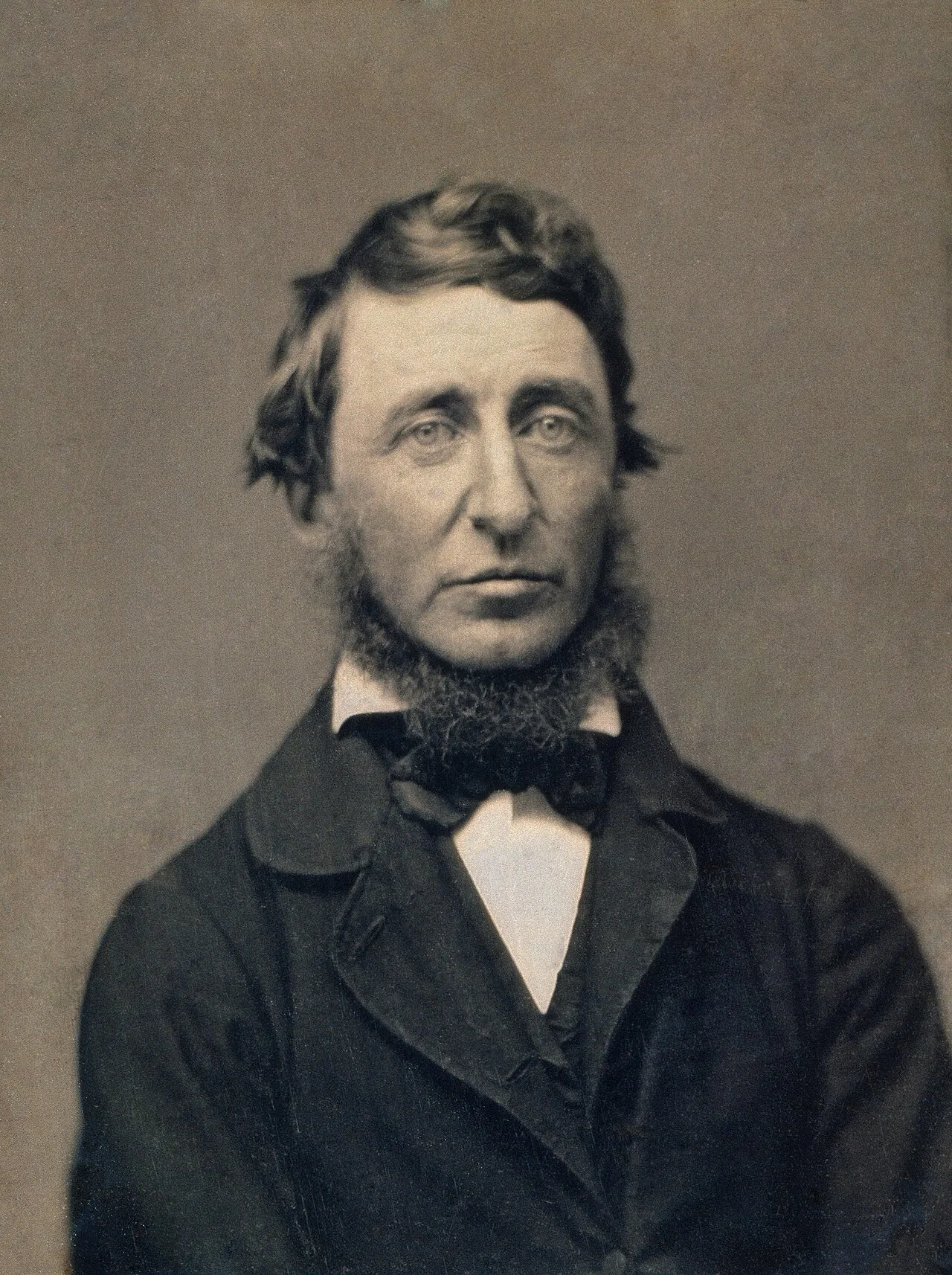
Figure 1: Henry David Thoreau (1817–1862), who defined the cost of a thing as “the amount of what I will call life which is to be exchanged for it, immediately or in the long run”—laying the philosophical foundation for autonomous living.
1. Existential Evacuation: The Starting Point of FIRE is Never a Spreadsheet
In the high-pressure centrifuge of the modern corporate machine, the first spark of the FIRE philosophy rarely ignites from an academic zeal for compound interest. Instead, it begins as a somatic alarm.
It is the moment you realize that your time, attention, and basic dignity are being systematically diluted by performative reporting, emotional tax, and hollow corporate narratives. At this juncture, your internal system initiates an emergency evacuation protocol. This aligns with the principles explored in The Depreciation of Labor and the Risk Management of Career Exits: the institution calculates only the wear-and-tear and replacement costs of its components, while the individual stakes their irreversible, non-renewable life capital.
To pursue genuine freedom, the first thing one must quit is not labor itself, but a pathological dependence on external validation systems. This awakening requires establishing three critical boundaries:
- The Boundary of Refusal: Cultivating the leverage to say “no” to absurd rules and meaningless friction, refusing to mortgage a lifetime of dignity to a single corporate carrot.
- An Internal Cadence: Withdrawing from institutionalized anxiety and refusing to be swept up in the systemic traps of The Comfort Zone Trap and the Myth of Constant Growth.
- The Narrative Rights of Life: Reclaiming time not as an assembly-line commodity to be sold, but as a private domain for experience, creation, and self-interpretation.
If the mind remains trapped in a race designed by others, a growing bank account merely yields a larger set of numbers to worry about. Capital only begins to deliver on its promise of redemption when the individual first anchors their mind in autonomy.
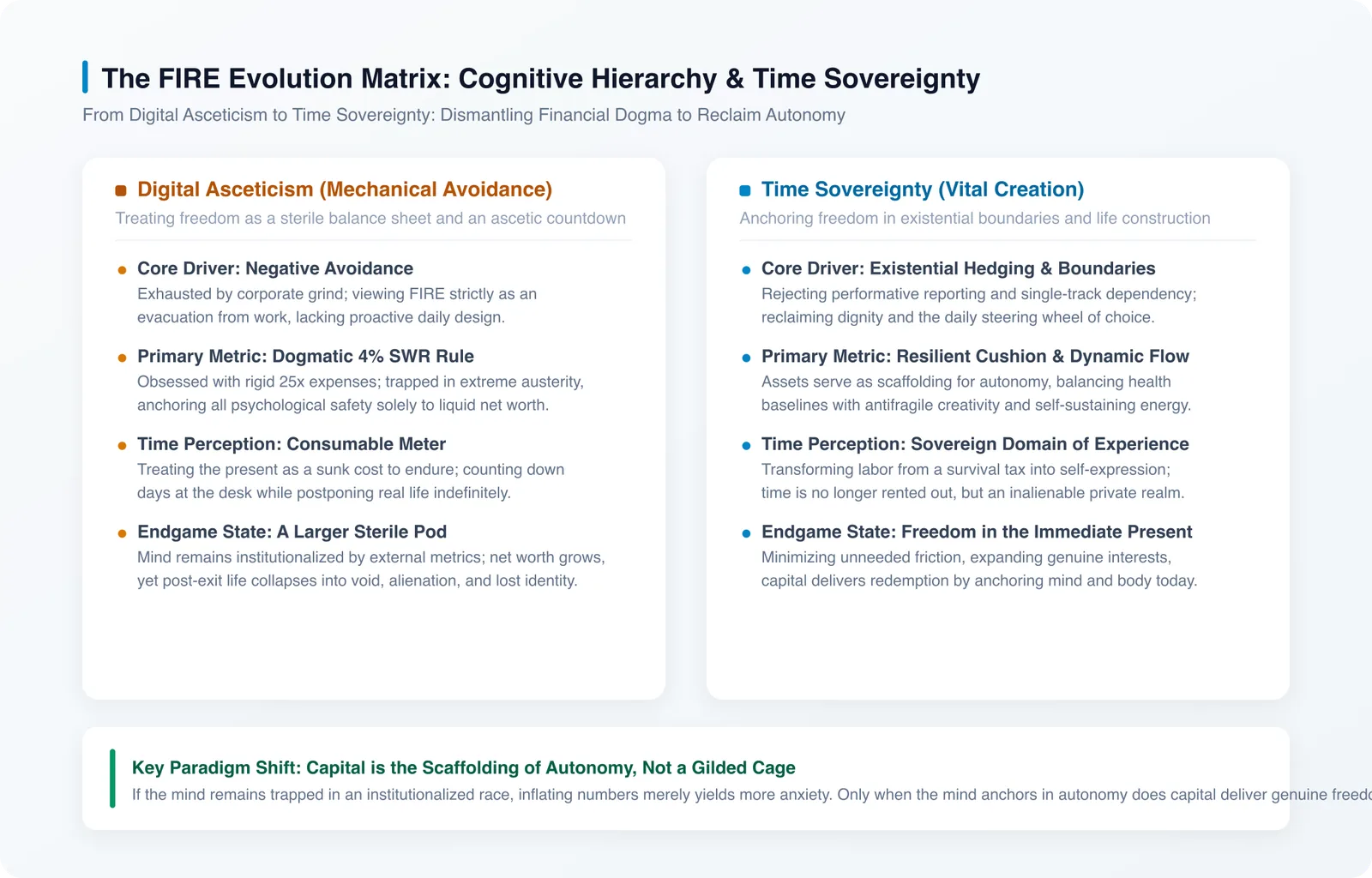
Figure 2: The FIRE Evolution Matrix: A multi-dimensional comparison between the digital asceticism trap and the time sovereignty model.
2. The Core of Freedom is Time Sovereignty, Not the Cessation of Labor
A binary misunderstanding dominates the discourse on early retirement: that work equals suffering, and retirement equals total inertia. Consequently, life is split into a miserable present and an empty, idle future.
Yet, as analyzed in Why Humans Need Freedom: Defensive Survival, Asymmetric Costs, and the Right of Exit, the core of freedom is never the evasion of action. It is holding the steering wheel of decision-making—Time Sovereignty.
- Escaping Forced Choices: The primary drive for freedom is reclaiming the right to wake up and decide what deserves your focus today. You no longer compromise your values to pay next month’s bills, nor do you perform enthusiasm in rooms that drain your soul.
- Reshaping the Contract with Work: “Retire Early” does not mean biological dormancy. It means transforming labor from a survival chip into a medium of self-expression and value creation. When money is no longer the sole driver of action, human effort can finally align with genuine conviction.
When labor is stripped of its coercive nature, it ceases to be a tax on survival and becomes the purest engine of human creativity.
3. From Escaping the Present to Constructing a Life
The motivational structure behind your pursuit of FIRE dictates the quality of your freedom once achieved. If your momentum is entirely negative—driven solely by a hatred of the corporate grind or exhaustion from hyper-competition—you will likely crash into a profound void the moment you cross the finish line.
Many who survive the long, ascetic march of capital accumulation discover they have lost their sense of purpose. The imaginary enemy that sustained their endurance has vanished, leaving them with no deep connection to the real world.
An autonomous mind must eventually confront a fundamental question:
“When you no longer need to sell your time for money, what kind of daily life do you actually want to construct?”
Freedom is not a vacuum. Without physical health, intellectual nourishment, genuine relationships, and deep-seated curiosities, an individual exiting the corporate system simply drifts from structured anxiety into unstructured alienation. To make autonomy sustainable, the focus must shift from “what I am escaping” to “what I am building.”
4. Freedom Begins Now: Capital is the Scaffolding, Not the Cage
The mathematical models of financial independence—savings rates, asset allocation, dynamic safe withdrawal rates—are the engineering scaffolding of your defense. But many mistake the scaffolding for the temple.
In pursuit of an arbitrary, “safe” net worth, people routinely break their bodies, neglect vital relationships, and treat every minor life pleasure as a betrayal of the goal. This brand of extreme frugality merely replaces corporate shackles with financial ones.
True autonomy is not a sudden mutation that occurs the moment your net worth hits a specific number. It is a muscle trained through daily practice:
- Keep the Master-Servant Relationship Clear: Assets are tools designed to serve your life experience, not idols to be worshipped at the expense of it.
- Practice Living in the Interim: Learn to live consciously on the way to financial independence. Protect your somatic baseline and cultivate sources of joy that do not rely on consumerism.
- Reclaim Sovereignty in Small Increments: Declining an empty social obligation, cutting out a vanity expense, or spending an hour reading in the morning light are all real-time redemptions of your freedom.
Freedom does not reside in a distant, post-numeric future. It begins the moment you reclaim your gaze and quietly, firmly, defend your boundaries in the immediate present.
Related Research & Topics
Tello Mobile eSIM
SafetyWing Nomad Insurance
* Disclosure: This post contains affiliate links. If you make a purchase through these links, V-G Journal may earn a small commission at no additional cost to you. We only recommend services we independently evaluate and trust.
FIRE and Golf:自由旅居之路
专注于为追求 FIRE 与品质生活的人群提供特惠打球权益与候鸟微度假。不持一砖一瓦,运营品质生活。