The 57-Year Inflection: Wealth, Time Sovereignty, and the Calculus of Marginal Utility
An exploration of the fundamental divide in financial independence: the pursuit of asset scale versus the reclamation of time. This essay analyzes the diminishing marginal utility of wealth against the rising shadow price of healthy years.

Executive Summary: When is financial independence actually achieved? The answer is never found in the absolute balance of an account, but in whether your primary anchor is “wealth” as an end or “sovereignty over time.”
As the life cycle progresses, the marginal utility of incremental wealth follows a classic logarithmic decay, while the marginal shadow price of healthy, free time climbs exponentially. James Shack, a prominent Chartered Financial Planner, proposed a provocative thesis: “57 is the inevitable intersection of wealth and time utility.” This essay examines the rigorous institutional and economic foundations of this inflection point and explores how individuals can restructure their own biological balance sheets.
I. The Great Divergence: Are You Chasing Wealth or Freedom?
In the discourse surrounding financial independence, the most pervasive—and expensive—confusion is treating the “pursuit of wealth” and the “pursuit of freedom” as synonyms.
In reality, these two objectives lead to diametrically opposed financial endgames and psychological states.
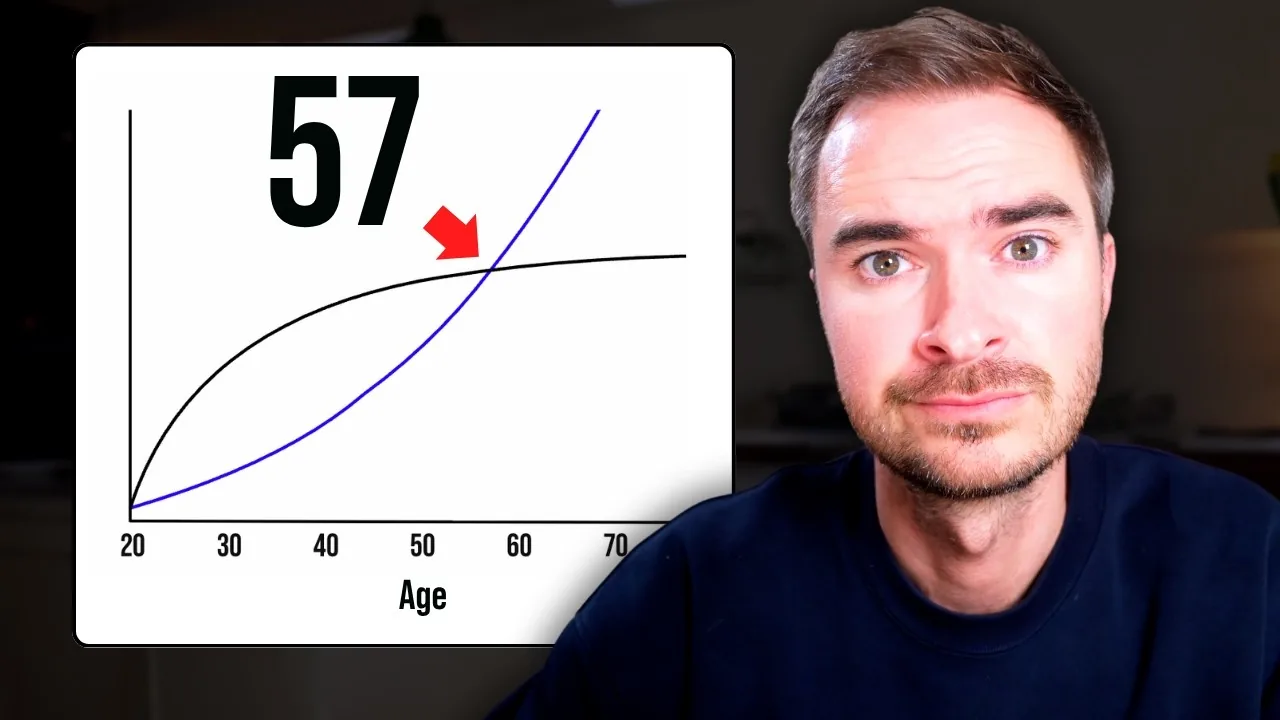 Figure 1: The marginal utility model of retirement at 57, as proposed by James Shack.
1. The Pursuit of Wealth: A Horizon in Constant Retreat
If the goal is the maximization of absolute asset figures, financial independence becomes mathematically non-convergent.
- The Hedonic Treadmill: Human adaptation to material increments is ruthlessly efficient. As assets jump from one million to ten, the reference frame for consumption and social comparison shifts in tandem—a phenomenon known as lifestyle inflation.
- The Competition for Positional Goods: Once wealth moves beyond basic security, it transforms into a tool for status signaling. Within the machinery of social comparison, there is always a larger portfolio on the horizon. The finish line is dynamic and perpetually receding.
- The Cognitive Burden of Scale: Massive wealth brings complexity—asset allocation, tax optimization, legal compliance, and drawdown defense. Many who appear wealthy are actually “asset-rich and time-bankrupt,” their schedules dictated by the very capital they supposedly own.
2. The Pursuit of Freedom: A Finite Buyout Equation
Freedom is not the license to do anything; it is Time Sovereignty—the absolute leverage to say “no” to tasks and people that do not align with one’s values.
When freedom is the objective, wealth is demoted from an end to a tool: a means to redeem one’s limited biological time from the external labor market.
In the realm of financial actuarial science, the formula for buying out time sovereignty is clear and convergent:
Sustainable Post-Tax Risk-Free Cash Flow ≥ Realistic Decent Living Expenses + Black Swan Risk Buffer
Once an individual audits their true needs and locks in an expense floor, the capital required to buy out time has a definitive ceiling. As explored in our analysis of Taoist Philosophy and Modern FIRE, if you pursue wealth, freedom is a perpetually delayed byproduct; if you pursue freedom, wealth is merely the minimum sufficient condition to remove survival constraints.
| Dimension | Pursuit of “Wealth” (Scale-Oriented) | Pursuit of “Freedom” (Sovereignty-Oriented) |
|---|---|---|
| Core Objective | Maximizing absolute asset totals | Maximizing autonomous time |
| Psychological Driver | Hedonic adaptation, status competition | Convergence of desire, safety floors |
| Convergence | Non-convergent; the goalpost moves | Convergent; threshold is fixed by cash flow |
| Time State | Asset management erodes leisure | Complete buyout of labor hours |
II. The Divergent Ledger: Diminishing Wealth vs. Appreciating Time
The “diminishing marginal utility of wealth” and the “increasing marginal utility of time” form the most profound resource revaluation in the second half of life.
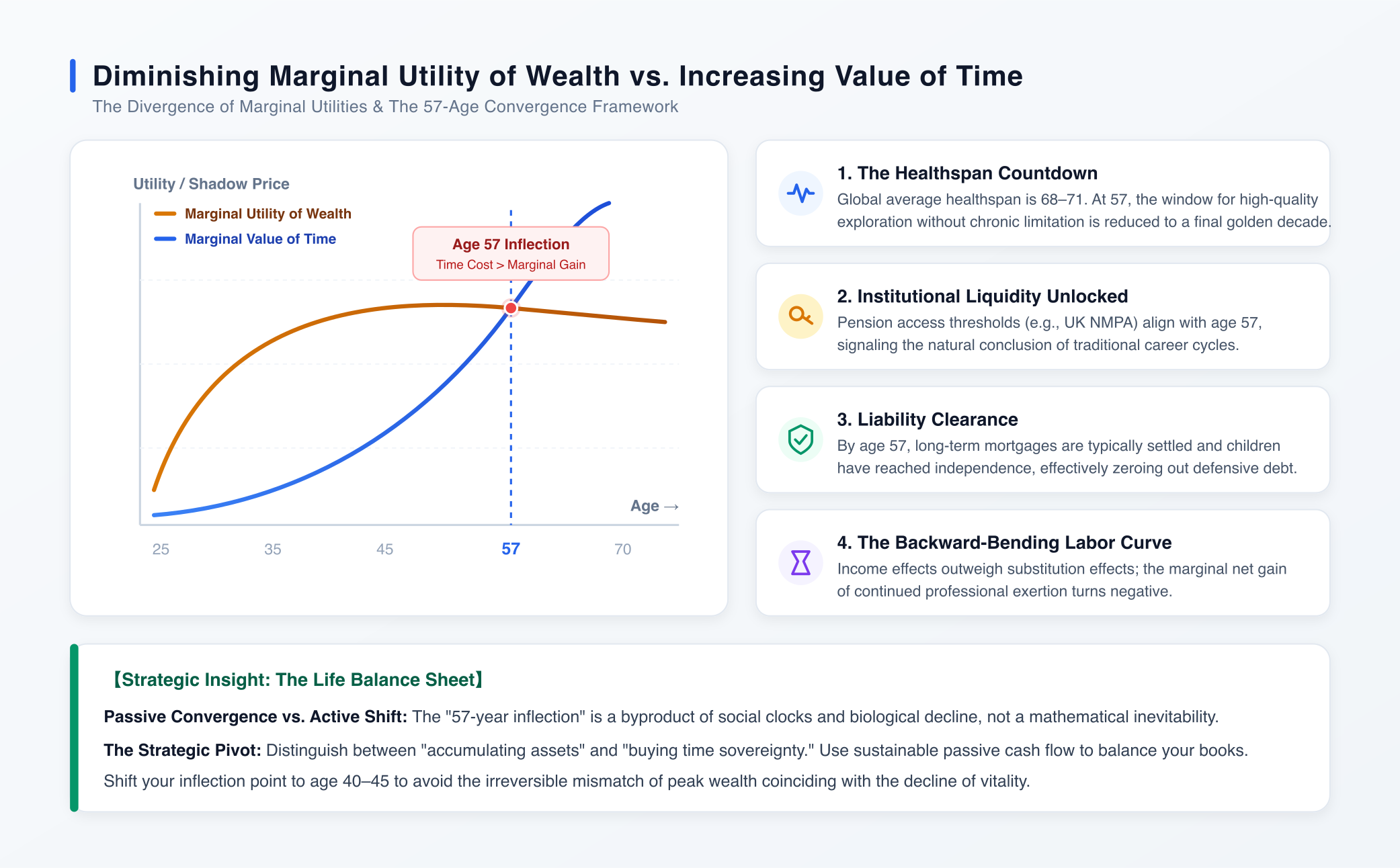 Figure 2: The dual-track intersection matrix of diminishing wealth utility and increasing time value.
1. Diminishing Marginal Utility of Wealth: From Exponential to Logarithmic
The Law of Diminishing Marginal Utility is a foundational axiom of microeconomics:
- The Security Phase (High Slope): The leap from zero to basic security—stable housing and health buffers—yields explosive marginal utility. It buys survival, dignity, and the removal of acute distress.
- The Maintenance Phase (The Logarithmic Plateau): Research by Nobel laureates Daniel Kahneman and Angus Deaton suggests that once income crosses the threshold of “comfortable security,” the marginal contribution of money to subjective well-being flattens significantly.
- The Zero-Utility Zone: In the later stages of life, incremental capital earned through high-stress labor cannot reverse arterial aging or buy back high-quality deep sleep. It eventually becomes nothing more than a fluctuating digital code on a screen.
2. The Exponential Pricing of Time: A Depleting Asset
Unlike currency, which can be recycled and accumulated infinitely, biological time is a non-storable, unidirectional, and rigidly depleting resource.
In intertemporal choice models, the “shadow price” of time skyrockets with age:
- The Depreciation of Healthspan: There is a critical distinction between lifespan (years alive) and healthspan (years of functional independence). WHO data shows average healthspans in major economies cluster between 68 and 71. Once mobility or cognitive health declines, the “experiential exchange rate” of time collapses.
- Non-linear Experience Discounting: A free year in one’s 50s—with energy, mobility, and sharp senses—can be converted into high-density “memory dividends” (hiking, travel, deep presence with family). A free year at 80, spent navigating hospital corridors, cannot replicate that quality of life.
- The Magnitude of Opportunity Cost: Selling a year of your life at 25 is trading from an abundant surplus. Selling 50 hours a week at 58 is sacrificing the final “Golden Window” of high-value exploration. As argued in Personal Time Pricing and the 900-Month Life Grid, the unit price of life-time follows an exponential curve in the final stretch.
III. The Logic of 57: Why the Intersection is Real
James Shack’s thesis—Once You Understand This, You’ll Stop Working Past 57—anchors this inflection point at age 57.
While utility is subjective and ordinal (meaning there is no universal constant like “57.5 years” for all humanity), the ages of 57 and 58 resonate globally because they represent the convergence of biological, institutional, familial, and labor supply cycles.
1. The Healthspan Ten-Year Countdown
Age 57 is a sensitive biological threshold:
- The individual is typically still healthy enough for vigorous activity and has the energy required to “stay fit.”
- However, relative to the average healthspan of ~70, the individual has roughly one decade of high-quality, autonomous “Golden Time” remaining.
- Continuing to trade this time for wealth that has already reached its utility plateau is a catastrophic asset misallocation: trading the scarcest resource (healthy time) for the most redundant one (excess capital).
2. Institutional Cash Flow Thresholds (The UK NMPA Factor)
Shack’s focus on 57 is partly rooted in UK regulatory shifts:
- Starting in 2028, the Normal Minimum Pension Age (NMPA) in the UK—the age at which one can legally access private pensions—rises from 55 to 57.
- 57 is the “unlock year” for the largest pool of deferred wealth for the middle class.
- While this varies by jurisdiction (e.g., 59.5 for US 401(k) penalty-free withdrawals), the principle remains: the arrival of institutional cash flow makes the marginal utility of a salary—after taxes and the “cost of working”—lower than the value of the pension itself.
3. The Clearing of the Family Balance Sheet
By age 57-58, most micro-familial cycles reach a conclusion:
- Offloading Dependents: Assuming a child is born when the parent is 28-30, that child is now 28, likely finished with education and economically independent.
- Debt Liquidation: A standard 25-to-30-year mortgage taken out in one’s early 30s typically reaches its final payment around age 57.
- The rigid defensive liabilities of the household drop off a cliff, drastically lowering the “burn rate” required to buy out one’s time.
4. The Backward-Bending Labor Supply Curve
In labor economics, the “Backward-Bending Labor Supply Curve” suggests that once wealth or wage rates pass a certain threshold, the income effect overrides the substitution effect.
By 57, most professionals have peaked in their career trajectory. The net gain of enduring office politics, commutes, and stress—when weighed against the rapid depreciation of the body—enters negative territory. The preference for leisure and autonomy finally crushes the desire for incremental wages.
| Pillar of Observation | Reality at Age 57-58 | Impact on Wealth/Time Decision |
|---|---|---|
| Biological Cycle | Approaching the 60s; health indicators shift; 10 years of “Golden Health” left. | Realization that “active days are numbered”; health multiplier forces time liquidation. |
| Institutional Cycle | UK NMPA 57 threshold; eligibility for “early retirement” or seniority benefits. | Passive cash flow activates; marginal utility of salary drops below the value of leisure. |
| Familial Cycle | Children are independent; 30-year mortgage is cleared. | Defensive liabilities hit zero; the “buyout price” for freedom shrinks. |
| Labor Cycle | Career ceiling reached; income effect dominates. | Net benefit of working turns negative when accounting for physical/mental friction. |
IV. The Strategic Takeaway: Don’t Wait for the Social Clock
Recognizing the 57-year inflection point is only the first step. The goal for the modern solo-enterprise or FIRE practitioner is to avoid two critical cognitive traps:
1. Beware of “One-More-Year Syndrome”
Prospect Theory in behavioral finance highlights our “Loss Aversion”—the pain of losing $10,000 is far greater than the joy of gaining it.
Many professionals with robust balance sheets remain trapped in the “One More Year” loop, seeking a phantom sense of security. They believe they are building a buffer against risk, but they are actually trading a high-certainty, high-value asset (healthy time) to hedge against a low-probability, illusory financial fear.
2. Left-Shift the Inflection Point
If you wait until 57 to reach the intersection of wealth and freedom, you are making a passive compromise forced by biological decline and institutional rules.
The tragedy of the passive exit is that by the time you own your time, your capacity to use it (metabolic rate, joint health, cardiovascular endurance) is already on a downward slope.
The proactive strategist should aim to “left-shift” this intersection to age 40 or 45 by:
- Converging Desires: Eliminating “status signaling” consumption to lower the capital threshold for freedom.
- Building Anti-Cyclic Cash Flow: Utilizing high-yield dividends, global fixed income, or “lean” micro-businesses to cover baseline costs early.
- Redefining Work: Moving from “labor-hour rental” to “Barista FIRE” or high-leverage consulting—work that provides flow and social value without the soul-crushing friction of the 9-to-5.
Financial independence is not a cold number in a bank account; it is a clear-eyed balance sheet of your remaining life-time.
By seeing through the saturation curve of money and the exponential pricing of aging time, you don’t have to wait until 57 to turn in your exam. Buying out your freedom while your energy is still at its peak is the ultimate victory in the modern economic system.
Related Research & Topics
Tello Mobile eSIM
SafetyWing Nomad Insurance
* Disclosure: This post contains affiliate links. If you make a purchase through these links, V-G Journal may earn a small commission at no additional cost to you. We only recommend services we independently evaluate and trust.
FIRE and Golf:自由旅居之路
专注于为追求 FIRE 与品质生活的人群提供特惠打球权益与候鸟微度假。不持一砖一瓦,运营品质生活。