Protocol De-risking: The 2017 Mar-a-Lago Summit and the Geopolitics of the Missing Fairway
A forensic analysis of the 2017 Mar-a-Lago summit, debunking the 'youth golf diplomacy' myth and examining how China's domestic anti-corruption campaign dictated the limits of international protocol.

Curator’s Note:
Regarding the first meeting between the Chinese and U.S. heads of state at Mar-a-Lago in April 2017, two dramatic narratives have long circulated in digital corridors. The first is whether Donald Trump extended a formal invitation to hit the links; the second is a more convoluted rumor—that a scheduled “youth golf friendship match” was aborted at the last minute due to the U.S. missile strike on Syria.By cross-referencing diplomatic archives, declassified White House memos, and the timeline of China’s internal “rectification” of golf courses, a clearer picture emerges. The “aborted youth tournament” is a piece of geopolitical apocrypha—a collage of fragmented truths stitched together by social media. The reality—where a “stroll on the lawn” replaced a “round on the course”—was a masterclass in Protocol De-risking, driven by the transmission of domestic political discipline into the theater of foreign affairs.
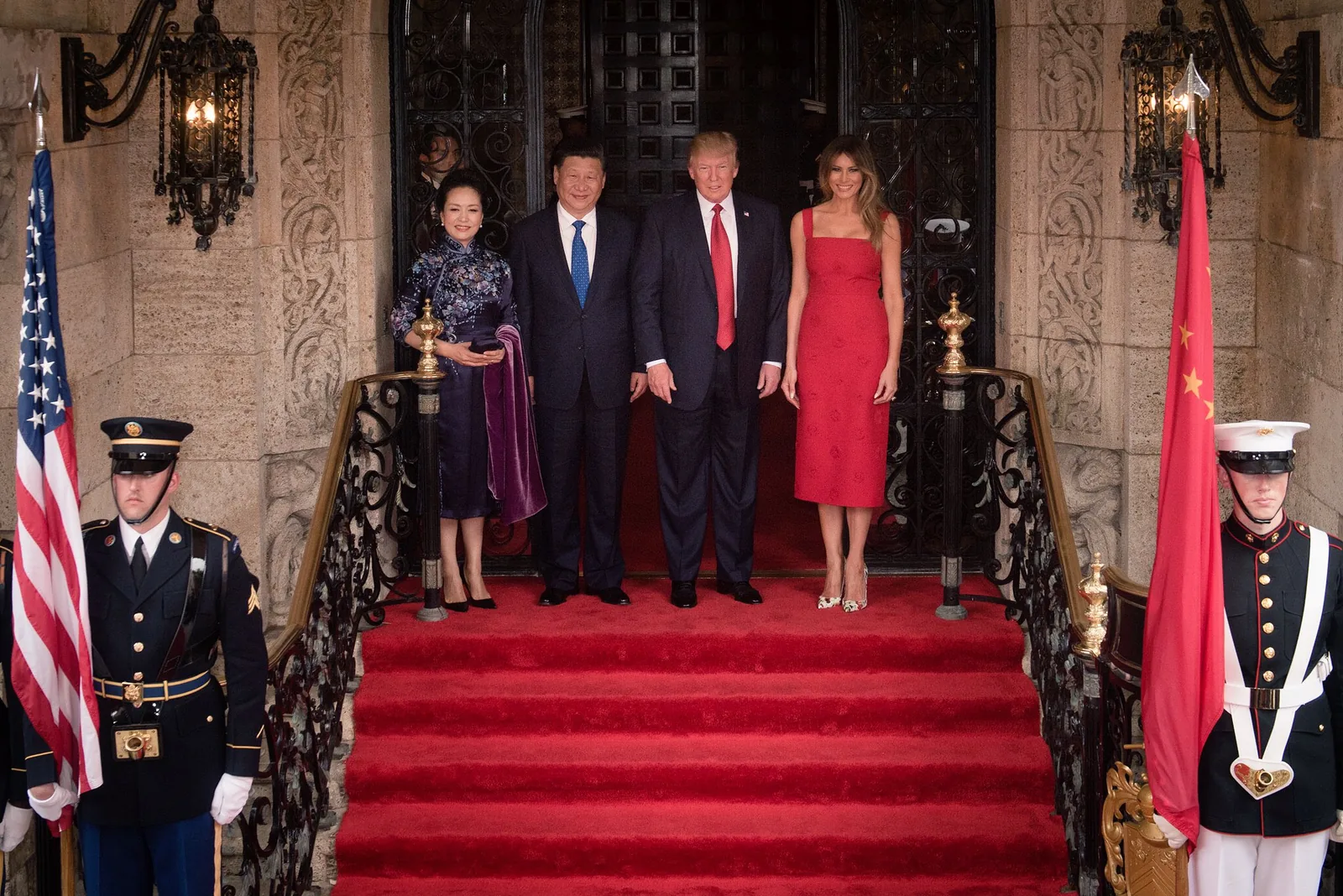
Figure 1: April 6, 2017. The first formal meeting between the U.S. and Chinese heads of state at Mar-a-Lago, Palm Beach (White House Official Archives).
I. Fact Check: Did “Golf Diplomacy” Actually Happen?
The global expectation for a golf-centric summit was fueled by a precedent set just two months earlier.
In February 2017, less than a month into his presidency, Trump hosted then-Japanese Prime Minister Shinzo Abe at Mar-a-Lago. The two played 27 holes, a move widely categorized by international media as textbook Golf Diplomacy. Given that Mar-a-Lago is essentially a luxury golf estate, the announcement of a Chinese delegation visit in April led the press to assume Trump would repeat the play.
However, White House archives and the actual execution of the visit tell a different story: No golf was ever scheduled, and no formal invitation to play was ever issued in the official itinerary.
1. Pre-emptive Exclusion
During the background briefing for senior White House officials on the eve of the summit, the spokesperson responded to repeated media inquiries with a definitive “No golf.”
The preparations, led by the Chinese diplomatic team and White House senior advisors (including Jared Kushner and Secretary of State Rex Tillerson), focused on two rigid pillars:
- Economic De-escalation: Launching the Comprehensive Economic Dialogue and the “100-Day Action Plan.”
- Security Consultations: Closed-door sessions regarding the North Korean nuclear crisis.
The schedule was dense and somber, leaving no window for leisure-based social sports.
2. The Protocol Design: The Stroll vs. The Swing
A review of the official bilateral movements from April 6–7, 2017, shows that informal interactions were strictly confined to the estate’s architecture and gardens:
- April 6 (Evening): Welcome reception, bilateral working dinner, and a performance of Chinese songs by Trump’s grandchildren.
- April 7 (Morning): Expanded meetings on trade and security mechanisms.
- April 7 (Noon): A walk on the inner lawn (the “garden stroll” cited in official communiqués), followed by a working lunch.
- April 7 (Afternoon): The Chinese delegation departed for the airport as per the original schedule.
At no point did the leaders step onto a fairway.
II. Deep Dive: Domestic Rectification and Diplomatic Constraints
To understand why the White House refrained from an invitation and why the Chinese side meticulously avoided the course, one must look beyond the Florida turf to the “rectification storm” then ravaging the golf industry in China.
The Mar-a-Lago summit occurred exactly as China’s multi-year crackdown on golf courses reached its zenith.
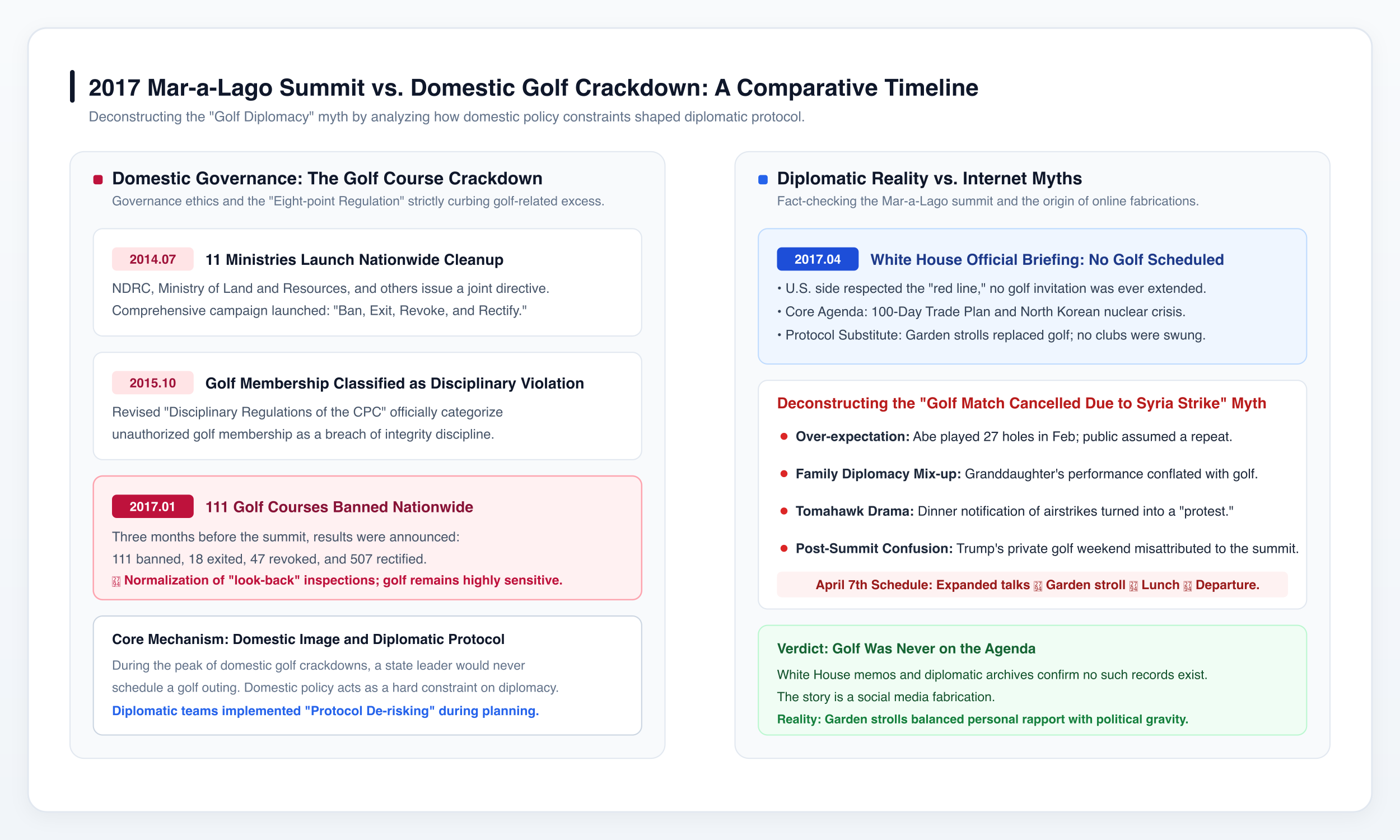
Figure 2: Comparison of the 2014–2017 golf industry cleanup in China and the Mar-a-Lago diplomatic protocol.
1. The Precision of the Timeline
The institutional evolution of China’s golf governance aligns perfectly with the summit’s constraints:
- July 2014: The 11-Department Cleanup
The National Development and Reform Commission (NDRC) and ten other ministries launched a nationwide crackdown on illegal land use, groundwater extraction, and the occupation of forest land by golf courses. - October 2015: Codifying Discipline
The CPC issued revised disciplinary regulations (effective Jan 1, 2016). Article 87 explicitly listed “obtaining, holding, or using golf club memberships” as a violation of integrity rules. Golf was officially codified as a symbol of “hedonism and extravagance.” - January 2017: The Final Tally (3 Months Before the Summit)
The NDRC announced the results: 111 courses were banned, 18 exited, 47 were canceled, and 507 were “rectified.” A permanent monitoring mechanism was established to prevent new illegal growth.
2. The Logic of Transmission: Domestic Ethics as Foreign Protocol
In a political climate where 111 courses had just been shuttered by the state, it was ideologically impossible for the top leadership to be seen swinging a club on the international stage.
In modern statecraft, a leader’s diplomatic image must remain consistent with domestic policy:
- If the state is purging golf as a symbol of elite excess, a leader playing golf abroad creates a “policy signal” conflict.
- In the Chinese context, golf carries metaphors of resource monopolization and class privilege. Any movement on a course would be magnified under the microscope of both domestic society and international observers.
3. Protocol De-risking
This policy rigidity formed the prerequisite for the summit. Chinese protocol teams were exceptionally strict about the boundaries of the visit, pre-emptively stripping away any golf elements that could trigger political misinterpretation. The U.S. side, well-briefed on these internal sensitivities, opted for “de-sensitized” protocol, replacing the fairway with the garden.
III. Deconstructing the Myth: The “Aborted Youth Tournament”
If no golf was ever planned, why does the story of a “canceled youth tournament due to Syria strikes” persist on X (formerly Twitter) and in overseas media?
This is a classic case of Diplomatic Apocrypha—fictional narratives constructed from real news fragments. The myth was assembled from four distinct pieces of reality:
Fragment 1: The “Compromise” Speculation
After the Abe visit, media speculation about “Golf Diplomacy” was rampant. When commentators realized the Chinese leader could not play due to anti-corruption optics, some hypothesized a compromise: “Perhaps they will watch youth players instead?” This was an unofficial “brainstorm” by pundits that, through repetition, was eventually presented as a “scrapped plan.”
Fragment 2: “Grandchild Diplomacy”
During the summit, Trump’s grandchildren, Arabella and Joseph, sang Jasmine Flower and recited the Three Character Classic for the guests. This “family diplomacy” went viral. In the game of digital “telephone,” the involvement of the Trump grandchildren—specifically Kai Trump, who is a high-level competitive golfer—morphed into a “youth golf match.”
Fragment 3: The Tomahawk Strike Drama
As dessert was served on April 6, Trump informed his guest that 59 Tomahawk missiles had been launched at a Syrian airbase. This high-stakes moment provided the perfect dramatic backdrop for rumors. Self-media creators, seeking engagement, invented a narrative of “Chinese protest,” claiming the next day’s (non-existent) golf event was canceled as a snub.
Fragment 4: Trump’s Personal Weekend Round
After the Chinese delegation departed on the afternoon of April 7, Trump stayed at Mar-a-Lago for the weekend and played golf on Saturday. U.S. media criticized him for “launching missiles, negotiating with superpowers, and golfing all in one weekend.” This criticism of Trump’s personal habits was misinterpreted by the Chinese-speaking internet as being part of the official summit schedule.
Fact Check: The Unaltered Schedule
The official timeline of April 7, 2017, shows a seamless execution of the pre-planned itinerary:
| Time | Scheduled & Executed Itinerary | Core Outcome / Venue |
|---|---|---|
| April 7 Morning | Expanded Bilateral Meetings | Framework for Economic Dialogue & “100-Day Plan” |
| April 7 Noon | Garden Stroll & Conversation | Official “Garden Walk” followed by Working Lunch |
| April 7 Afternoon | Delegation Departure | U.S. officials escorted the party to the airport as planned |
Neither the official communiqués nor the memoirs of participants like Jared Kushner, John Bolton, or Mike Pompeo mention a youth golf match.
IV. Conclusion: Protocol as a Mirror of Governance
In diplomacy, there are no small matters; protocol is always politics.
The “No Golf” arrangement of 2017 was not a whim of Trump’s, nor was it a casualty of war. It was the inevitable result of domestic political context, the “iron red lines” of Party discipline, and the precise calculations of professional diplomatic teams.
By stripping away the layers of geopolitical folklore, we see the summit for what it was: a reflection of institutional reality. A nation’s movements on the diplomatic stage are always the most faithful projection of its domestic political ethics and core governance order.
Extended Reports & Clusters
To understand the role of golf in commercial strategy and regional governance, see:
Related Research & Topics
Tello Mobile eSIM
SafetyWing Nomad Insurance
* Disclosure: This post contains affiliate links. If you make a purchase through these links, V-G Journal may earn a small commission at no additional cost to you. We only recommend services we independently evaluate and trust.
FIRE and Golf:自由旅居之路
专注于为追求 FIRE 与品质生活的人群提供特惠打球权益与候鸟微度假。不持一砖一瓦,运营品质生活。