The Mbappé-Wallace Divergence: Geopolitical Strategy vs. Commercial Breach
The fallout from Kylian Mbappé’s recent disparaging remarks regarding China is often misattributed to a simple 'money-talks' dynamic. By contrasting this with Mike Wallace’s 2000 interview of Jiang Zemin, we reveal the profound shift from high-stakes geopolitical statecraft to the mundane enforcement of modern commercial contracts.

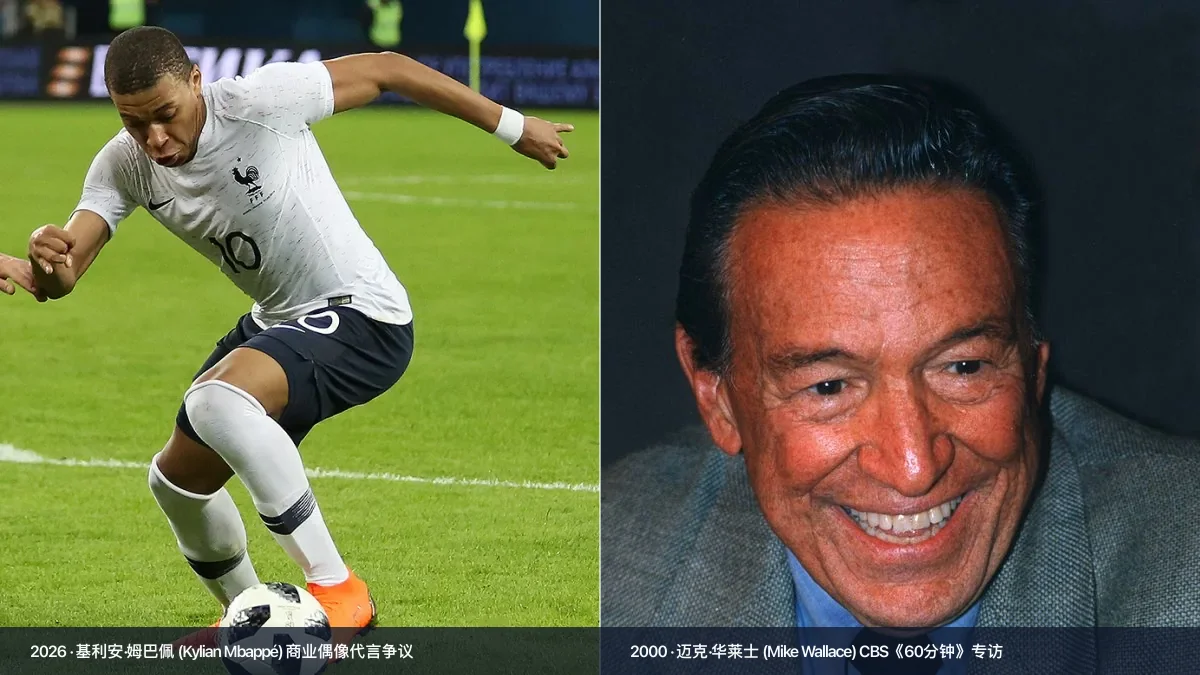
Figure 1: Kylian Mbappé (left), embroiled in a 2026 contract termination crisis, and Mike Wallace (right) during his seminal 2000 Beidaihe interview.
In late October 2026, French football icon Kylian Mbappé casually remarked on a podcast that he enjoyed using a meme depicting his own face superimposed over a late Chinese leader, flippantly labeling it a “Chinese dictator.” The backlash was instantaneous. Within hours, major Chinese sponsors—including Mengniu and Dongpeng Beverage—terminated their contracts and purged all promotional materials, triggering a textbook case of cross-border reputational meltdown.
Amidst the ensuing noise, a seductive narrative has taken hold in online discourse: “Why was Mike Wallace, the legendary CBS anchor, able to look a Chinese leader in the eye in 2000 and call him ‘the last major Communist dictator’ without consequence, while Mbappé is canceled for a mere quip? The answer is simple: Wallace didn’t need Chinese money, while Mbappé does. Money dictates backbone.”
While it is true that Wallace did not rely on the Chinese market, reducing that historic journalistic confrontation to a crude calculation of “who pays whom” ignores the strategic complexity of the era. It degrades a high-stakes geopolitical maneuver into a petty squabble, obscuring the vast chasm between institutional confidence and the legal realities of modern commercial endorsement.
I. The Commercial Logic: Wallace’s Bread and Butter
In the ecosystem of commercial television, Wallace was no ascetic monk; he lived by ratings, subscriber data, and high-end sponsorship.
- The Institutional Moat: As the face of CBS’s 60 Minutes, Wallace commanded an audience of millions of American middle-class voters. His sponsors were global conglomerates like General Motors and Pfizer. His professional leverage was built entirely on his persona as the “Grand Inquisitor” of the West. He made his name by making the powerful—from Khomeini to Putin—squirm.
- Immunity from Corporate Capture: In 2000, Western media conglomerates were not yet shackled to global box-office receipts, theme park access, or the complex supply chains that define today’s corporate landscape. CBS had no dependency on the Chinese market, nor did it require state-issued licenses to operate. His audience was the American living room, not the global boardroom.
- The Inverse of Professional Suicide: In Wallace’s arena, had he been soft or compliant with a foreign leader, his credibility would have evaporated overnight. His professional value was directly proportional to his sharpness.
II. Strategic Opportunity: Why Invite the Lion into the Cage?
The real question is not why Wallace dared to ask, but why the Chinese leadership agreed to the interview without pre-set conditions and allowed it to be broadcast in its entirety during American prime time.
This was not a ambush; it was a calculated strategic move on the eve of China’s accession to the WTO:
- The WTO Window: In the summer of 2000, the U.S. Congress was debating the Permanent Normal Trade Relations (PNTR) act. This was the final gate for China to enter the global trade system.
- Shattering the Cold War Narrative: China needed to communicate directly with the American public and lawmakers. They needed to prove that the leadership was not a collection of rigid, ideology-driven puppets, but a rational, modern, and sophisticated governing body.
- The “Global Passport”: A soft-ball interview on state media would have been dismissed as propaganda. Only by surviving the scrutiny of the West’s most feared “journalistic assassin” could China achieve the PR breakthrough necessary to dismantle Western prejudice.
III. Statesmanship: Playing by the Opponent’s Rules
When Wallace played the “dictator” card, Jiang Zemin did not walk out. He smiled and dismantled the premise.
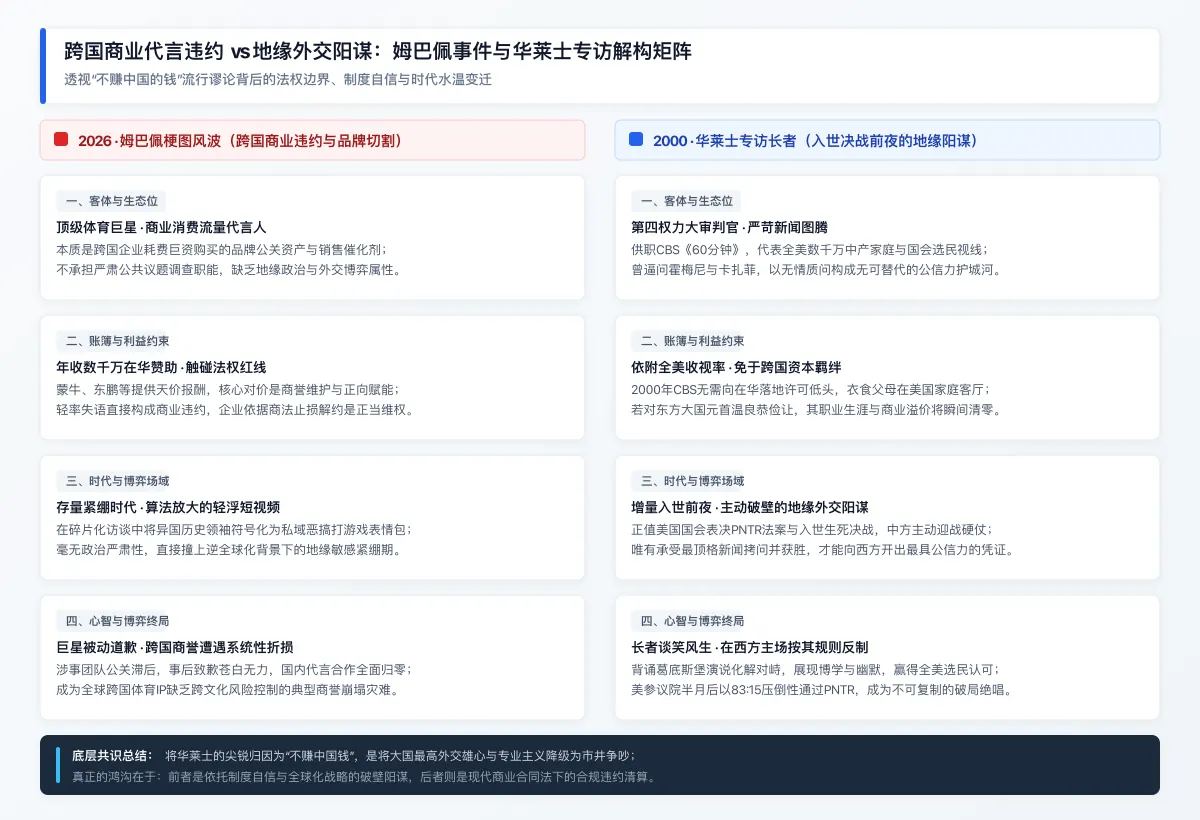
Figure 2: Deconstructing the Mbappé contract breach versus the Wallace geopolitical maneuver.
Video: Historic CBS 60 Minutes footage of Mike Wallace pressing Jiang Zemin on the "dictator" label (Bilingual Subtitles, 1:53)
Jiang utilized the moment to demonstrate a rare form of political charisma:
- Speaking the Language of the West: He recited the Gettysburg Address and quoted Western history, framing China’s development within a universal vocabulary.
- Humor as a Shield: He maintained national dignity while using wit to neutralize the confrontational atmosphere.
- Strategic Success: The interview showcased a confident, erudite leader. Two weeks later, the U.S. Senate passed the PNTR act by a landslide, clearing the path for China’s 2001 WTO entry.
IV. The Mbappé Incident: Breach of Contract, Not Political Debate
The Mbappé incident exists in a different universe.
- Role Misalignment: Mbappé is neither an investigative journalist nor a diplomat. He is a professional athlete—a “living billboard” whose value is derived from his public image.
- The Morality Clause: Every major endorsement contract contains a “morality clause.” These clauses exist to protect the brand from the spokesperson’s potential to alienate the consumer base through discriminatory or offensive remarks.
- Legal Rectification: When Chinese brands terminated their contracts, they were not engaging in “political censorship”; they were executing standard legal risk management. Had a Western celebrity mocked a sensitive racial or historical trauma in the West, Nike or Adidas would have initiated the same termination process within hours.
To frame this as a clash of “free speech” versus “money” is to ignore the fundamental nature of modern commercial law.
V. The Shift: From Strategic Confidence to Defensive Stasis
Many today default to the “money-talks” explanation because we live in an era of deglobalization and zero-sum games. We have become accustomed to corporate capitulation, leading us to believe that financial leverage is the only law of the land.
The 2000 Beidaihe interview was a singular event because it required more than just a fearless journalist; it required a leader with the strategic depth and institutional confidence to hold their ground under the harshest scrutiny. It was not a transaction of money, but a historical contract built on the foundation of openness and strategic intent.
Related Research & Topics
Tello Mobile eSIM
SafetyWing Nomad Insurance
* Disclosure: This post contains affiliate links. If you make a purchase through these links, V-G Journal may earn a small commission at no additional cost to you. We only recommend services we independently evaluate and trust.
FIRE and Golf:自由旅居之路
专注于为追求 FIRE 与品质生活的人群提供特惠打球权益与候鸟微度假。不持一砖一瓦,运营品质生活。