The LGFV Debt 'Zeroing' Myth: Restructuring, Financial Repression, and the Safety of Household Wealth
A deep dive into the rumors surrounding the 2027 LGFV debt clearance and the 2028 implicit debt swap. We analyze the macro transmission mechanisms—from declining deposit rates to the marketization of public services—and the reality of household wealth security.

Executive Summary: Public discourse has recently been flooded with speculation regarding a “total clearance of LGFV debt by 2027” and the potential seizure of private deposits to fund this resolution. From a structural and institutional perspective, these rumors stem from a fundamental conflation of policy concepts. The regulatory timeline is clear: the goal is for Local Government Financing Vehicles (LGFVs) to “exit the regulatory list” by June 2027 and for implicit debt to be converted into explicit government bonds by the end of 2028. As independent legal entities, LGFVs cannot have their commercial debts erased by administrative fiat. The debt resolution process does not involve the direct confiscation of savings or pensions; instead, it relies on “financial repression”—maintaining low interest rates and ultra-long durations to socialize the cost over time. For the individual, the real threat is not the seizure of assets, but the permanent erosion of risk-free yields and the inevitable default of high-yield, “non-standard” assets in weaker regions.
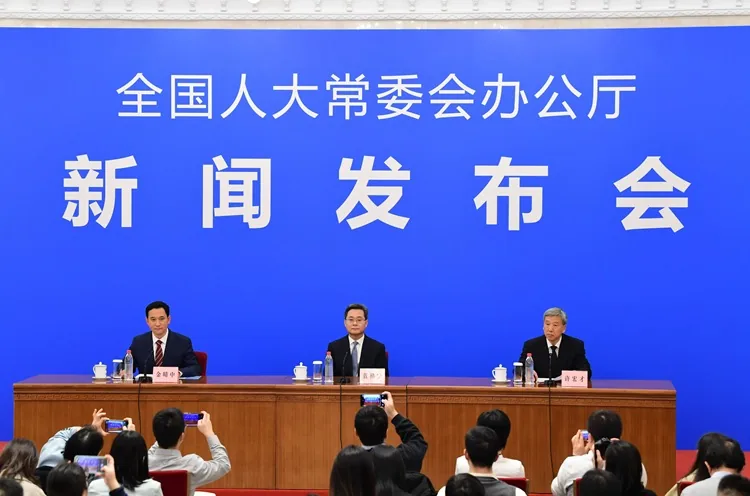
Figure 1: November 2024 press conference regarding the expansion of local government debt limits for implicit debt replacement.
I. Tracing the Concept: The Misreading of “2027 Debt Zeroing”
In the official lexicon of fiscal and financial regulation, the term “administrative zeroing of LGFV debt” does not exist. The “2027 Zeroing Myth” circulating in the public sphere is a fragmented synthesis of requirements from two major policy documents.
To understand the reality, we must deconstruct the institutional mandates of these frameworks:
1. The “De-platforming” Mandate of Document No. 150 (2024)
In August 2024, the People’s Bank of China (PBOC), the Ministry of Finance, and other regulators issued the Notice on Regulating the Exit of Financing Platforms (Yinfa [2024] No. 150). This document established a specific timeline: Provinces must push LGFVs to exit the regulatory list by the end of June 2027.
Exiting this list (commonly referred to as “de-platforming”) requires meeting three rigid criteria:
| No. | Hard Criteria for Exiting the Platform List | Substantive Regulatory & Legal Boundary |
|---|---|---|
| 1 | Zeroing of Implicit Government Debt | All debt recorded in the Ministry of Finance’s monitoring system must be fully repaid via government replacement bonds or the entity’s own legal funds. |
| 2 | Divestment of Government Financing Functions | The entity must issue a legal pledge to no longer borrow on behalf of local infrastructure projects, severing the implicit fiscal backing of the local government. |
| 3 | Commercial Debt Resolution or Creditor Consent | If commercial financial debts remain, the entity must obtain written consent from financial institutions holding at least two-thirds of the total debt share. |
“De-platforming” removes the “financing platform” label and the implicit sovereign credit guarantee; it does not mean the LGFV is liquidated, nor does it mean its legal debts to financial institutions are wiped out. Once off the list, these entities transition into general competitive State-Owned Enterprises (SOEs) responsible for their own profits and losses. Their remaining commercial debts must still be serviced through operational cash flow and asset management.
2. The 2028 Fiscal Swap Timeline for Implicit Debt
The second source of confusion is the 2018 top-level design for resolving local government implicit debt, which set a 5-to-10-year window (ending in 2028) to fundamentally neutralize implicit liabilities.
The “bazooka” stimulus approved in November 2024—allocating 6 trillion RMB in debt limits over three years plus 800 billion RMB annually for five years—aims to reduce the stock of implicit debt from 14.3 trillion RMB to below 2.3 trillion RMB by the end of 2028.
This is a transparency exercise: replacing high-cost, short-term “off-balance-sheet” debt with low-interest, long-term “explicit” local government bonds. It is a restructuring of the bond market, not a default or a cancellation.
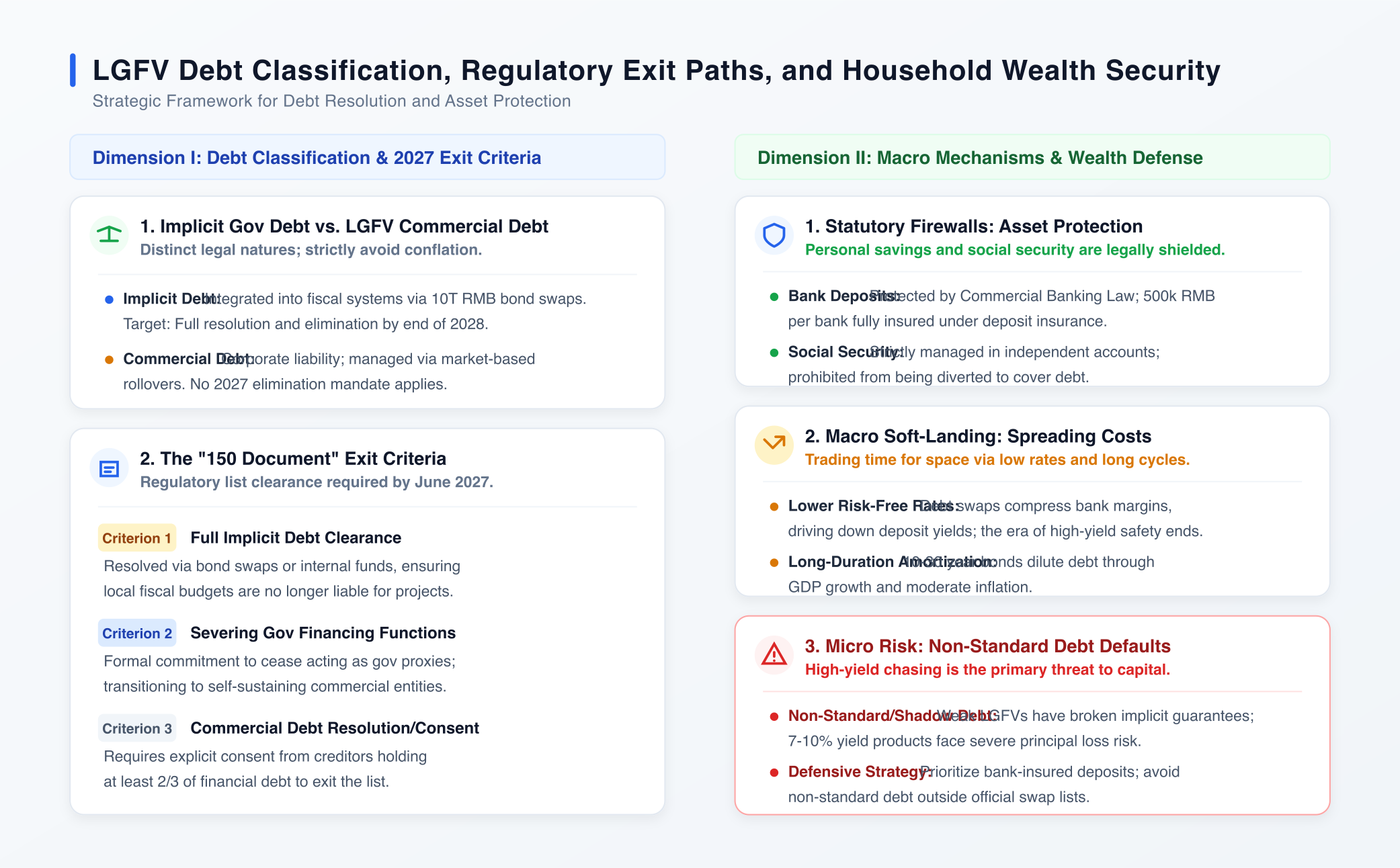
Figure 2: The legal classification of local debt, the 2027 de-platforming path, and the defensive architecture of household assets.
II. Transmission Mechanisms: How Debt Resolution Impacts Private Life
Debt resolution is not merely a bookkeeping exercise on a balance sheet. This “surgical” financial operation, which trades time for space, transmits to the macroeconomy and micro-households through four primary channels:
1. Defusing Systemic Triggers to Protect Deposits
The primary buyers of LGFV debt are commercial banks, mutual funds, and insurance asset managers. If local implicit debt were allowed to default in a chaotic manner, the first casualties would be the balance sheets of commercial banks and the Net Asset Value (NAV) of retail wealth management products.
By swapping unpredictable short-term debt for long-term, sovereign-grade bonds, the state is building a liquidity buffer between banks and failing platforms. This prevents a credit chain rupture that could lead to bank runs.
2. Clearing Supply Chain Arrears
For years, LGFVs with restricted cash flows failed to pay contractors, leading to a “triangular debt” crisis. This hit private construction firms, material suppliers, and design institutes, eventually manifesting as unpaid wages for migrant workers and layoffs in the private sector.
The new replacement bonds have strict “closed-loop” payment requirements. The priority is clearing arrears owed to private enterprises. Unclogging this chain helps SMEs restore liquidity and stabilizes the employment floor.
3. The Decline of the Risk-Free Rate: A Yield Sacrifice
During the era of high-leverage expansion, LGFVs borrowed at 6%–9% through shadow banking. This high-cost borrowing supported the 4%–6% annual returns on retail trusts and “guaranteed” bank wealth management products.
As debt resolution progresses:
- High-interest implicit debt is replaced by 2% government bonds.
- The yield on interest-earning assets for commercial banks shrinks, pushing net interest margins (NIM) to historic lows.
- Banks are forced to repeatedly cut deposit rates and yields on Certificates of Deposit (CDs).
The era of “living off high-interest, risk-free deposits” is over. Household savings are effectively providing the low-cost capital necessary to subsidize the national debt restructuring.
4. Re-pricing Public Utilities
In the past, LGFVs provided subsidized water, gas, heating, and public transit, backed by implicit fiscal guarantees.
Under the “de-platforming” mandate and the shift toward self-sufficiency, local governments can no longer provide unlimited subsidies. To ensure cash flows cover operational costs and debt interest, many regions are moving toward market-based pricing for utilities. Households should expect a structural adjustment in the cost of basic living services.
III. Defensive Analysis: Is the “Coffin Money” at Risk?
The “coffin money” that many citizens worry about refers to bank deposits and future social security pensions.
1. Legal Firewalls and Institutional Isolation
From a legal and regulatory standpoint, the notion of directly seizing deposits or diverting pension funds to fill local debt holes is a non-starter:
- Statutory Protection of Deposits: Under the Commercial Banking Law and the Deposit Insurance Regulations, individual savings are legally protected. Even in extreme cases of institutional failure, principal and interest up to 500,000 RMB are 100% guaranteed. Private deposits are legal property; there is no legal mechanism to “equalize” them to pay off SOE liabilities.
- The Red Line on Pension Funds: According to the Social Security Law, these funds are managed under a strict “dual-line” fiscal account system. They are independently managed by the National Council for Social Security Fund and provincial authorities. Local governments are strictly prohibited from misappropriating these funds to balance general budgets or clear LGFV debts. As analyzed in our Report on the Pension Gap, the long-term pressure on the pension system stems from demographic aging and actuarial ratios, not LGFV debt contagion.
2. The Real Path: Financial Repression and Long-Cycle Dilution
Debt does not vanish into thin air. In a modern monetary system, massive debt is resolved through “soft socialization”:
- “Financial Repression”: By keeping policy rates low for an extended period, the interest burden on local governments is reduced by hundreds of billions of RMB annually. Conversely, the real return for savers is compressed.
- “Duration Extension”: By issuing 10, 20, or 30-year bonds, the state flattens the debt mountain. Over three decades, the relative weight of this debt is diluted by nominal GDP growth and moderate inflation. As discussed in our Report on Negative Household Credit, families holding large amounts of low-interest cash will see their real purchasing power gradually eroded over time.
3. The Micro-Risks Households Should Fear
The real threat to micro-households is not a phantom deposit seizure, but a path dependency on “implicit guarantees” and the pursuit of unsustainable yields:
- The Collapse of Non-Standard LGFV Products: Under Document 150, weak LGFVs that are not on the “swap list” are losing their fiscal backing. Their “non-standard” products—often sold through local exchanges or wealth management firms at 7%–10% interest—are at high risk of default. The state will not bail these out.
- Securing the Liquidity Floor: In a macro cycle of deleveraging, the fundamental defense for any household is to accept the reality of low interest rates and credit polarization. Abandoning the fantasy of “high-yield, zero-risk” products and maintaining safe cash flow within legally protected bank accounts is the only way to navigate the restructuring of the national balance sheet.
Related Research & Topics
Tello Mobile eSIM
SafetyWing Nomad Insurance
* Disclosure: This post contains affiliate links. If you make a purchase through these links, V-G Journal may earn a small commission at no additional cost to you. We only recommend services we independently evaluate and trust.
FIRE and Golf:自由旅居之路
专注于为追求 FIRE 与品质生活的人群提供特惠打球权益与候鸟微度假。不持一砖一瓦,运营品质生活。