The Irvine Realtor Case: Geopolitical Friction and the Fate of the Micro-Asset
The arrest of a California realtor at LAX reveals the mechanics of transnational surveillance and the legal 'gray zone' of 18 U.S.C. § 951. An analysis of how individuals are weaponized as disposable tools in the escalating shadow war between global powers.

Executive Summary: On October 4, 2026, Wanying “Heather” Zhang, a 34-year-old realtor based in Irvine, California, was intercepted by FBI agents at Los Angeles International Airport (LAX) while attempting to board a flight to Shanghai. Prosecutors allege she acted as an unregistered agent of a foreign government (18 U.S.C. § 951), conducting clandestine surveillance on the family of a high-ranking Taiwanese official. This essay deconstructs the case to clarify the legal lethality of “Espionage-Lite” charges, examines how micro-individuals are captured by institutional ties to become expendable geopolitical tools, and outlines a defense of cognitive sovereignty for the modern digital citizen.
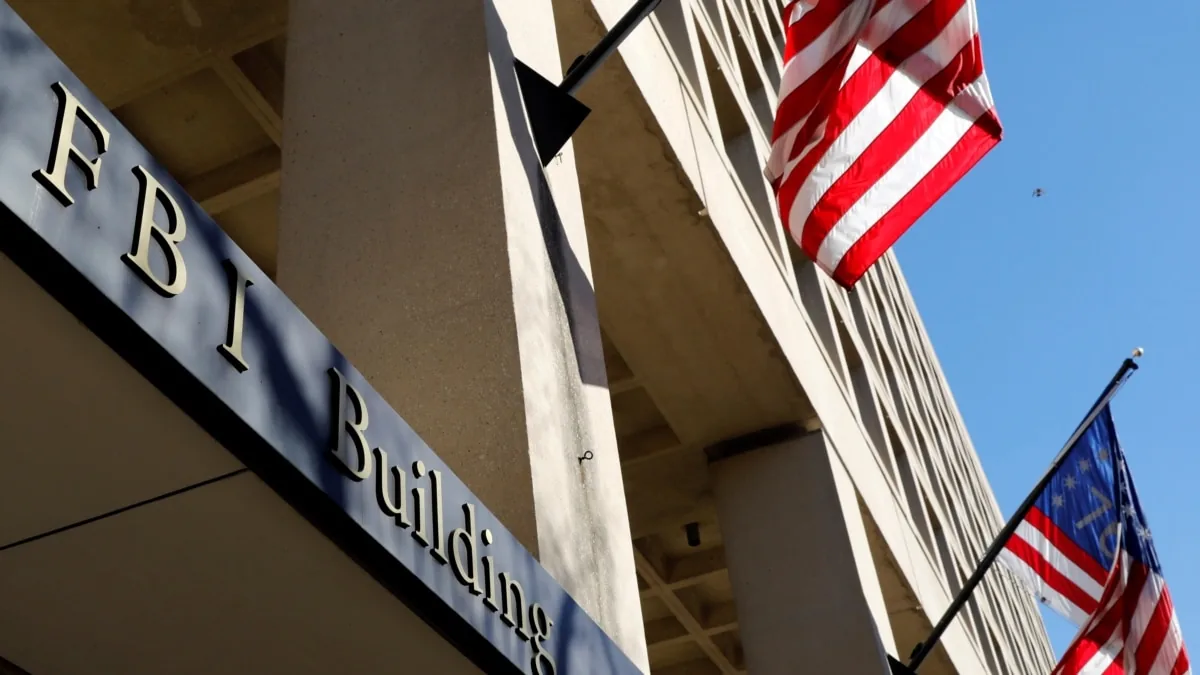
Figure 1: The Federal Bureau of Investigation (FBI) serves as the enforcement core for counterintelligence and unregistered foreign agent investigations.
I. The LAX Interception: The Dissonance of Middle-Class Veneer
On October 4, 2026, at a boarding gate for a direct flight to Shanghai, a micro-operation spanning the Pacific came to an abrupt halt as federal agents flashed their credentials.
The woman taken into custody was Wanying “Heather” Zhang. To the public, she was a quintessential Irvine professional—a full-time real estate agent navigating the high-end markets of Orange County, facilitating escrow, and closing deals in manicured suburban enclaves.
However, the criminal complaint filed in the U.S. District Court for the Central District of California reveals a starkly different reality. Zhang stands accused of violating federal law by acting as an unregistered agent of a foreign government.
According to the filing, Zhang’s primary objective was not the theft of semiconductor blueprints or state secrets, but something far more visceral: “human-intelligence” stalking. She was allegedly tasked with traveling to Seattle to conduct physical surveillance on the eldest son of Taiwanese leader Lai Ching-te. The prosecution claims she surreptitiously photographed the residence, tracked the daily movements of family members, and recorded license plate data—all of which was relayed via encrypted messaging apps to handlers abroad.
The complaint highlights Zhang’s use of basic “tradecraft” to evade detection. Yet, these maneuvers were performed under the full spectrum of FBI surveillance.
The case presents a jarring contrast: on one side, the polished image of a California professional; on the other, the clandestine voyeurism of a backyard stalker. When the realtor’s briefcase is replaced by a hidden lens, the fragile barrier between ordinary life and geopolitical friction is effectively dissolved.
II. The Capture Mechanism: Alumni Ties and the Bait of Vague Power
In the FBI’s dossier, the genesis of Zhang’s involvement in this transnational web traces back over a decade to Beijing.
Zhang is an alumna of the University of International Relations (UIR). In China, UIR is an institution with a unique pedigree, long associated with training personnel for foreign affairs and security sectors. The school recently made headlines following the passing of the famous musician Liu Huan, a prominent alumnus and former faculty member. Just days after the Chinese internet reflected on the school’s history, Zhang’s arrest refocused attention on the institution under a much harsher light.
The recruitment narrative outlined in the complaint is almost pedestrian in its simplicity: In the summer of 2025, Zhang returned to China, where a former classmate introduced her to specific officials in Changsha, Hunan Province. It was here that the machinery of state capture began its work:
- The Gradual Encroachment of Social Ties: Intelligence systems rarely lead with coercion. Instead, they leverage alumni networks, hometown connections, and “trusted” introductions to lower an individual’s psychological defenses.
- The Seduced Ego of the Grand Narrative: By framing tasks as “serving the national interest” or “assisting in a critical mission,” the state provides the micro-individual with the illusion of participating in the “making of history.”
- The Fatal Illusion of Low Stakes: Assignments often begin with seemingly trivial requests—“check an address while you’re there,” “take a photo of a door,” “log a few plates.” The target is led to believe they are operating in a harmless gray area, rather than committing a federal felony.
The state apparatus has no reverence for the tools it uses. It exploits vanity, nostalgia, or greed to transform a middle-class professional into a peripheral nerve ending of its own power. The cruel reality is that when the operation is compromised, the “asset” is left to face the full weight of the law and total social ruin alone.
III. Legal Asymmetry: The Lethality of 18 U.S.C. § 951
While the public often labels such cases as “espionage,” the U.S. federal justice system employs a precise hierarchy of charges, each with distinct evidentiary burdens and strategic purposes.
The regulation of foreign intelligence activities in the U.S. Code is primarily governed by three statutes:
| Statute | Common Name | Primary Target | Max Penalty |
|---|---|---|---|
| 18 U.S.C. §§ 793/794 | Espionage Act | Theft of National Defense Information (NDI) | Life / Death |
| 22 U.S.C. § 611 (FARA) | Foreign Agents Registration Act | Political lobbying, PR, and “Soft Power” influence | 5 Years |
| 18 U.S.C. § 951 | “Espionage-Lite” | Acting as an agent of a foreign govt (non-diplomatic) | 10 Years |
Figure 2: Comparison of legal frameworks for foreign agent regulation and intelligence asset tiers.
1. The High Bar of Traditional Espionage (18 U.S.C. §§ 793/794)
Under the Espionage Act, the prosecution must prove the defendant handled National Defense Information (NDI) with the specific intent to harm the U.S. or benefit a foreign power. Because the evidentiary requirements are so high and the risk of exposing intelligence sources during trial is so great, the Department of Justice (DOJ) rarely uses this for peripheral assets.
2. The Administrative Nature of FARA (22 U.S.C. § 611)
FARA is about transparency. It regulates those engaged in lobbying, public relations, or think-tank funding on behalf of foreign principals. The law doesn’t necessarily ban the activity; it mandates disclosure. Violations are often handled through civil injunctions or administrative corrections.
3. The Prosecutor’s Scalpel: 18 U.S.C. § 951
For individuals like Zhang—tasked with monitoring political figures or gathering non-classified personal data—the DOJ’s weapon of choice is 18 U.S.C. § 951.
In legal circles, this is known as “Espionage-Lite”:
- Core Requirement: It is a crime to act in the U.S. as an agent of a foreign government without prior notification to the Attorney General.
- Decoupled from Secrecy: The prosecution does not need to prove that the photos taken were “classified.” They only need to prove a three-part loop: (1) Acting under the direction/control of a foreign official, (2) performing a physical act/information gathering in the U.S., and (3) failing to notify the DOJ.
- Severe Consequences: It is a felony carrying up to 10 years in prison.
Through § 951, federal law enforcement achieves a “downgraded” but highly effective prosecution: a lower burden of proof resulting in a significant deterrent sentence, specifically designed to prune the peripheral tentacles of foreign intelligence networks.
IV. The Anatomy of the Shadow Web: Tiers and Hubs
As the concept of the “spy” becomes increasingly decentralized, geopolitical friction has evolved beyond the classic Cold War archetypes. Modern transnational networks operate through a clear hierarchy of assets.
1. The Three Tiers of Intelligence Assets
A functional intelligence gathering system relies on three distinct echelons:
- Official Cover (OC): Intelligence officers stationed in embassies or consulates under diplomatic titles (e.g., Attachés). These individuals enjoy full diplomatic immunity. If caught, the only consequence is being declared Persona Non Grata (PNG) and expelled. They face no jail time.
- Non-Official Cover (NOC): Professional officers operating under deep cover as corporate executives, scholars, or journalists. They have no immunity but possess state-level support and “extraction” funds. If arrested, they are often the subjects of high-level prisoner swaps.
- Peripheral Assets & Informants: Locally recruited assets, private investigators, or industry employees (like the realtor in this case). These individuals have neither institutional status nor immunity. They are at the bottom of the pyramid—the first to be consumed by the legal system and the last to be protected.
2. The “Spy Capitals” of the Third Party
Beyond the direct friction between Washington and Beijing, much of the shadow war takes place in neutral or high-density international hubs:
- Vienna & Geneva: Traditional hubs for international organizations where intelligence services have coexisted in a state of “armed neutrality” since the Cold War.
- Singapore & Bangkok: Critical Asia-Pacific transit points. Their relaxed visa policies and status as commercial crossroads make them high-frequency zones for asset meetings and financial transfers.
- Dubai: A burgeoning node for the transfer of restricted technology and regional geopolitical maneuvering.
In these cities, the mission has shifted from military intent to monitoring supply chains, tracking the movements of political scions, and building “counter-defection” barriers. As seen in the California AI chip smuggling case, the logic of illicit hardware transit and micro-surveillance shares the same clandestine infrastructure.
V. The Defense of the Micro-Individual: Boundaries of Freedom
In a world of ubiquitous surveillance and escalating geopolitical tension, the specific number of active agents is irrelevant.
The real takeaway for any professional living or working abroad is this: when the reach of the state extends from deep-sea sensors to the private messages of an Irvine realtor, the traditional boundaries of “safety” have been rewritten.
The machinery of power is adept at exploiting human fragility:
- It uses the warmth of “alumni reunions” to dissolve your compliance filters.
- It uses the “triviality” of a small favor to mask the risk of a federal felony.
- It uses the “Grand Narrative” to replace your personal future and family’s freedom.
But the law of the state is cold. The “Grand Narrative” will not pay for a $1,000-an-hour federal defense attorney. The vague promise of power will not stop the handcuffs at LAX. When the net closes, the machinery does not sigh; it simply severs the connection and looks for the next expendable bolt.
In an era that seeks to pull every individual into its vortex, the ultimate form of maturity is the total rejection of dependence on illusory power. Recognizing the hard red lines of a rule-of-law society and guarding one’s independent, sovereign boundaries is the only reliable airbag for the micro-individual in the undercurrents of history.
Related Research & Topics
Tello Mobile eSIM
SafetyWing Nomad Insurance
* Disclosure: This post contains affiliate links. If you make a purchase through these links, V-G Journal may earn a small commission at no additional cost to you. We only recommend services we independently evaluate and trust.
FIRE and Golf:自由旅居之路
专注于为追求 FIRE 与品质生活的人群提供特惠打球权益与候鸟微度假。不持一砖一瓦,运营品质生活。