The Fiscal Logic of Mortgage Subsidies: Asset Exposure and the Redistribution Paradox
An anatomical look at the fiscal gears behind mortgage interest subsidies. We analyze why the 'thickness' of these subsidies fails to hedge against asset volatility and how matching subsidies create a regressive redistribution of wealth.

Executive Summary: Recently, various regional governments have rolled out a suite of mortgage interest subsidies, deed tax rebates, and home-buying vouchers. During this window of price volatility, individual households are weighing whether a few thousand dollars in interest relief justifies the risk of entry. Meanwhile, from a macro-governance perspective, directing public funds toward large-scale private assets raises questions of “reverse redistribution.” To resolve these debates, one must dismantle the gears connecting the household balance sheet to the local fiscal engine.

Figure 1: The signing of a commercial mortgage involves a fundamental restructuring of a household's multi-decadal cash flow and balance sheet.
I. The Micro Balance Sheet: An Asymmetric Gamble
Most regional mortgage subsidy policies come with strict temporal and monetary caps—typically covering 1 to 3 years of interest, with a rate reduction of 0.5% to 1%, or a hard ceiling between $3,000 and $7,000 (equivalent).
When these subsidies are audited against the total cost of acquisition and the broader balance sheet, their financial weight is often far lower than their psychological impact suggests.
Consider a standard property priced at $200,000:
- Down Payment: 20% ($40,000); Commercial Loan: $160,000 for 30 years.
- The Subsidy: If the local government provides a 1% interest subsidy for 3 years, the cumulative benefit is roughly $4,500.
- The Reality: This “generous” cash incentive represents a mere 2.25% discount on the total asset value.
1. The Threshold of Price Erasure
Real estate is a high-leverage asset. In a cycle where price expectations have not yet bottomed, a minor downward fluctuation completely obliterates the subsidy:
$200,000 × 2.25% = $4,500
If the property price dips by just 2.25% over three years, the paper gain from the subsidy is neutralized. If the price corrects by 5% (a $10,000 loss in asset value), the buyer faces a net loss of $5,500 despite the “gift”:
$10,000 (Asset Depreciation) - $4,500 (Subsidy Gain) = $5,500 (Net Loss)
2. Absorption of Transactional Friction
The costs of entry—deed taxes (1%–1.5%), public maintenance funds (1%–2%), brokerage commissions, and appraisal fees—usually consume 2% to 3% of the total price.
In financial substance, the subsidy acts merely as a buffer for these entry frictions. It does not provide a meaningful “safety airbag” for the core principal of the asset.
3. Maturity Mismatch and the Liquidity Freeze
The subsidy covers only the first 1,000 days, while the mortgage obligation spans 10,000 days. Once the subsidy expires, the buyer is left to navigate market rates for the long haul.
The more critical cost is the “liquidity lock-in.” Real estate is a heavy asset with high liquidation costs. In a market saturated with secondary listings, converting liquid cash into a down payment while assuming massive long-term debt drastically reduces a family’s defensive redundancy against economic shocks or income instability.
| Decision Dimension | Genuine End-User | Induced Leverage Seeker |
|---|---|---|
| Capital Reserves | Ample cash; not dependent on short-term liquidity | Barely scraping the down payment; thin margins |
| Holding Period | Locked in for 10+ years of primary residence | Betting on a short-term rebound or “stop-loss” |
| Subsidy Effect | A minor reduction in entry friction | Risking six-figure principal for a four-figure rebate |
| Financial Verdict | A welcome “free ride” | An asymmetric, high-risk bet |
II. The Fairness Lens: Matching Subsidies and Reverse Redistribution
From the perspective of public finance, mortgage subsidies and high-value consumption vouchers are classic “Matching Subsidies.” These mechanisms are inherently exclusive and structurally biased.
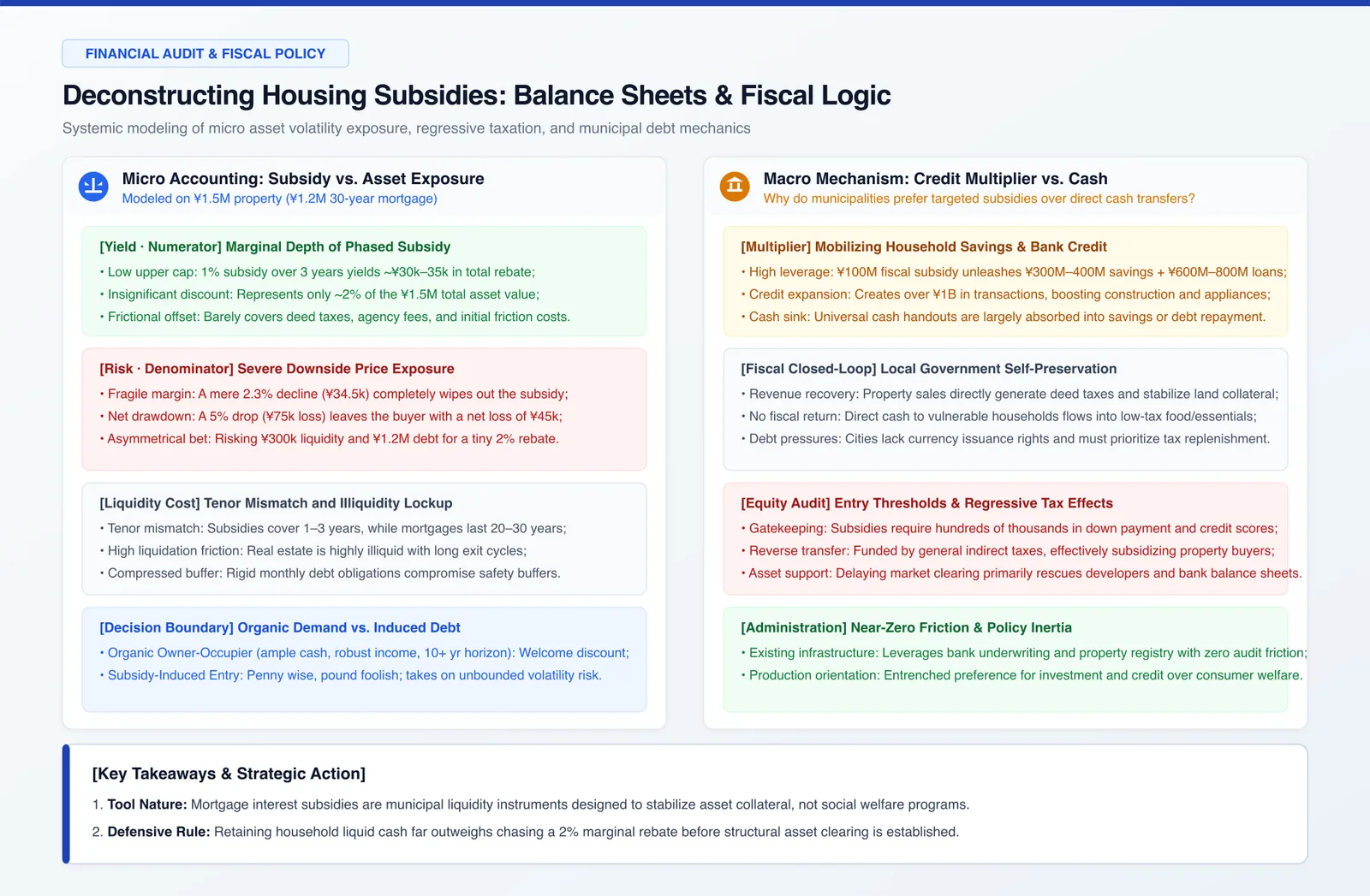
Figure 2: Deconstructing the transmission mechanism between micro-financials and macro-distribution.
1. The Wealth Threshold as a Filter
The primary pain point for low-income households is a lack of disposable income and original capital accumulation. The trigger for a mortgage subsidy is the ability to produce a massive down payment and pass the rigorous credit and income audits of a commercial bank.
This threshold naturally excludes the very demographic that most requires a fiscal safety net. Consequently, the beneficiaries are concentrated among the middle-to-high-income strata who already possess the creditworthiness to take on debt.
2. Reverse Transfers in Indirect Tax Systems
In economies where the tax structure relies heavily on Value-Added Tax (VAT) and consumption taxes, the system is inherently regressive. Lower-income groups spend nearly all their earnings on daily survival; thus, the proportion of their income paid in indirect taxes is significantly higher than that of the wealthy.
When public funds—pooled from all taxpayers—are earmarked to subsidize the few who can afford property, it creates a “reverse redistribution” pathway: the many fund the asset acquisition of the few.
3. Delaying Market Clearing
A core objective of these policies is to “floor” asset prices and clear inventory. If a policy successfully delays the market-driven price correction of real estate, the primary beneficiaries are over-leveraged developers, financial institutions protecting their collateral, and high-net-worth individuals with existing portfolios. The working class, seeking affordable housing, is left facing a higher cost of entry.
III. The Mechanism: Why Subsidies Instead of Direct Cash?
While some mature economies favor unconditional cash transfers (e.g., “stimulus checks”), domestic macro-policy often prefers targeted subsidies tied to assets and credit. This choice is deeply embedded in the logic of credit derivation and administrative constraints.
1. The Leverage Multiplier: Credit Expansion vs. Precautionary Savings
- The Subsidy Multiplier: For every $1 spent on interest subsidies, the government can theoretically mobilize $3 to $4 in private down-payment capital and drive banks to issue $6 to $8 in long-term mortgage credit. This creates an immediate surge in transaction volume and credit growth on the books, activating the construction, decor, and appliance sectors. The goal is to use a small fiscal lever to move a mountain of stagnant private capital.
- The Savings Sink: In an environment of low income visibility, direct cash transfers often fail to stimulate consumption. High-income groups move the cash into time deposits, while low-income groups use it to pay down existing debt or smooth basic expenses. The money fails to transform into new macro-demand, and the fiscal multiplier decays within bank accounts.
2. The Local Fiscal “Self-Rescue” Loop
Mortgage subsidies are usually local initiatives. Local governments, lacking the power of currency issuance, are under immense pressure from declining land sales and debt obligations.
- Immediate Revenue Recapture: A mortgage subsidy stimulates a property sale, allowing the local treasury to immediately collect deed taxes (1%–1.5% of the total price). This creates a closed loop where the subsidy pays for itself through immediate tax backflow.
- The Consumption Tax Gap: If cash is given to the vulnerable, it flows into basic necessities like groceries and agricultural products. In many jurisdictions, these sectors enjoy low tax rates or exemptions. Direct cash transfers provide almost zero immediate “refueling” for the local government’s balance sheet.
3. Outsourcing Risk Assessment to Banks
Accurately distributing cash to the “needy” requires a transparent data infrastructure covering income, property, financial assets, and social security. Without this, direct transfers are prone to fraud and high administrative costs.
Mortgage subsidies, however, piggyback on the existing infrastructure of commercial banks. The government effectively “borrows” the bank’s sophisticated risk-control systems, credit checks, and tax records at zero administrative cost.
IV. Conclusion: Defensive Postures for the Individual
When the underlying logic is laid bare, mortgage subsidies are revealed not as social welfare, but as liquidity tools used by local governments to leverage household balance sheets in an attempt to repair their own fiscal credit.
In the grinding of these macro gears, the individual’s defensive boundary is clear:
- Liquidity Priority: Never trade “liquidity” for “marginal savings.” Do not risk a $50,000 principal loss to save $5,000 in interest.
- Reject Induced Debt: If you do not have an absolute surplus of cash and a definitive, long-term need for a primary residence, retaining liquid, high-quality assets is the only way to navigate the cycle safely.
The most valuable asset in a volatile era is not a subsidized mortgage, but the freedom to not be leveraged.
Related Research & Topics
Tello Mobile eSIM
SafetyWing Nomad Insurance
* Disclosure: This post contains affiliate links. If you make a purchase through these links, V-G Journal may earn a small commission at no additional cost to you. We only recommend services we independently evaluate and trust.
FIRE and Golf:自由旅居之路
专注于为追求 FIRE 与品质生活的人群提供特惠打球权益与候鸟微度假。不持一砖一瓦,运营品质生活。