The Audit That Never Sleeps: Retrospective Governance and the Fall of Fu Chengyu
The corruption investigation into former Sinopec and CNOOC chairman Fu Chengyu 11 years after his retirement is not a sensationalist offshore asset interception. Instead, it marks the culmination of China's multi-decade retrospective audits targeting state energy conglomerates, establishing an era of permanent corporate accountability.

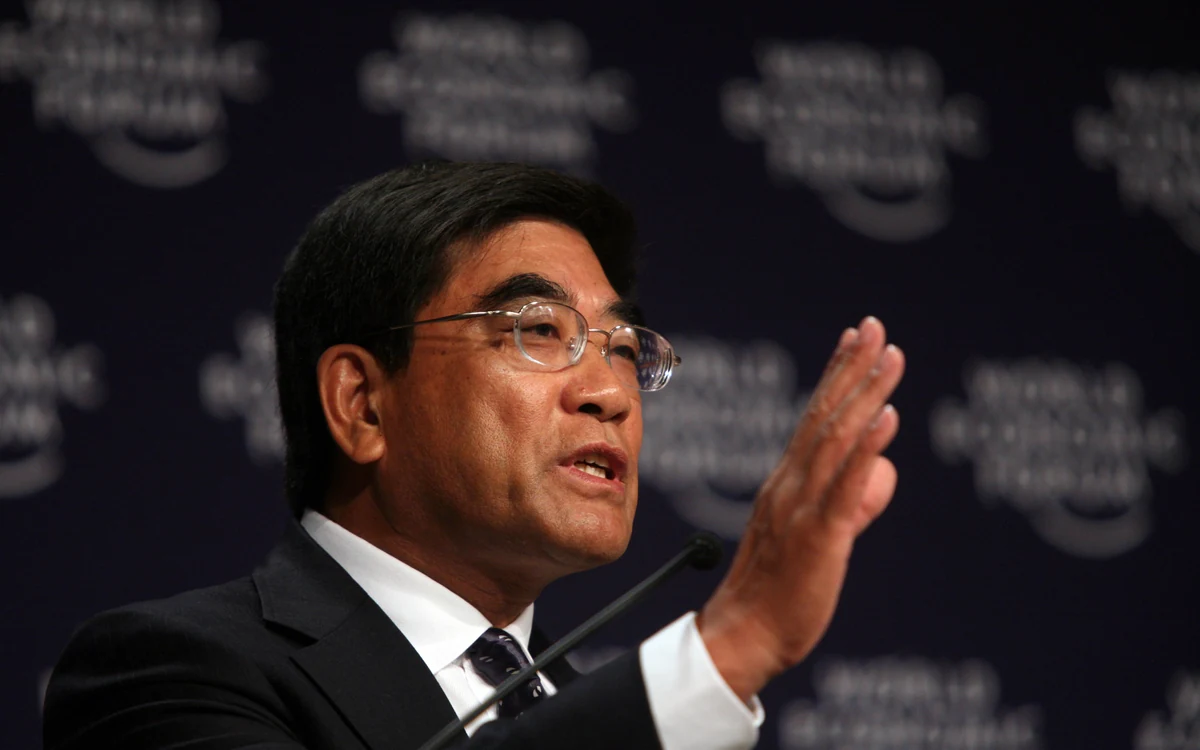
Figure 1: Fu Chengyu, former Chairman of both CNOOC and Sinopec (Public Archival Portrait).
On October 31, 2026, the Central Commission for Discipline Inspection (CCDI) and the National Supervisory Commission announced that Fu Chengyu, former Party Secretary and Chairman of China Petrochemical Corporation (Sinopec Group), was under investigation for serious violations of discipline and law. Because Fu stepped down upon reaching the mandatory retirement age in May 2015—eleven years and five months ago—online commentary quickly coalesced around sensationalist narratives of “intercepted flight capital” and “busted offshore trusts.”
However, a rigorous examination of the judicial and regulatory logic reveals a far more systemic reality: Fu’s downfall represents the inevitable execution of China’s “twenty-year lookback” (倒查二十年) campaign across state-owned energy giants. Fueled by deep, cross-cycle penetrative auditing, the probe focuses on historical cross-border M&A governance, compliance in mega-capital restructuring, and institutional rent-seeking during his tenure—not an episodic capital-flight interception at the border.
Narrative Fracture: Deconstructing the “Offshore Laundering Interception” Myth
Within hours of the official announcement, public commentary fractured into starkly divergent viewpoints. The primary catalyst for speculation was the unprecedented length of time that had elapsed: more than eleven years since Fu’s retirement. Commercial self-media outlets and financial social media accounts immediately began circulating dramatic tropes, alleging “collapsed offshore trusts” and “a multi-billion-yuan asset transfer caught in real time by customs and regulators.” In these accounts, Fu was depicted as a long-retired executive who finally tripped up over a botched, last-minute attempt to move capital overseas.
This hyperbolic narrative fundamentally misinterprets the procedural law and regulatory architecture of Chinese state supervision. Initiating a formal investigation into a vice-ministerial-level executive of a central state-owned enterprise (SOE) is a highly formalized, multi-tiered process. It typically stems from long-term inspections by Central Inspection Teams, targeted investigations by the National Audit Office, intelligence from whistleblower channels, and cross-corroborated testimonies from related judicial cases.
In terms of cross-border financial transparency—as analyzed in our examination of Offshore Trust Tax Penetration and Cross-Border Asset Disputes—global tax reporting structures like CRS and AEOI have rendered financial opaque zones obsolete. Major corruption cases do not rely on chance interceptions of single wire transfers; they are built on meticulous, decade-long ledger reconciliations and historical mapping of executive power.
| Analytical Dimension | Sensationalist Media Narrative | Disciplinary & Regulatory Reality |
|---|---|---|
| Primary Trigger | Sudden interception of illegal offshore trust transfers or emergency capital flight. | Long-term inspection leads, specialized audit tracking, and evidentiary loops from linked cases. |
| Investigative Focus | Personal offshore trust accounts and emergency outbound transfers. | Procedural compliance of historical M&A decisions, corporate governance, and systemic rent-seeking. |
| Temporal Framework | Presumption that corporate liability naturally expires after 11 years of retirement. | Strict enforcement of “lifelong accountability”—major strategic failures and corruption carry permanent liability. |
| Sectoral Context | An isolated executive’s sudden personal misstep. | Comprehensive, penetrative anti-corruption enforcement across the entire state energy value chain. |
The Historical Ledger: From Unocal and Nexen to Daylight Energy
To grasp the trajectory of the investigation, one must examine Fu’s decades-long stewardship over two of China’s three national oil companies. Born in June 1951, Fu graduated from Northeast Petroleum Institute with a degree in petroleum geology and earned a master’s degree in petroleum engineering from the University of Southern California. Over a career spanning four decades, he held the helm at both China National Offshore Oil Corporation (CNOOC) and Sinopec: serving as General Manager and Party Secretary of CNOOC from October 2003 to April 2011, before being appointed Chairman and Party Secretary of Sinopec from April 2011 to May 2015.
At CNOOC, Fu earned a global reputation for aggressive, internationalized strategic moves. In 2005, he orchestrated CNOOC’s landmark $18.5 billion hostile takeover bid for the American oil firm Unocal. Though political opposition in Washington ultimately forced CNOOC to withdraw, the deal established the template for Chinese state energy companies operating on the global stage. Years later, under Wang Yilin’s tenure in 2012, CNOOC completed its $15.1 billion acquisition of Canada’s Nexen—the largest overseas corporate takeover by a Chinese company at the time—an execution whose underlying framework and international advisory teams were largely built during Fu’s decade of leadership.
After transferring to Sinopec in 2011, Fu accelerated the group’s outbound expansion, pushing aggressively into North American shale gas and international upstream assets, including the high-profile acquisition of Canada’s Daylight Energy.
At the time, these multi-billion-dollar overseas transactions were hailed as visionary moves to secure national strategic energy reserves. However, as global commodity prices entered a prolonged down-cycle, several of these premium-priced international assets suffered severe asset impairments and operational write-downs.
Publicly reducing these complex cross-border corporate investments into simple “executive money-laundering schemes” is a logical fallacy. Commercial misjudgment and criminal self-dealing have distinct legal boundaries. Yet, within $10-billion-plus outbound capital flows, the distribution of intermediary consulting fees, covert kickbacks, procedural irregularities in decision-making, and unmonitored offshore subsidiaries have historically operated in regulatory shadow zones. These opaque mechanisms are precisely where state asset auditors are now directing their attention.
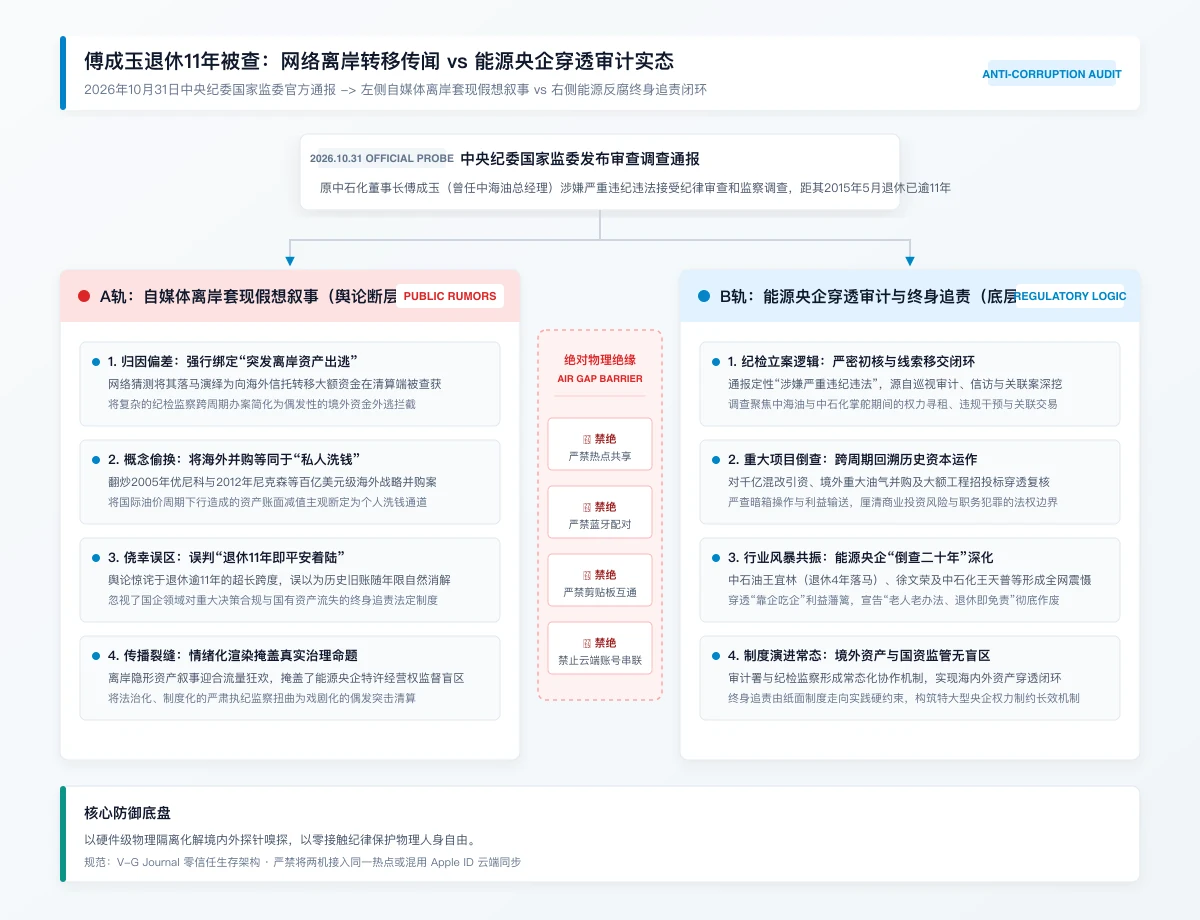
Figure 2: Sensationalist Tropes vs. Penetrative Energy Sector Audit Mechanisms.
Capital Operations and Rent-Seeking: Revisiting the $17-Billion Mixed-Ownership Reform
Beyond overseas asset expansion, Fu’s second defining legacy at Sinopec was his aggressive push for mixed-ownership reform (混改) in the retail distribution sector. In September 2014, Sinopec signed capital injection agreements with 25 domestic and international institutional investors, selling a 29.99% equity stake in Sinopec Marketing Co., Ltd. for RMB 107.09 billion (approximately $17 billion USD). At the time, this was celebrated as a milestone for China’s state-owned monopolies, demonstrating a willingness to cede equity to private and institutional capital in pursuit of modern corporate governance.
Yet, in capital injections and asset restructuring exceeding RMB 100 billion, decisions regarding strategic investor qualification, license concessions, and non-listed equity valuations create vast vectors for covert rent-seeking.
As explored in our analysis of PwC, Evergrande, and Penetrative Accountability for Financial Institutions, modern audit frameworks require working papers and capital flow ledgers to maintain strict, unyielding legal enforceability across time. Similarly, in the broader context of state enterprise leadership—drawn out in our review of The Zhuhai Probes and Corporate Governance Audit at Gree—every authorization granting strategic access, off-balancing state assets, or restructuring monopoly distribution channels touches the core legal line of state asset protection.
The CCDI’s investigation into Fu is grounded in a systematic post-audit of his exercise of power across both CNOOC and Sinopec over two decades. It targets structural compliance vulnerabilities: executive interference in procurement and engineering tenders, related-party transactions embedded in concession grants, and the illicit facilitation of private interest groups under the banner of financial engineering.
Penetrative Lifelong Accountability: Shattering the “Safe Landing” Illusion
Fu Chengyu’s investigation is not an isolated technical correction; it is a landmark event in the ongoing anti-corruption campaign across China’s state energy sector. For decades, resource-intensive sectors such as oil, natural gas, coal, and power generation—distinguished by their monopoly status and immense capital throughput—were prone to self-dealing network dynamics (“靠企吃企”). A widespread assumption persisted among state executives that retirement served as a permanent “safe landing,” believing that historical compliance failures and concealed benefits would naturally fade into oblivion with the passage of time.
That industry assumption has been permanently dismantled. In February 2024, Wang Yilin—former Party Secretary of CNOOC and later Chairman of China National Petroleum Corporation (CNPC)—was placed under investigation four years after his retirement, ultimately being expelled from the Party in July of that year. Coupled with the earlier fall of former Sinopec President Wang Tianpu, the regulatory stance toward historical legacy issues in the energy sector has grown uncompromisingly absolute.
Fu Chengyu being placed under formal investigation after eleven years of retirement sends an unmistakable institutional signal to the entire state-owned enterprise system: Supervision has no pause button, and accountability carries no expiration date. In an era of penetrative, lifelong liability governing critical infrastructure, energy assets, and state-backed financial engineering, neither offshore trust structures nor temporal distance can shield historical governance failures from the cold arithmetic of the ledger.
Related Research & Topics
Tello Mobile eSIM
SafetyWing Nomad Insurance
* Disclosure: This post contains affiliate links. If you make a purchase through these links, V-G Journal may earn a small commission at no additional cost to you. We only recommend services we independently evaluate and trust.
FIRE and Golf:自由旅居之路
专注于为追求 FIRE 与品质生活的人群提供特惠打球权益与候鸟微度假。不持一砖一瓦,运营品质生活。