Anatomy of an Audit: Financial Impairment, Subcontracting Corruption, and the Purge at China Railway Construction
The detention of Li Xinglong, former Vice President of CRCC, marks a watershed moment in state-owned enterprise governance. As property inventory impairments wipe out billions in profits, regulators are shifting from surface-level procedural compliance to forensic audit penetration across procurement and subcontracting chains.

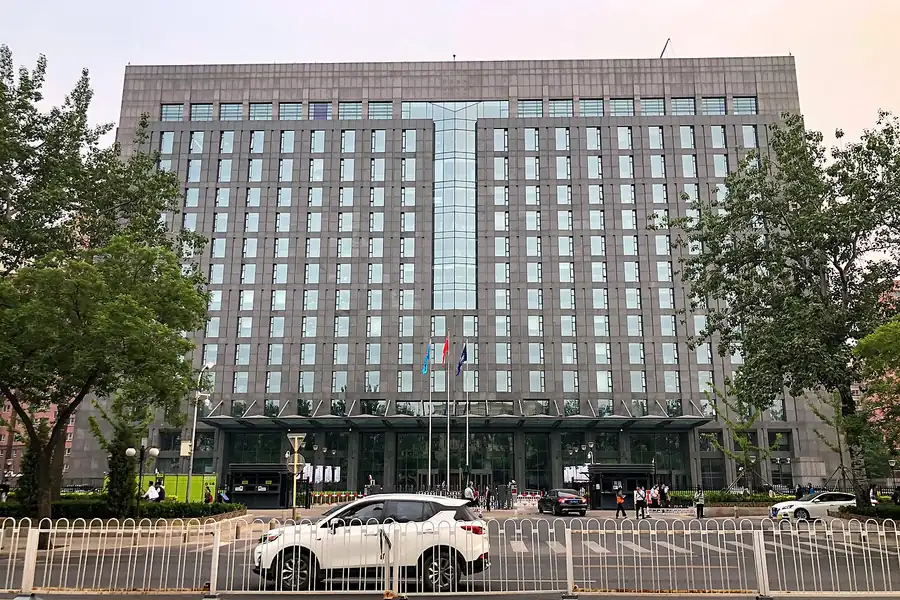
Figure 1: Headquarters of China Railway Construction Corporation (CRCC) at No. 40 Fuxing Road, Haidian District, Beijing. On November 4, 2026, former Standing Committee member and Vice President Li Xinglong was placed under disciplinary review and supervisory investigation, signaling a deep-water transition in SOE compliance governance.
On November 4, 2026, the Discipline Inspection and Supervision Group stationed at the State-owned Assets Supervision and Administration Commission (SASAC) issued a formal announcement: Li Xinglong, member of the Standing Committee of the Party Committee of China Railway Construction Group and former Vice President of China Railway Construction Corporation Limited (CRCC), was placed under investigation for serious violations of discipline and law.
The announcement arrived exactly five days after CRCC’s board convened on October 30 to quietly strip Li of his executive vice presidency, citing “personal reasons.” As the long-standing chief architect of CRCC’s property development arms and cost-procurement mechanisms, Li’s rapid fall after his removal punctures a lingering illusion within China’s state infrastructure sector: that paper-thin procedural compliance can shield opaque tendering and real estate operations from macro-driven financial reckonings. More fundamentally, it reflects a structural shift in state-owned enterprise (SOE) oversight—from superficial document checks to forensic, look-through audits under the weight of asset write-downs.
The Choreography of Removal: A 20-Year Real Estate Operative
The cadence of Li’s downfall underscores a tightly orchestrated legal and administrative sequence. On October 30, 2026, CRCC held the 14th meeting of its Sixth Board of Directors, voting to relieve Li Xinglong of his executive duties. The public filing followed the next day; the anti-graft announcement landed less than a week later. This seamless handoff between corporate board actions and state supervisory organs points to extensive preliminary investigation long before the public press release.
Li’s two-decade ascension mirrors the trajectory of CRCC’s real estate expansion, peak valuation, and painful structural unwind. Born in November 1974 in Tai’an, Shandong, Li graduated with a degree in management engineering from Shijiazhuang Railway Institute and rose through technical engineering ranks. Unlike traditional SOE cadre who spend decades managing bridge and tunnel construction sites in remote provinces, Li built his career within the commercial engine of CRCC: starting as a cost-control manager at China Railway Construction Development Co., then progressing through market development roles. This specialized background gave him a granular, systemic mastery over project budget assembly, centralized materials procurement, and tendering quota allocations.
The decisive stage of Li’s career unfolded in Southwest China. As the principal manager of CRCC’s Chengdu and Sichuan real estate subsidiaries, he directed massive residential developments and created “Xipai,” the flagship luxury residential line within CRCC’s real estate portfolio. The high margins and regional prestige generated by the Xipai brand cemented Li’s reputation as an elite operator within the system. By April 2019, he was promoted to General Manager and Deputy Party Secretary of China Railway Construction Real Estate Group Co., Ltd. Between November 2020 and September 2024, he served as its Party Secretary and Chairman, presiding over the multi-billion-dollar developer for nearly four years. In July 2024, he joined CRCC’s highest executive circle as a Standing Committee member and Vice President of the listed entity.
Receding Tides and the Impairment Storm: Numbers Forcing the Audit
To understand why Li’s tenure ended in an anti-graft net, one must contextualize his executive period against the macro backdrop of China’s property downturn. During the boom years, state-backed developers leveraged superior credit lines and low borrowing costs to aggressively acquire land banks and expand project pipelines across core tier-1 and tier-2 cities. However, as housing supply dynamics fundamentally inverted, the inventory and contract assets accumulated during that expansion quickly transformed into severe financial burdens under slower absorption rates and falling residential valuations.
CRCC’s audited financial statements trace this deterioration with stark clarity. According to the company’s 2025 annual report, total revenue fell 3.50% year-on-year to 1.03 trillion RMB, while total profit shrank to 26.93 billion RMB. Within this massive top-line figure, the real estate development division suffered disproportionate contraction:
- Contract and Scale Contraction: New real estate development contracts signed in 2025 totaled 78.58 billion RMB, down 19.55% year-on-year; operational revenue from the segment fell 7.41% to 66.56 billion RMB.
- Margin Compression: Gross margin for the group’s real estate segment fell to 8.60%, contracting by 2.32 percentage points compared to the previous year.
- Subsidiary Losses: China Railway Construction Real Estate Group Co., Ltd.—the core entity long commanded by Li—recorded 46.47 billion RMB in revenue for 2025 (down 0.39%). Rising recognized costs and price cuts slashed gross margin from 12.78% in the previous year to 7.18%, triggering a net parent loss of approximately 3.90 billion RMB for the year.
- Surging Write-Downs: CRCC recognized 3.81 billion RMB in total asset impairment losses for 2025, expanding 25.35% year-on-year. The financial reports explicitly attributed this to inventory write-down provisions across real estate development products and contract assets.
Financial pressures escalated further into 2026. CRCC’s Q3 2026 report revealed nine-month revenue of 639.45 billion RMB (down 12.21% year-on-year) and net profit attributable to equity holders of 9.35 billion RMB (down 36.88%). Third-quarter single-quarter net profit dropped precipitously by 83.98% to just 658 million RMB. Real estate contract value sank another 28.93% in the first nine months, while asset impairment provisions surged to 2.59 billion RMB—compared to 733 million RMB over the same period in 2025.
This balance sheet stress mirrors the structural unwind detailed in Industrial Realities vs. Liquidity Defenses. In a bull market, rapid sales velocity and rising book values obscure procurement markups, bid-rigging spreads, and internal control weaknesses. When the market turns, asset write-downs and margin collapses force internal auditors, SASAC inspectors, and discipline officers to conduct look-through reviews. Under this forensic scrutiny, actual project costs and historical accounting practices are exposed.
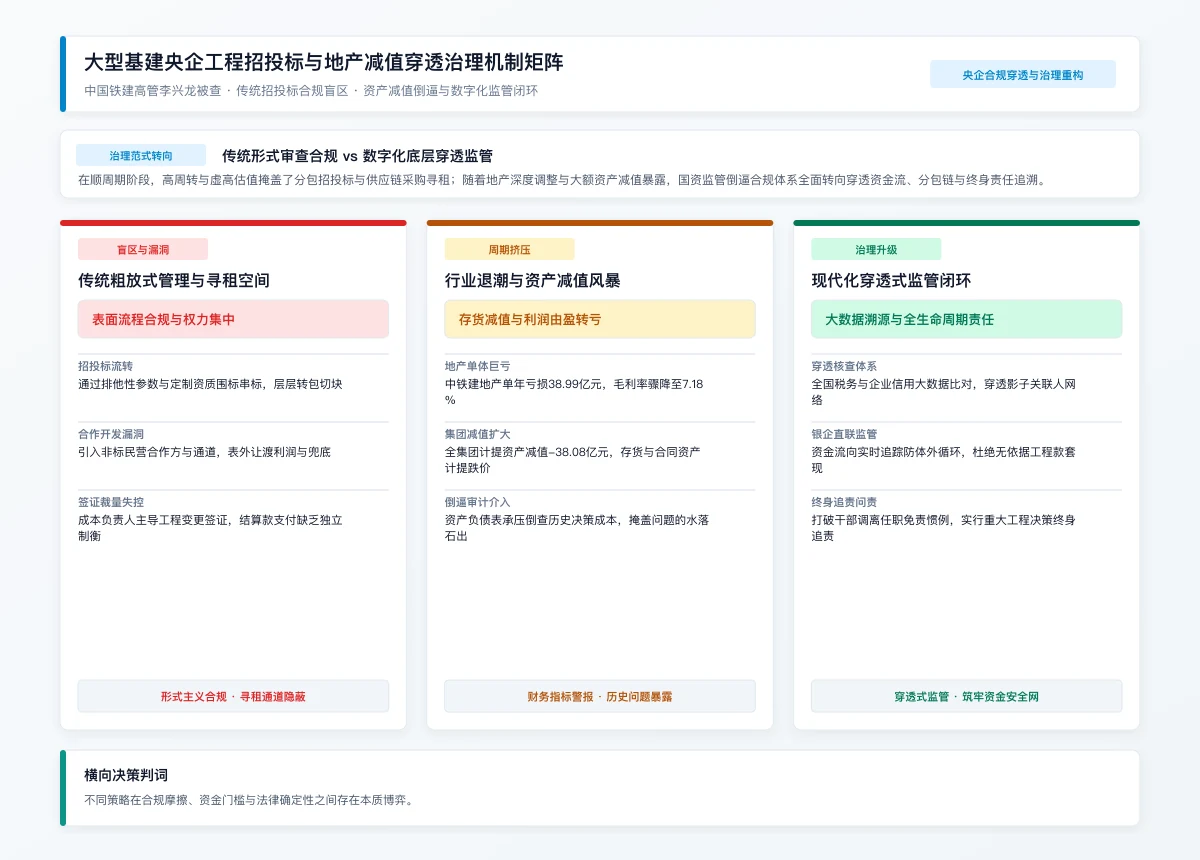
Figure 2: Corporate governance matrix mapping tender manipulation, subcontractor cash routing, and forensic audit intervention points in state infrastructure enterprises.
The Mechanics of Subcontract Rent-Seeking
In large infrastructure conglomerates, high capital intensity, multiple tiers of subcontracting, and complex material procurement create structural vectors for rent-seeking. While SOEs maintain elaborate bidding rules, internal audit checks, and centralized procurement platforms, key decision-makers can bypass these controls through predictable structural loopholes.
Historically, non-compliant rent-seeking in state-led construction and property development concentrates along three primary operational vectors:
First, off-balance-sheet joint ventures and partner concessions. During peak market expansion, state developers frequently partnered with private developers, joint venture entities, or private equity vehicles to win land auctions. Because daily operational management and sub-contract awards in project-level entities were routinely delegated to private partners, these entities operated beyond the parent group’s direct compliance oversight. Executives could route high-quality asset rights, extend high-yield equity-disguised debt, or grant unauthorized financial guarantees to favored private partners in exchange for off-balance-sheet kickbacks. As analyzed in Corporate Firewalls and Fundamental Auditing, without look-through checks across multi-tier legal entities, operational firewalls quickly degrade into accountability vacuums.
Second, tailored tender specifications and layered sub-contracting. In high-value specialty engineering contracts—such as facade installation, MEP systems, structural interior fit-outs, and landscape architecture—bidding protocols were formally observed but functionally manipulated. Insiders set restrictive technical parameters, leaked benchmark figures, or specified exclusive supplier lists to guarantee wins for favored entities. Winning contractors then carved up the projects, retaining a “management fee” before subcontracting actual labor to uncredentialed teams. This inflated total project expenditures while eroding construction quality and safety margins.
Third, discretionary authority over site variations and material substitution. Li’s background in cost engineering reflects a precise understanding of how volume and price adjustments alter project balance sheets. Major real estate and infrastructure projects undergo numerous variation orders between site prep and final handover—covering soil backfill, foundation adjustments, and material brand swaps. In the absence of continuous third-party auditing, executive sign-offs on change orders and milestone payments frequently served as leverage to extract concessions from downstream contractors and suppliers.
| Governance Dimension | Conventional Surface Compliance | Modern Look-Through Forensic Oversight |
|---|---|---|
| Tender Auditing | Verifies basic documentation, signature completeness, and formal bidding workflows. | Employs big-data cross-matching of bidding IPs, bid bond origin accounts, and hidden executive networks. |
| Supply Chain Capital Tracking | Checks invoices against milestone schedules and contractual payment applications. | Integrates direct banking APIs to trace ultimate cash settlement accounts, exposing off-balance-sheet diversion pools. |
| Variation Sign-Offs | Relies on site manager and field supervisor signatures for engineering variations. | Uses drone survey mapping, BIM model comparison, and independent third-party physical volume verification. |
| Accountability & Metrics | Evaluates performance primarily on current book sales, revenue targets, and contract volume. | Mandates lifetime return-on-capital metrics with retrospective liability after executive departure. |
From Paper Compliance to Forensic Accountability
The investigation into Li Xinglong signals a systemic transition in state-owned enterprise governance. The era of relying on superficial compliance paperwork to cover structural procurement norms is coming to an end; SASAC oversight is shifting toward digital, trace-capable, and forensic auditing frameworks.
This transformation rests on cross-system digital audit integration. In previous cycles, anti-graft inquiries faced severe obstacles when navigating multi-tier corporate ownership structures and complex banking trails. Today, joint operations between SASAC supervisory boards, the National Audit Office, and state discipline inspectors utilize central enterprise credit databases, tax invoice tracking systems, and bank-settlement monitoring to expose shadow partners and off-balance-sheet capital pools. This methodological shift mirrors the forensic reality-testing outlined in Auditing Integrity and Financial Accountability.
Concurrently, regulators are executing a shift from top-line expansion metrics to legacy asset accountability. As aggressive capital deployment slows, state-owned entities are under mandate to optimize existing capital allocation and mitigate legacy debt liabilities. Where past capital decisions, high-premium land acquisitions, or overseas contract approvals caused severe losses of state assets, regulatory bodies are enforcing lifetime accountability. Executive reassignment or retirement no longer shields individuals from retrospective audits of historical contracts.
For CRCC and the broader state infrastructure sector, Li’s downfall is a clear indicator of structural reform. In multi-billion-dollar state conglomerates, internal controls built on individual discretion or hierarchy remain vulnerable to abuse. Building long-term operational resilience requires institutional mechanisms that dismantle rent-seeking networks—using digital, look-through tools across procurement, tendering, and subcontracting to protect both capital efficiency and state assets.
Related Research & Topics
Tello Mobile eSIM
SafetyWing Nomad Insurance
* Disclosure: This post contains affiliate links. If you make a purchase through these links, V-G Journal may earn a small commission at no additional cost to you. We only recommend services we independently evaluate and trust.
FIRE and Golf:自由旅居之路
专注于为追求 FIRE 与品质生活的人群提供特惠打球权益与候鸟微度假。不持一砖一瓦,运营品质生活。