The Cockpit Paradox: Deconstructing the flydubai FZ1073 'Hijack' Alert
On September 30, 2026, flydubai flight FZ1073 triggered a global hijack alert and a terrifying 14,000-foot plunge. Investigations reveal the crisis was not a terrorist act, but a violent physical altercation between pilots within the locked flight deck.

Executive Summary: On September 30, 2026, a flydubai Boeing 737 MAX 8 bound for Tel Aviv transmitted “Squawk 7500”—the international emergency code for unlawful interference and hijacking. This was accompanied by a terrifying descent of over 14,000 feet in less than 30 seconds, sending shockwaves through Middle Eastern air defense systems and international media. Subsequent verifications by Israeli security, the airline, and Saudi officials have confirmed that the incident was not an external terrorist attack. Instead, the crisis originated from a violent, kinetic struggle between the two pilots within the confines of the cockpit.
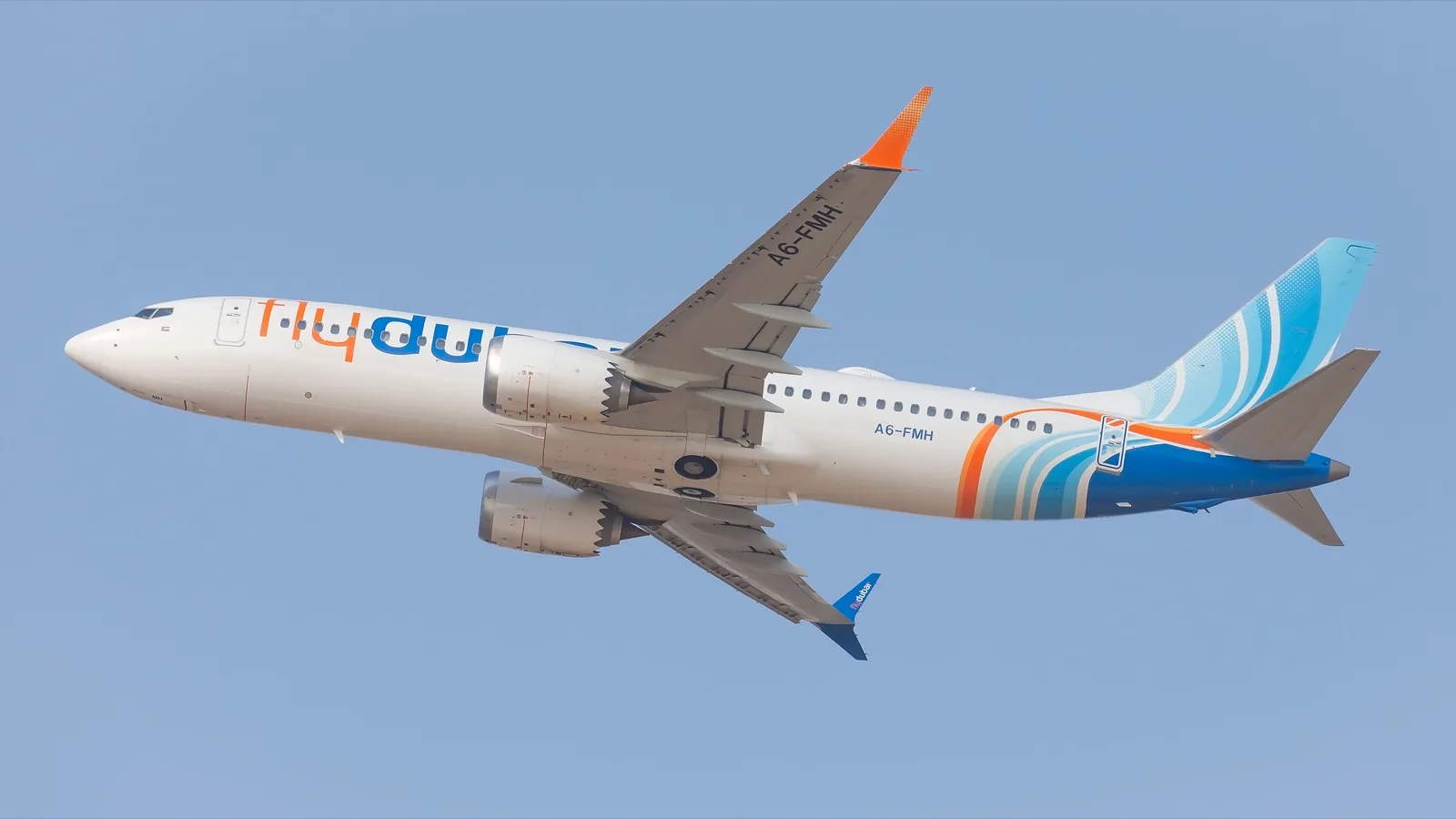
Figure 1: A flydubai Boeing 737 MAX 8, similar to the aircraft involved in the incident (Reg: A6-FMH).
I. Fact Check: Defining the “Internal Mutiny”
Following the incident, rumors of a hijacking spread rapidly across flight-tracking platforms and social media. However, as official reports and crew testimonies emerged, a clearer—and perhaps more unsettling—picture formed:
| Dimension | Initial Rumor/Appearance | Verified Fact & Determination |
|---|---|---|
| Flight & Aircraft | flydubai FZ1073 | Boeing 737 MAX 8 (Dubai DXB → Tel Aviv TLV) |
| Nature of Incident | External terrorist hijacking | External hijacking ruled out; violent physical brawl between the two pilots |
| Transponder Evolution | Immediate loss of control | 05:31 UTC: Squawk 7700 (Emergency); 05:38 UTC: Squawk 7500 (Unlawful Interference) |
| Flight Profile | Standard emergency descent | Extreme vertical drop of 14,000+ feet in seconds; erratic radar signatures |
| Defense Response | Unknown | Israeli Air Force scrambled fighter jets; air defense units placed on high alert |
| Outcome | Forced landing in desert | Diverted to Prince Sultan bin Abdulaziz International Airport (Tabuk, KSA); All 170+ passengers safe; pilots hospitalized |
In the hierarchy of aviation transponder codes, Squawk 7500 carries the highest level of international alarm, reserved for hijacking or violent coercion. Investigations confirm this code was not a deliberate distress signal sent by a victimized crew, but was triggered during the struggle as the pilots’ bodies were slammed against the center pedestal and transponder control panel.
II. Forty Minutes of Terror: The 7700 to 7500 Sequence
Data from Flightradar24 and regional Air Traffic Control (ATC) reconstructs a harrowing timeline of the flight’s near-catastrophe at 30,000 feet:
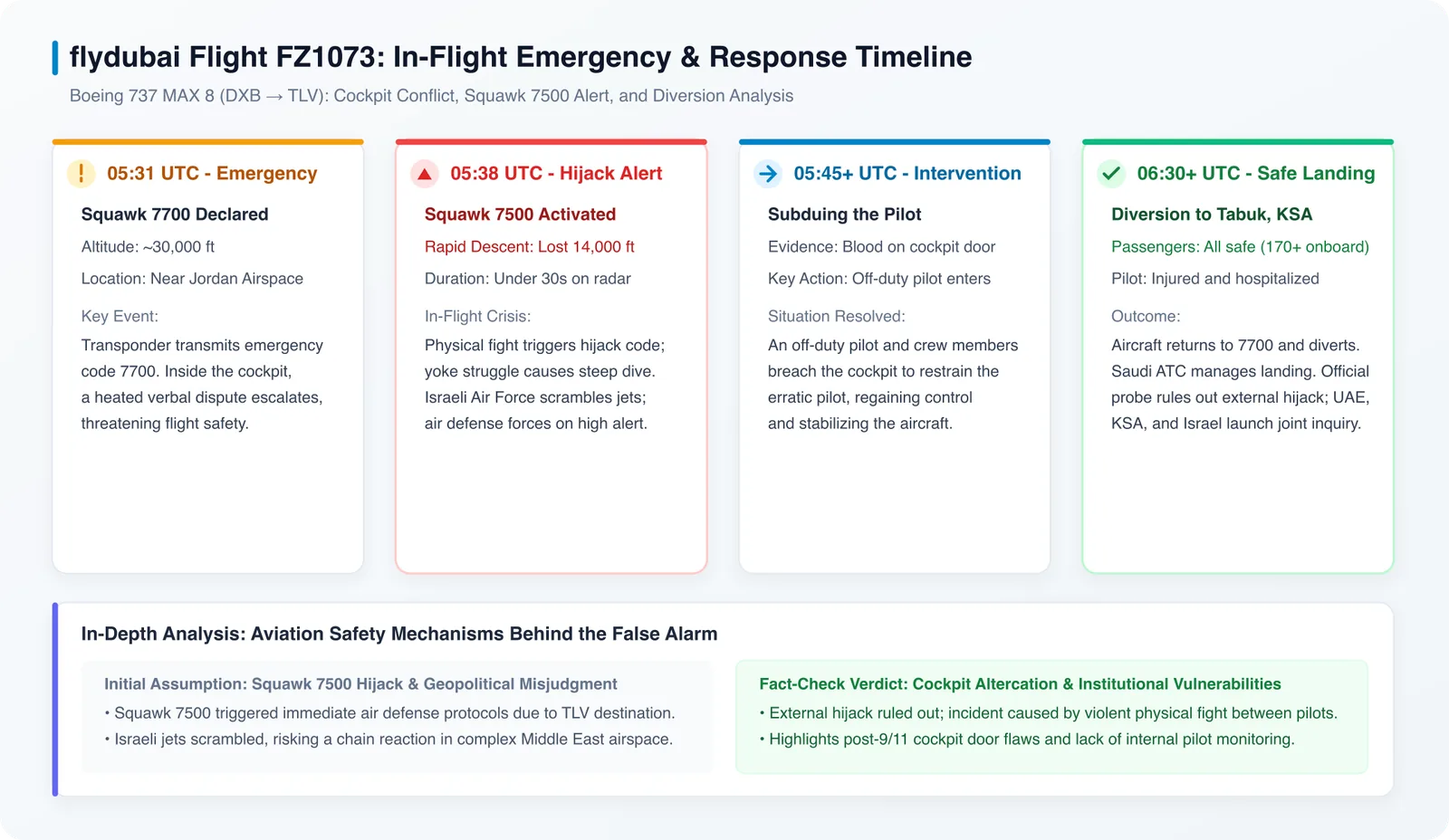
Figure 2: Comprehensive timeline of the FZ1073 incident and emergency response.
1. 05:31 UTC: The Initial Distress (Squawk 7700)
Approximately two hours after departing Dubai, while cruising at 30,000 feet near the border of Jordan and northwestern Saudi Arabia, the crew transmitted a 7700 code. This indicated a general emergency. At this stage, a verbal dispute in the cockpit had already escalated into physical shoving.
2. 05:38 UTC: The Hijack Code and the “Death Dive” (Squawk 7500)
Seven minutes later, the transponder switched to 7500. Simultaneously, radar data showed a chilling anomaly:
- Altitude Plunge: The aircraft dropped from 30,000 feet to approximately 14,000–16,000 feet in less than a minute—a vertical drop exceeding 14,000 feet.
- Velocity Fluctuations: As the aircraft dove, onboard overspeed alarms triggered. Passengers experienced sustained weightlessness and violent turbulence; cabin items were thrown from bins as panic took hold.
3. The Israeli Air Defense Response
As FZ1073 was destined for Tel Aviv’s Ben Gurion Airport, the sight of a heavy jet squawking 7500 and losing altitude while heading toward sovereign airspace triggered the Israel Defense Forces’ (IDF) highest alert. Fighter jets were scrambled for an intercept, and high-level security meetings were convened to assess the threat of a “9/11-style” suicide attack.
III. The Battle for the Stick: Intervention at 30,000 Feet
As testimonies from passengers and security sources surface, the details of the cockpit struggle reveal a desperate fight for control:
1. A Bloodstained Flight Deck
At cruising altitude, one pilot reportedly suffered a severe psychological break, exhibiting paranoid behavior and attempting to push the control column forward into a terminal dive. The other pilot fought to regain control, leading to a brutal kinetic struggle in the cramped cockpit.
The force of the struggle was so intense that the cockpit door was reportedly damaged or partially unlatched. Subsequent reports from the cabin crew described a scene of chaos inside the flight deck, with blood spatters on the controls and both pilots suffering significant blunt-force trauma and facial injuries.
2. The “Deadheading” Savior
In the critical moments of the descent, a deadheading flydubai pilot (an off-duty pilot traveling as a passenger) intervened.
Aided by the cabin crew and several passengers, the off-duty pilot forced his way into the cockpit, helped neutralize the erratic pilot, and restrained him. The off-duty pilot then took the controls alongside the less-injured on-duty pilot, leveling the aircraft and preventing a catastrophic hull loss.
IV. Diversion and Aftermath in Tabuk
With the flight stabilized and the cockpit secured, the aircraft abandoned its route to Tel Aviv and turned southwest into Saudi Arabian airspace.
Saudi Arabia’s General Authority of Civil Aviation (GACA) took over radar guidance. FZ1073 switched its squawk back to 7700, signaling the end of the “hijack” threat and the start of an emergency landing. The aircraft landed safely at Prince Sultan bin Abdulaziz International Airport (Tabuk Airport) in the early morning hours.
- Passenger Status: Saudi security and medical teams met the aircraft. flydubai confirmed that all 170+ passengers were unharmed. They were provided with accommodation before being transferred to a relief flight.
- Pilot Status: Both pilots were taken into custody by Saudi authorities and transported to a local hospital under armed guard for medical treatment and psychiatric evaluation.
- Investigation: A joint task force involving the UAE’s General Civil Aviation Authority (GCAA), Saudi GACA, and international counter-terrorism agencies has secured the “black boxes” (Cockpit Voice Recorder and Flight Data Recorder) for a full forensic analysis.
V. Institutional Reflection: The “Fortress Cockpit” and the Human Fail-Point
While the FZ1073 incident ended without loss of life, it serves as a grim warning for global aviation. The event exposes a dual crisis in counter-terrorism and human factors engineering:
1. The Backfire of the Reinforced Door
Post-9/11, the industry mandated high-strength, bulletproof cockpit doors. While this “fortress” successfully keeps external threats out, it creates an absolute black box of information and power.
From the 2015 Germanwings Flight 9525 tragedy to this latest brawl, the reinforced door ensures that if a threat originates inside the cockpit—whether through malice or mental collapse—the cabin crew and air marshals are physically barred from intervening. Had the door not been compromised during the struggle, or had an off-duty pilot not been on board, the outcome would likely have been fatal.
As we have previously noted in our analysis of urban airspace vulnerabilities, modern aviation must defend not just against external penetration, but against the “systemic single point of failure”: the psychological volatility of the human operator.
2. The Failure of Mental Health Surveillance
Pilots undergo rigorous physicals and technical checks, yet the industry’s approach to long-term stress, interpersonal conflict, and psychiatric disorders remains “physically heavy and mentally light.” In a high-pressure environment of red-eye schedules and transnational fatigue, the cockpit becomes a pressure cooker.
The FZ1073 incident demands a profound institutional reckoning: What level of grievance or breakdown allows a professional to jeopardize hundreds of lives? The industry’s reliance on the “two-person rule” is no longer a sufficient safeguard if the two people in question become combatants. A fundamental restructuring of crew monitoring and psychological support is no longer optional; it is a matter of survival.
Related Research & Topics
Tello Mobile eSIM
SafetyWing Nomad Insurance
* Disclosure: This post contains affiliate links. If you make a purchase through these links, V-G Journal may earn a small commission at no additional cost to you. We only recommend services we independently evaluate and trust.
FIRE and Golf:自由旅居之路
专注于为追求 FIRE 与品质生活的人群提供特惠打球权益与候鸟微度假。不持一砖一瓦,运营品质生活。