Beijing Light Aircraft Incident: The Unseen Systemic Overhaul After the CITIC Tower Collision
The 2026 Beijing light aircraft collision with the CITIC Tower sparked intense public interest. This analysis dissects the flight's deviation, the official investigation's findings, and the severe penalties imposed. It probes the systemic reasons behind the public's perception of a 'quiet' aftermath and the subsequent institutional reshaping of private pilot licensing, psychological screening, and the low-altitude economy.

Executive Summary: On the evening of June 26, 2026, a single-engine, two-seat light sport aircraft collided with Beijing’s tallest building, the CITIC Tower (China Zun), shattering the long-held tranquility of the capital’s core airspace. Following a brief official statement categorizing the incident, public discourse quickly subsided. Many questioned why such a significant accident seemed to vanish without a trace. However, beyond public view, a rigorous accountability process, airport license revocations, and a profound overhaul of the low-altitude airspace system are being forcefully implemented within the establishment.
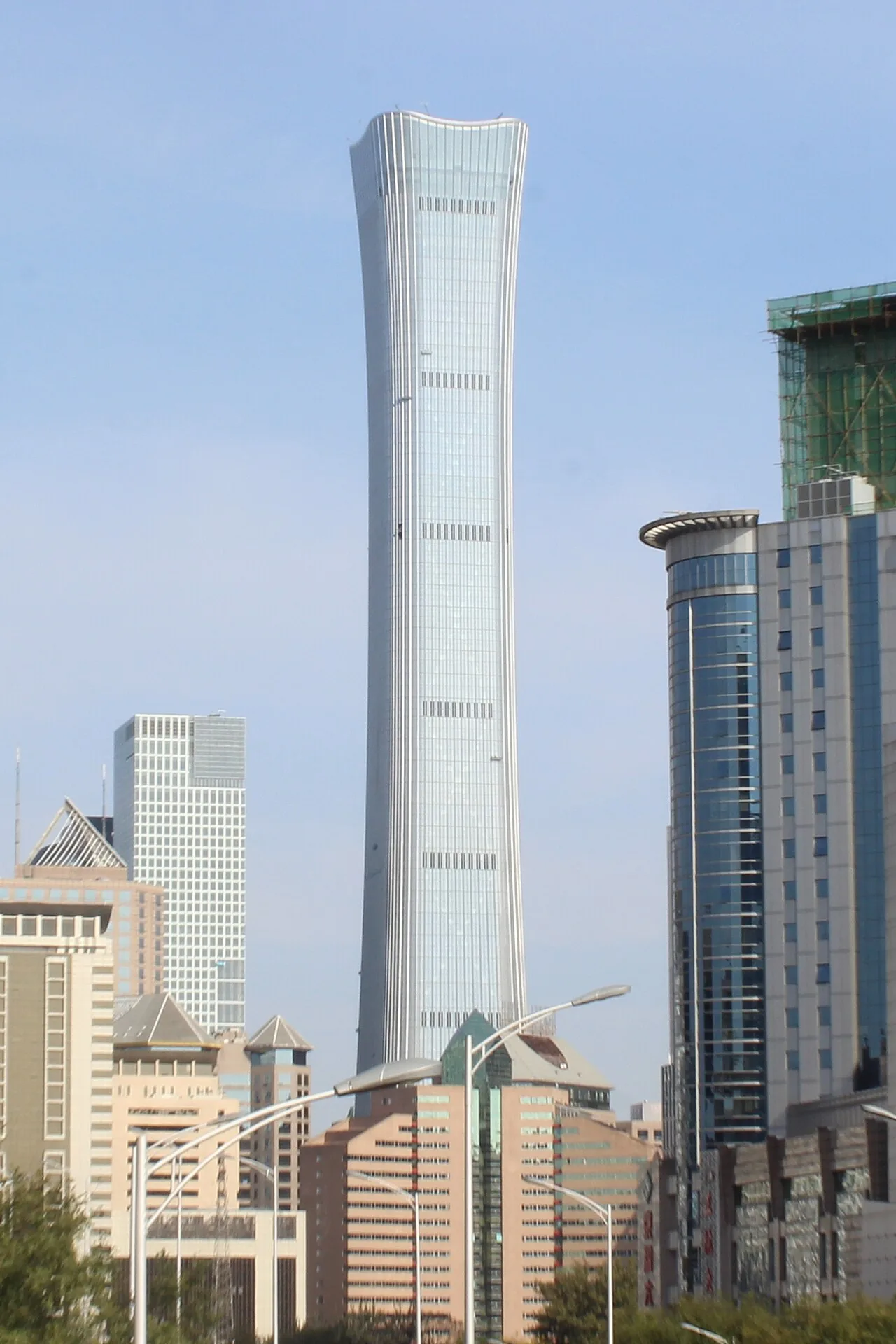
Figure 1: The CITIC Tower (China Zun), standing 528 meters tall, located in the core area of Beijing’s Chaoyang District CBD.
I. The Incident: From Pinggu Takeoff to CBD Collision
On the afternoon of June 26, 2026, at the Shifosi General Aviation Airport in Beijing’s Pinggu District, an Aurora SA60L light sport aircraft, registered as B-12PP, taxied onto the runway.
The aircraft model is a domestically developed, single-engine, two-seat light sport aircraft by Sunward, featuring a carbon fiber composite fuselage and a cruising speed of approximately 220 km/h, with a maximum takeoff weight of only 600 kg. The aircraft belonged to Dongshi Shuangyue (Beijing) General Aviation Co., Ltd. On the day of the incident, it was rented by a 66-year-old licensed pilot for solo flight training within the airport’s designated airspace.
At approximately 17:30, the aircraft took off normally. However, about 10 minutes after ascent, an anomaly occurred:
- Communication Cutoff and Deviation: The pilot intentionally disabled the onboard radio communication and secondary radar transponder, ceased responding to ground control, and unilaterally deviated from the planned airspace. The aircraft then turned sharply towards the southwest, heading directly for Beijing’s core district.
- Penetration of Controlled Airspace: Due to its small radar cross-section and low flight altitude, the aircraft was a typical “low, slow, small” target. In its lost-contact state, it traversed the airspace from Pinggu to Chaoyang, entering the tightly monitored network of civil aviation and air defense radar.
- Building Collision: Around 17:55, the aircraft reached the airspace above Beijing’s Central Business District (CBD) in Chaoyang District and collided at high speed with the glass facade of the CITIC Tower (China Zun) on its eastern side, subsequently disintegrating in mid-air.
The impact caused debris from the aircraft and a large number of glass fragments to scatter from hundreds of meters high onto the surrounding roads and building canopies. The accident resulted in the immediate death of the pilot and injuries to 13 people on the ground who were struck by falling debris (all were diagnosed as non-life-threatening). Fortunately, due to the top-tier seismic and impact-resistant redundant design of the supertall building, the core structure sustained minimal damage, with damage primarily to the exterior glass curtain wall and some ground-level components.
II. Investigation and Classification: Psychological Motives and Clarification of Public Rumors
Following the incident, Beijing’s public security, emergency management departments, and the North China Regional Administration of the Civil Aviation Administration of China (CAAC) swiftly formed a joint investigation team. They conducted a comprehensive review of the aircraft’s airworthiness, airport dispatch records, and the pilot’s personal history.
On July 2, 2026, the joint investigation team released its official report, clarifying the core facts:
1. Pilot Identity and Background
The pilot involved was identified as Liu Moumou, male, 66 years old, a Beijing resident, self-employed, divorced, and living alone.
- Flight Qualifications: He obtained a Sport Pilot License (SPL) in 2021 and a Private Pilot License (PPL) in 2024. On the day of the incident, he rented the aircraft for solo flight as a licensed member.
- Mental State and Motive Determination: A search of the deceased’s residence and personal belongings revealed numerous records of severe suicidal ideation in his private diaries, including repeated mentions of “ending life.” Investigations confirmed he suffered from chronic severe insomnia and significant anxiety.
- Exclusion of External Interference: Technical analysis of the wreckage and reverse trajectory calculations ruled out external factors such as mid-air mechanical failure, fuel contamination, or hijacking. It was confirmed that the pilot intentionally disabled communication equipment and deliberately piloted the aircraft into the landmark building.
2. Official Case Classification
Based on these findings, the authorities officially classified the incident as: “A public safety hazard case caused by personal reasons,” essentially an act of extreme malice stemming from the perpetrator’s profound negative psychological state.
3. Clarification of Online Rumors
In the initial phase of the incident, foreign media reported police searching an SUV registered to another individual at the departure airport’s parking lot. Internet speculation quickly arose that the pilot was a high-ranking executive in a financial institution’s wealth management division, seeking revenge due to economic disputes. Subsequently, the involved party publicly refuted these claims through video appearances and media interviews. The official investigation findings also explicitly confirmed the pilot as Liu Moumou, a 66-year-old retiree, definitively ending the baseless speculation.
III. Why the Public Perception of a “No Follow-Up” Blind Spot?
Following the collision, many members of the public who closely followed the event generally felt that, apart from initial on-site videos and a brief official statement, mainstream media did not publish extensive follow-up reports, nor did discussions on social media persist. It seemed as if the entire matter “quietly disappeared without a trace.”
This information disparity arises from three underlying logical factors:
1. Legal Closure of Judicial Proceedings
In modern criminal justice systems, cases typically enter public view through lengthy judicial processes: police investigation, prosecution by the procuratorate, public trial by the court, and final sentencing.
However, according to Article 16 of the “Criminal Procedure Law of the People’s Republic of China,” “Criminal responsibility shall not be pursued if the criminal suspect or defendant dies.”
The perpetrator, Liu Moumou, died instantly when the aircraft disintegrated upon impact. From a legal procedural standpoint, once the police clarified the facts, motive, and ruled out accomplices, the case was closed. It could not, and would not, be transferred to the procuratorate for criminal prosecution. Without court hearings, sentencing debates, or live trial broadcasts, the judicial aspect naturally concluded.
2. Prevention of Secondary Imitation and Moderate Cooling of Public Opinion
The incident occurred in the capital’s core CBD, a location of extreme sensitivity. A light aircraft colliding with a central urban landmark could easily induce panic among the public.
From the perspectives of mass communication and social psychology, excessive detailed or dramatized reporting of malicious suicide incidents can trigger the “Werther effect” (imitative suicide) among vulnerable individuals. Therefore, after swiftly clarifying the motive and publicly announcing the official classification, mainstream media adhered to journalistic ethics and guidelines for reporting on emergencies, refraining from excessive consumption or sensationalized follow-ups to avoid generating secondary public safety risks.
3. Focus Shift to a Powerful Internal Systemic Shock and Restructuring
The perception of “no follow-up” is merely a surface-level phenomenon in public media. In the unseen dimensions of industry regulation and national airspace security, this incident triggered a systemic storm that shook the entire general aviation sector nationwide.
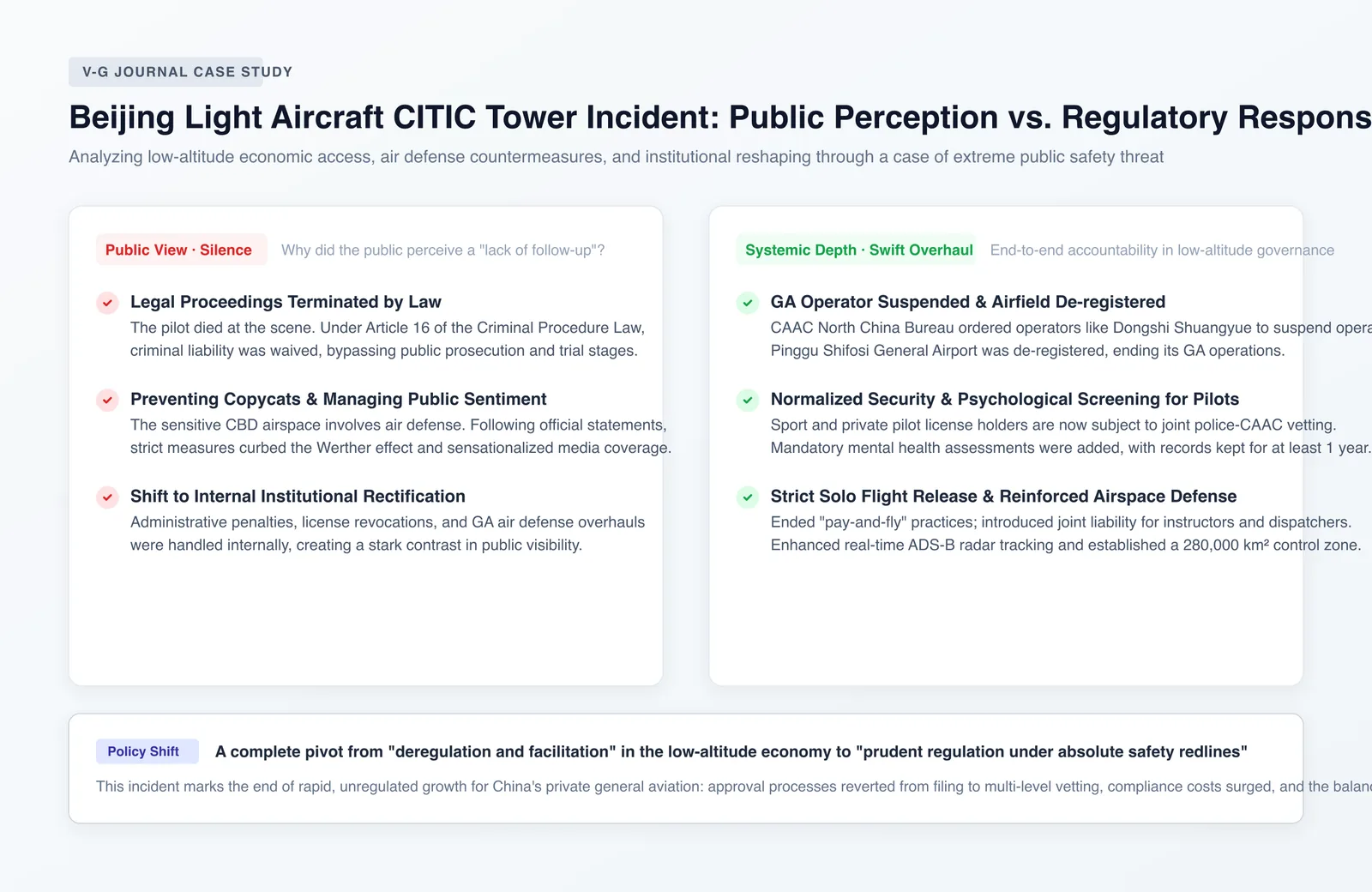
Figure 2: A comparative overview of the public perception and deep-level industry response mechanisms following the Beijing light aircraft collision with the CITIC Tower.
IV. Accountability and Administrative Penalties for Involved Entities
In response to the various operational entities involved in the incident chain, civil aviation regulatory authorities and local governments imposed extremely severe, top-tier penalties and industry accountability measures in accordance with the “Production Safety Law” and civil aviation regulations:
1. Involved General Aviation Company: Complete Cessation of Operations
Dongshi Shuangyue (Beijing) General Aviation Co., Ltd., and its affiliate Dongshi Kunpeng (Beijing) General Aviation Co., Ltd., found themselves at the forefront of safety production accountability.
On July 20, 2026, the Safety Committee of the North China Regional Administration of the CAAC issued an administrative decision pursuant to Article 65 of the “Production Safety Law of the People’s Republic of China”:
- Dongshi Shuangyue and Dongshi Kunpeng were ordered to temporarily suspend production and operations, and cease the use of all aircraft effective immediately.
- Regulatory review indicated that both companies had long-standing, significant safety hazards, including irregular safety management of flight activities, lax ground dispatch oversight, and failure to effectively verify the airworthiness and psychological well-being of flight personnel.
- Any flight or business activities were prohibited indefinitely until rectification was approved by the CAAC’s safety inspection team.
2. Departure Airport: Revocation of General Aviation Airport Registration
The Shifosi General Aviation Airport in Pinggu District, Beijing, which facilitated and served as the departure point for the incident flight, faced severe administrative access revocation.
The accident exposed serious loopholes in the airport’s airspace application and reporting, ground release review, and emergency response coordination for lost-contact situations. According to publicly available administrative licensing records from the North China Regional Administration of the CAAC, the Shifosi General Aviation Airport in Pinggu had its general aviation airport registration officially revoked on August 31, 2026. A general aviation flight base that had been operational for many years thus exited the stage.
3. Capital Low-Altitude Airspace: Establishment of an Absolute Defense Line
To prevent the recurrence of similar blind spots, national air traffic control authorities and the Beijing municipality implemented unprecedented physical and institutional controls over the airspace surrounding the capital:
- Establishment of Special Restricted Zones: Effective September 20, 2026, permanent low-altitude “Special Restricted Zones” covering an area of 280,000 square kilometers were established around Beijing and its key surrounding areas, significantly raising the threshold for transit and operational general aviation.
- Comprehensive Drone Regulation: Beijing enacted stringent new regulations for unmanned aerial vehicles, implementing a complete flight ban in core defense zones and strict traffic flow control, effectively sealing low-altitude blind spots.
V. Systemic Reshaping of China’s Licensed Pilot Community and the Low-Altitude Economy
In recent years, China’s “low-altitude economy” was designated as a strategic emerging industry, and the examination and approval processes for general aviation licenses had undergone a series of “streamline, delegate, and improve services” reforms (e.g., medical examination standards for sport licenses were aligned with those for motor vehicles).
However, this extreme malicious incident, initiated by a licensed amateur pilot due to personal depression and suicidal ideation, pierced through the risk defenses of relaxed management in a tragically stark manner. The event directly prompted a shift in China’s civil aviation management system from “encouraging exploration” to “bottom-line defense,” with profound implications for all licensed pilots:
1. Sharply Increased Entry Barriers: Full Inclusion in Civil Aviation Security Background Checks (Political Vetting)
On August 21, 2026, the Civil Aviation Administration of China officially issued the “Administrative Provisions on Civil Aviation Security Background Checks (Draft for Comments),” addressing previous systemic shortcomings:
- Full Political Vetting Coverage: The stringent security background checks, previously primarily applicable to public transport airline pilots, were comprehensively extended to applicants and holders of Private Pilot Licenses (PPL) and Sport Pilot Licenses (SPL) for general aviation.
- Coordination Between Public Security and Civil Aviation: Before a private pilot applicant’s file is created, public security and air traffic control authorities will conduct a comprehensive verification of their criminal records, credit status, legal disputes, and complex social relationships.
2. Health Screening Mechanism: Introduction of a Rigid Psychological and Mental Health Defense Line
Addressing the critical loophole of the involved pilot’s “chronic insomnia and anxiety, with suicidal thoughts expressed in diaries,” aviation medical examinations are moving away from the traditional “heavy on physical, light on psychological” model:
- Establishment of Traceable Psychological Records: The CAAC requires all general aviation clubs and flight schools to cooperate with professional institutions in conducting comprehensive technical and psycho-physical assessments of all registered pilots. Psychological assessment records must be retained for at least one year for review.
- Screening for Latent Mental Illnesses: Medical examination and certification bodies have strengthened the screening for depressive disorders, severe anxiety, and a history of psychoactive substance use. Previously, minor psychological health issues marked with a check were now considered red lines with a one-vote veto power.
3. End of Liberalized Rental Solo Flights: Implementation of “Dual Binding of Instructor and Dispatcher Responsibility”
Previously, the process for licensed pilots to rent aircraft from general aviation clubs for solo flights was relatively market-driven and liberalized. Following the incident, the joint safety liability of general aviation enterprises escalated to a matter of corporate survival:
- Dual Signature Release System: Solo flights are no longer permitted simply upon payment. A release form must be jointly signed by the duty flight instructor and the ground dispatch supervisor on-site.
- Pre-flight Physiological and Mental On-Site Re-evaluation: Before boarding, the ground dispatcher must conduct a face-to-face assessment of the pilot’s mental state and demeanor, confirming stability before handing over the keys.
4. Surge in Flight Costs and Relocation of Bases
With the revocation of the Shifosi General Aviation Airport in Pinggu and the tightening of airspace controls around Beijing, a large number of private licensed pilots in Beijing and the North China region lost their closest training grounds:
- Pilot Relocation Across Provinces: Many private pilots and students have had to transfer their aircraft or travel to remote general aviation airports in Hebei, Inner Mongolia, Shandong, and other provinces, significantly increasing the time and travel costs associated with flying.
- Compliance Premium for Operations: To equip high-specification ADS-B monitoring equipment, strengthen dispatch capabilities, and bear enormous third-party liability insurance costs, general aviation companies have substantially increased hourly rental rates and hangar parking fees. The emerging consumer sector of private recreational flying has rapidly entered a period of consolidation and deep clearing.
VI. Extended Research Reports and Thematic Clusters
To understand the deeper impact of this extreme event on modern urban public safety, systemic disaster resilience, and risk pricing, complementary reading can be found in the following thematic reports:
Extended Thematic Cluster Recommendations:
- The Law of Cost Conservation and Crisis Load Shedding Calculation: Pathways to Mitigating Systemic Risk
- Life Cycle Actuarial and Terminal Risk Pricing: Principles for Constructing Institutional Safety Nets
- Supertall Buildings and Modern Facility Emergency Protection: A Guide from Sudden Incapacitation to Systemic Redundant Defense
Conclusion: The Beijing light aircraft collision with the CITIC Tower was far from the “quiet” event perceived by the public. It brutally ended the early, untamed growth phase of China’s low-altitude general aviation. Beyond public view, administrative penalties, regulatory revisions, airspace restructuring, and the compliance costs borne by the entire industry are being deeply absorbed—this is precisely the systemic immunity and self-repair that modern megacities and civil aviation systems inevitably initiate after encountering extreme black swan events.
Related Research & Topics
The Anatomy of Digital Predation: Inside the Syndicate Targeting the Elderly via Livestream Appraisal Scams
Starlink V4 and the Low-Earth Orbit Satellite Arms Race: How a 100,000-Node Optical Mesh Pierces the Submarine Cable Monopoly
Tello Mobile eSIM
SafetyWing Nomad Insurance
* Disclosure: This post contains affiliate links. If you make a purchase through these links, V-G Journal may earn a small commission at no additional cost to you. We only recommend services we independently evaluate and trust.
FIRE and Golf:自由旅居之路
专注于为追求 FIRE 与品质生活的人群提供特惠打球权益与候鸟微度假。不持一砖一瓦,运营品质生活。