Kinetic Failure and Evasive Maneuvers: A Survival Guide for Treadmill Power Outages
When a treadmill loses power, the belt stops almost instantly, creating a dangerous forward momentum. This guide analyzes the mechanical damping of motors and outlines the critical 0.5-second SOP to prevent severe injury.

Curator’s Note:
The indoor treadmill is the ubiquitous infrastructure of urban cardiovascular maintenance and metabolic regulation. Yet, few practitioners have ever simulated a “non-normal shutdown” during their training.Many runners harbor a dangerous psychological assumption: that if a circuit trips or power fails, the belt will coast to a gradual stop like a floor fan, providing ample time to decelerate.
Mechanical transmission and physics dictate the opposite. Under the heavy load of a human body, a powered-down belt becomes a “braking plate” that reaches a dead stop within 0.3 to 0.8 seconds. Attempting to “run it out” during this golden half-second usually results not in a safe stop, but in catastrophic ligament tears and high-velocity impact with the console.
I. The Physics: What Happens During a Sudden Power Loss
To build the correct evasive reflex, one must first deconstruct the coupling of mechanical transmission and human dynamics at the moment of failure.
Commercial and home treadmills typically rely on AC variable-frequency motors or brushless DC motors. When a breaker trips or a cord is kicked loose, the drive circuit is severed, and the motor loses its driving torque in milliseconds. While treadmills lack a mechanical brake like a car, the belt does not “glide” due to three overlapping resistive forces:
- Vertical Kinetic Friction: The runner’s full body weight (typically 50–90 kg) is pressed vertically onto the high-speed belt, creating intense dynamic friction between the belt underside and the lubricated deck.
- Mechanical Damping: The drive belt and multi-stage bearings connect the motor to the rollers with high tension. The internal magnetic resistance of the motor and the viscosity of the bearing grease provide inherent mechanical damping.
- The Stall Window: Empirical data shows that under load, a treadmill belt decelerates from cruising speed to a complete standstill in just 0.3 to 0.8 seconds.
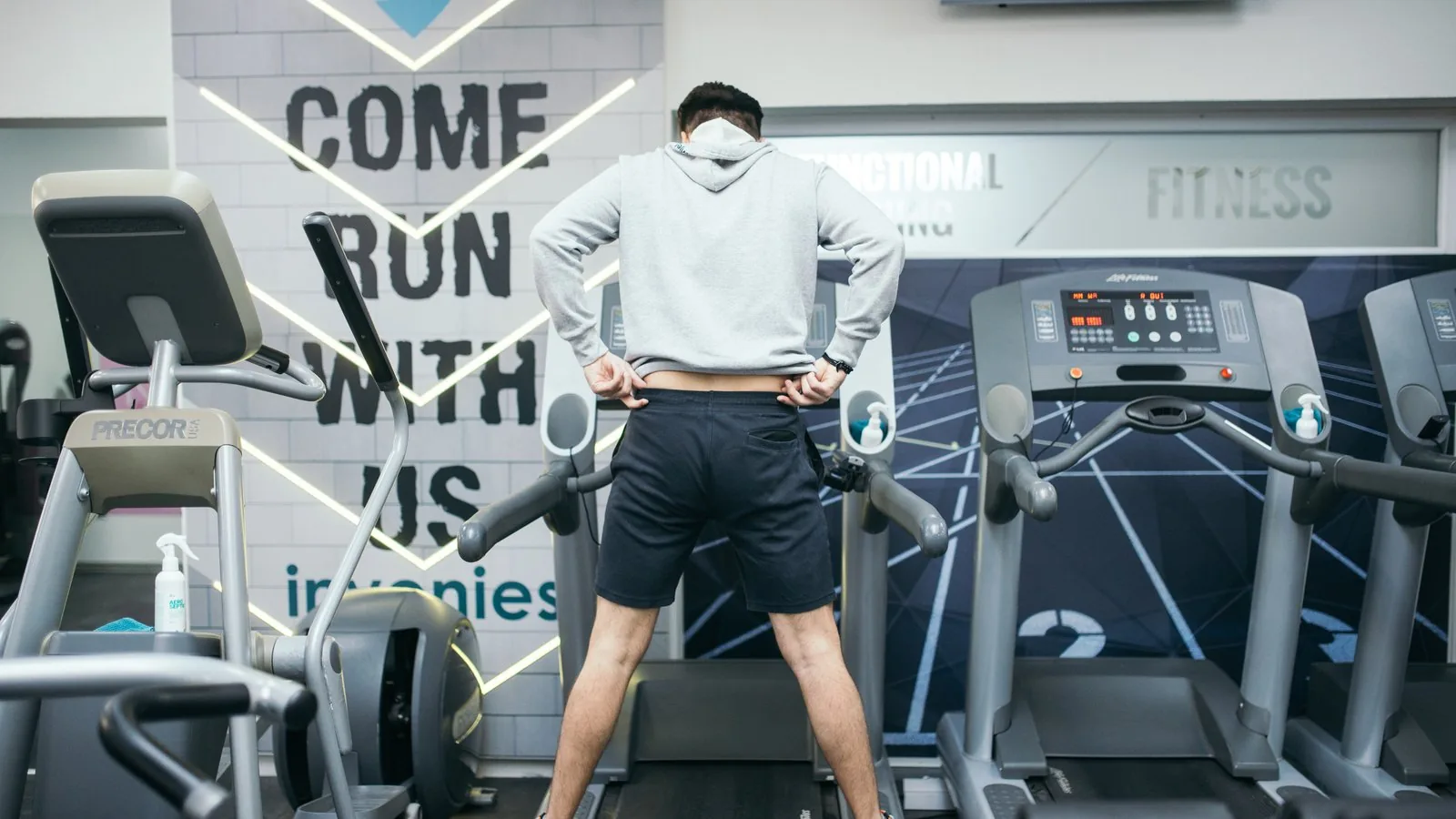 Figure 1: High-speed cruising. The center of mass remains at a constant horizontal velocity, making it extremely sensitive to sudden mechanical imbalance.
Horizontal Impulse and Rotational Overturning Torque
From a biomechanical perspective, the process is brutal:
[Kinetic Parameter Projection]
At a standard aerobic pace of 10 km/h, the runner’s center of mass (CoM) moves at approximately 2.78 m/s. During a 15 km/h interval sprint, this velocity rises to 4.17 m/s.
When the belt stops in 0.5 seconds, the high friction between the belt and the shoe sole anchors the lower extremities instantly. However, over 60% of human mass is concentrated in the pelvis and thorax—well above the pivot point.
Inertia dictates that the CoM continues forward at the initial velocity. Between the fixed feet and the surging upper body, a massive forward rotational torque is generated around the ankles and knees.
The primary danger is not “being thrown off the back,” but rather the CoM overshooting the base of support, causing the runner to pitch forward at high angular velocity into the hardened console and metal uprights.
II. The Fatal Instinct: Why You Must Not “Keep Running”
When a crisis occurs, the central nervous system faces a physiological latency of approximately 0.15 to 0.20 seconds for perception and decision-making.
Following this delay, the most common subconscious reaction is to try and “run it out”—attempting to take extra steps to match the perceived belt speed.
This instinct must be intellectually suppressed.
The deceleration curve of a failing treadmill is steeply non-linear. If a runner attempts to take another step:
- Stride-Speed Decoupling: By the time the lead foot strikes, the expected rearward displacement of the belt has vanished. The belt is nearly static, turning the reaching leg into a “rigid lever” rather than a shock absorber.
- Knee Hyperextension and Ligament Rupture: Under the pressure of forward momentum, the extended knee joint absorbs a massive shear force, leading to ACL tears, posterior horn meniscus crushing, and severe ankle eversion.
- Loss of Protective Posture: Looking down to find footing pulls the head away from the protective axis of the torso, exposing the face and collarbone to the edges of the console.
The iron rule of self-preservation is: Abandon the illusion of decelerating on the belt; immediately transfer control from the lower limbs to the upper body.
III. The Golden 0.5-Second SOP (Standard Operating Procedure)
The logic of self-rescue during a power failure can be summarized in four words: Grip, Lift, and Lateralize.
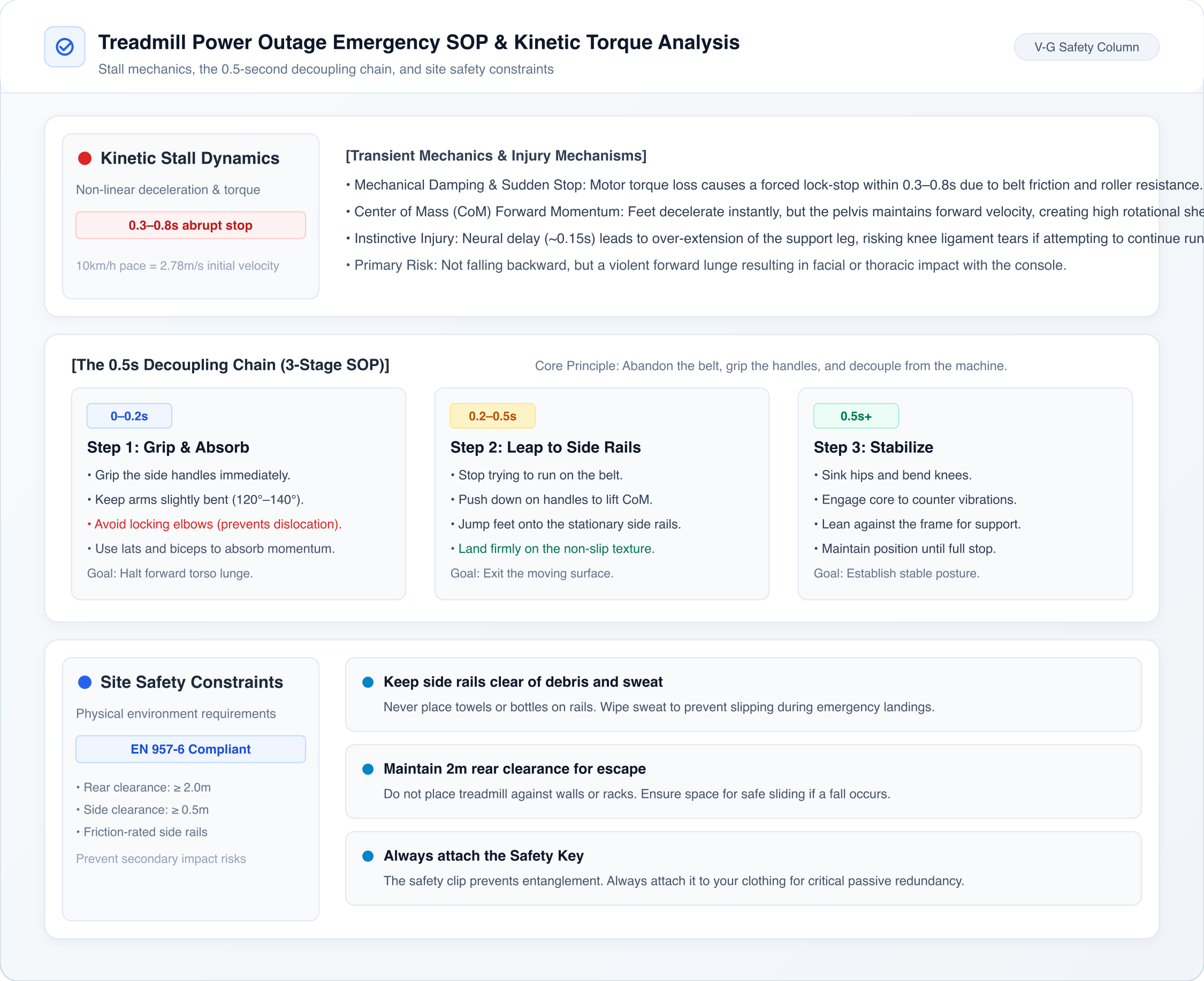 Figure 2: Treadmill Emergency SOP and Kinetic Matrix (Stall mechanisms, action chains, and spatial constraints).
The standard emergency sequence must be completed within 0.5 seconds:
1. Phase One: The Elbow-Locked Grip (0 – 0.2s)
- Emergency Grasp: Clamp both hands onto the front crossbar or side handrails with maximum reaction speed.
- Maintain Micro-Flexion (120°–140°): Never lock your arms straight. Bracing with straight arms sends the horizontal shockwave through the radius and ulna directly into the glenoid, causing shoulder impingement or elbow dislocation. Slightly bent arms allow the biceps, posterior deltoids, and latissimus dorsi to perform eccentric contraction, converting momentum into muscular work.
- Torso Lean: Actively lean the upper body backward while locking the handles to counter the forward overturning torque.
2. Phase Two: The Vertical Lift and Lateral Step (0.2 – 0.5s)
- Depress and Elevate: Using the handles as a fulcrum, drive the arms downward to momentarily lift the CoM, unloading the vertical pressure of the feet on the belt.
- Decisive Straddle: Instead of reaching forward, move the feet outward to the stationary footrails on either side of the belt.
- Secure the High-Friction Zone: Footrails are textured for grip. Once the feet are planted here, the body is physically decoupled from the decelerating mechanical parts.
3. Phase Three: Stabilize the Triangle (Post-0.5s)
- Knee Flexion: Once on the footrails, slightly bend the knees to lower the CoM and engage the core to absorb residual inertia.
- The Pillar Configuration: Maintain tension on the handrails, stabilizing the body within the “inverted triangle” formed by the two heavy metal uprights until all components are static.
IV. Environmental Constraints: The Three Hard Rules of Layout
The effectiveness of these maneuvers depends entirely on the physical redundancy of your environment. A single oversight can render the SOP useless.
1. Keep Footrails Clear and Dry
The footrails are your only “escape landing zone.” Many runners place water bottles, towels, or phones on these rails. Stepping on a cylindrical bottle or a slick towel during an emergency stop leads to immediate ankle fractures or lateral falls. Furthermore, sweat must be wiped down regularly to maintain the static friction coefficient of the rubber texture.
2. Maintain the 2-Meter Rear Clearance (EN 957-6)
International standards (such as EN 957-6 and ISO 20957-6) mandate specific safety clearances:
- Rear Buffer: A minimum of 2.0 meters of unobstructed space behind the rear roller.
- Lateral Buffer: A minimum of 0.5 meters of clearance on both sides of the machine.
In many home gyms or small studios, treadmills are pushed against walls or glass windows. If a runner fails to catch the handles and falls backward at high speed, they risk being pinned between the belt and the wall—a “secondary mechanical crush” that can be fatal.
3. Respect the Safety Key
The safety key’s primary function is not to prevent power loss, but to prevent the rearward drag. Clipping the key to your clothing ensures that if you lose balance and move backward, the magnetic circuit breaks, cutting motor power and triggering an alarm, providing a vital split-second of reaction time to re-establish a grip on the rails.
The ultimate goal of indoor aerobic exercise is long-term cardiovascular maintenance, not testing the body’s impact threshold against uncontrolled machinery. By internalizing mechanical principles into muscle memory and respecting physical boundaries, one can navigate millisecond-level failures with composure.
Related Research & Topics
Tello Mobile eSIM
SafetyWing Nomad Insurance
* Disclosure: This post contains affiliate links. If you make a purchase through these links, V-G Journal may earn a small commission at no additional cost to you. We only recommend services we independently evaluate and trust.
FIRE and Golf:自由旅居之路
专注于为追求 FIRE 与品质生活的人群提供特惠打球权益与候鸟微度假。不持一砖一瓦,运营品质生活。