The Fatal Pause at Hole 11: Tropical Microclimates and the Institutional Blind Spots of Junior Golf
The death of 15-year-old Thai golfer Iyawarin Pradubyat under a convective thunderstorm reveals the brittle safety infrastructure behind Southeast Asia's junior golf boom. Between cost-saving weather monitoring and the coercive incentives of competition rules, player agency vanishes precisely when the atmosphere turns lethal.

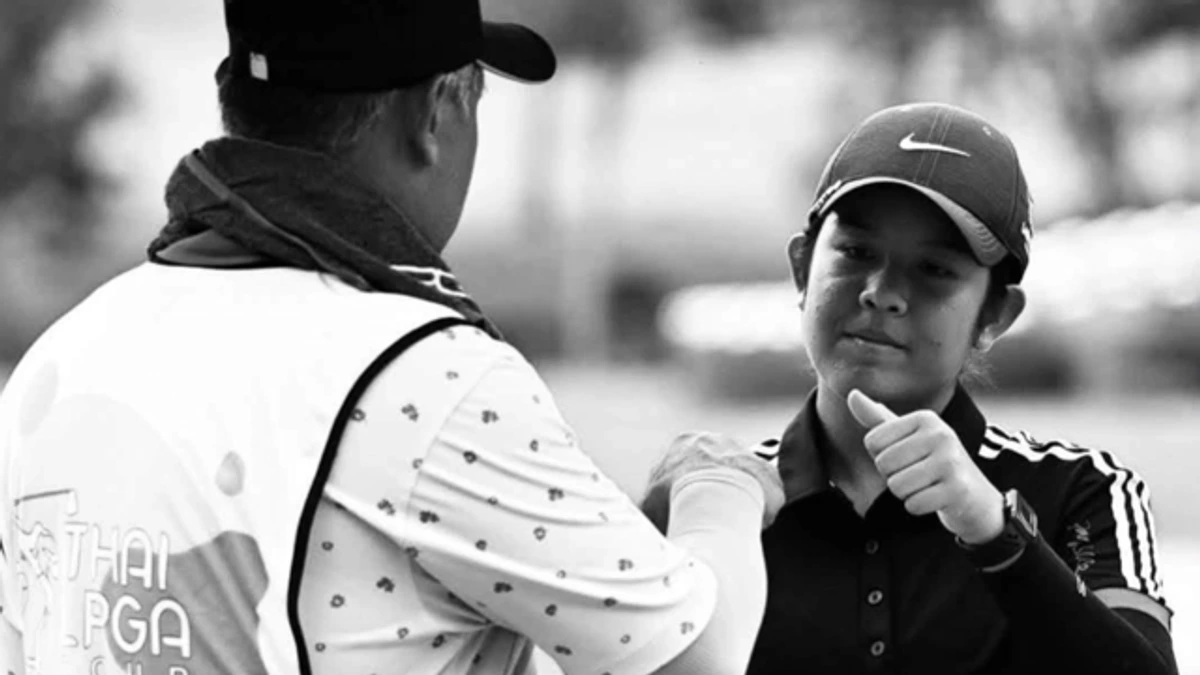
Figure 1: Lotus Valley Golf Resort in Chachoengsao, Thailand. Wide-open fairways offer zero margin for error under rapid tropical convective storm cells.
On the afternoon of November 1, 2026, 15-year-old Thai junior prodigy Iyawarin Pradubyat was standing near the 11th fairway at Lotus Valley Golf Resort in Chachoengsao when a cloud-to-ground lightning bolt struck her and her 31-year-old caddie, Saithan Boonkoed. Despite hours of emergency resuscitation, Pradubyat succumbed to catastrophic electrical burns and multiorgan failure the following morning. Her caddie remains hospitalized with severe injuries.
In the hours following the tragedy, the victim’s family publicly denounced tournament organizers. According to eyewitnesses and family statements, the sky had been rumbling for an extended period, and lightning had already struck nearby trees outside the perimeter. Yet the tournament committee failed to sound the warning horn. Play was suspended only after the lethal bolt hit the fairway and torrential rain finally broke overhead.
The tragedy punctures the illusion of safety underpinning Southeast Asia’s booming junior tournament ecosystem. It lays bare three compounding points of failure: the institutional refusal to invest in precision electrostatic radar, the legal fiction of player autonomy under the Rules of Golf, and the physical reality of open-air sports architecture.
The Delay at Hole 11: When Human Judgment Trails Electrostatic Reality
The sequence of events was brutal in its brevity. At roughly 16:00, Pradubyat—a rising star representing Chonburi Province—was navigating Hole 11. An atmospheric shift that had been gathering charge across the Chachoengsao basin discharged directly onto the fairway. The strike caused immediate cardiac arrest; Pradubyat was without a pulse for nearly an hour before paramedics restored a faint rhythm. She was transferred from Bang Nam Priao Hospital to the intensive care unit at Phutthasothon Hospital. Her father boarded an emergency flight from Myanmar, arriving at her bedside hours before she was declared dead on the morning of November 2.
Her mother, Natcha Pradubyat, challenged the committee’s handling of the crisis on social platforms, pointing out that warning signs were evident long before the fatal discharge. Yet marshals and tournament directors hesitated. The decision to sound the air horn came not when atmospheric conditions dictated it, but when the tragedy had already materialized.
In standard professional tournaments, safety is treated as a sensor-driven engineering problem, not a matter of human intuition. On the PGA Tour or DP World Tour, tournament operations deploy dedicated meteorologists armed with commercial electrostatic field monitors—such as Thor Guard or Earth Networks lightning tracking radar. These systems detect charge accumulation in the local atmosphere well before a stepped leader touches the ground. The governing rule is mechanical and non-negotiable: once cloud-to-ground strikes register within an 8-to-10-mile (13-to-16-kilometer) radius, a continuous blast of the air horn signals an immediate suspension. Players and spectators are afforded a 15-to-20-minute operational window to reach hardened shelters or clubhouses.
In the mid-tier and commercial junior circuits that populate the developing golf world, these protocols collapse. Enterprise-grade atmospheric field arrays, which cost tens of thousands of dollars to lease and staff, are routinely discarded to preserve margins. In their place, organizers rely on visual inspection and consumer smartphone weather apps—tools that update on delayed radar cycles completely unsuited for the volatile thermodynamics of tropical convective cells. In an environment where a local storm can transition from fair-weather cumulus to a violent supercell in under twelve minutes, relying on the naked eye is an act of institutional negligence.
The Illusion of Rule 5.7: Agency vs. Coercion in Junior Ranks
From a regulatory standpoint, the governing bodies anticipated lightning decades ago. Under Rule 5.7 of the Rules of Golf:
When the Committee suspends play for immediate danger (such as lightning), it must sound a single prolonged horn blast. Players must immediately stop play and cannot finish the hole.
Under Rule 5.7b(1), the rules grant individual agency: a player may suspend play on their own initiative if they reasonably believe there is danger from lightning, even if the committee has not sounded the horn.
Yet in the sociodynamics of competitive junior golf, this self-determined exemption is a legal fiction. Junior players operate under compounding pressures: regional ranking points, college recruitment scrutiny, and the financial sacrifices of their families. Pitted against these incentives is Rule 5.6a, which enforces severe penalties—including disqualification—for unreasonable delay of play.
To expect a 15-year-old competitor to drop her clubs, walk off the fairway, and forfeit a round while her competitors continue playing and the tournament committee stands silent is an abdication of duty. It assumes an equality of bargaining power that does not exist. The coercive gravity of the competitive environment forces young athletes into passive compliance.
When organizers treat safety as a matter of individual player discretion rather than enforcing an automated, top-down circuit breaker, they perform a sleight of hand: they outsource liability to children while stripping them of the psychological safety needed to protect their own lives.
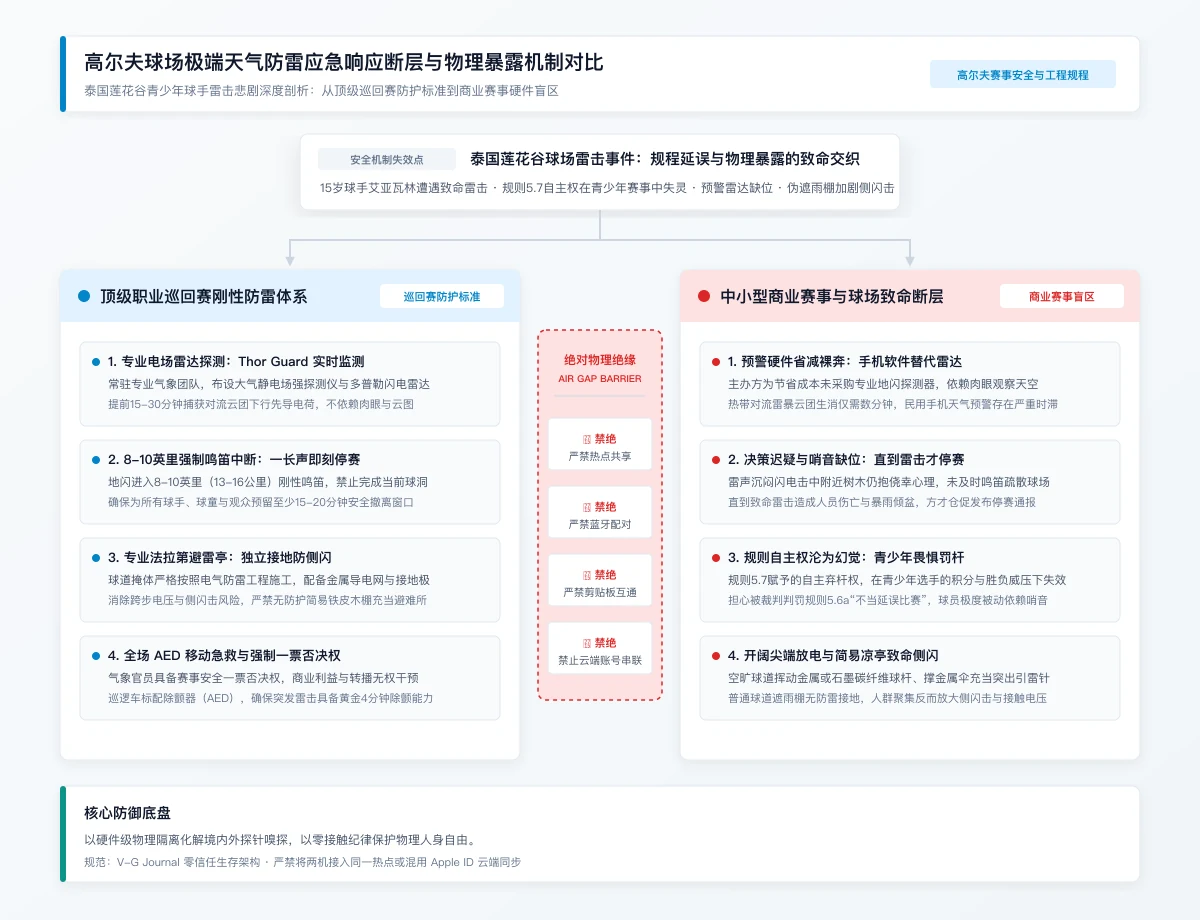
Figure 2: The systemic failure chain: How sensor omissions, regulatory fictions, and architectural vulnerabilities converge into fatal exposure on the golf course.
The Physics of Exposure: Corona Discharge and False Refuges
The architecture of a modern golf course exacerbates this atmospheric vulnerability. Spread across dozens of hectares of manicured turf, open sand hazards, and sparse vegetative canopy, a golf course is an engineered void. When convective storm clouds accumulate massive negative charge layers aloft, any vertical protrusion on the surface initiates an upward streamer of positive ions to complete the ionized discharge channel. An upright human body standing on an open fairway is effectively a localized lightning rod.
The equipment carried on the bag accelerates this vulnerability:
| Equipment / Behavior | Physical Mechanism | Fatal Vulnerability |
|---|---|---|
| Graphite & Steel Clubs | Conductor geometry & elevated vertical profile | High tip-potential induces localized corona discharge, accelerating leader formation |
| Large Golf Umbrellas | Metal stretchers, conductive fabric framing, elevated height | Acts as an elevated ground termination point directly above the player’s skull and spine |
| Fairway Rest Shelters | Open-sided structures lacking grounded Faraday cages | Vulnerable to direct strikes, violent side flashes, and extreme ground step-potentials |
The most common misconception concerns course shelters. The huts scattered across tropical golf resorts are built for shade and rain protection, not electrical safety. Constructed with timber framing or corrugated steel roofs resting on non-conductive posts—without dedicated lightning conductors, deep-earth ground rods, or integrated Faraday cages—these structures offer zero lightning attenuation.
When lightning strikes a nearby canopy tree or the shelter’s roof, the current seeks ground through the path of least resistance. Anyone huddled inside is immediately exposed to “side flash” (arcing through the air from the structure to the victim) and lethal “step potential” (voltage differentials across the soil between a person’s feet). By clustering under an ungrounded rain gazebo, athletes and caddies trade the risk of a direct strike for an equally deadly zone of electrical field convergence.
Fiduciary Duty in the Tropics: Rebuilding the Safety Floor
Southeast Asia has built a lucrative industry around golf tourism and high-volume competitive training. Warm winters, lower operational overhead, and luxury resort facilities attract thousands of aspiring junior competitors from across East Asia, Europe, and the Americas. Yet this commercial engine cannot continue to arbitrage the boundary between operational costs and baseline human safety.
Real safety is an engineering and capital expense. It requires structural compliance at every layer:
- Physical Facilities: Replacing ungrounded course gazebos with verified Faraday-cage shelters equipped with certified earth-ground grids.
- Atmospheric Monitoring: Mandating that any commercial tournament sanctioning body employ calibrated electrostatic field monitors alongside real-time lightning detection feeds.
- Automated Interlocks: Removing human hesitation from the loop by establishing an absolute threshold—if a strike registers within 10 miles, the sirens deploy automatically, without committee deliberation.
- Emergency Infrastructure: Requiring automated external defibrillators (AEDs) and trained wilderness medical responders stationed along course transit arteries.
The lesson left behind at Lotus Valley’s 11th hole is unambiguous. In an era of escalating extreme weather, emergency management cannot tolerate operational paralysis. When dealing with cloud-to-ground electrical discharge, human intuition is worse than useless. Organizers must adopt a doctrine of aggressive, automated over-caution: an air horn sounded ten minutes too early is a minor administrative inconvenience; an air horn sounded two minutes too late is manslaughter by institutional inertia.
Related Research & Topics
Tello Mobile eSIM
SafetyWing Nomad Insurance
* Disclosure: This post contains affiliate links. If you make a purchase through these links, V-G Journal may earn a small commission at no additional cost to you. We only recommend services we independently evaluate and trust.
FIRE and Golf:自由旅居之路
专注于为追求 FIRE 与品质生活的人群提供特惠打球权益与候鸟微度假。不持一砖一瓦,运营品质生活。