The Cost of Leaving: Geoarbitrage, ATO Tax Shoals, and the Australian Middle-Class Exodus
Surging rents and high cash rates are pushing Australian middle-class professionals to seek geoarbitrage in Southeast Asia. Yet relocating physical presence is not a tax sanctuary: the ATO's CGT Event I1 deemed disposal, dual-residency traps, and superannuation gaps represent formidable financial liabilities that demand rigorous sovereign planning.


Figure 1: Facing elevated housing overhead in major capital cities, Australian middle-class professionals and freelancers are turning to Southeast Asia for cross-border geoarbitrage.
As median weekly rents across major Australian capital cities hover between A$600 and A$750, and the Reserve Bank of Australia maintains its cash rate target at 4.35%—continuing a prolonged squeeze on household mortgages and personal savings—conversations surrounding “leaving Australia” have rapidly evolved from online discourse into real-world migration. Remote workers, freelancers, and middle-class professionals pursuing Financial Independence, Retire Early (FIRE) are increasingly looking toward hubs like Bali, Indonesia, and Chiang Mai, Thailand. The goal is simple: capture strong currency revenues (in AUD or USD) while expending capital in low-cost jurisdictions, thereby resetting net cash flow.
Yet cross-border geoarbitrage is not a frictionless escape. From the Australian Taxation Office’s (ATO) aggressive deemed disposal rules under Capital Gains Tax Event I1 to dual-residency traps triggered by extended overseas stays, unmitigated legal vulnerabilities can swiftly turn a strategy of financial defense into a costly tax audit.
The Middle-Class Balance Sheet Under Stagflationary Pressure: Why the Australian Welfare Myth Is Cracking
For decades, Australia was globally regarded as an economic sanctuary characterized by high wages, robust social safety nets, and an enviable lifestyle. However, recent Living Cost Indexes (LCIs) from the Australian Bureau of Statistics (ABS) alongside real estate tracking data reveal that working families and owner-occupiers are confronting their heaviest financial burden in generations.
The core friction stems from housing costs. According to data from CoreLogic and the ABS, median house rents in Sydney have breached the A$1,000 per week mark, while capital city rents nationwide consistently range between A$600 and A$750 per week. For mortgage-laden households, the RBA’s elevated benchmark rate has kept standard variable home loan rates floating between 6.0% and 6.5%. For an average middle-class property, principal and interest repayments consume A$4,000 to A$5,500 monthly, swallowing the bulk of dual-income net revenues.
+-----------------------------------------------------------------------+
|                 AUSTRALIAN MIDDLE-CLASS CASH FLOW SQUEEZE             |
|                                                                       |
|  +--------------------+    RBA Cash Rate @ 4.35%     +-------------+  |
|  | Gross AUD Revenue  | ---------------------------> | Mortgage &  |  |
|  |  (A$120k-150k/yr)  |                              | Rent Costs  |  |
|  +--------------------+                              +-------------+  |
|            |                                                |         |
|            v                                                v         |
|  +--------------------+    Double-Digit Rate Hikes   +-------------+  |
|  | Statutory Taxes &  | ---------------------------> | Living &    |  |
|  | Medicare Levy (2%) |                              | Insurance   |  |
|  +--------------------+                              +-------------+  |
|                                                             |         |
|                                                             v         |
|                                                      +-------------+  |
|                                                      | Savings     |  |
|                                                      | Rate < 5%   |  |
|                                                      +-------------+  |
+-----------------------------------------------------------------------+
This structural inflation quickly leaks into non-discretionary baseline spending. Annual hikes in electricity, gas, municipal council rates, and daily groceries continue to erode discretionary cash flows, while private health and comprehensive auto insurance premiums rise at double-digit rates. This squeeze leaves even high-earning professionals—those pulling in A$120,000 to A$150,000 annually—with net monthly savings rates compressed below 5%, or diving into negative territory. As Australian media outlets like Adelaide Now have documented, soaring baseline living expenses combined with a broken housing ladder have generated a profound sense of economic alienation among skilled young professionals, catalyzing a broader movement toward offshore risk mitigation.
The Visible Ledger of Geoarbitrage: Rebuilding Cash Flow from Sydney to Southeast Asia
Faced with persistent domestic inflation, cross-border geoarbitrage has emerged as an active strategy for digital nomads and sovereign freelancers to reclaim financial agency. The mechanics rely on geographic misalignment: maintaining remote contracts denominated in AUD or USD for technical, design, or consulting services, while transferring physical residence to lower-cost emerging economies.
A comparative analysis of recurring monthly expenses highlights the disparity between Australian capital cities and key Southeast Asian hubs:
| Financial Metric | Sydney / Melbourne Middle-Class Baseline | Bali, Indonesia (Long-Term Villa) | Chiang Mai, Thailand (High-End Serviced Condo) |
|---|---|---|---|
| Core Housing Overhead | A$600–750 / week (~A$2,800/mo) | ~A$1,100–1,400 / month (Villa with pool/garden) | ~A$700–900 / month (Fully furnished, central location) |
| Dining & Household Services | ~A$1,800–2,200 / month (Prohibitive dining out) | ~A$600–800 / month (Domestic aid & organic options) | ~A$450–600 / month (Diverse culinary offerings) |
| Commute, Utilities & Internet | ~A$600–800 / month (High transit & fuel) | ~A$150–250 / month (Local transport & fiber broadband) | ~A$120–180 / month (Transit rail & ride-hailing) |
| Comprehensive Monthly Base | A$6,000–8,000 | A$2,500–3,500 | A$1,800–2,400 |
| Discretionary Savings Rate | <10% (Often reliant on revolving credit) | 50%–60% (Substantial recurring surplus) | 60%–70% (Dramatically compressed accumulation cycle) |
As detailed in our breakdown of Asian Digital Nomad Visas and Cost Comparisons, regional governments across Southeast Asia have established formal legal pathways to attract global mobile talent. Indonesia’s E33G Remote Worker Visa permits foreign employees to reside legally for one year, contingent on proof of an annual salary exceeding US$60,000. Similarly, Thailand’s Destination Visa (DTV) offers a 5-year multiple-entry status, granting 180 days of stay per entry with a liquid asset requirement of just 500,000 THB (approximately A$22,000).
These surface-level metrics can easily create an illusion: that relocating to a tropical hub resolves all financial pressure. However, international living is not an isolated exercise in simple arithmetic. The regulatory and legal mechanisms operating beneath the surface carry significant friction.
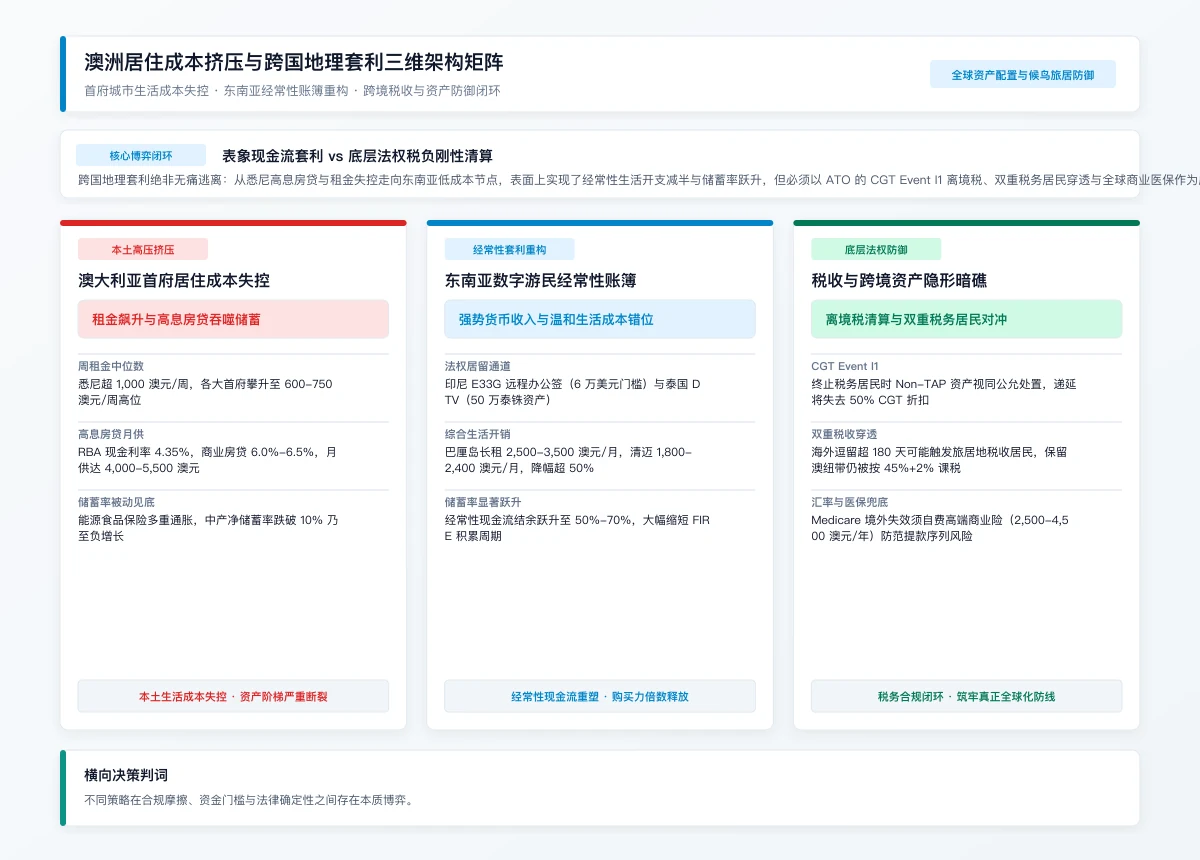
Figure 2: Cash flow restructuring via cross-border geoarbitrage and the underlying legal/tax defense loop.
Jurisdictional Shoals and Tax Reckonings: The ATO’s CGT Event I1 Deemed Disposal
A common misconception among new digital nomads is that physically departing Australia automatically terminates Australian tax jurisdiction. Under statutory tax frameworks, that assumption is dangerously flawed.
The Australian Taxation Office (ATO) determines tax residency based on four statutory tests: the Resides Test, the Domicile Test, the 183-Day Test, and the Commonwealth Superannuation Test. If an individual retains a primary residence in Australia (without converting it into a long-term arm’s-length rental or disposing of it), leaves a spouse or dependents behind, or fails to establish a clear, durable “permanent place of abode” overseas, the ATO will continue to classify them as an Australian tax resident.
Under Australian tax law, tax residents remain subject to tax on their worldwide income—including foreign remote service fees, consulting retainers, and investment yields—at domestic marginal rates of up to 45%, plus the 2% Medicare Levy. Furthermore, spending 180 to 183 days or more in a single tax year in countries like Indonesia or Thailand can trigger tax residency status under local domestic laws, creating dual-residency friction and complex cross-border filing obligations.
+-------------------------------------------------------------------------+
|                  AUSTRALIAN TAX RESIDENCY SHIFT TRAPS                   |
|                                                                         |
|   +-----------------------------------------------------------------+   |
|   | Maintains Primary Residence / Dependent Ties / Temporary Abode  |   |
|   +-----------------------------------------------------------------+   |
|                                    |                                    |
|                                    v                                    |
|   +-----------------------------------------------------------------+   |
|   | Remains ATO Tax Resident -> Worldwide Income Subject to ATO      |   |
|   | Rates (Up to 45% + 2% Medicare Levy)                            |   |
|   +-----------------------------------------------------------------+   |
|                                                                         |
|   -------------------------------------------------------------------   |
|                                                                         |
|   +-----------------------------------------------------------------+   |
|   | Successfully Severs ATO Residency -> Triggers CGT Event I1      |   |
|   +-----------------------------------------------------------------+   |
|                                    |                                    |
|                                    v                                    |
|   +-----------------------------------------------------------------+   |
|   | Deemed Disposal of Non-TAP Assets (Global Stocks, ETFs, Crypto)  |   |
|   | Taxed on Unrealized Paper Gains at Fair Market Value            |   |
|   +-----------------------------------------------------------------+   |
+-------------------------------------------------------------------------+
Conversely, if an individual successfully severs ties with Australia and satisfies non-residency criteria, an even more aggressive provision applies: Capital Gains Tax Event I1 (CGT Event I1).
Under ATO regulations, on the precise date a taxpayer ceases to be an Australian tax resident, the law deems that they have disposed of all Non-Taxable Australian Property (Non-TAP) at fair market value. This includes Australian and international equities, exchange-traded funds (ETFs), cryptocurrencies, and foreign real estate holdings.
Consequently, even if an investor has not sold a single share of an index fund or tech stock, any unrealized paper gains must be included as assessable income in their final tax return for the year of departure, with tax payable accordingly.
While taxpayers can make an explicit statutory election to defer this liability (treating the assets as Taxable Australian Property until actual disposal), doing so comes at a heavy cost: once non-resident status is active, the taxpayer permanently forfeits the 50% CGT discount for any gains accrued after departure, even if the asset was held for over 12 months.
Many middle-class professionals and early FIRE aspirants who accumulate significant unrealized paper gains during market bull cycles risk discovering—often via a post-departure assessment—that their liquid safety buffers have been substantially diminished by unexpected tax liabilities.
Hidden Costs and Asset Preservation: FX Volatility, Broken Superannuation, and Healthcare Backstops
Beyond direct taxation, a durable geoarbitrage strategy must account for three critical hidden costs that frequently erode net returns:
First is the impact of foreign exchange volatility on the Safe Withdrawal Rate (SWR). As explored in our analysis of US Stock Selloffs and FIRE Sequence-of-Returns Risk, executing a safe withdrawal strategy (such as the traditional 4% rule) requires relative stability between asset-denominated currencies and living-expense currencies. If a portfolio is anchored in Australian Dollars while baseline living expenses transition toward US Dollars or USD-pegged local cost structures, a depreciation in the AUD can inflate real living expenses when converted, compounding early-stage sequence-of-returns risk.
Second is the interruption of mandatory Superannuation compounding. Under Australian law, employers must contribute a statutory minimum of 11.5% of an employee’s earnings into superannuation. For professionals transitioning to offshore freelancing or self-employment, this automatic compounding mechanism halts. Unless individuals disciplinedly allocate a portion of their offshore savings into productive, yield-bearing assets, the long-term gap in retirement capital can quickly outweigh the short-term savings achieved through lower living expenses.
Finally, there is the loss of domestic healthcare coverage. Australia’s Medicare system covers most essential medical overhead domestically. However, Medicare provides zero coverage overseas. While Southeast Asia hosts world-class private medical facilities, self-funding care for unexpected critical illnesses or injuries without employer-sponsored insurance can rapidly deplete savings. As a result, long-term expatriates must budget for comprehensive global private health cover (typically costing A$2,500 to A$4,500 annually), which must be factored directly into the geoarbitrage equation.
+-----------------------------------------------------------------------+
|                    THE THREE HIDDEN ARBITRAGE COSTS                   |
|                                                                       |
|  1. FX Volatility       AUD/USD fluctuations erode Safe Withdrawal    |
|                         Rates (SWR) for local living expenses.        |
|                                                                       |
|  2. Broken Super        Loss of mandatory 11.5% compounding; requires   |
|                         disciplined self-directed reinvestment.       |
|                                                                       |
|  3. Healthcare Deficit  Zero Medicare coverage abroad; mandates       |
|                         private global health policies ($2.5k-$4.5k). |
+-----------------------------------------------------------------------+
As observed in our review of Tokyo Real Estate Price Adjustments and Overseas Capital Liquidation, cross-border asset and lifestyle strategies often look attractive on superficial yield metrics. Yet, long-term success is ultimately determined by underlying transaction costs, tax compliance, and structural downside protection.
Dual-Layered Defense in an Era of Rational Asset Allocation
Australia’s current cost-of-living environment is not an isolated event; it reflects a broader post-inflationary adjustment shared by major developed economies. Leveraging cross-border geoarbitrage to reset baseline expenses can be an effective, forward-looking personal financial strategy.
However, geoarbitrage cannot succeed if approached as an emotional exit or undertaken without strict tax and regulatory compliance. Sustainable sovereign mobility requires a precise understanding of international tax rules, cross-currency asset management, and proper visa structures.
Before relocating, individuals must audit their tax residency status, evaluate potential CGT Event I1 liabilities on existing portfolios, secure comprehensive global health coverage, and establish multi-currency liquidity buffers. Aligning regulatory compliance with financial planning turns geoarbitrage from a temporary reaction into a robust framework for preserving capital and long-term autonomy.
Related Research & Topics
Tello Mobile eSIM
SafetyWing Nomad Insurance
* Disclosure: This post contains affiliate links. If you make a purchase through these links, V-G Journal may earn a small commission at no additional cost to you. We only recommend services we independently evaluate and trust.
FIRE and Golf:自由旅居之路
专注于为追求 FIRE 与品质生活的人群提供特惠打球权益与候鸟微度假。不持一砖一瓦,运营品质生活。