The Mechanics of Failure: Why Afghanistan Remains the Graveyard of Empires
Afghanistan’s reputation as the 'Graveyard of Empires' is not a product of military myth, but a systemic certainty born of fragmented geography, tribal autonomy, and the ruinous marginal costs of asymmetric warfare.

Executive Summary: In the lexicon of popular geopolitics, Afghanistan is often shrouded in a fatalistic mystique—the “Graveyard of Empires.” However, a cold analysis of statecraft and governance reveals that its resilience is neither supernatural nor purely military. The successive failures of the Soviet Union and the United States were the inevitable results of a collision between modern imperial logic and a landscape defined by extreme physical fragmentation, a tribal social contract that rejects modern taxation, and a logistical burden that eventually bankrupts any external power.
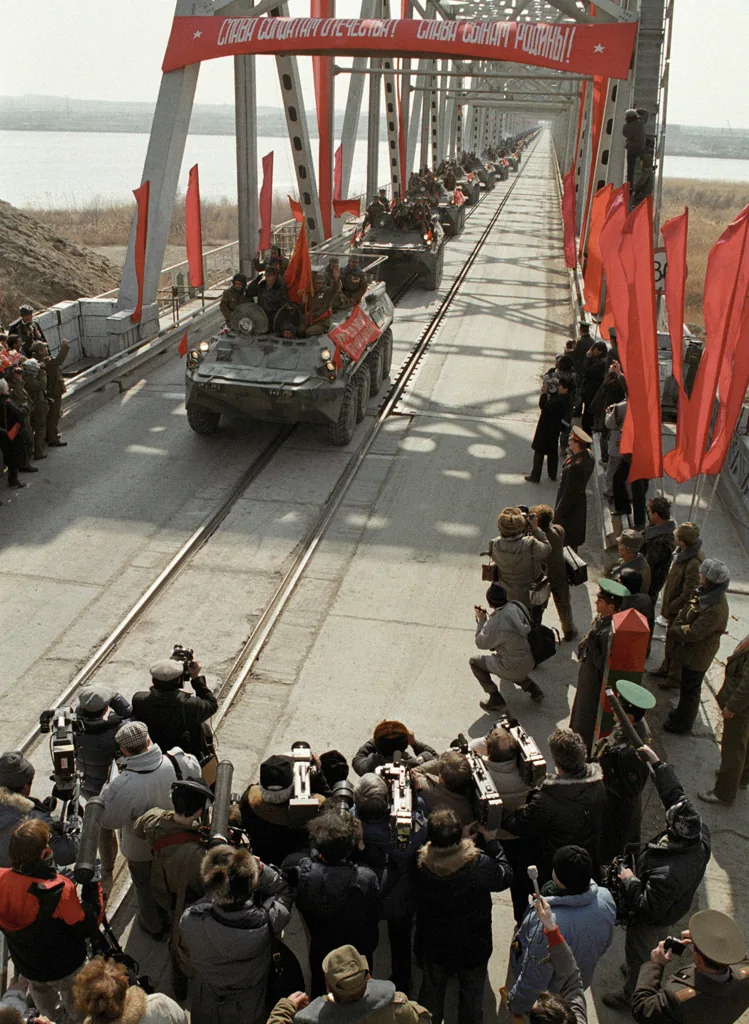
Figure 1: On February 15, 1989, the final Soviet armored personnel carriers of the 40th Army crossed the Termez Friendship Bridge, ending a decade of occupation. (Source: RIA Novosti / Boris Kavashkin / CC BY-SA 3.0)
I. The Anatomy of a Non-State: Physical and Social Fragmentation
To understand Afghanistan, one must first strip away the Westphalian projection of a “nation-state.” It is, in essence, a mountain-locked geographic unit and a collection of discrete tribal communities forcibly contained within borders drawn by 19th-century colonial powers.
1. Topographical Fragmentation: A Defense Without a Center
The Hindu Kush mountains bisect the country from northeast to southwest, with an average elevation exceeding 1,200 meters. Nearly 80% of the terrain consists of rugged peaks and arid deserts. This harsh geography creates two fatal military conditions:
- Valley Islands: The mountains slice the country into hundreds of isolated, narrow river valleys. These valleys lack natural connectivity; lateral transport is grueling. For millennia, each valley has evolved into a closed ecosystem—a self-contained social and political universe.
- The Absence of High-Value Nodes: The logic of industrialized warfare relies on the “center of gravity”—the destruction of command hubs, power grids, rail networks, and industrial clusters to force a surrender. In Afghanistan, these nodes barely exist. Even when an external force occupies Kabul and the primary ring roads, they control only discrete points and fragile lines on a map. The vast interior remains in a state of primordial, self-sufficient autonomy.
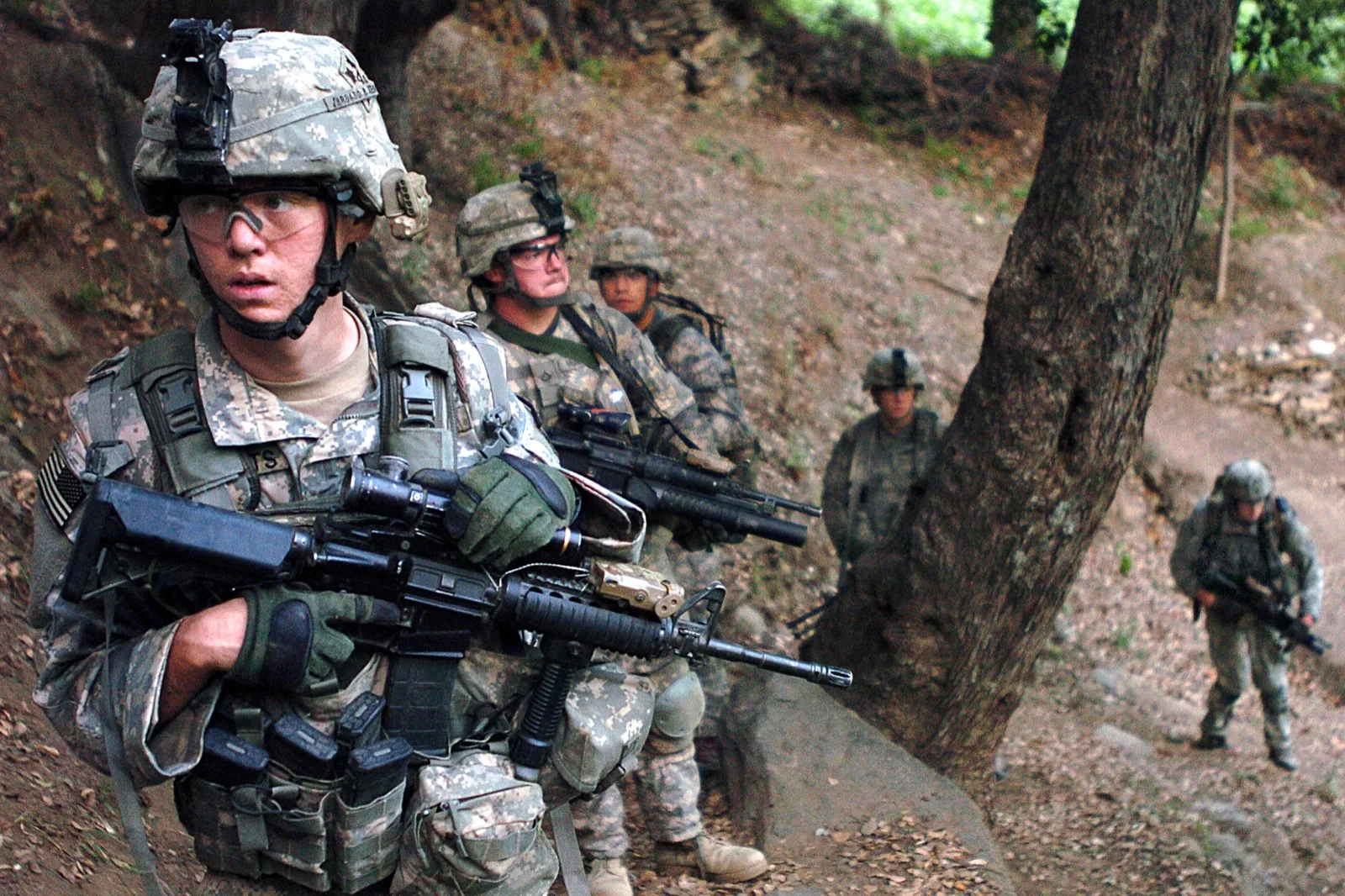
Figure 2: U.S. infantry units patrolling the Korengal Valley. Modern mechanized advantages are neutralized by the verticality and enclosure of the terrain. (Source: U.S. Army / Spc. Matthew Freire)
2. “Society Against the State”: Tribal Jurisprudence
Afghanistan has never successfully integrated a modern bureaucratic hierarchy at the grassroots level:
- Bottom-Up Authority: The Pashtun majority adheres to Pashtunwali, an unwritten code centered on blood feuds (Badal), sanctuary (Nanawatai), and honor (Nang). Real power resides with the tribal elders (Malik) and local clerics (Mullah). Disputes are settled via the Jirga (tribal council), not a central court.
- The “Ring Road” Limit: Whether it was the 19th-century Emirs, the 20th-century King Zahir Shah, or the later Republic, central authority rarely penetrated beyond the main highways. The relationship between Kabul and the provinces was never one of “administration,” but rather a transactional exchange of subsidies for nominal loyalty.
3. The Rentier Trap: A Fiscal Dead End
A modern state requires a stable domestic tax base to maintain a standing army and civil service. Deprived of sea access and an industrial base, Afghanistan’s legitimate tax base is negligible. It has historically relied on informal smuggling, mining, and narcotics.
Every central government in Kabul has seen 50% to 80% of its budget funded by external geopolitical subsidies—from British stipends during the Great Game to Soviet infrastructure aid and, finally, tens of billions in direct U.S. fiscal support. The moment the external blood transfusion is cut, the central government suffocates under the weight of its own gravity.
II. The Soviet Quagmire: 1979–1989
The Soviet intervention was intended as a swift “surgical” regime change. Instead, it became a decade-long “bleeding wound” for the empire.
1. Radical Social Engineering and the Traditionalist Backlash
Following the 1978 Saur Revolution, the People’s Democratic Party of Afghanistan (PDPA) attempted to impose radical land nationalization, forced secular education, and the abolition of religious privileges upon a deeply conservative society. This top-down assault on tribal tradition ignited a nationwide insurgency before the first Soviet tank even crossed the border. By intervening to save a regime with zero local legitimacy, Moscow placed itself in direct opposition to the entire fabric of Afghan society.
2. The Durand Line: A Strategic Blind Spot
The “Durand Line,” drawn in 1893, split the Pashtun heartland between Afghanistan and what is now Pakistan. This created a permanent tactical nightmare:
- Cross-Border Sanctuary: Insurgents utilized Peshawar as a rear base, receiving CIA funding (Operation Cyclone), Saudi capital, and international volunteers.
- The Asymmetric Safe Haven: As seen in our analysis of the Azerbaijan-Iran power structure, artificial borders cutting through homogenous ethnic groups create natural depth for infiltration. Bound by Cold War constraints, the Soviets could not launch a full-scale ground invasion of Pakistan. As long as the sanctuary existed, the insurgency was mathematically impossible to defeat.
3. Mechanized Failure in the Mountains
The Soviet military was designed for high-intensity, deep-strike armored warfare on the European plains. In the Hindu Kush:
- Massive mechanized columns were funneled into narrow mountain passes and the Salang Tunnel, where they were easily ambushed by a handful of guerrillas with RPGs.
- The introduction of “Stinger” MANPADS in the mid-80s neutralized the Mi-24 Hind gunships, stripping the Soviets of their only rapid-response aerial advantage.
- By 1989, the cost—15,000 dead and billions of rubles annually—became unsustainable for a stagnating Soviet economy facing a collapse in oil prices.
III. The American Deadlock: 2001–2021
The U.S. spent twenty years and over $2.2 trillion in Afghanistan. Yet, ten days after the U.S. withdrawal, the multi-billion dollar security apparatus it built vanished.
1. Strategic Drift and “State-Building” Rejection
The initial mission—toppling the Taliban and dismantling Al-Qaeda—was achieved in weeks. However, Washington’s objectives drifted into the ambitious territory of “State-building”:
- Institutional Incompatibility: Attempting to graft Western representative democracy and a highly centralized presidential system onto a decentralized, illiterate, and tribal society.
- The Kabul Bubble: The President in Kabul was granted the power to appoint provincial governors and police chiefs, yet he often lacked the authority to enforce a decree ten miles outside the capital. This artificial political machine was viewed as a foreign imposition, lacking any endogenous legitimacy.
2. The “Ghost Soldier” Economy
The Special Inspector General for Afghanistan Reconstruction (SIGAR) documented how billions were systematically devoured by corruption:
- The Aid-Dependent State: With 80% of the budget coming from foreign aid, the government had no incentive to develop a social contract with its citizens through taxation.
- Institutional Rot: On paper, the Afghan National Defense and Security Forces (ANDSF) numbered 300,000. In reality, the rolls were padded with “ghost soldiers”—non-existent troops whose salaries were pocketed by commanders. When U.S. air support and technical contractors departed, this hollow force, which had been built as a subsidiary of the U.S. military, collapsed instantly.
3. The Ruinous Marginal Cost of Logistics
As a landlocked nation, the logistical chain for the U.S. was one of the most expensive in military history:
- Supplies had to be shipped to Karachi, trucked through the Khyber Pass, and defended against constant extortion and ambush.
- At the height of the war, the fully burdened cost of a single gallon of fuel delivered to a remote forward operating base reached hundreds of dollars.
- Conversely, the Taliban operated on a shoestring budget funded by opium tithes and informal Hawala networks. In a war of attrition, the empire’s fiscal endurance will always fail before the local insurgent’s survival instinct. As the Taliban famously noted: “You have the watches, but we have the time.”
IV. Comparative Matrix: Soviet vs. U.S. Interventions
| Dimension | Soviet Intervention (1979–1989) | U.S. Intervention (2001–2021) |
|---|---|---|
| Initial Objective | Propping up a secular client state | Counter-terrorism and regime change |
| Mission Creep | Radical social transformation (Marxism) | Western-style “State-building” |
| Nature of Client | Ideologically rigid, detached from tradition | Comprador-led, aid-dependent democracy |
| Social Resistance | Jihad against “godless” communism | Rural backlash against foreign occupation and Kabul corruption |
| External Sanctuary | Peshawar, Pakistan; the Durand Line | Pakistan’s Tribal Areas; the Durand Line |
| Insurgent Funding | CIA, Saudi Arabia, Western MANPADS | Narcotics, smuggling, informal donations |
| Tactical Failure | Mechanized columns in mountain ambushes | High-tech counter-insurgency vs. decentralized IEDs |
| Economic Impact | Accelerated Soviet fiscal collapse | $2.2 trillion spent; massive deficit spending |
| The End Game | 1989 withdrawal; Najibullah fell in 1992 | 2021 withdrawal; ANDSF collapsed in 10 days |
V. The Bottom Line: The Physical Inevitability of Retreat
Afghanistan’s “invincibility” is not a matter of superior martial prowess, but a reality of systems engineering:
- Structural Asymmetry: An empire brings an expensive, integrated, and fragile system dependent on complex logistics and legal procedures. It faces a decentralized, fragmented, and low-cost network that is indigenous to the terrain. Breaking the network is easy; maintaining the occupation is astronomically expensive.
- The Failure of Endogenous Growth: Military force can suppress disorder, but it cannot create a state. A state requires an internal fiscal cycle. If $2 trillion cannot produce a self-sustaining economy, the entire structure will revert to its baseline the moment the checks stop arriving.
- The Marginal Cost of Endurance: For the empire, the war is a line item in a budget and a liability in an election. For the local, the war is the environment. When the benefit of stopping the “bleeding” outweighs the cost of staying, retreat becomes a physical necessity.
Related Research & Topics
Tello Mobile eSIM
SafetyWing Nomad Insurance
* Disclosure: This post contains affiliate links. If you make a purchase through these links, V-G Journal may earn a small commission at no additional cost to you. We only recommend services we independently evaluate and trust.
FIRE and Golf:自由旅居之路
专注于为追求 FIRE 与品质生活的人群提供特惠打球权益与候鸟微度假。不持一砖一瓦,运营品质生活。