The Azerbaijani-Iranian Power Matrix: Institutional Symbiosis and the Northern Siege
Debunking the myth of ethnic minority control in Tehran while analyzing the strategic threat posed by Baku’s alliance with Israel and the Zangezur Corridor.

Executive Summary: In the corridors of digital discourse and popular geopolitics, a persistent narrative suggests that “less than 20% of the population—the Azerbaijanis—control Iran.” From Supreme Leader Ali Khamenei to the 2024 election of President Masoud Pezeshkian and the merchant kings of the Tehran Grand Bazaar, the evidence seems anecdotal but overwhelming. However, this conclusion suffers from a profound reversal of causality. It mistakes the “deep embedding and co-construction” of Azerbaijani elites within the Iranian state apparatus for “minority rule over a majority.” To understand the true power dynamics, one must look past internal ethnic labels and examine the geopolitical asphyxiation Tehran faces from the Republic of Azerbaijan to its north.
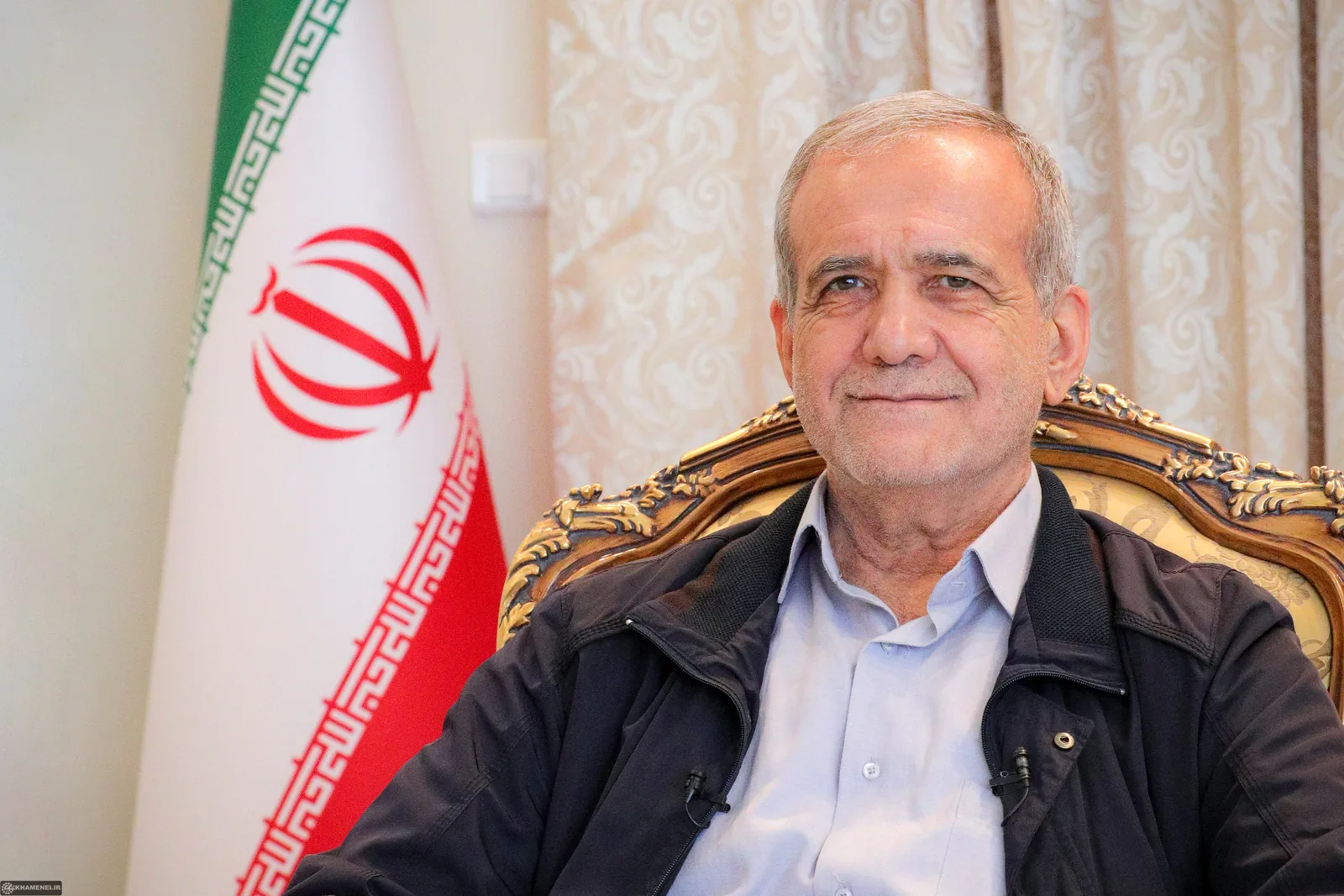
Figure 1: Masoud Pezeshkian, Iran’s 9th President (of Azerbaijani descent), during an official interview in Tehran. (Source: Khamenei.ir / CC BY 4.0)
I. Deconstructing the “Azerbaijani Control” Narrative
The claim that Azerbaijanis run Iran is not a fabrication, but rather a misinterpretation of three visible realities:
1. The Lineage of the Ruling Class
In the hierarchy of the Islamic Republic, the representation of ethnic Azerbaijanis (who comprise roughly 16%–20% of the population, or 15–18 million people) is disproportionately high:
- The Supreme Leader: Ali Khamenei’s father hailed from Khamaneh in East Azerbaijan province, a lineage of distinguished clerical scholars; his mother was Persian.
- The Presidency: Masoud Pezeshkian, elected in 2024, was born in Mahabad. He is fluent in Azerbaijani and openly embraced his northwestern ethnic identity during his campaign.
- The Military-Political Core: Key figures like Mir-Hossein Mousavi (the pivotal Prime Minister during the Iran-Iraq War) and Hassan Firouzabadi (the long-serving Chief of Staff of the Armed Forces) share this heritage. The Islamic Revolutionary Guard Corps (IRGC) and the senior ranks of the Qom Seminary are densely populated by Azerbaijani-Iranians.
2. The “Bazaar” and the Economic Nervous System
The Tehran Grand Bazaar is the traditional heart of Iran’s economy, logistics, and shadow finance. During the 1979 Revolution, the Bazaari merchant class provided the capital and grassroots mobilization that toppled the Pahlavi dynasty.
Within this circle, Azerbaijani merchant guilds dominate critical sectors: Persian carpets, dried fruits, precious metals, leather, and unofficial foreign exchange hedging. They have built a closed-loop network of mutual aid societies and religious foundations (Bonyads), forming an unbreakable alliance with conservative high-ranking clerics.
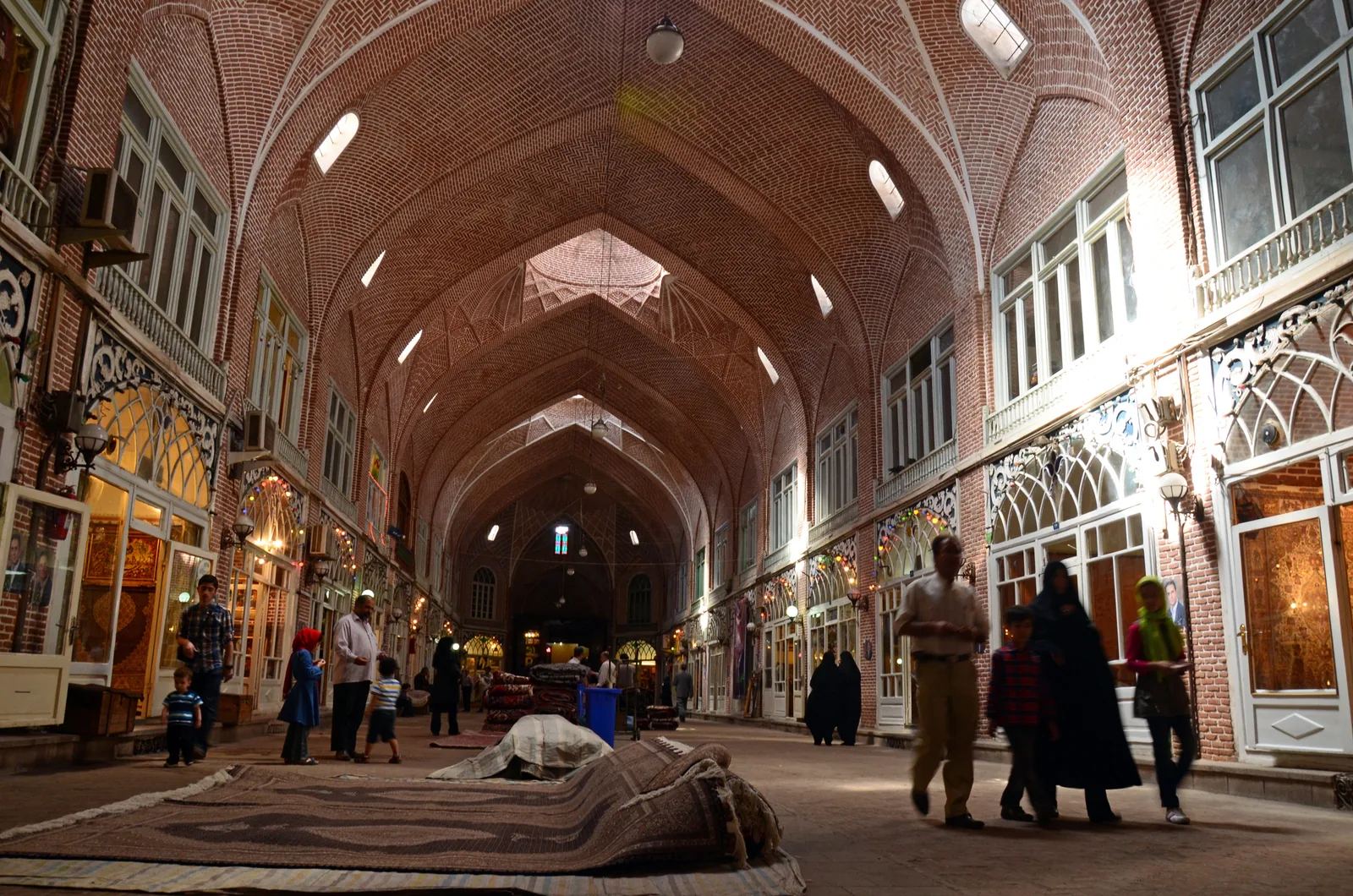
Figure 2: The Mozaffariyeh Arcade in the UNESCO-listed Tabriz Grand Bazaar, the historic hub of Azerbaijani merchant guilds. (Photo: Mostafameraji / CC BY-SA 4.0)
3. A Millennium of “Co-Founding” Status
Civilizational Iran has never been a mono-ethnic Persian state. From the Seljuk Turks in the 11th century to the Safavids (who established Shiism as the state religion in 1501), and through the Afsharid and Qajar dynasties, the ruling families and military aristocracies were largely Turkic or Azerbaijani-speaking nomadic tribes:
- The Safavid Dynasty, which defined modern Iran’s borders and religious identity, originated in Ardabil, in Iran’s northwest.
- The Qajar Dynasty maintained Tabriz as the seat of the Crown Prince and a strategic military base long before making Tehran the capital.
Historically, Azerbaijanis have been “founding shareholders” of the Iranian state, never peripheral subjects or a colonized tribe.
II. Why “Minority Control” is a Causal Inversion
To characterize this as “Azerbaijanis controlling Persians” ignores the actual institutional logic of the Islamic Republic:
1. The Sole Axis of Loyalty: The Shiite System
The bedrock of the current regime is Velayat-e Faqih (Guardianship of the Jurist). Political loyalty is measured by absolute submission to the revolutionary line and the territorial integrity of Iran-Zamin (the Land of Iran).
An Azerbaijani-Iranian cleric or IRGC commander is, first and foremost, a defender of the Shiite theocracy. They have no political incentive to seek exclusive ethnic privileges. If an Azerbaijani official shows pan-Turkic or secessionist tendencies, the Azerbaijani-led security apparatus in Tehran would be the first to purge them for treason.
2. The Hegemony of the Persian Language
If a group truly “controlled” a state, it would not marginalize its own mother tongue. In Iran, Persian remains the sole official language of education, law, and administration. Despite Article 15 of the Constitution nominally allowing minority languages in local media, the central government has consistently suppressed efforts to establish formal Azerbaijani-language public schooling.
3. Factionalism Over Ethnicity
There is no “Azerbaijani Caucus” in Tehran. Power is brokered through IRGC factions, clerical lineages in Qom, and intermarriage between political families. The Azerbaijani elite in Tehran are deeply “Persianized”; they speak Persian at home and are fully integrated into the metropolitan social fabric.
4. Shared Economic Hardship
Ordinary Azerbaijanis in provinces like East Azerbaijan or Ardabil suffer the same hyperinflation and unemployment as Persians. They do not receive preferential fiscal transfers. In fact, the drying of Lake Urmia—a geographical symbol of the northwest—has sparked repeated protests against Tehran’s perceived negligence in water management.
III. The 1828 Fracture and the Northern Geopolitical Siege
While Azerbaijanis are integrated within Iran, the sovereign Republic of Azerbaijan to the north (capital: Baku) represents Tehran’s most sensitive security vulnerability. This split dates back to the 19th-century expansion of the Russian Empire.
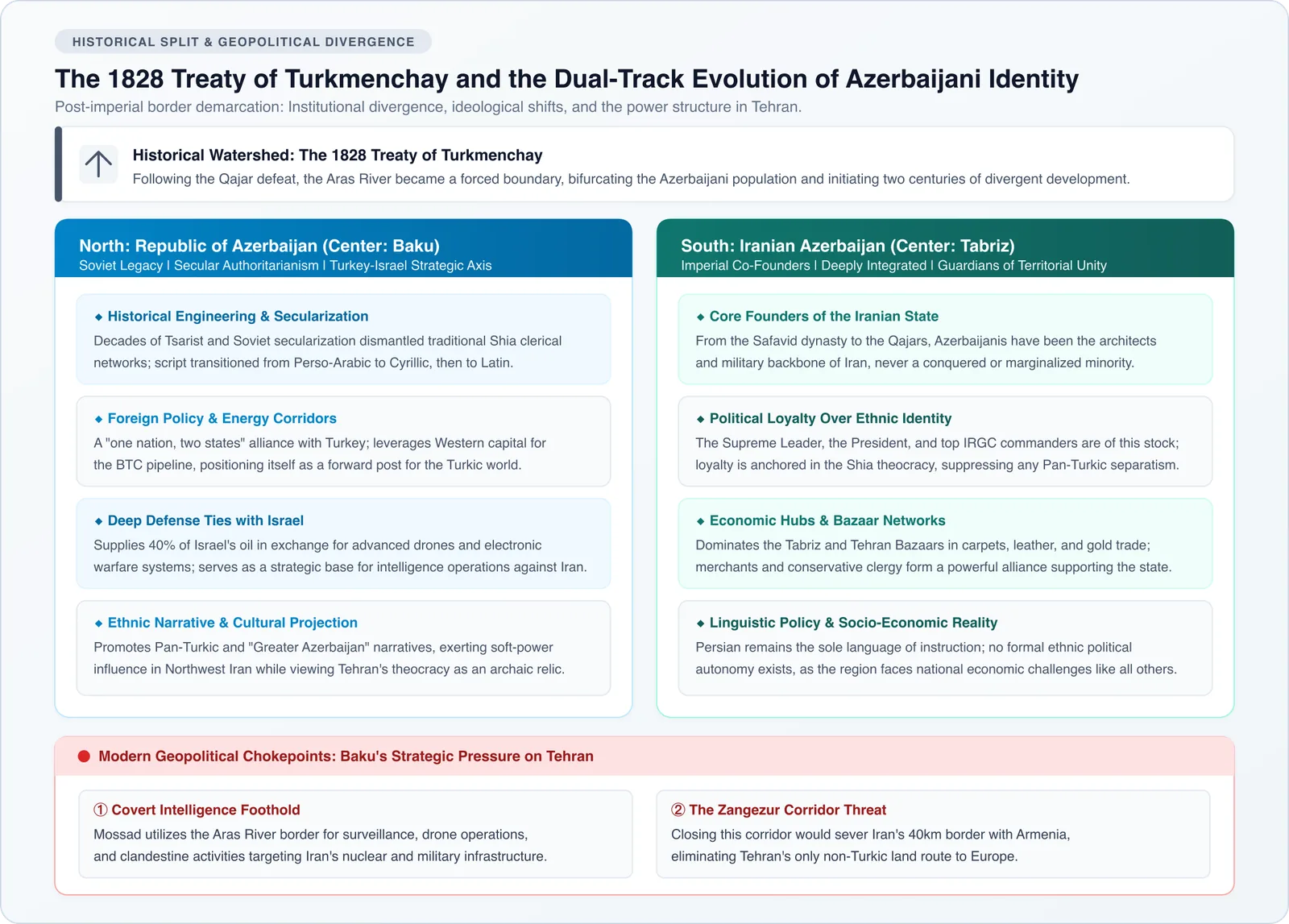
Figure 3: The divergence of the two Azerbaijans following the 1828 Treaty of Turkmenchay: Institutional paths, alliances, and modern conflict matrices. (Source: V-G Journal)
1. Israel’s Intelligence Outpost
Tehran views Baku as a “Trojan Horse” for Israeli interests:
- Energy for Arms: Azerbaijan provides 30%–40% of Israel’s crude oil. In exchange, Israel provides advanced military tech (Harop drones, Barak-8 missiles). This technological edge allowed Baku to crush pro-Iranian Armenia in the Nagorno-Karabakh wars.
- The Border as a Launchpad: Tehran has repeatedly warned that Mossad utilizes the Aras River border region for electronic surveillance, drone incursions, and as a transit point for agents targeting Iran’s nuclear program.
2. The “Zangezur Corridor”: An Existential Red Line
Baku and Ankara are pushing for the Zangezur Corridor, a transport link across southern Armenia’s Syunik province to connect mainland Azerbaijan with its Nakhchivan enclave and Turkey.
For Tehran, this corridor is a “geopolitical death blow”:
- Physical Severance: It would sever Iran’s 40km direct border with Armenia.
- Loss of Transit Power: Iran would lose its only non-Turkic land route to the Caucasus, the Black Sea, and Europe. It would be effectively encircled by a pan-Turkic geopolitical network, losing all leverage over energy and logistics transit.
The IRGC has conducted massive military drills along the Aras River, signaling that any change to the “historic borders of the Caucasus” is a casus belli.
3. Ideological Friction and the “Tractor Sazi” Factor
Baku’s secularism and its “Greater Azerbaijan” rhetoric (which implicitly claims Iranian territory) create ideological pressure. In Tabriz, the Tractor Sazi FC stadium often becomes a pressure valve where young fans chant pro-Azerbaijan or pro-Turkey slogans to vent frustration against the central government. Tehran must balance its reliance on Azerbaijani elites with a high-pressure crackdown on northern cultural infiltration.
IV. Conclusion: Ballast and Choke Point
The “Azerbaijani factor” in Iran is a study in dualities:
- Internal Symbiosis: The “minority control” theory is a myth. Azerbaijani elites are not occupiers; they are the ballast of the Iranian state. They exercise the will of the Islamic Republic and the Shiite faith, not an ethnic agenda.
- External Siege: North of the Aras River, the Republic of Azerbaijan—aligned with Israel and pursuing the Zangezur Corridor—is Tehran’s most dangerous choke point. It threatens to cut Iran off from Eurasia and ignite ethnic friction within its own borders.
Related Research & Topics
Tello Mobile eSIM
SafetyWing Nomad Insurance
* Disclosure: This post contains affiliate links. If you make a purchase through these links, V-G Journal may earn a small commission at no additional cost to you. We only recommend services we independently evaluate and trust.
FIRE and Golf:自由旅居之路
专注于为追求 FIRE 与品质生活的人群提供特惠打球权益与候鸟微度假。不持一砖一瓦,运营品质生活。