The Asymmetric Attrition Trap: Why High-End Air Defense Failed in Riyadh
The strikes on Riyadh's King Khalid International Airport exposed more than tactical gaps—they laid bare the economic bankruptcy of high-cost air defense facing low-cost saturation. An inquiry into the security vulnerabilities of Vision 2030 and the geopolitical dead end of Israeli military assistance.

Executive Brief: In October 2026, a coordinated, high-density strike combining low-altitude cruise missiles and loitering munitions penetrated the airspace over King Khalid International Airport (KKIA) in Riyadh and key Aramco facilities in the Eastern Province. The attack inflicted unprecedented civilian and foreign contractor casualties, damaged critical terminal infrastructure, and triggered sweeping cancellations across Gulf aviation hubs. The strikes penetrated far more than a multilayered, billions-dollar air defense umbrella; they fractured the carefully cultivated premise of Riyadh as a pristine, risk-free haven for global capital. Attributing these failures to operational negligence misses the structural physics and brutal economic calculus governing modern asymmetric warfare. This analysis dissects the cost-exchange collapse, geographic coverage paradoxes, the acute vulnerabilities of Vision 2030, and the political impossibility of procuring an Israeli defense shield.
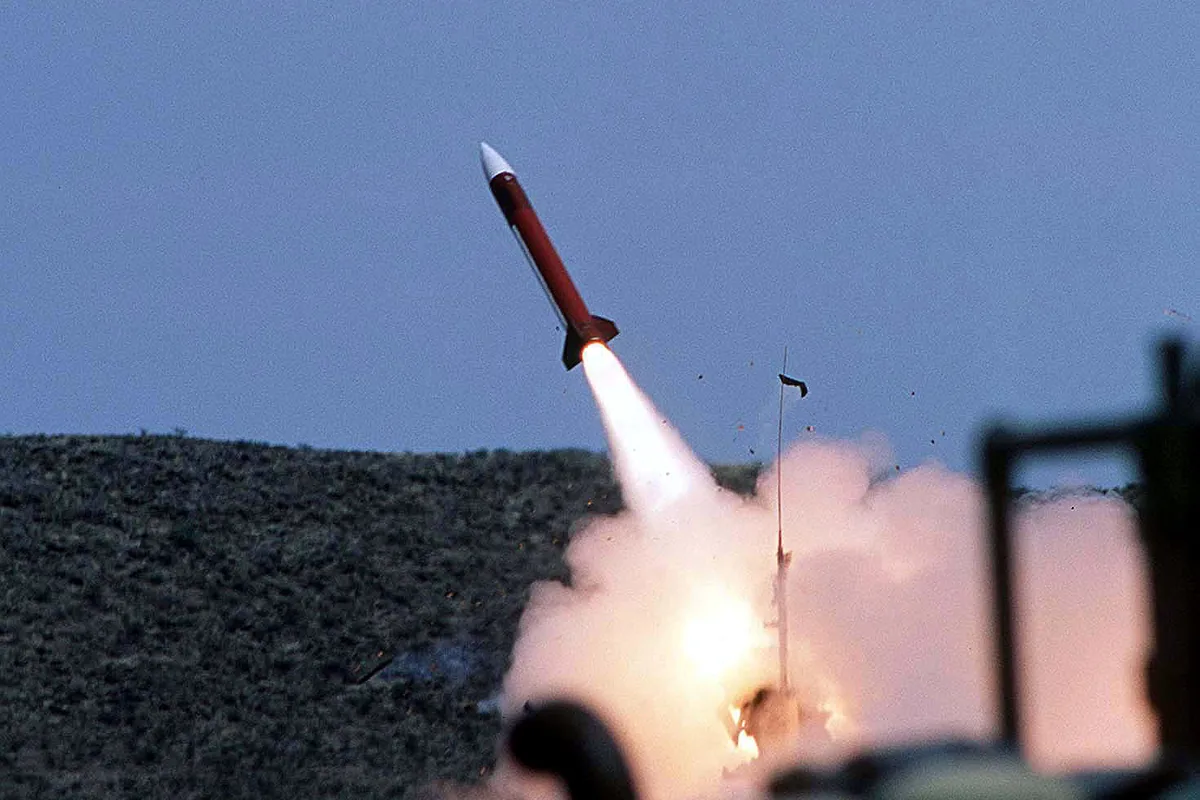
Figure 1: A US-manufactured Patriot missile battery engaging inbound aerial threats.
I. Beyond Incompetence: The Physics and Economics of Defense Inversion
Conventional commentary falls back on an easy trope: Saudi Arabia spends tens of billions annually on defense, fields cutting-edge American hardware—including Patriot PAC-3 MSE and THAAD batteries—and yet repeatedly suffers penetrations by irregular forces wielding cheap, hybrid arsenals. The label of “operational incompetence” is tempting, but lazy.
Tactical penetrations of this scale are not anomalies of crew readiness. They are the mathematical inevitability of asymmetric war.
1. The Bankruptcy of the Cost-Exchange Ratio
Asymmetric penetration relies on dragging the defender into an unsustainable financial and industrial burn rate:
| Operational Dimension | The Attacker (Asymmetric Penetration) | The Defender (Integrated Air Defense Network) | Systemic Asymmetry |
|---|---|---|---|
| Primary Vectors | One-way loitering munitions, low-altitude cruise missiles | Patriot PAC-3 MSE, GEM-T interceptors | Commercial assembly lines vs. boutique, strategic stockpiles |
| Unit Cost | $2,000 – $15,000 (loitering munition) | $3,000,000 – $5,000,000 (single interceptor) | Economic cost imbalance exceeding 1:200 to 1:1,000 |
| Tactical Doctrine | Massed swarms to bleed radar channels + terrain masking + terminal ballistic spikes | Phased-array tracking + algorithmic engagement allocation | Saturation tactics rapidly exhaust tracking and engagement queues |
| Margin for Error | Infinite: a 10% penetration rate constitutes a strategic victory | Zero: civil infrastructure demands 100% interception fidelity | Leakers and falling interceptor debris yield severe secondary damage |
Under operational doctrine, Saudi air defense units apply a “shoot-look-shoot” or dual-salvo protocol against incoming tracks, driving the cost of engaging a single mixed wave into tens of millions of dollars. Even if a battery achieves an impressive 85% to 90% intercept rate, the remaining 10%—or the sheer kinetic mass of supersonic debris falling onto passenger concourses and fuel manifolds—is enough to shut down international air corridors and spark devastating fires.
2. The Geographic Paradox: Expansive Space vs. Point Defense
Saudi Arabia covers over 2.14 million square kilometers, commanding long coastlines along both the Red Sea and the Persian Gulf. Its primary economic engines are geographically disparate:
- The sovereign command center and international logistics nodes of Riyadh;
- The hydrocarbon nerve centers of Dammam, Abqaiq, and Ras Tanura in the Eastern Province;
- Desalination facilities, power generation plants, and port logistics lining the Red Sea littoral.
No modern defense arsenal can provide high-density, gapless coverage across thousands of kilometers of border. Heavy phased-array radars, optimized for ballistic missiles screaming through the upper atmosphere, face fundamental physical limits against slow, terrain-hugging drones masking behind jagged wadis and ridges. Earth curvature and terrain shadow compress warning horizons. Intercept windows routinely shrink to single-digit miles, leaving operators seconds to verify, track, and fire.
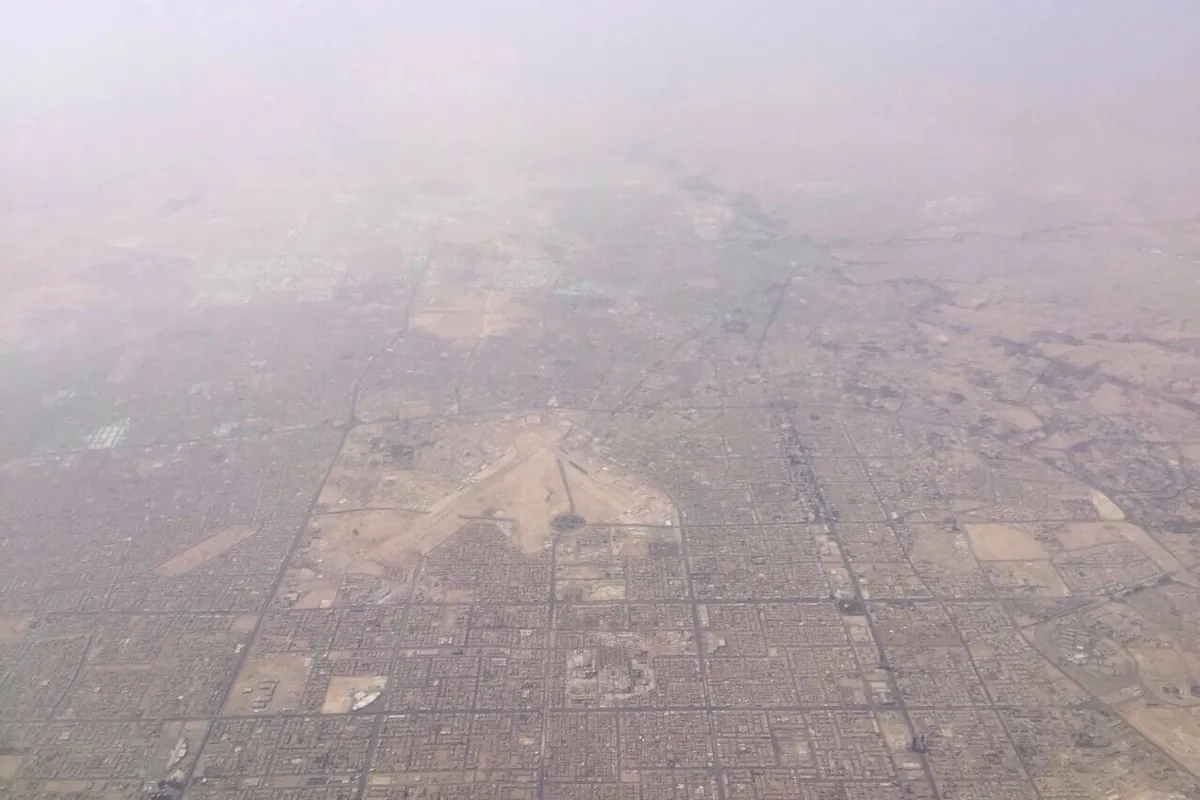
Figure 2: The terminal complex at King Khalid International Airport, Riyadh.
3. The Porcelain Shop: Economic Ambition as a Strategic Vulnerability
The Kingdom’s transformation under Vision 2030 hinges entirely on foreign direct investment, the relocation of multinational regional headquarters, tourism inflows, and massive infrastructure programs. Its economic viability requires the world to view Riyadh as an impregnable island of stability in an otherwise volatile region.
This aspiration creates an asymmetric vulnerability: a classic case of porcelain fighting clay pots. The adversary does not need to destroy the Royal Saudi Land Forces in open combat. It needs only to send dark smoke billowing over a Riyadh terminal or an Aramco tank farm once every six months. The resulting surge in maritime and aviation war-risk insurance, coupled with an exodus of foreign talent, accomplishes the strategic objective at minimal cost.
As explored in our analysis of why asymmetric insurgencies endure against conventional coalition firepower, mountain-entrenched adversaries cannot be eliminated through aerial bombing alone. Furthermore, the diplomatic détente brokered in Beijing in 2023 leaves Riyadh reluctant to engage in escalatory regional retaliation. This tactical restraint further narrows its deterrent leverage.
II. Tactical Band-Aids vs. Strategic Deadlocks
Riyadh possesses the resources to patch technical vulnerabilities, but these measures cannot resolve the deeper strategic deadlock.
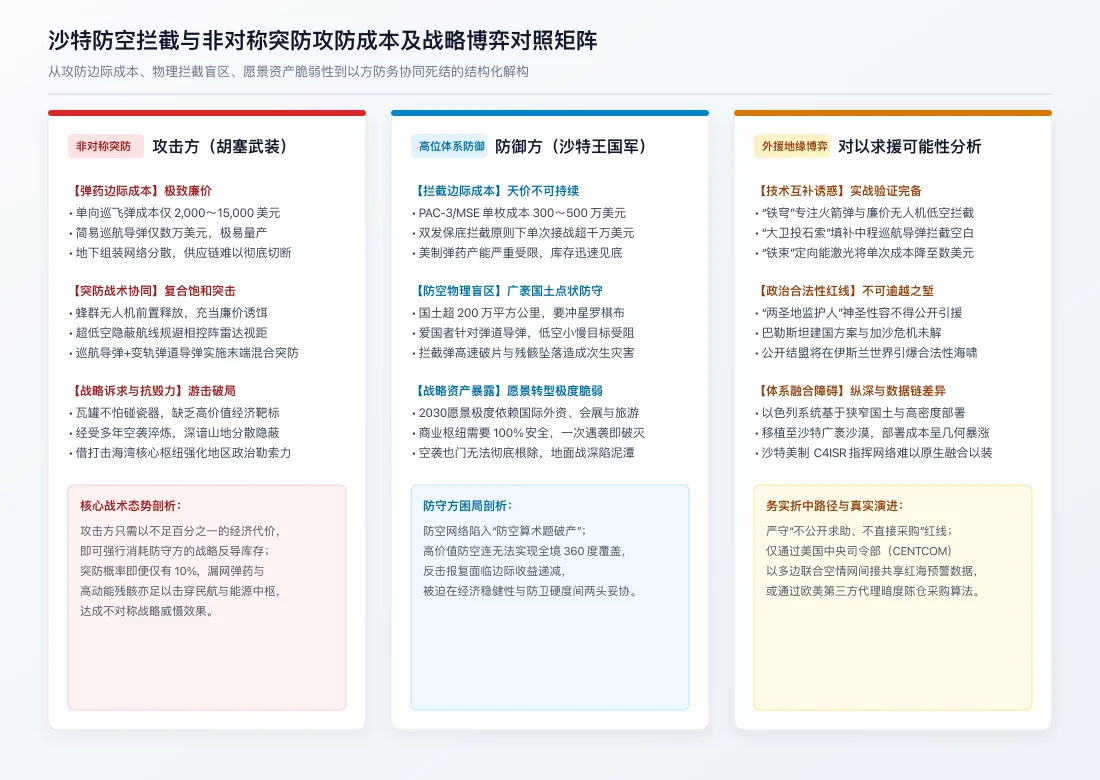
Figure 3: Cost-exchange ratios and operational trade-offs in Gulf airspace defense.
1. Near-Term Tactical Adjustments
Saudi defense planners can quickly pursue three defensive hardening measures:
- Lower-Tier Defense Augmentation: Fast-tracking the deployment of counter-unmanned aerial systems (C-UAS), rapid-fire close-in weapon systems (CIWS), and vehicle-mounted directed-energy (laser/microwave) weapons around airports and energy assets, liberating Patriot batteries from costly low-altitude drone interceptions;
- Forward-Deployed Sensor Networks: Coordinating airborne early warning and control (AEW&C) flights with allied naval vessels in the Red Sea and Gulf, pushing radar coverage out to detect low-altitude launches earlier and expand decision margins;
- Passive Resilience and Hardening: Fortifying airport fuel storage, building blast deflection barriers, and shielding air traffic infrastructure to blunt the impact of intercepted debris.
2. The Structural Impossibility of Strategic Closure
While these tactics reduce breach probability at designated nodes, the systemic vulnerability remains:
- The Counter-Insurgency Quagmire: Decisively neutralizing cross-border drone launches requires large-scale ground forces to clear and hold mountainous, cave-riddled hostile territory. Neither the Saudi military nor any foreign partner will enter that mountain quagmire;
- Diminishing Returns of Airstrikes: Air strikes against dispersed, mobile launch points and crude fabrication workshops rarely destroy deeply buried inventories. Instead, they provoke cycles of vertical escalation, inviting heavier retaliatory strikes against the Kingdom’s critical infrastructure.
III. The Operational Trajectory: Retaliation and Fragile Equilibrium
The theater will not descend into unlimited, open ground warfare. It will oscillate between cycles of pulsed escalation and attrition-driven diplomacy.
1. The Short-Term: Politically Mandated Retaliation
A direct hit on Riyadh’s international airport with foreign casualties crosses explicit sovereign red lines. Confronting both domestic anxiety and international investor scrutiny, the Saudi military must project decisive force.
The near term will see intensive aerial strikes against radar arrays, coastal launch nodes, and command bunkers across Yemen. In return, irregular forces operating under “blockade-for-blockade” doctrines will likely attempt further drone and missile launches, creating a volatile period of retaliatory fire.
2. The Medium-Term: An Exhaustion-Driven Truce
This high-intensity cycle damages Saudi Arabia’s long-term economic plans far more than it hurts an adversary operating outside the global economy. Riyadh cannot afford redirected commercial flights, investor caution, or paused capital commitments.
Once both sides demonstrate their capacity for mutual damage, the dynamic will pivot back toward backchannel diplomacy. Intermediaries will work to re-establish informal red lines, settling into an uneasy, heavily armed deterrence: an unstable peace sustained solely by calculated limits on how much disruption either side can absorb.
IV. The Israeli Mirage: Technological Fit, Political Dead End
Defense analysts frequently propose Israel as the obvious partner, pointing to its combat-tested, layered air defense network as an ideal off-the-shelf solution for the Gulf. In political reality, this option is unworkable.
1. The Technological Allure
Israel’s air defense architecture addresses the exact profile of threats challenging Saudi Arabia:
- Iron Dome: Designed for short-range rockets and low-altitude drones; Tamir interceptors cost roughly $40,000 to $50,000, offering far better economics than Patriot missiles;
- David’s Sling: Tailored for heavy maneuvering cruise missiles and long-range rockets;
- Iron Beam: Directed-energy lasers offering near-zero per-shot engagement costs, theoretically neutralizing drone swarm economics.
On paper, this equipment addresses every blind spot in Saudi Arabia’s low-altitude defense network.
2. The Political Deadlock
This technical symmetry collapses against the hard realities of regional politics:
- Religious Legitimacy and the Holy Mosques: The Saudi monarch holds the title of Custodian of the Two Holy Mosques. With the humanitarian crisis in Gaza unresolved and no viable path to Palestinian statehood, deploying Israeli hardware and military personnel would provoke deep domestic and regional backlash;
- Unmet Preconditions for Normalization: Riyadh has conditioned diplomatic normalization on explicit, legally binding American security guarantees, civilian nuclear technology sharing, and a credible framework for an independent Palestinian state. Granting Israel historic defense contracts without securing these core concessions would surrender Saudi Arabia’s principal diplomatic leverage;
- The Scale Mismatch: Israel’s defense architecture is designed for dense, compact geography with short reaction times. Scaling this umbrella across a territory of two million square kilometers would require massive capital outlays without resolving integration hurdles with Saudi Arabia’s US-built C4ISR architecture.
3. The Workaround: Third-Party Defense Architecture
Rather than overt bilateral procurement, defense integration will rely on indirect coordination:
- CENTCOM-Brokered Air Picture Sharing: Riyadh needs no formal diplomatic ties with Tel Aviv to benefit from integrated early warning. The Combined Air Operations Center (CAOC) via US Central Command at Al Udeid Air Base in Qatar synthesizes radar tracking feeds from US, Israeli, and Gulf assets. Early-warning indicators of inbound launches are routed directly through US tactical data networks to Saudi batteries;
- Intermediary Defense Procurement: Saudi Arabia will increasingly turn to European, American, and East Asian suppliers for advanced counter-drone systems, electro-optical tracking modules, and directed-energy weapons, avoiding political complications while upgrading its low-altitude defense grid.
V. Epilogue: The Ledger of the Glass Showcase
The security breaches outside Riyadh in late 2026 were not isolated tactical failures. They exposed the central dilemma of a modernizing economy: an open, glass-walled showcase built on global trade and foreign investment, operating next door to low-cost asymmetric arsenals designed to exploit that openness.
Turning to Israel offers no easy diplomatic escape. The future of Gulf defense stability depends on balancing the underlying economics of interception, recognizing the limits of high-tech hardware, and finding a political equilibrium that protects the Kingdom’s economic transformation.
Related Research & Topics
Tello Mobile eSIM
SafetyWing Nomad Insurance
* Disclosure: This post contains affiliate links. If you make a purchase through these links, V-G Journal may earn a small commission at no additional cost to you. We only recommend services we independently evaluate and trust.
FIRE and Golf:自由旅居之路
专注于为追求 FIRE 与品质生活的人群提供特惠打球权益与候鸟微度假。不持一砖一瓦,运营品质生活。