Sovereignty, Sanctions, and Strategic Blind Spots: The US Arms Sales Conundrum
Recent remarks by Donald Trump have reignited media debate over US arms sales to 'China.' This essay dissects the profound institutional chasm between the One China principle, the Taiwan Relations Act, the ITAR arms embargo, and the Pentagon's tactical adversary mapping, revealing a deep fracture in US foreign policy.

Executive Summary: US media and political circles recently engaged in a fierce debate over whether Donald Trump publicly mentioned “selling weapons to China.” From a straightforward perspective of sovereign logic, given the universally accepted One China principle and Taiwan’s status as part of China, US arms sales to Taiwan legally occur within Chinese territory, rendering the media’s consternation seemingly moot. However, the true mechanics of great power geopolitical maneuvering never hinge on a singular dimension of legal reasoning. The artificial entity segmentation within the US domestic legal system, the three-decade-long ITAR arms embargo, the Pentagon’s singular focus on a designated adversary in its operational plans, and Washington’s partisan weaponization during election cycles collectively constitute the deep institutional fracture underlying this media perplexity.
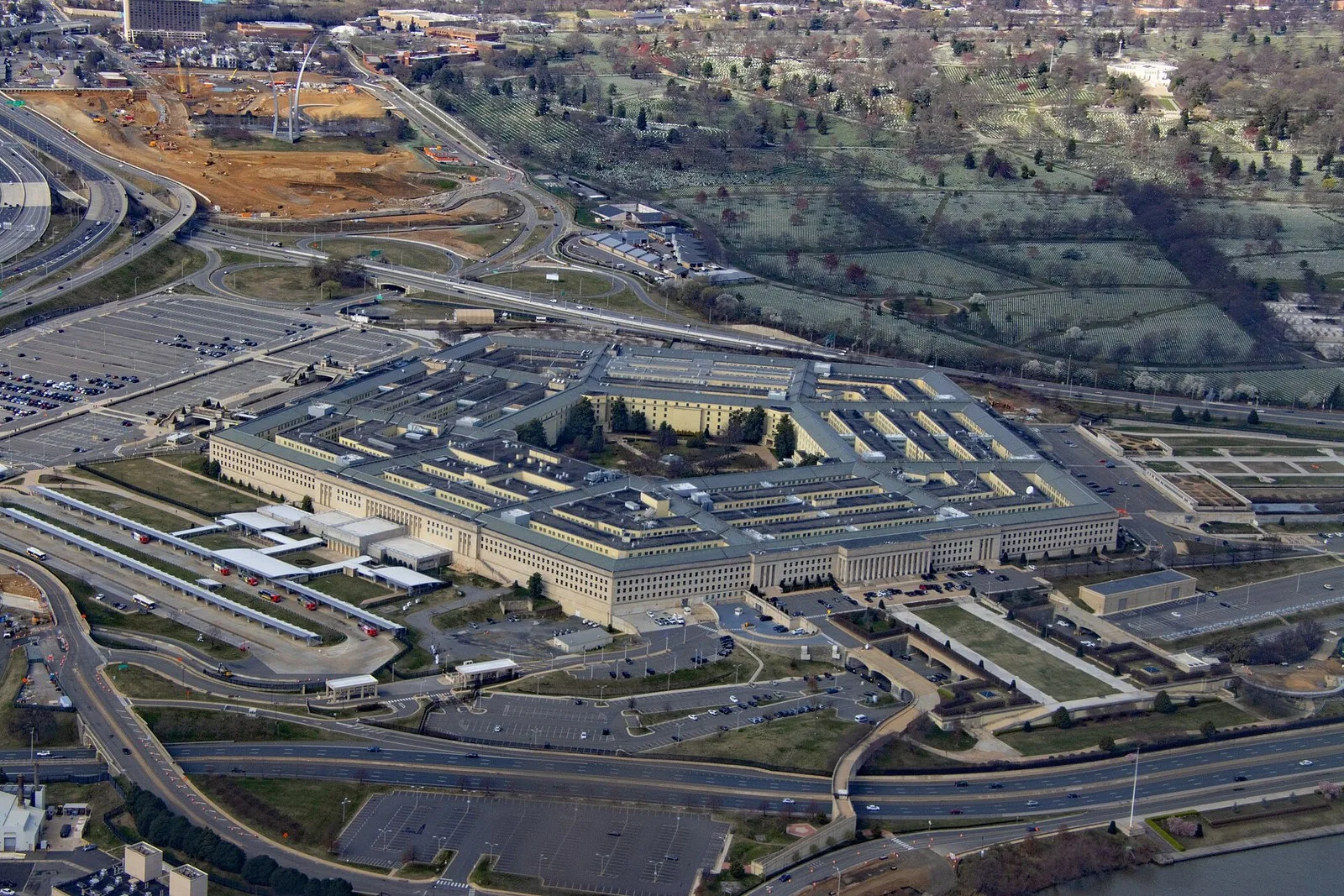
Figure 1: Panoramic view of The Pentagon, US Department of Defense, Washington D.C.
In recent US political rallies and media interviews, Donald Trump’s foreign policy remarks concerning arms sales once again underwent microscopic scrutiny in Washington’s public sphere. A particular point of contention for American media was whether Trump, in articulating his foreign trade and arms sales vision, conflated “arms sales to Taiwan” or misspoke it as “selling weapons to China.”
Many observers posed a direct, intuitive question: Given that UN General Assembly Resolution 2758 and international law universally establish the One China principle, and Taiwan is an inalienable part of China, and since the US factually continues to supply significant armaments to the Taiwan region, then within the framework of legal sovereignty, this action inherently takes place within China’s territory. What exactly is the US media so fixated on?
This cognitive dissonance precisely reveals a vast chasm between the sovereignty logic at the level of international public law and the US domestic legal system and the operational mechanisms of the Pentagon’s defense apparatus. To dissect Washington’s hypersensitivity, one must penetrate beyond semantic literalism and delve into the four rigid institutional boundaries governing US foreign military exports.
I. The Legal Schism of Entity Designation: Sovereignty vs. Procurement Codes
In the logic of legal sovereignty, entity ownership is exclusive and indivisible:
- According to international legal norms, UNGA Resolution 2758, and the three Sino-US Joint Communiqués, the Government of the People’s Republic of China is the sole legal government representing all of China, and Taiwan is an inalienable part of Chinese territory. The Chinese government has consistently and solemnly reiterated this red line, firmly opposing any form of official US-Taiwan interaction and arms sales to Taiwan.
However, the US domestic legal system has, through internal legislation, forcibly created parallel legal channels:
- After the establishment of diplomatic relations between the US and China in 1979, the US Congress unilaterally passed the Taiwan Relations Act (TRA). Under the authorized framework of this act, the US legally treats the “Taiwan authorities” as an independent defense procurement entity, stipulating that the US may provide “such defense articles and defense services in such quantity as may be necessary to enable Taiwan to maintain a sufficient self-defense capability.”
- Within the official approval records of the Pentagon’s Defense Security Cooperation Agency (DSCA), Foreign Military Sales (FMS), and Direct Commercial Sales (DCS), “Taiwan” possesses its own exclusive recipient codes and procurement processing systems.
- In the common lexicon of Washington policymakers, congressional members, and mainstream media, “China” in the context of “selling weapons to China” strictly and unequivocally refers to the Government of the People’s Republic of China (Beijing) and the People’s Liberation Army. These two entities are, within the US defense administration and weapons tracking systems, fundamentally opposing in nature and possess entirely mutually exclusive security clearance codes.
Should a supreme decision-maker conflate the two in public discourse, it is not regarded as a legal recognition within the Washington system, but rather characterized as a severe cognitive disconnect from the existing foreign policy governance structure and procurement procedures.
II. Touching the Cold War’s Legal Tripwire: The ITAR Arms Embargo
The US media’s almost allergic reaction to phrases like “selling weapons to China” stems from its direct collision with the longest-running federal embargo regulation in post-Cold War America.
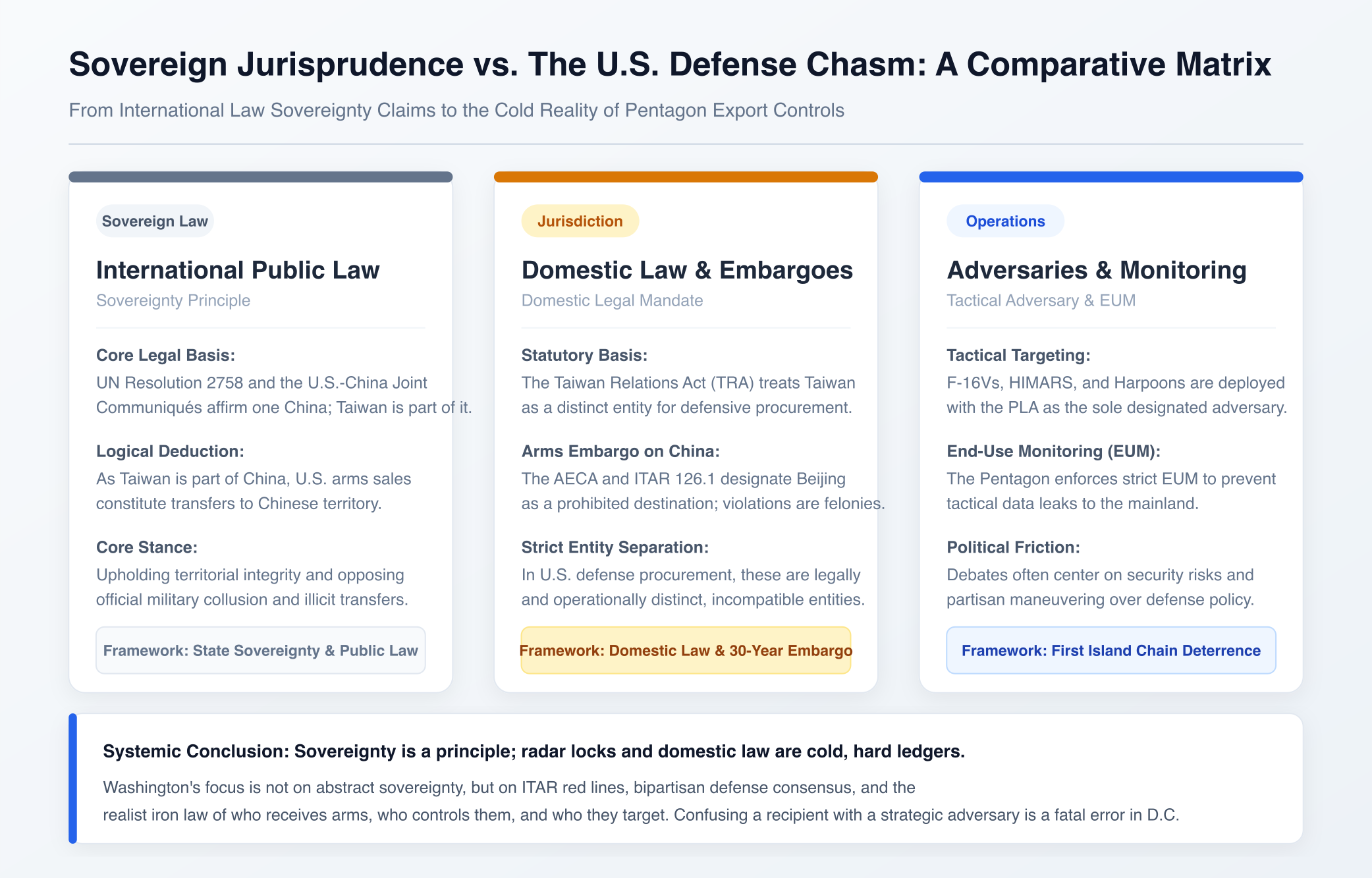
Figure 2: Comparison matrix of sovereign legal logic and deep fissures in the US defense system
1. Strict Federal Felony (ITAR §126.1)
After 1989, the US Congress amended the Arms Export Control Act (AECA), and the US Department of State, under Section 126.1 of the International Traffic in Arms Regulations (ITAR), explicitly listed mainland China as a “Prohibited Destination.”
According to this provision, any act of exporting controlled defense articles, advanced dual-use technologies, tactical software, or related defense services to Beijing constitutes a serious violation of US federal law, with all related administrative approvals completely blocked.
2. Bipartisan Establishment Consensus: A Red Line
Regardless of how the White House occupant’s China strategy oscillates between engagement, containment, tariff wars, and tactical decoupling, a comprehensive arms embargo against China has remained a bipartisan institutional ironclad rule in Washington for over three decades.
As we noted in our analysis of the true cost of US-China strategic competition, the underlying logic of great power strategic rivalry is built upon a hardcore foundation of tariffs, critical semiconductor controls, and security legislation. When a presidential candidate, in a speech, reveals even a hint of a gaffe or a transactional inclination towards “selling weapons to Beijing,” the media and congressional establishment immediately perceive it as a blatant trampling of the entire post-Cold War export control legal framework.
III. Direct Tactical Confrontation: Equipment Delivery and Adversary Targeting
Setting aside abstract legal provisions and returning to military operations and the Pentagon’s practical deployments, the tactical intentions of the two sides are diametrically opposed.
1. Sole Adversary in Tactical Drills
All high-value strategic and tactical equipment delivered by the US to Taiwan through foreign military sales procedures—including 66 F-16V fighter jets, M142 High Mobility Artillery Rocket Systems (HIMARS), land-launched Harpoon anti-ship missiles, shore-based anti-ship cruise systems, and tactical data links (Link-16)—are, in their operational requirements analysis and simulation models, solely targeted at the People’s Liberation Army as the operational adversary.
The core strategic objective of the US military-industrial complex and the Indo-Pacific Command in advancing these arms sales is precisely to raise the tactical cost of regional action through “asymmetric deterrence.”
2. Rigorous End-Use Monitoring (EUM) Mechanism
To prevent the leakage of advanced US weapon technology, radar fire control codes, and airborne avionics systems to mainland China, the US Department of Defense implements an extremely stringent “Golden Sentry” End-Use Monitoring (EUM) protocol for arms sales to Taiwan.
The Pentagon not only dispatches personnel regularly for on-site physical inventory and technical verification but also imposes strict physical isolation on the storage and maintenance access of critical components. If the decision-making level were to conflate the “recipient” with the “object of defense” in their statements, it would, within the Pentagon’s intelligence assessment and security review system, be tantamount to subverting the entire First Island Chain security logic.
IV. Election-Year Media Agenda and Political Weaponization
In a highly polarized US election cycle, the media’s nitpicking over Taiwan- and China-related terminology is a standard weapon in partisan political attacks.
- Trump’s Transactional Business Ethos: Trump has long held a pragmatic, transactional view of business, repeatedly complaining publicly that Taiwan “took all of America’s chip business” and openly declaring that Taiwan “should pay the US for defense (protection money).” This de-ideologized, ledger-based approach to economics already causes deep anxiety among Washington’s traditional national security elite.
- Scrutiny of Governance Consistency and Professionalism: Mainstream media’s relentless focus on whether he mentioned “selling weapons to China” is not primarily concerned with the cross-strait legal status. Instead, it seeks election ammunition—by characterizing his remarks as a “gaffe,” a “lack of basic knowledge of the Taiwan Relations Act,” or an “attempt to turn core national security lines into commercial bargaining chips,” thereby attacking his fundamental strategic competence to serve as Commander-in-Chief.
V. Conclusion: The Dual World of Legal Principles and Cold, Hard Realities
Returning to the initial question: What exactly is the US media fixated on?
Superficially, it appears to be a deduction based on “sovereignty and territorial logic”: Taiwan is part of China, therefore selling to Taiwan is selling to China. But in the deep waters of contemporary geopolitics and US foreign defense practices, the world is governed by two fundamentally different coordinate systems:
- Legal sovereignty is a lofty national principle: It concerns national dignity, territorial integrity, and the historical justice of international public law.
- Defense approvals and geopolitical chess are a cold, hard ledger: Who ultimately receives the weapons, whose pilots operate them, whose radar beams they lock onto, and which domestic law governs them, strictly determine the real-world flow of funds and lethality.
Washington media’s fixation has never been on the logical deduction of cross-strait sovereignty. Rather, it is on whether the next occupant of the White House might inadvertently step on the ITAR federal embargo regulations, subvert three decades of bipartisan strategic characterization of China, and undermine the Pentagon’s combat defense system that strictly ties equipment to a designated adversary. This seemingly absurd linguistic quibble is, in fact, a cold slice of the intense collision between institutions and reality in great power geopolitical rivalry.
Related Research & Topics
Tello Mobile eSIM
SafetyWing Nomad Insurance
* Disclosure: This post contains affiliate links. If you make a purchase through these links, V-G Journal may earn a small commission at no additional cost to you. We only recommend services we independently evaluate and trust.
FIRE and Golf:自由旅居之路
专注于为追求 FIRE 与品质生活的人群提供特惠打球权益与候鸟微度假。不持一砖一瓦,运营品质生活。