The Bulk Crisp Crisis: Tiffany & Co. and the Erosion of the Luxury Covenant
An autopsy of the 2026 Tiffany & Co. Mid-Autumn gift scandal. This analysis explores the systemic disconnect between aggressive luxury pricing and frontline service failures, and the collapse of brand prestige in the face of 'insulting compensation.'

Executive Summary: In late September 2026, Tiffany & Co.’s Chengdu boutique transformed a minor logistical error into a full-scale brand crisis. After misdelivering a bespoke Mid-Autumn gift box intended for a high-net-worth client, the store’s management attempted to “settle” the matter privately by offering a bag of bulk, street-market peach crisps. What began as a clerical oversight spiraled into a saga of internal cover-ups, “insulting compensation,” and heavy-handed PR suppression. This incident is more than a localized service failure; it is a textbook case of the widening chasm between the aggressive price hikes of global luxury houses and the deteriorating quality of their frontline execution.
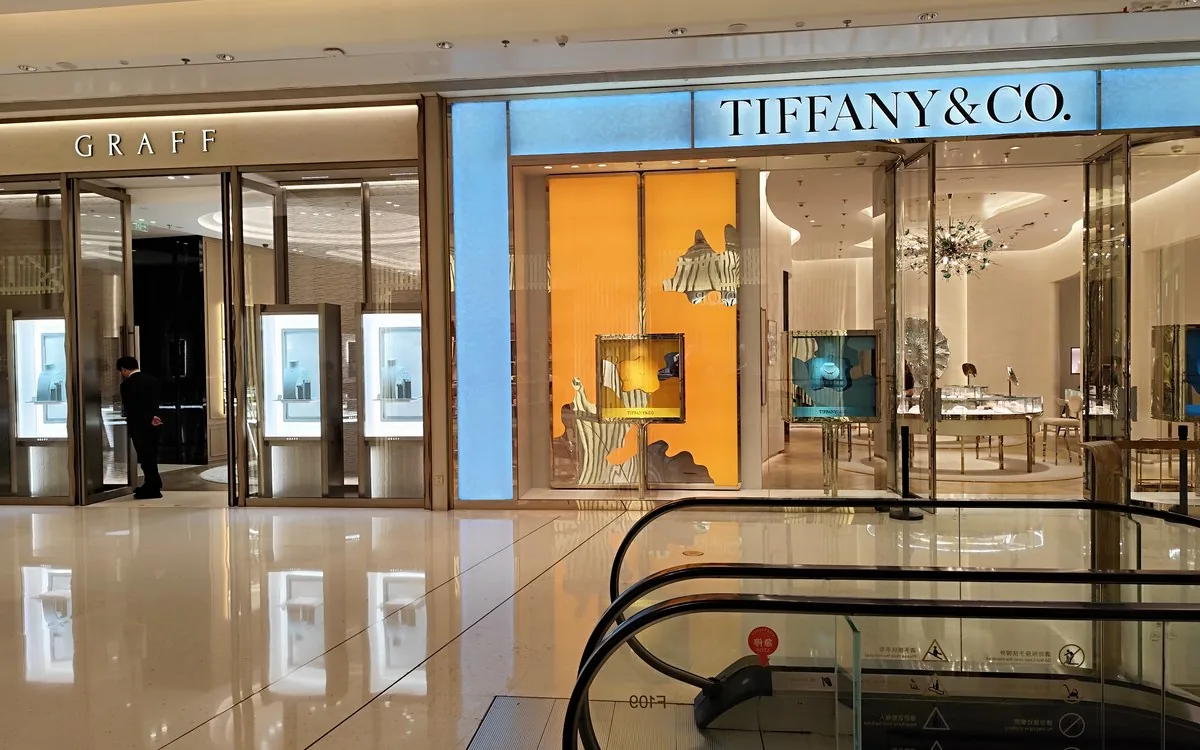
Figure 1: The meticulously curated facade of a Tiffany & Co. boutique. Luxury brands rely on a rigid sense of ritual to sustain their high emotional premiums.
I. The Anatomy of a Collapse: From Logistical Error to “Insulting Compensation”
The trajectory of this crisis was not dictated by force majeure, but by a chain of human indifference, bureaucratic obfuscation, and a fundamental misreading of consumer psychology.
1. The Broken Promise and the Culture of Concealment
According to public reports and the victim’s testimony, the consumer in question was a Very Important Client (VIC) with a cumulative spend exceeding 200,000 RMB at the Chengdu boutique. Ahead of the Mid-Autumn Festival, a dedicated Sales Associate (SA) promised a custom brand gift box. As the client was abroad, they provided a domestic address for their family.
The festival passed with no delivery. Only when the client proactively inquired did the SA admit that due to a “copy-paste error,” the gift had been sent to the wrong person. At this stage, the service failure was already twofold:
- Lack of Proactive Monitoring: The frontline staff failed to track the delivery or flag the anomaly before the client intervened.
- Dismissive Attitude: The initial response was to “send a gift during the next promotion,” treating a time-sensitive cultural ritual as a trivial, delayable perk.
2. The Absurdity of the “Bulk Peach Crisps”
The conflict reached a tipping point when the Assistant Store Manager attempted a “private” remedy. The manager personally purchased a bag of bulk peach crisps and a generic bouquet from a local market as a gesture of apology.
This move was psychologically catastrophic for the consumer:
- The Value Gap: A client who invests six figures expects a level of decorum commensurate with the brand’s positioning. Offering street-market snacks as a substitute for a luxury brand’s curated gift is not just a failure of logic; it is a social affront.
- The “Insulting Compensation” Narrative: The gesture was immediately branded by the public as “dismissive” and “humiliating.”
- The Deconstruction of the Brand: On social media, “Tiffany-Selected Peach Crisps” became a viral meme, satirizing the arrogance and laziness of luxury houses. Decades of brand-building were eroded by the visual of a plastic bag of cookies.
3. Secondary Disasters: PR Pressure and the “Muzzle” Allegations
When the client posted the communication logs on platforms like Xiaohongshu, the boutique’s response was to pressure the client to delete the post. Subsequently, the client reported that their account faced login restrictions and the post was shadow-banned. This triggered a secondary wave of outrage against “multinationals using PR clout to bully consumers.” Hashtags like #TiffanyMuzzle trended, turning a service complaint into a national debate on corporate ethics.
4. Delayed Accountability
As mainstream media outlets like Jiemian News and The Paper picked up the story, the Head of Retail for Tiffany China was forced to issue a formal apology on September 29. The official response admitted to a “total breakdown in management,” citing the address error, unprofessional communication, and the failure of the Assistant Manager’s judgment.
II. The Collapse of Emotional Value: Why Luxury Cannot Survive a “Bulk Snack”
From the perspective of economic and consumer psychology, the core of this crisis was not the value of the mooncakes, but the destruction of the emotional premium and contractual certainty that underpin luxury.
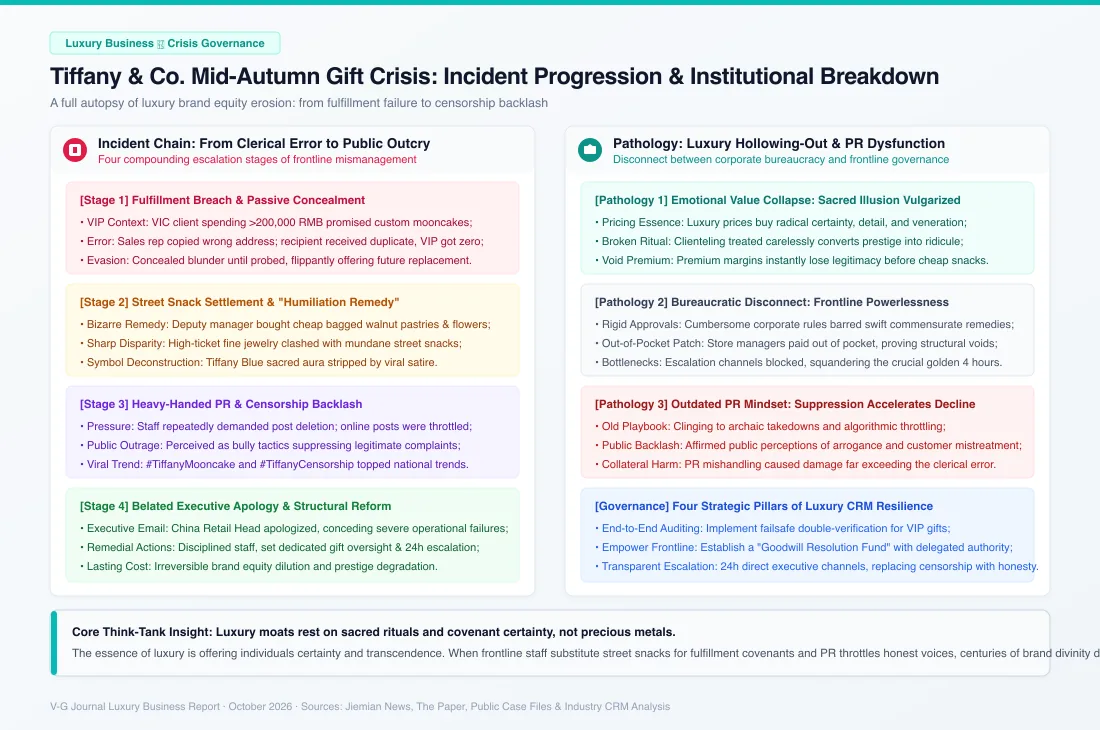
Figure 2: The evolution of the Tiffany crisis: From systemic failure to the collapse of the brand's defensive matrix.
1. Luxury as an “Illusion of Certainty”
The physical cost of high jewelry bears little relation to its retail price. High-net-worth individuals pay a 500% to 1,000% premium not for the weight of the gold, but for the promise of meticulous detail, status validation, and seamless emotional labor.
As we have analyzed in our reports on organizational costs, the “moat” of any high-end service is built on the consistent fulfillment of micro-expectations. When a brand fails at a task as simple as “copying an address,” the aura of professional perfection evaporates. The consumer no longer feels like a VIP; they feel like a “sucker” who paid a premium for amateur service.
2. The Misalignment of Clienteling
In luxury retail, “Clienteling” (the art of long-term relationship management) relies on exclusivity and ritual. A bespoke gift is a symbol of belonging to an elite tier.
By offering bulk snacks, the manager reduced a “brand ritual” to a “market transaction.” This didn’t just fail to solve the problem; it actively “downgraded” the client’s social identity. It signaled that, in the eyes of the brand, the client’s loyalty was worth the price of a local pastry.
3. Semiotic Collision: Tiffany Blue vs. The Plastic Bag
“Tiffany Blue” (Pantone 1837) is one of the world’s most expensive cultural symbols, representing Manhattan elegance and Audrey Hepburn-esque dreams. Bulk peach crisps in a generic plastic bag are the ultimate symbol of the mundane and the proletarian.
The forced pairing of these two symbols provided the public with a high-octane “deconstructionist” thrill. The contrast was so sharp that it pierced through social strata, making the brand a laughingstock.
III. Short-Circuiting the Hierarchy: The Reality of Frontline Power Vacuums
How does a manager at a top-tier global brand arrive at the conclusion that “bulk peach crisps” are an appropriate fix? This is not a question of individual IQ, but a symptom of bureaucratic calcification.
1. The Trap of Rigid Internal Audits
Multinational luxury groups (like LVMH) operate under draconian financial and inventory controls:
- Rigid Gift Quotas: Mid-Autumn boxes are often centrally allocated by HQ. Stores have no “safety stock” for errors.
- The Cost of Formal Redress: Requesting a high-value replacement (e.g., a 2,000 RMB perfume or silver accessory) requires layers of approval from regional directors and triggers internal audits and performance penalties.
- The Incentive for “Peasant-Style” Settlements: Under the pressure of rigid KPIs, frontline staff are incentivized to “keep the lid on” by paying out of pocket. However, since a manager cannot personally afford a multi-thousand-dollar official gift, they resort to cheap, local alternatives—falling into the trap of a “small-scale private settlement” that is fundamentally incompatible with a luxury brand.
2. The Broken Escalation Mechanism
In modern crisis management, a service failure involving a VIP has a “Golden 4-Hour” window. In this case, there were days between the error and the explosion. Had there been a direct escalation path to regional management, a high-level apology and a curated experience (e.g., a chauffeured flower delivery or an exclusive brand experience) could have neutralized the issue. Instead, the fear of internal punishment led to a cover-up that allowed a spark to become a forest fire.
IV. The Death of Suppression PR in the Social Era
The most damaging part of this crisis was not the misdelivered mooncakes, but the subsequent attempt to “muzzle” the consumer.
| Phase | Traditional Brand Logic | Social Media Perception | Reputational Cost |
|---|---|---|---|
| The Error | Misdelivery; tell the client to wait. | Breach of contract; indifference. | Erosion of VIP trust. |
| The “Fix” | Private settlement with cheap goods. | Insulting and dismissive treatment. | Viral outrage. |
| The Suppression | Pressure to delete; shadow-banning. | Arrogance; bullying the consumer. | National trending crisis. |
| The Apology | Formal letter from HQ. | Too little, too late; forced by media. | Permanent brand devaluation. |
1. The Streisand Effect of “Muzzling”
In the era of decentralized, algorithm-driven social media, attempts to suppress a legitimate consumer grievance inevitably trigger the Streisand Effect. The more a brand tries to hide a fact, the more the public is incentivized to amplify it. Tiffany’s reliance on old-school “suppression PR” only confirmed the public’s worst suspicions: that luxury brands are arrogant entities that use their power to silence the very people who fund them.
2. Rebuilding the Luxury Defense: Four Pillars
This incident is a warning to every institution that survives on high premiums. To prevent such “absurd” crises, brands must restructure their frontline governance:
- Pillar I: End-to-End Fulfillment Audits: VIP deliveries must move from manual “copy-pasting” to a “Dual-Verification” whitelist system to eliminate low-level human error.
- Pillar II: Frontline “Goodwill Reserves”: Store managers should be empowered with a “discretionary budget” to provide high-quality, brand-approved remedies (e.g., official accessories or services) without fear of immediate performance docking.
- Pillar III: 24-Hour Escalation Directives: Any dispute involving a top-tier client must bypass the immediate supervisor and reach regional directors within two hours. The culture of “concealment” must be replaced by a culture of “rapid resolution.”
- Pillar IV: Abandoning Adversarial PR: In the digital age, transparency is the only antidote. Brands must stop wasting resources on “deleting posts” and start investing in the integrity of their promises.
The moat of a luxury brand is not built with the lights in its windows, but with the certainty of its delivery. When a brand uses a plastic bag of cookies to cover a mistake and a PR muzzle to cover the fallout, it shatters the very “sacredness” that justifies its price tag.
Related Research & Topics
Disentangling Dong Mingzhu from Zhuhai's Political Earthquake: The Structural Firewall of Gree’s Mixed-Ownership Reform and Its Hard Fundamental Realities
The Yu Chengdong Justice Doctrine: Huawei’s Mechanical Reckoning
Tello Mobile eSIM
SafetyWing Nomad Insurance
* Disclosure: This post contains affiliate links. If you make a purchase through these links, V-G Journal may earn a small commission at no additional cost to you. We only recommend services we independently evaluate and trust.
FIRE and Golf:自由旅居之路
专注于为追求 FIRE 与品质生活的人群提供特惠打球权益与候鸟微度假。不持一砖一瓦,运营品质生活。