Disentangling Dong Mingzhu from Zhuhai's Political Earthquake: The Structural Firewall of Gree’s Mixed-Ownership Reform and Its Hard Fundamental Realities
A wave of high-level corruption investigations in Zhuhai, including former party secretary Guo Yonghang and former Gree Group chairman Zhou Lewei, sparked rumors regarding Dong Mingzhu. While a 2019 mixed-ownership firewall legally insulated Dong from the political fallout, her true crisis lies in a 43.31% drop in Q3 2026 net profit and a 24.78 billion yuan debt black hole at Gree Titanium.

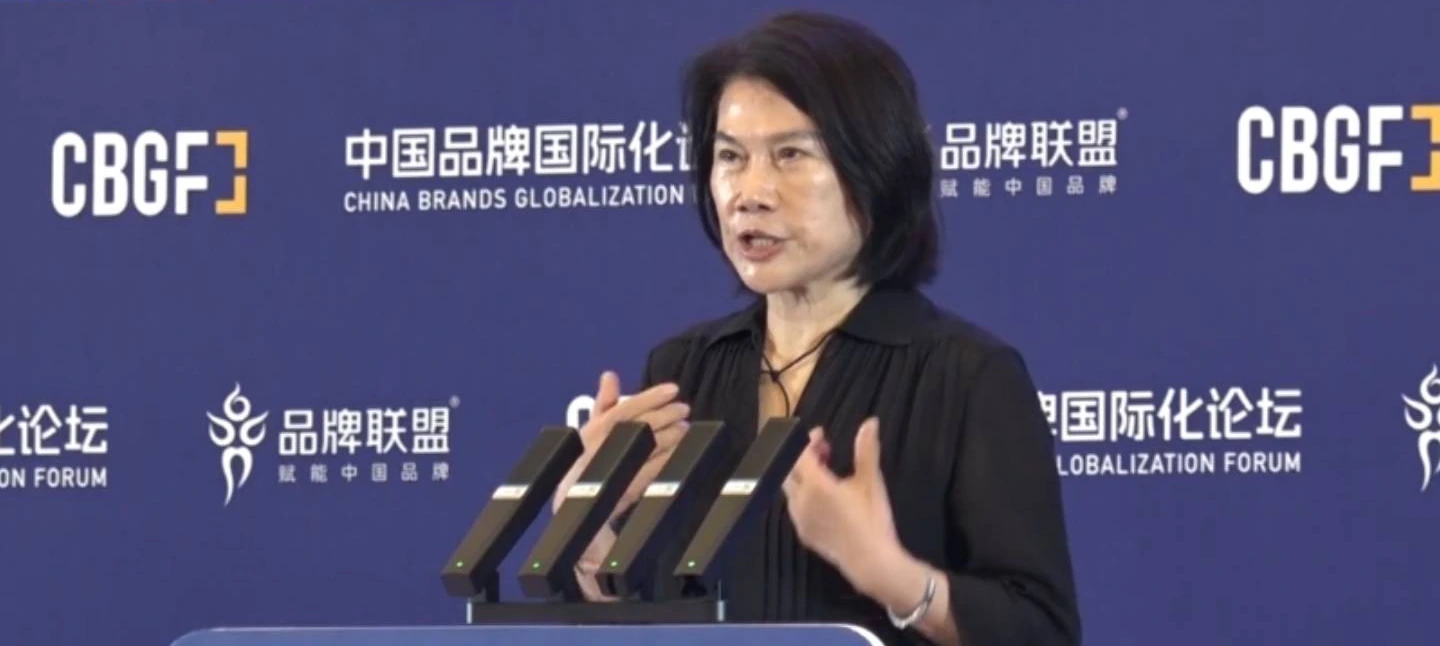
Figure 1: On October 20, 2026, Gree Electric Chairwoman Dong Mingzhu attended the “2026 China Brand Internationalization Forum” in Haikou, delivering the opening keynote. Her successive personal stock purchases that same month thoroughly dismantled rumors of her “suspension and investigation.”
In the spring of 2026, a sweeping cross-cycle anticorruption purge struck Zhuhai’s political and state-owned asset systems, targeting former Municipal Party Secretary Guo Yonghang, Municipal State-owned Assets Supervision and Administration Commission (SASAC) Director Li Wenji, and former Gree Group Chairman Zhou Lewei, who surrendered to authorities on April 28. This wave reignited sensational rumors that the “Zhuhai political earthquake was closing in on Dong Mingzhu.”
A rigorous forensic examination of equity structures and disciplinary notices reveals that these rumors conflated two distinct entities: the municipal state-owned enterprise Gree Group and the post-mixed-ownership public corporation Gree Electric. Following a 41.66 billion yuan mixed-ownership reform in 2019, Gree Group retained a mere 3.46% stake in Gree Electric with zero board seats. The epicenter of the corruption scandal lies in Gree Group’s post-spin-off, blind expansion into 46.7 billion yuan worth of industrial investment funds. While Dong Mingzhu remains safely insulated behind legal firewalls from the disciplinary purge, her genuine crisis is written on the corporate ledger: a staggering 43.31% year-on-year collapse in Gree Electric’s third-quarter net profit for 2026, compounded by the 24.78 billion yuan debt abyss of Gree Titanium.
I. Piercing the Public Opinion Fuse: The Collapse of Zhuhai’s Political-Business Elite and the Confusion of Two “Grees”
Between 2024 and 2026, Zhuhai and its municipal state-owned asset system experienced an unprecedented retrospective investigation storm. The primary fuel for overseas media and social platforms generating sensational claims that “Dong Mingzhu has been interrogated, suspended, or is about to be ousted” was the dense concentration of figures directly linked to “Gree” and Zhuhai’s state capital appearing on the rosters of fallen officials.
Official announcements from central, provincial, and municipal anti-graft bodies reveal that this storm unfolded across three parallel fronts:
First, the cross-cycle retrospective accountability of local political leaders. On March 27, 2026, the Central Commission for Discipline Inspection (CCDI) announced that Guo Yonghang—a member of the Leading Party Members Group and Vice Chairman of the Guangdong Provincial Committee of the Chinese People’s Political Consultative Conference (CPPCC), and former Zhuhai Party Secretary from February 2018 to October 2021—was under disciplinary review and supervisory investigation for severe violations of discipline and law. Prior to this, his Zhuhai subordinates—Guo Caiwu (former member of the Zhuhai Municipal Standing Committee and Head of the United Front Work Department, investigated in January 2026) and Liang Zhaoxiong (former Zhuhai Level-II Inspector, investigated in February 2026)—had already fallen.
Extending the timeline further, former Zhuhai mayors Li Zecheng (investigated in 2017, sentenced to 17 years in 2020), Zheng Renhao (Mayor from 2016 to 2017, investigated in December 2025), and He Ningka (Mayor from 2011 to 2015, investigated in May 2025) were all swept away. This piercing retrospective audit mirroring historical urban construction and state capital restructuring mirrors the political power clearance mechanisms analyzed in our autopsy of Huang Qifan’s Investigation and the Fifteen-Year Power Struggle in Chongqing’s Officialdom.
Second, the total collapse of three consecutive directors of the Zhuhai SASAC. In June 2024, Wu Aicun (Director from 2013 to 2017) was placed under investigation. Just a month later, his successor Li Congshan (Director from January 2019 to July 2021) fell. On April 2, 2026, the Zhuhai discipline inspection commission announced that Li Wenji—Secretary of the Party Committee and Director of the Zhuhai SASAC since July 2021—was under investigation. Consequently, every single director who has held the reins of Zhuhai’s state asset regulation since 2013 has been implicated. Between July 2024 and December 2025, at least ten senior executives from Zhuhai state-owned enterprises—including chairmen, general managers, and vice presidents—were investigated.
Finally, two state enterprise heads bearing the “Gree” brand were brought down sequentially. On April 14, 2025, the Guangdong Provincial Commission for Discipline Inspection announced that Lu Junsi—former Party Secretary and Chairman of Zhuhai Duty-Free Enterprise Group and former Chairman of Gree Real Estate—was under investigation (having already been subjected to coercive criminal measures in June 2022 for suspected insider trading). On April 28, 2026, Zhou Lewei—Party Secretary of the Zhuhai Economic Development Zone and Deputy Secretary of the Jinwan District Committee, who served as Chairman, Party Secretary, and legal representative of Zhuhai Gree Group from November 2016 to February 2024—surrendered to authorities under suspicion of severe disciplinary violations.
To observers lacking grounding in corporate law and state asset regulation, this sequence—three SASAC directors investigated, the former chairman of Gree Real Estate fallen, and the former chairman of Gree Group surrendering—naturally appeared to point toward Dong Mingzhu, long the living embodiment of “Gree.” Deconstructed through the lens of legal framework, however, this conclusion rests on a severe category error regarding homonymous entities:
- Zhuhai Gree Group Co., Ltd. (Gree Group): A municipal state-owned capital investment and operation platform 100% owned by the Zhuhai SASAC. It is a purely administrative local state enterprise where Zhou Lewei held sway until early 2024.
- Gree Real Estate Co., Ltd. (600185.SH): Detached from Gree Group as early as 2015, its equity was transferred to the Haitou Company system under the Zhuhai SASAC. Lu Junsi’s real estate and duty-free acquisitions had zero intersection with the home appliance business.
- Zhuhai Gree Electric Appliances, Inc. (000651.SZ): The home appliance manufacturing listed company actually helmed by Dong Mingzhu. Following its mixed-ownership reform in December 2019, Gree Electric evolved into a public enterprise with no controlling shareholder and no actual controller.
Equating Zhou Lewei’s surrender at “Gree Group” with Dong Mingzhu facing trouble at “Gree Electric” is fundamentally an exercise in forcefully equating a separated state-owned parent body with a market-driven public corporation.
II. The Power Struggle Between Fallen Officials and Dong Mingzhu: How the 41.6 billion yuan Reform Built a “Legal Firewall”
To understand why the Zhuhai political earthquake bypassed Gree Electric, one must review the decade-long control struggle between Dong Mingzhu and the Zhuhai state-owned system. In the evolution of Zhuhai’s political economy, Dong Mingzhu was never a compliant subject of local administrative intervention; she was the chief architect who systematically decoupled Gree Electric from local bureaucratic commands to construct an independent governance loop.
The first landmark clash occurred in 2012. When Gree Electric founder Zhu Jianghong retired, the Zhuhai SASAC attempted to tighten direct control over the listed company by parachuting in Zhou Shaoquan—then deputy director of the SASAC—as Party Secretary and President of Gree Group, nominating him to Gree Electric’s board. At the May 25, 2012 shareholder meeting, institutional investors and retail shareholders representing market capital revolted: Zhou Shaoquan garnered a mere 36.6% approval rating for his board candidacy and was soundly defeated. This rare shareholder blockade established the institutional defense of Gree Electric’s management, centered on Dong Mingzhu, against administratively parachuted cadres.
The second separation occurred in late 2016. In October 2016, constrained by regulations prohibiting state enterprise leaders from holding excessive concurrent positions and by compensation reforms, Dong Mingzhu officially stepped down as Chairwoman of Gree Group, choosing to remain as Chairwoman and President of the more market-oriented Gree Electric. On November 22 of that year, Zhou Lewei—an official from Zhuhai’s Jinwan District—was parachuted in to succeed her at Gree Group. From that point on, Gree Group and Gree Electric completely diverged at the highest executive appointment levels.
The physical legal firewall was ultimately erected by the multi-billion-yuan mixed-ownership reform finalized in 2019. After assuming office as Zhuhai Party Secretary in February 2018, Guo Yonghang aggressively advanced the restructuring of municipal state enterprises and the mixed-ownership reform of Gree Electric. In December 2019, Zhuhai Mingjun (backed by Hillhouse Capital) acquired a 15% stake in Gree Electric from Gree Group for 41.66 billion yuan at 46.17 yuan per share.
This transaction completely rewrote Gree Electric’s governance foundation. Post-reform, Gree Electric transformed into a company with no controlling shareholder and no actual controller. By late 2025 and mid-2026, Hillhouse Capital held between 15.35% and 16.11% (acting in concert with Dong Mingzhu), while the second-largest shareholder, Jinghai Internet (representing core distributor interests), held 7.83%. The former holding parent, Gree Group, retained a mere 3.46% stake with zero board representation.
In a supreme irony of institutional design, it was precisely the 2019 de-consolidation of Gree Electric that catalyzed the subsequent blind expansion and corruption scandals within Gree Group (under Zhou Lewei) and the Zhuhai SASAC (under Li Congshan and others).
Before Gree Electric was spun off from its consolidated accounts, Gree Group easily commanded nearly 200 billion yuan in annual operating revenue. Once Gree Electric’s financials were no longer consolidated, Gree Group’s reported revenue instantly evaporated by over ninety percent, leaving behind 41.66 billion yuan in cash from the equity sale. Facing performance assessments tied to maintaining municipal revenue and asset scale, then-Chairman Zhou Lewei, backed by SASAC Director Li Congshan, embarked on an aggressive march into financialization and industrial investment.
According to investigative reports by Caixin and HK01 citing insiders, Zhou Lewei orchestrated an industrial investment sector with a total registered capital of 10 billion yuan (covering Gree Financial Investment and Xingge Capital), participating in the formation and investment of 17 industrial investment funds totaling 46.7 billion yuan. This forcibly inflated Gree Group’s total assets from 7.6 billion yuan at the end of 2015 to over 1132 billion yuan by the end of 2023.
Amidst this deployment of tens of billions in state funds, various private enterprise owners wrote directly to Zhuhai’s top leadership seeking capital cooperation, securing an approval note from Party Secretary Guo Yonghang to “handle with discretion.” Distorted by executive directives and a lack of rigorous market due diligence, a slew of industrial fund projects suffered consecutive blowups, triggering massive risks of state asset dissipation and plunging several Zhuhai state firms into financial distress. The out-of-control mechanics of this state capital investment platform under administrative rent-seeking closely mirror the capital approval rent-seeking chains dissected in How Massive is Yi Huiman’s Bribery Amount? Public Prosecution Rules and Financial Corruption Sentencing Analysis.
Following Guo Yonghang’s downfall on March 27, 2026, anti-graft investigators traced the paper trail to uncover the inside story behind the approvals of Zhuhai’s state-owned funds, summoning Zhou Lewei for questioning in late March. A month later, on April 28, realizing he could not weather the storm, Zhou surrendered to the Zhuhai discipline commission.
Thus, the lesions of the Zhuhai state asset corruption scandal are localized entirely within Gree Group—the entity that, after 2019, took 41.66 billion yuan in share-sale proceeds and plowed them into 46.7 billion yuan worth of industrial investment funds. Gree Electric, having completed its mixed-ownership spin-off and anchored by Dong Mingzhu and Zhuhai Mingjun, remained entirely insulated from Gree Group in terms of capital accounts, investment committee approvals, and board seats. That very firewall of mixed-ownership reform kept Dong Mingzhu safely within the legal clear zone during the 2026 Zhuhai political earthquake.
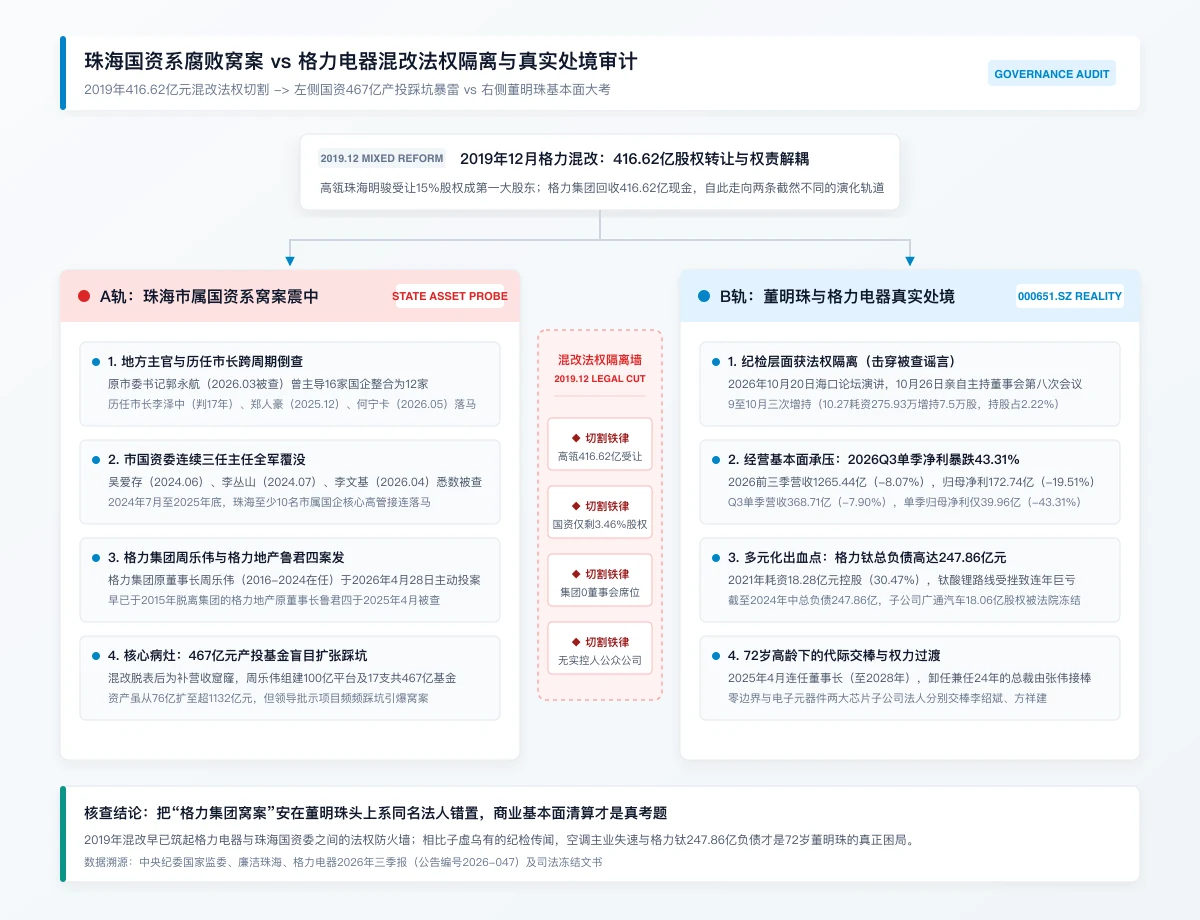
Figure 2: Comparative matrix mapping the Zhuhai state asset corruption chain (Gree Group/Gree Real Estate) against the legal governance boundaries established by Gree Electric’s (000651.SZ) 2019 mixed-ownership reform.
III. Core Controversies and First-Hand Evidence Verification Matrix
Beyond confusing Gree Group with Gree Electric, public commentary recently misinterpreted Dong Mingzhu’s stepping down from the presidency of Gree Electric and various chip subsidiaries between 2025 and early 2026 as “precursors to being implicated, exit-banned, or forced out of power.” Cross-verifying police administrative penalty records, listed company board announcements, and firsthand schedules from late October 2026 dismantles four core rumors:
| Rumor Focus & Speculation | Official Notices, Corporate Registry, and First-Hand Listed Company Evidence | Factual Verification & Classification |
|---|---|---|
| Rumor 1: The downfall of Zhou Lewei (former Gree Group Chairman) and Lu Junsi (former Gree Real Estate Chairman) directly implicates Dong Mingzhu in corruption. | Strict Entity Separation: Gree Real Estate, helmed by Lu Junsi, detached from Gree Group as early as 2015. Zhou Lewei surrendered on April 28, 2026, due to industrial fund failures totaling 46.7 billion yuan across 17 funds under Guo Yonghang’s directives after Gree Electric’s 2019 spin-off. Gree Group retains a mere 3.46% stake in Gree Electric with zero board seats; their decision-making chains are entirely independent. | Mistaken Identity (Homonymous Entity Confusion) |
| Rumor 2: Internet commentators allege that “Dong Mingzhu has been suspended from her duties and placed under investigation by the discipline commission.” | Police Investigation & Administrative Penalties: In response to microblogger “Xu Tao’s Weibo” spreading rumors of Dong’s suspension on January 18, 2025, Gree Public Relations reported the case the same day. On January 22, 2025, official notices confirmed that public security organs issued Administrative Penalty Decisions penalizing five individuals—Li, Gao, Zhang, Chen, and Wang—for fabricating facts and defaming senior executives. The source accounts were banned. | Pure Fabrication (Rumor Mongers Punished) |
| Rumor 3: Dong Mingzhu’s consecutive resignations as Gree Electric president and chip subsidiary chair indicate she was “forced out due to involvement in cases.” | Re-election as Chair & Intergenerational Power Delegation: On April 22, 2025, Gree Electric’s 13th Board elected Dong Mingzhu to a new term as Chairwoman (2025–2028), while she stepped down from the concurrent presidency she held for 24 years (succeeded by Party Secretary Zhang Wei). In June 2025 and January 2026, Dong relinquished her legal representative roles in Zhuhai Zero Boundary Integrated Circuits and Zhuhai Gree Electronic Components to Vice Presidents Li Shaobin and Fang Xiangjian, representing routine internal generational succession for “post-70s” executives. | Over-Extrapolation (Routine Senior Power Handover) |
| Rumor 4: Following the deepening of Zhuhai’s anti-graft drive in October 2026, Dong Mingzhu has lost contact or faced restrictions. | Frequent Public Appearances & Three Personal Stock Purchases: Attended the employee orientation for 6,514 graduates on August 10, 2026; delivered the opening keynote at the Haikou forum on October 20; personally chaired the 8th meeting of the 13th Board on October 26; and made three consecutive personal open-market stock purchases on September 16, October 21, and October 27. | Conclusively Debunked (Duties and Transactions Proceed Normally) |
Examining Gree Electric announcements and corporate archives reveals a clear trajectory of management transition. On April 22, 2025, Gree Electric held its shareholder meeting and first meeting of the 13th Board of Directors. Dong Mingzhu, Zhang Wei, Zhang Jundu, Shu Lizhi, and Zhong Chengbao were elected as non-independent directors, and the board unanimously re-elected Dong Mingzhu as Chairwoman for her fifth three-year term (2025–2028). Simultaneously, Dong stepped down from the presidency (general manager) role she had held since 2001, handing the mantle to Zhang Wei—who joined Gree in 1999, served as Vice President of Gree Group from 2013 to 2020, and became Party Secretary of Gree Electric in September 2020.
In the semiconductor sector—viewed as a core technological foundation—this delegation of power to internal “post-70s” heavyweights is equally explicit. In June 2025, Dong stepped down as legal representative and chairman of Zhuhai Zero Boundary Integrated Circuits Co., Ltd., handing over to Gree Electric Vice President Li Shaobin. On January 23, 2026, nearing age 72, Dong resigned as executive director and legal representative of Zhuhai Gree Electronic Components Co., Ltd. (established in 2022 with a registered capital of 100 million yuan, specializing in silicon carbide chips), passing the baton to veteran Fang Xiangjian (born 1978, joined Gree in 2001).
According to Gree Electric’s 2024 annual report, Fang Xiangjian’s annual compensation reached 7.186 million yuan, ranking immediately behind Dong Mingzhu (14.372 million yuan) and Zhang Wei (8.623 million yuan). Having the chairwoman anchor strategic direction at the parent board while devolving frontline operations and subsidiary legal responsibilities to capable internal veterans represents standard governance for ultra-large manufacturing enterprises confronting the aging of a founder.
Even more persuasive are her autumn 2026 public appearances and secondary market transaction records. On October 20, 2026, Dong appeared in Haikou, Hainan, to deliver a keynote address at the China Brand Internationalization Forum, highlighting Gree’s accumulation of 140,000 patented technologies, 20,000 R&D personnel, and over 1,600 laboratories. On October 26, she personally presided over the 8th meeting of the 13th Board of Directors at the Zhuhai headquarters.
Meanwhile, exchange regulatory data shows Dong personally purchasing company shares through open-market bidding on September 16 (10,000 shares at an average price of 38 yuan), October 21 (30,000 shares at 36.87 yuan), and October 27 (75,000 shares totaling 2.759 million yuan). No corporate executive subjected to disciplinary detention or suspension could maintain such a high frequency of inter-provincial public appearances, preside over board meetings, and actively deploy personal securities accounts for continuous share accumulation.
IV. Beyond the Disciplinary Storm: Three Unavoidable Operational Realities Facing Dong Mingzhu
Once the spotlight shifts away from sensational “political involvement rumors,” Dong Mingzhu’s actual predicament in the deep autumn of 2026 assumes a starker tone. As reflected in the dual mirror of public figures like Zhao Wei’s Singapore Appearance Shatters Exit-Ban Rumors: Frontline Exit and AI Pivot Amidst Ten-Million-Yuan Equity Freezes, dispelling personal restriction rumors with a photo is easy, but weathering industrial cyclical downturns and the financial blowback of legacy investments admits no shortcuts.
Having escaped the Zhuhai state asset disciplinary purge, Dong Mingzhu stands at the most severe operational crossroads Gree Electric has faced in a decade, confronting three inescapable commercial realities:
1. Decelerating Core Air Conditioning Growth: Q3 2026 Net Profit Plummets 43.31%
High-margin air conditioning has long served as the moat supporting Dong Mingzhu’s iron-fisted governance and high dividend payouts. Financial statements over the past three years, however, show this cash-printing machine slowing down significantly. In 2024, Gree Electric achieved total operating revenue of 190.038 billion yuan (down 7.26% year-on-year) and net profit attributable to shareholders of 32.185 billion yuan. In 2025, revenue slipped further to 171.118 billion yuan (down 9.96%), with net profit dropping to 29.003 billion yuan (down 9.89%), breaking below growth baselines.
The third-quarter financial report for 2026 (Announcement No. 2026-047), released on October 27, 2026, delivered a shockwave to capital markets: in the first three quarters of 2026, the company recorded total operating revenue of 126.544 billion yuan (operating revenue of 126.075 billion yuan), down 8.07% year-on-year; net profit attributable to shareholders stood at 17.274 billion yuan, down 19.51%. Notably, in the third quarter of 2026 alone, total operating revenue was 36.871 billion yuan (operating revenue of 36.678 billion yuan), a year-on-year decline of 7.90%, while single-quarter net profit attributable to shareholders plunged by 43.31% to just 3.996 billion yuan.
Amidst a shrinking winter for China’s domestic household air conditioning market—where domestic sales fell 15.1% in Q3 2026—softening appliance demand, combined with rigid pressures from raw material and channel rebate expenses, subjected Gree Electric to a rare, halving collapse in single-quarter profit. This explains why, on the evening the Q3 report was released, Dong Mingzhu urgently deployed 2.759 million yuan to purchase 7.5 million shares: she was hedging not against discipline commission investigations, but against secondary market panic over Gree’s decelerating fundamentals.
2. The Financial Blowback of Founder Autonomy: Gree Titanium’s 24.78 Billion Yuan Total Liabilities and Frozen Equities
If the decline in the core air conditioning business can be attributed to the long-term property market downturn and saturated home appliance demand, the colossal losses of Gree Titanium New Energy Co., Ltd. (formerly Zhuhai Yinlong New Energy) represent a deep scar left on Gree Electric’s balance sheet by Dong Mingzhu’s personal willpower.
Recalling 2016, Dong pushed Gree Electric to spend 13.0 billion yuan acquiring Zhuhai Yinlong in full. When retail shareholders voted down the acquisition at a shareholder meeting, she took the extraordinary step of uniting external capital, including Wanda, to invest 3 billion yuan of her own money. In 2021, Gree Electric spent 1.828 billion yuan via judicial auction to acquire a 30.47% stake in Yinlong, consolidating it into financial reports and renaming it “Gree Titanium.”
Yet, the lithium titanate battery technology path stubbornly pursued by Gree Titanium suffered brutal market obsolescence: its energy density of 90–110 Wh/kg lagged far behind mainstream lithium iron phosphate batteries (160–200 Wh/kg), while production costs soared to 150,000–200,000 yuan per ton.
This technological disadvantage translated directly into bottomless financial hemorrhage. Post-consolidation, Gree Titanium posted revenues of 694 million yuan and net losses of 417 million yuan in 2021; in 2022, revenue reached 2.587 billion yuan while net losses surged to 1.905 billion yuan; in the first half of 2023, revenue hit 1.44 billion yuan with net losses of 171 million yuan. By June 30, 2024, Gree Titanium’s total liabilities had swollen to 24.786 billion yuan, with a net loss of 1.905 billion yuan in the first half of 2024 alone, pushing its debt-to-asset ratio near 100% and into technical insolvency.
Furthermore, 1.806 billion yuan in equity held by its wholly-owned subsidiary, Zhuhai Guangtong Auto, was formally frozen by the Zhuhai Intermediate People’s Court (from June 4, 2025, to June 3, 2028). How to resolve or divest this 24.786-billion-yuan liability time bomb remains a Damocles sword hanging over Gree Electric’s income statement.
3. The Terminal Phase of a 72-Year-Old Chairmanship and Intergenerational Governance Reconstruction
During her 13th Board term (2025–2028), the nearly 72-year-old Dong Mingzhu is navigating the deepest waters of her tenure. Although she devolved presidential and subsidiary legal responsibilities to Zhang Wei, Li Shaobin, and Fang Xiangjian between 2025 and early 2026—initiating a transition toward the “strategic second line”—Gree’s brand equity, political-business relationships, and livestreaming channel reforms over the past decade remain deeply intertwined with the personal IP of Dong Mingzhu.
The 41.66 billion yuan mixed-ownership reform of 2019 successfully erected a legal and equity firewall protecting Gree Electric, allowing Dong Mingzhu to weather the systemic political downfalls of Guo Yonghang, Zhou Lewei, and Li Congshan. However, corporate governance firewalls can insulate against the contagion of bureaucratic rent-seeking, but they cannot shield a manufacturing giant from technological misjudgments or cyclical headwinds.
During the 2025–2028 term—likely the final chapter of her chairmanship—her ultimate test lies in stabilizing the air conditioning core, stopping the 24.786-billion-yuan debt hemorrhage at Gree Titanium amidst a 43.31% quarterly profit plunge, and successfully executing a smooth handoff from autocratic founder rule to a modern professional management team.
Related Research & Topics
Tello Mobile eSIM
SafetyWing Nomad Insurance
* Disclosure: This post contains affiliate links. If you make a purchase through these links, V-G Journal may earn a small commission at no additional cost to you. We only recommend services we independently evaluate and trust.
FIRE and Golf:自由旅居之路
专注于为追求 FIRE 与品质生活的人群提供特惠打球权益与候鸟微度假。不持一砖一瓦,运营品质生活。