The Yu Chengdong Justice Doctrine: Huawei’s Mechanical Reckoning
Following a government-led investigation into the Maextro V800 brake pedal failures, Yu Chengdong’s 'justice' rhetoric highlights a deeper systemic crisis. This essay dissects the friction between Huawei’s consumer-electronics marketing and the unforgiving laws of automotive mechanical engineering.

Executive Summary: On the evening of October 15, 2026, a joint task force comprising the Ministry of Industry and Information Technology (MIIT), the Cyberspace Administration of China, and the State Administration for Market Regulation launched an investigation into the structural failure of the Maextro V800 brake pedal bracket. Following the official statement of cooperation from Maextro, Huawei Executive Director and Terminal BG Chairman Yu Chengdong took to social media, declaring: “Justice may be delayed, but it will never be absent.”
This confrontational stance elevates a critical technical failure into a clash of grand narratives. Yet, the reality remains: the end-state of software-defined vehicles is still governed by cold, hard material science. When the fragile mechanical foundations of traditional OEMs collide with the hyper-aggressive marketing of consumer electronics, the resulting “physical boomerang” threatens to erode the very brand equity Huawei has worked so hard to build.
I. The Subtext of Yu’s Rhetoric: A Three-Tiered Defense
Yu Chengdong’s high-profile intervention is not standard PR; it is a calculated response to a high-intensity reputational crisis, signaling three distinct layers of intent:
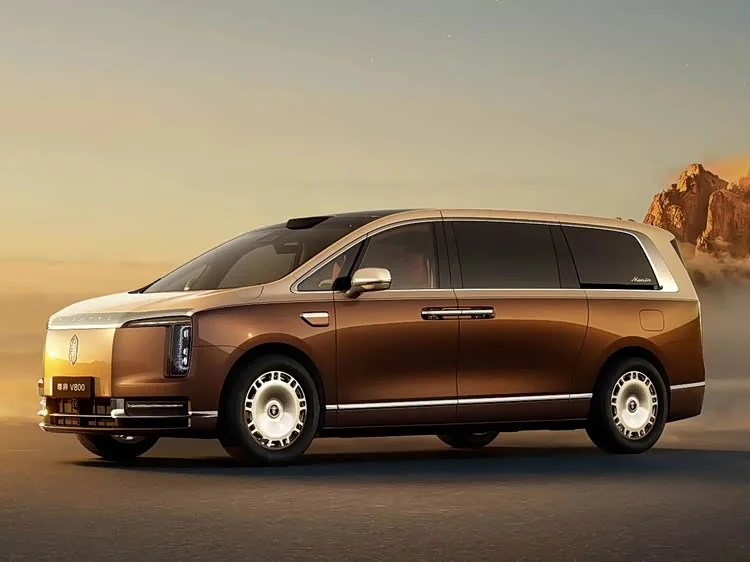
Fig 1: The Maextro V800. As the flagship of the Harmony Intelligent Mobility Alliance (HIMA), its hardware reliability is the bedrock of Huawei’s automotive credibility.
- Framing as “Non-Standard Testing and Malicious Competition”: The controversy began on October 8, when a third-party reviewer released footage showing three new V800 units suffering pedal bracket failures under sustained, maximum-force braking. Yu and his team maintain that the design meets all compliance standards, citing internal reports of 3000N vertical load resistance. By doing so, they imply that the testing methodology applied unreasonable lateral shear force, suggesting a coordinated “hit job” by competitors.
- The Regulatory Investigation as a “Sword of Justice”: By involving the Cyberspace Administration alongside manufacturing regulators, Yu signals that the investigation will not only look at the pedal’s metallurgy but also at the “information ecosystem”—effectively threatening to expose the funding and coordination behind the negative PR.
- Stabilizing Investor and Owner Confidence: With the V800 priced between 766,000 and 1.016 million RMB, the “brake failure” narrative caused a massive market reaction, wiping over 12 billion RMB from the market cap of partner JAC Motors in three days. Yu’s personal intervention is a desperate attempt to reassure high-net-worth buyers that the brand remains “uncompromised.”
II. The Fractured Reality: Whose Justice?
The phrase “justice may be delayed, but it will never be absent” is rhetorically potent, yet it collapses under the weight of industrial reality. The perspectives on this crisis are fundamentally split:
| Dimension | The “Defensive” Perspective (Yu/OEM) | The “Safety” Perspective (Public/Industry) |
|---|---|---|
| Defining “Justice” | Official regulatory vindication and the purging of “malicious” third-party reviewers. | Absolute safety margins. The public’s right to know outweighs corporate narratives. |
| The “Delay” | The delay in regulatory intervention caused billions in market losses. | The delay in implementing high-redundancy hardware during the R&D phase. |
| The “Absence” | The absence of market fairness and tolerance for domestic innovation. | The absence of engineering humility and genuine technical accountability. |
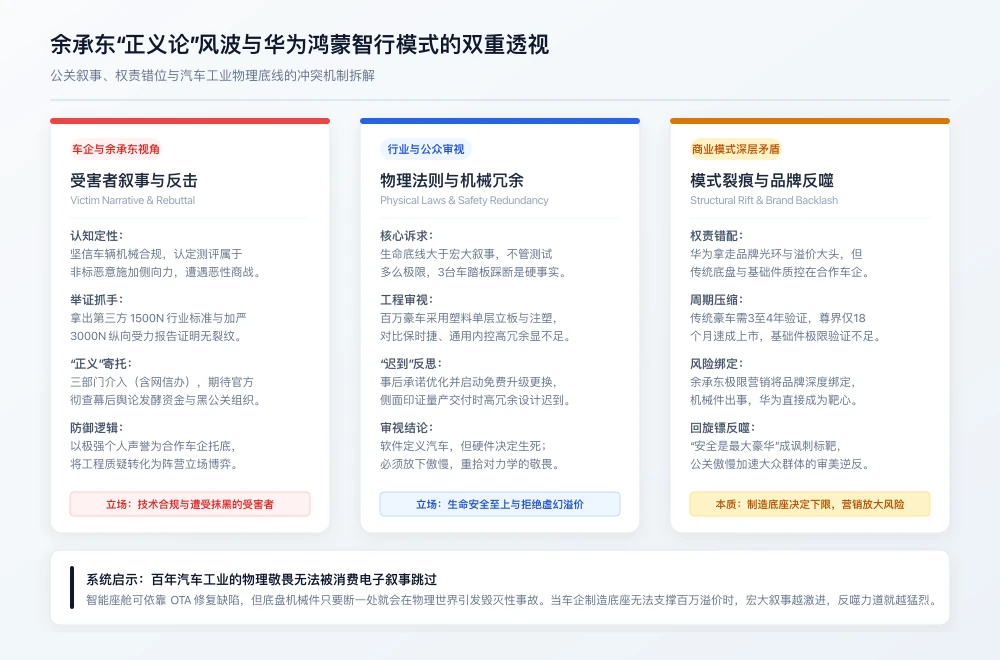
Fig 2: The dual-perspective matrix of the HIMA model. Engineering foundations dictate the safety floor, while aggressive marketing amplifies the systemic risk.
III. Structural Cracks in the HIMA Model
The core question remains: Will Huawei’s brand be undone by the manufacturing limitations of its partners, or by Yu Chengdong’s aggressive marketing style? The answer lies in the structural contradictions of the HIMA (Harmony Intelligent Mobility Alliance) model:
1. The “Hard” Limitations of Traditional OEMs
In the HIMA ecosystem, there is a fundamental misalignment of risk and reward:
- The Software Premium: Consumers pay a premium for Huawei’s brand, autonomous driving, and cockpit software.
- The Hardware Liability: The physical manufacturing—chassis rigidity, stamping, and Tier 1 supply chain quality—remains in the hands of traditional partners like JAC or Seres.
- The “Fast-Track” Pressure: While global luxury brands spend 36–48 months on rigorous engineering validation, the V800 went from project launch to delivery in roughly 18 months. In this compressed timeline, Failure Mode and Effects Analysis (FMEA) for edge cases—like lateral stress on pedal brackets—is often sacrificed.
2. The “Smartphone-Style” Aggression
Yu Chengdong’s tendency to use consumer-electronics rhetoric (“Leading the industry,” “Safety is the ultimate luxury”) creates a dangerous expectation gap. When a product fails in the physical world, the “boomerang effect” is magnified by the very hyperbole used to sell it. By binding the Huawei brand so tightly to the physical vehicle, Yu has removed the “brand firewall” that usually protects technology suppliers from the mechanical failures of their OEM partners.
IV. Conclusion: Respecting the Laws of Physics
Huawei’s brand moat was built on the back of thousands of engineers working in telecommunications and semiconductors—a culture of rigor and technical excellence. However, the automotive industry operates under a different set of laws: human lives are at stake, and the margin for error is zero.
The most effective PR in the face of a mechanical failure is not to cry “injustice” or blame “malicious actors.” It is to exhibit technical honesty: publish the data, address the manufacturing tolerances, and recall the hardware if necessary. If Huawei continues to treat the physical laws of automotive engineering with the “fast-track” logic of consumer electronics, any failure at the OEM level will inevitably become a hammer that shatters the Huawei brand myth.
Related Research & Topics
Tello Mobile eSIM
SafetyWing Nomad Insurance
* Disclosure: This post contains affiliate links. If you make a purchase through these links, V-G Journal may earn a small commission at no additional cost to you. We only recommend services we independently evaluate and trust.
FIRE and Golf:自由旅居之路
专注于为追求 FIRE 与品质生活的人群提供特惠打球权益与候鸟微度假。不持一砖一瓦,运营品质生活。