Subway Security and Global Public Safety Governance: A Deep Dive into Efficacy and Marginal Costs
Subway security serves as a mirror reflecting public safety governance. This essay systematically dissects the intricate trade-offs between public safety investment and societal operational efficiency, examining macro crime statistics, comparative global subway security models, and the institutional mobilization and marginal costs of preventive governance.

Executive Summary: The queues at subway entrances, X-ray conveyor belts, and handheld detectors form the most familiar physical interface of daily commutes in China’s megacities. As the most concrete manifestation of urban public space defense mechanisms, the “all-station, all-time, person-and-item” inspection model has been deeply institutionalized over the past decade. To objectively assess the efficacy and cost of this governance paradigm, it must be viewed along three axes: the macro reality of social security levels, a comparative analysis with typical global cities, and the marginal cost ledger required to maintain absolute physical interdiction.
I. Objective Security Levels: The Generational Shift from Low Violent Crime to New Threats
Discussing the density of public safety infrastructure necessitates a clear understanding of the underlying social security landscape. According to authoritative objective statistics and international comparative data, the overall security performance of Chinese cities exhibits distinct structural characteristics:
- Violent Crime Consistently Ranks Among the Lowest Globally: Data from long-term monitoring by international organizations such as the United Nations Office on Drugs and Crime (UNODC) consistently places China among the lowest in the incidence of violent offenses like intentional homicide, armed terrorism, and street robbery among major economies. Strict controls on firearms, ammunition, and explosives fundamentally sever the toolchain for the vast majority of violent physical attacks.
- High Sense of Security in Routine Public Spaces at Night: In public streets and transit hubs of major cities, the probability of ordinary individuals encountering indiscriminate street-level personal assault, even when traveling alone late at night, is extremely low. This high sense of security, consistently reported by international travelers and in public opinion surveys, forms a crucial trust foundation for urban societal operations.
- Fundamental Generational Shift in Threat Modalities: With the seamless coverage of surveillance systems and the deepening of grassroots grid-based management, traditional street theft, pickpocketing, and violent disturbances have seen a precipitous decline. However, the focus of criminal activity has not disappeared; it has comprehensively migrated to the non-contact realm of cyberspace. Virtual infringements, represented by telecommunications fraud, cross-border illicit activities, and novel digital deception, have become the most painful and difficult-to-govern battlegrounds for the public.
This shift in threat modalities creates a thought-provoking paradox: in the physical realm, individuals undergo rigorous metal detection and liquid screening at subway security checkpoints; yet, in the virtual space, pervasive information harassment and financial erosion occur silently.
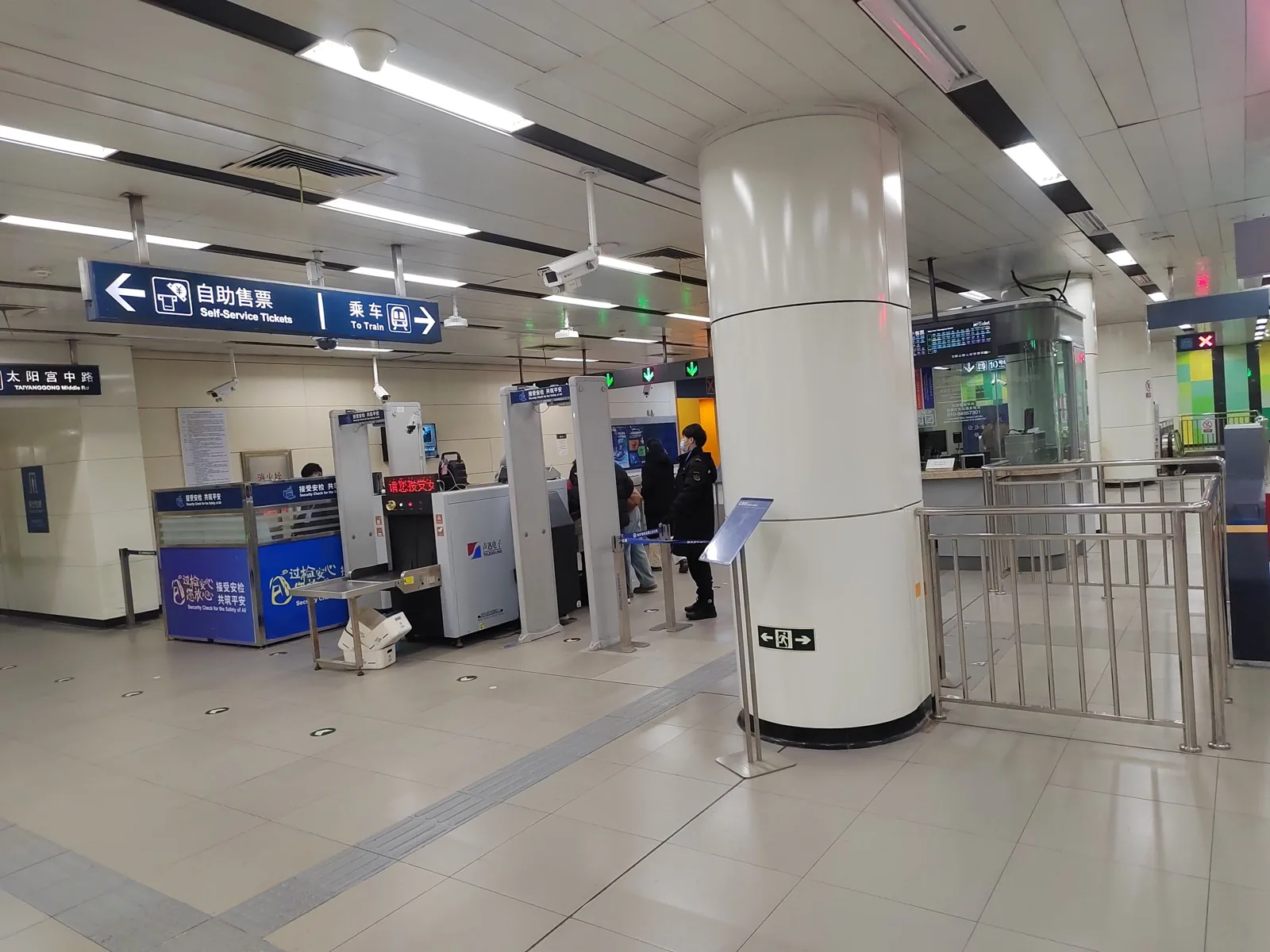
Figure 1: Ubiquitous full-coverage security checkpoints ("people pass through gates, items through machines") commonly operating in subway stations of major Chinese cities.
II. The Global Landscape: Why Do Most Major International Metropolises Not Have Entrance Security Checks?
Subway security is not unique to China, but the implementation of a rigid “all-network, all-station, all-time, all-person” model of “people through gates, items through machines, liquids tasted/tested” is extremely rare worldwide.
Across global public transit systems, different economies have evolved distinct response paradigms due to varying geopolitical threat types, legal traditions, historical station structures, and fiscal capacities.
1. Typical Countries Implementing Routine Strict Checks or Partial Security
Some nations, facing high-risk pressures due to geopolitical conflicts or specific counter-terrorism traumas, maintain relatively stringent physical security at public transit points:
- India (New Delhi, Kolkata, etc.): Security checks at the Delhi Metro are directly managed by a national paramilitary force – the Central Industrial Security Force (CISF). All passengers entering the station must pass through metal detector gates, undergo manual pat-downs separated by gender, and have their luggage scanned by X-ray machines. Its defensive specifications are comparable to airports, driven fundamentally by the severe counter-terrorism and stability maintenance pressures faced in South Asia.
- Russia (Moscow, St. Petersburg, etc.): Following tragic incidents such as the 2010 Moscow Metro bombing and the 2017 St. Petersburg Metro bombing, major Russian metro hubs have universally installed security gates and X-ray machines. Their actual operation adopts a mechanism of “routine equipment deployment + targeted random checks”: under normal passenger flow, attention is focused on suspicious individuals and large luggage; during heightened anti-terrorism alerts or large-scale events, it switches to strict checks for everyone.
- Turkey and Egypt, etc.: In Istanbul or Cairo, not only metro and main railway stations but also the entrances to large shopping malls and foreign-related hotels commonly feature metal detector gates and baggage scanners to prevent attacks on civilian gathering areas.
- Thailand (Bangkok MRT): Entrance gates are equipped with metal detectors, and security personnel often use high-intensity flashlights to randomly ask passengers with large backpacks or bags to open them for visual inspection, maintaining a basic state of alert.
2. The “No Security Check” Operational Logic of Mature Rail Networks in Europe, America, Japan, and South Korea
In the busiest and longest-operating subway systems globally, such as New York, London, Paris, Tokyo, Seoul, and Berlin, routine X-ray machines and metal gates at entrances are generally absent. Passengers can enter the platform within seconds by swiping their transit cards, scanning their phones, or using paper tickets.
The reasons why Europe, America, Japan, and South Korea do not adopt comprehensive entrance security checks are not due to indifference towards safety, but are constrained by deep-seated physical, economic, and legal factors:
- Physical Space Constraints and Stampede Risks in Century-Old Stations: The London Underground, Paris Metro, and New York Subway, with over a century of history, have extremely narrow and cramped station halls and entrances, leaving no space for X-ray conveyor belts and queuing buffer zones. Forcing security checks during peak hours would, within minutes, cause extreme and dangerous human traffic backups in confined entryways, thereby creating significant stampede hazards.
- Unbearable Labor Costs and Operational Deficits: Staffing security teams 24/7 for hundreds or thousands of entrances across the entire network requires astronomical personnel numbers. In mature economies with high labor costs, subway operating companies are generally in a state of continuous deficit. Neither municipal finances nor subway fares can long sustain such massive fixed personnel compensation.
- Constitutional Privacy Boundaries and Due Process Constraints: In jurisdictions under common law and civil law traditions (such as the Fourth Amendment of the U.S. Constitution), indiscriminate physical searches of law-abiding citizens’ personal belongings by law enforcement or security personnel, without “Reasonable Suspicion,” carry significant constitutional controversy and litigation risks.
- Alternative Security Matrix Based on Dynamic Mobility:
- Plainclothes Police and Mobile Patrols: Deployment of armed plainclothes officers and patrol officers in key carriages and platforms.
- Routine K9 Explosives Detection Patrols: Utilizing police dogs with extremely sensitive senses of smell to detect explosives in moving crowds.
- Random Checks at High-Risk Windows: For example, the New York City Police Department (NYPD) randomly stops and inspects backpacks during heightened alerts.
- Ultra-High-Density Closed-Circuit Surveillance and Precursor Intelligence Networks: Shifting the focus of defense to clue investigation and source disruption before an attack occurs, rather than indiscriminate interception at station gates.
Note: In some long-distance rail or cross-border transport, certain countries still retain security procedures. For instance, Spain’s National Railway (RENFE) high-speed trains (AVE) conduct X-ray scans of large luggage at major hubs; the “Eurostar” train traversing the Channel Tunnel, due to cross-border control and customs sovereignty, implements rigorous security checks equivalent to international civil aviation.
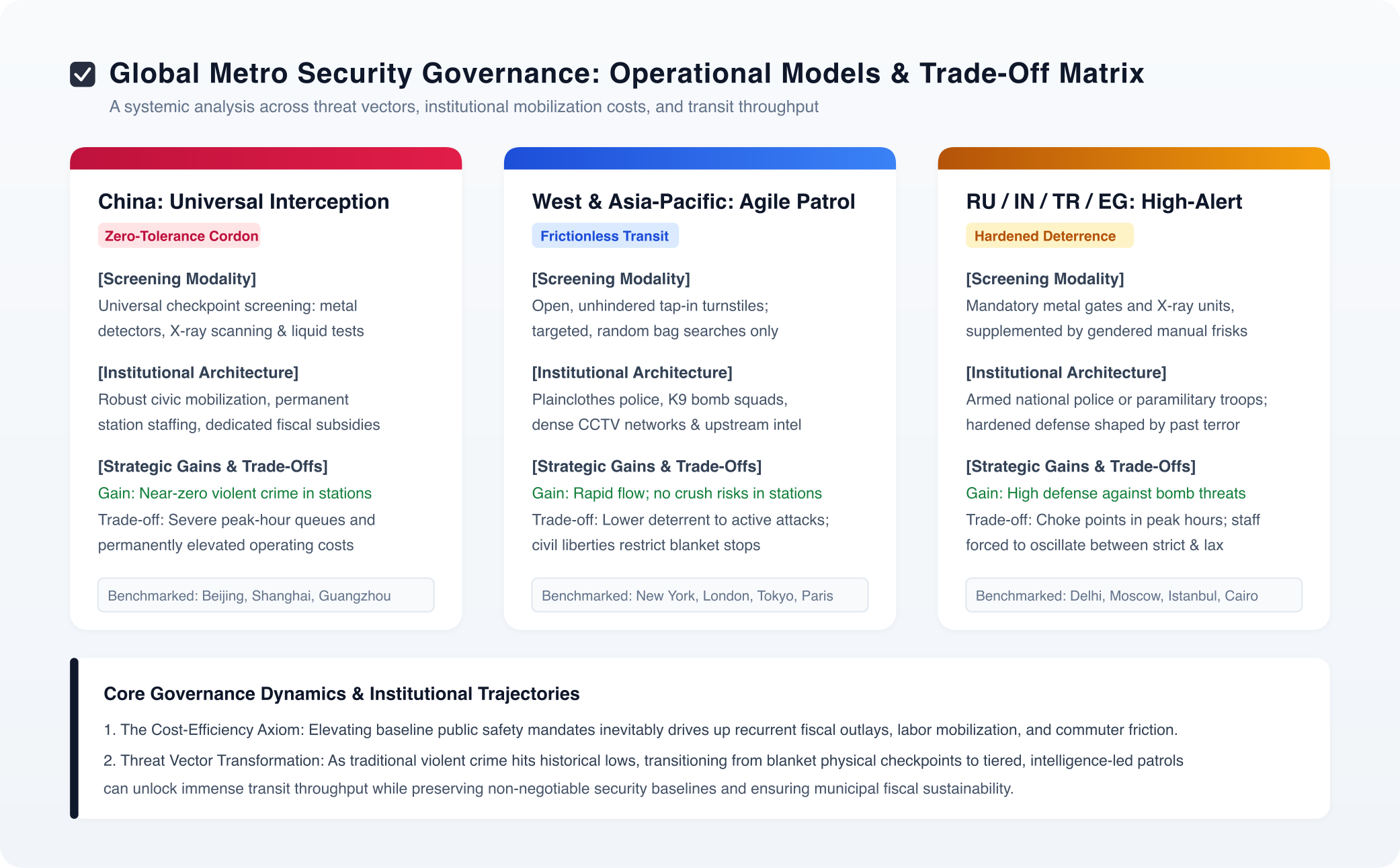
Figure 2: Trade-off Matrix of Subway Security Governance Models in Major Global Cities.
III. Governance Logic and Marginal Cost Ledger: Institutional Mobilization for Prevention and Efficiency Trade-offs
China’s public safety governance (represented by subway security, community grid management, surveillance networks, etc.) demonstrates organizational mobilization efficiency rarely seen in the history of modern urban management. This model is underpinned by a self-consistent governance logic, but it also faces the objective law of diminishing marginal returns.
1. The Underlying Philosophy of “Absolute Physical Interdiction”
The core logic of this model lies in “prevention first, zero-risk tolerance”: it strives to physically isolate any potential danger, however minuscule the probability (controlled knives, fireworks, flammable liquids), before passengers enter enclosed transportation vehicles. It does not rely on citizen self-restraint nor gamble on rapid post-incident response; instead, it chooses to establish absolute interdiction zones at physical boundaries.
2. Support Conditions: Vast Labor Reserves and Social Mobilization
The reason this model has been promoted nationwide and maintained for over a decade in China is supported by the labor supply structure of a specific historical period and an efficient grassroots organizational system. Hundreds of thousands of security personnel, auxiliary police, and security teams form the capillaries that absorb employment and maintain physical order. This high-density human presence is something societies with high labor costs, such as in Europe and America, cannot replicate economically.
3. Non-Negligible Explicit Expenses and Hidden Efficiency Losses
However, from the perspective of institutional economics and public governance, any increase in security standards comes at a cost. As traditional violent physical crimes decline to extremely low levels, the marginal benefits and marginal costs of nationwide rigid security checks are undergoing a profound shift:
- Societal Transit Friction and Total Time Loss: In megacities with populations of tens of millions like Beijing, Shanghai, Guangzhou, and Shenzhen, tens of millions of person-trips rely on the subway daily. During peak hours, the 2-5 minutes spent queuing for security checks at each entrance accumulates to hundreds of millions of hours of lost productive capacity annually across society. This hidden temporal friction is a micro-cost that urban operations must continuously bear.
- Massive Fiscal Special Subsidies and Rigid Operational Expenses: The procurement, maintenance, calibration, and updating of thousands of X-ray scanners and liquid detectors across the network, coupled with the substantial salary and welfare expenses for a large security workforce, constitute a significant fixed cost in subway operating expenses. At a time when local finances and rail transit operations generally face pressure to reduce costs and increase efficiency, the crowding-out effect of this investment on other public facility maintenance is prompting deeper public policy discussions.
- Potential Evolution from “Comprehensive Rigid Defense” to “Tiered Precision Risk Control”: As digital infrastructure such as social credit systems, intelligent contactless screening, and big data situational awareness becomes increasingly sophisticated, is it still necessary to maintain the same intensity of physical checks for all people, all networks, and all times? By implementing “contactless rapid passage” for routine passengers and conducting precise random checks on suspicious targets, while upholding baseline safety, releasing constrained urban vitality is a necessary exploration direction for mature governance.
Public safety has never been a simple yes-or-no question; it is a scale that constantly seeks balance between “absolute sense of security,” “public fiscal affordability,” and “micro-social efficiency.”
Related Research & Topics
Tello Mobile eSIM
SafetyWing Nomad Insurance
* Disclosure: This post contains affiliate links. If you make a purchase through these links, V-G Journal may earn a small commission at no additional cost to you. We only recommend services we independently evaluate and trust.
FIRE and Golf:自由旅居之路
专注于为追求 FIRE 与品质生活的人群提供特惠打球权益与候鸟微度假。不持一砖一瓦,运营品质生活。