The Geography of Pathogens: Decoupling the 2026 Siberian Plague Scare from the 2018 African Swine Fever Crisis
A rigorous epidemiological and structural analysis of the October 2026 laboratory fatality in Irkutsk, Russia. By contrasting the fragile biology of Yersinia pestis with the highly resilient 2018 African Swine Fever outbreak, we deconstruct the mechanics of cross-border biosecurity risks and debunk bioweaponization anxieties.

Executive Summary: In early October 2026, the death of a laboratory technician at the Irkutsk Anti-Plague Research Institute in Siberia sparked widespread international concern. Haunted by memories of the 2018 African Swine Fever (ASF) outbreak—which similarly crept eastward across Siberia before devastating domestic swine populations—public discourse has quickly succumbed to “history repeating” anxieties and bioweapon conspiracy theories. However, a cold appraisal of molecular epidemiology, pathogen resilience, incubation kinetics, and global logistics reveals a fundamental generational divide between plague and ASF. The probability of this incident triggering a large-scale imported outbreak is virtually zero. Furthermore, a historical deconstruction of the Soviet dual-track anti-plague system, alongside clinical data from close contacts under prophylactic treatment, systematically refutes any hypotheses of offensive bioweapon development or super-resistant mutations.
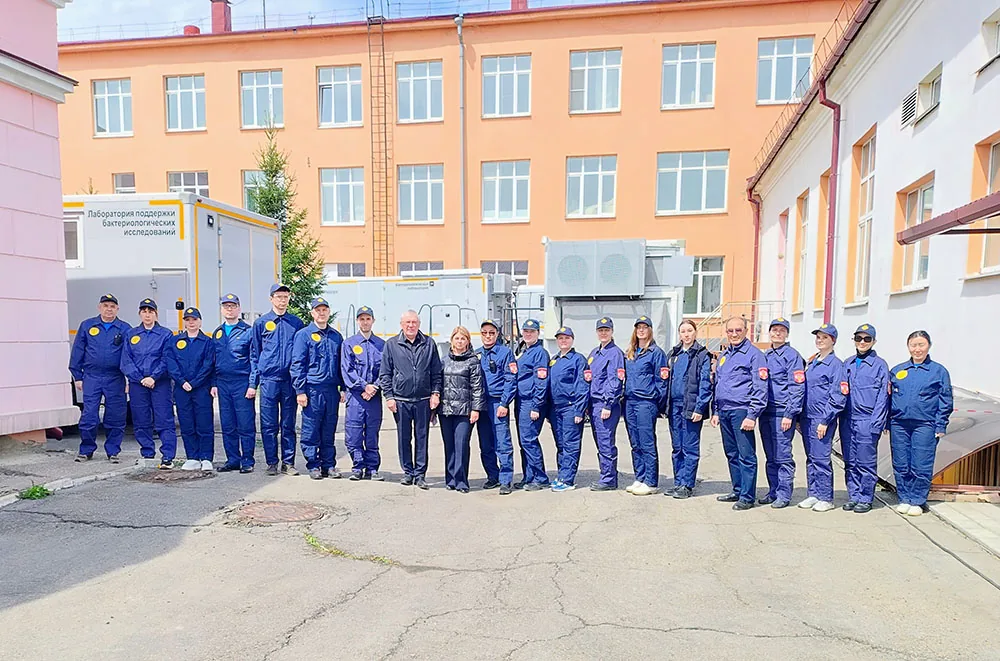
Figure 1: The main campus of the Irkutsk Anti-Plague Research Institute of Siberia and the Far East, featuring mobile pathogen monitoring units.
I. The 2018 Russian Importation of African Swine Fever (ASF): A Retrospective and Structural Analysis
In August 2018, China confirmed its first case of African Swine Fever (ASF) in Shenyang, Liaoning Province. The virus subsequently tore through the nation’s primary swine-producing provinces, inflicting profound structural damage on the agricultural supply chain. Reconstructing the trans-Eurasian northern corridor through which this pathogen traveled is essential for establishing a baseline for modern cross-border biosecurity risk assessment.
【The Transnational Transmission and Domestic Amplification of ASF (2007–2018)】
- Source Entry: The Caucasus (introduced to Eurasia via Georgia in 2007)
- Inland Transversals: Steady spread across the Russian heartland, traversing Siberia
- Border Proximity: Outbreaks in the Far East and around Lake Baikal (the 2017 Irkutsk strain)
- Cross-Border Breach: Smuggled frozen meat / international cold-chain logistics
- Domestic Index Case: Confirmed in Shenyang, China (August 2018)
- Domestic Amplification: Feeding of untreated swill (catering waste) ➔ long-distance interprovincial transport ➔ nationwide point-source outbreaks.
1. Molecular Epidemiology and Traceability
Following the initial outbreak, domestic research institutions—including the Harbin Veterinary Research Institute of the Chinese Academy of Agricultural Sciences (CAAS) and the China Animal Health and Epidemiology Center—immediately performed high-throughput whole-genome sequencing on the index isolates (such as Pig/HLJ/2018). The findings were definitive:
- Genotypic and Homology Alignment: The index virus belonged to Genotype II. It shared a nucleotide sequence homology of over 99.9% with both the 2007 Georgia strain (Georgia 2007/1) and the 2017 Russian Irkutsk isolate (Irkutsk 2017).
- Spatiotemporal Progression: Following its 2007 introduction into Georgia, ASF established a decade-long endemic presence in Russia, marching steadily eastward along the Trans-Siberian Railway and commercial logistics corridors. By 2017, intensive outbreaks in the Irkutsk Oblast, the Zabaykalsky Krai, and various Far Eastern districts signaled an inevitable, high-pressure spillover across the border.
2. Primary Transmission Vectors and Domestic Amplifiers
ASF’s successful multi-thousand-kilometer transcontinental penetration and subsequent domestic explosion were driven by a perfect alignment of pathogen biology and the structural vulnerabilities of contemporary agricultural logistics:
- Extreme Physical and Biochemical Resilience: ASF is an exceptionally large, double-stranded DNA virus protected by a highly stable, multi-layered envelope. It exhibits remarkable resistance to extreme pH levels and low temperatures. The virus can remain viable in frozen pork for several years and in cured hams or bacon for months, providing the biological durability required for ultra-long-distance transport via commercial trade routes.
- Cold-Chain Meat Products and Catering Waste: The primary physical conduits of entry were informal, cross-border smuggling of frozen meat and the illicit disposal of food waste from international trains and flights.
- Wild Boar Ecological Corridors: Dense forests along the Sino-Russian border provided a natural corridor for wild boar migrations, creating a silent, sylvatic cycle that continuously exposed free-ranging domestic herds near the border.
- The “Fatal Primer” of Domestic Farming: At the time, small- and medium-scale domestic farmers routinely fed pigs untreated catering waste (swill). Contaminated pork scraps in this swill acted as the primary spark that ignited outbreaks across multiple provinces.
- Interprovincial Transport Dynamics: The geographical decoupling of swine production (primarily in the north) and consumption (primarily in the south) necessitated long-distance transport of live animals. Mechanically contaminated transport vehicles rapidly dispersed the pathogen across the national highway network, transforming localized introductions into a nationwide epidemic.
II. The October 2026 Irkutsk Plague Incident: Timeline and Context
In stark contrast to the agricultural and logistical vectors of the 2018 swine epidemic, the incident that unfolded in Irkutsk, Siberia, in early October 2026 presents an entirely different epidemiological profile.
1. Documented Facts and Official Communications
- The Institution: The Irkutsk Anti-Plague Research Institute of Siberia and the Far East (established in 1934, originating from an anti-plague laboratory founded in 1923) operates under the Federal Service for Surveillance on Consumer Rights Protection and Human Wellbeing (Rospotrebnadzor). It is a tier-one national facility tasked with monitoring high-consequence pathogens across Siberia and the Russian Far East.
- The Incident: In late September 2026, a 28-year-old female laboratory technician (Daria Shipilova) at the institute developed acute, severe respiratory symptoms. She was hospitalized on September 29 and passed away on October 2. Media reports suggested she may have handled a compromised specimen tube around September 25, raising urgent concerns of an occupational exposure to pneumonic plague.
- Official Russian Response: Rospotrebnadzor attributed the death to “severe pneumonia of unknown etiology,” asserting that diagnostic tests on the deceased revealed no dangerous pathogens or Yersinia pestis strains linked to her professional duties. The institute’s safety committee reported no containment breaches. Approximately 200 close contacts were placed under strict medical isolation and administered prophylactic therapies; no secondary cases were reported by the end of the observation period.
- International Assessments: The World Health Organization (WHO) monitored the situation, requesting detailed epidemiological and pathological data from Russian authorities. Border control agencies in neighboring states, such as Kazakhstan, initiated routine thermal screening, assessing the risk of cross-border importation as “low.” In the United States, official channels monitored the event closely; President Donald Trump remarked on October 7, 2026, that the administration did “not believe” the technician’s death was linked to biological weapons.
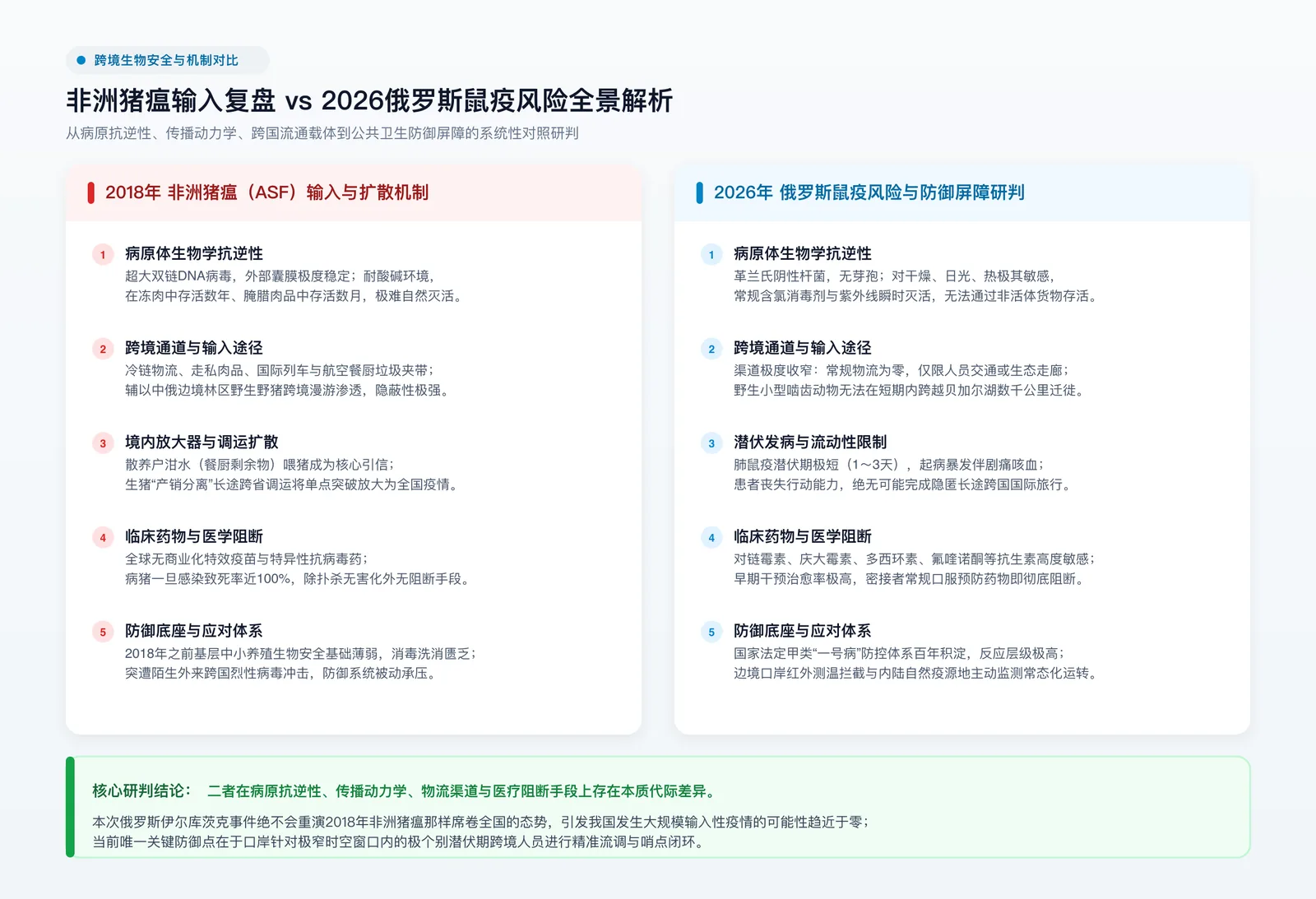
Figure 2: Comparative matrix of African Swine Fever and Plague transmission mechanics.
III. Structural Comparison: The Deep Divergence Between Plague and ASF Transmission Mechanics
Public anxiety has conflated these two events, largely because they share a geographical origin: Irkutsk, Siberia. However, in terms of epidemiology, pathogen biology, and modern medical countermeasures, the two pathogens are separated by a vast structural chasm.
| Analytical Dimension | African Swine Fever (2018 Importation) | Plague Risk (2026 Assessment) | Epidemiological Implications & Risk Determination |
|---|---|---|---|
| Pathogen Type & Environmental Resilience | Large, double-stranded DNA virus; highly stable envelope, resistant to pH extremes, survives for years in frozen meat. | Gram-negative bacterium (Yersinia pestis); non-spore-forming, highly sensitive to desiccation, sunlight, and standard disinfectants. | Plague cannot be covertly imported via cold chains or standard commercial cargo. It lacks the biological capacity to survive on inanimate surfaces over long transit periods. |
| Primary Cross-Border Vectors | International cold-chain smuggling, transport-related catering waste, wild boar migrations. | Restricted to active human transit (international flights/trains) or localized wild rodent migrations. | Severely restricted entry pathways. The probability of importation via commercial freight is zero; risk is confined to narrow human and ecological windows. |
| Incubation Period & Mobility Dynamics | Long incubation period (5–19 days); early symptoms are subtle, enabling undetected transport of infected animals across provinces. | Ultra-short incubation period for pneumonic plague (24–72 hours); rapid, debilitating onset with severe pain and hemoptysis. | Infected individuals cannot travel long distances. The rapid onset of severe symptoms ensures detection and isolation at border checkpoints or early in transit. |
| Host Susceptibility & Target Demographics | Exclusively infects suids (domestic and wild pigs); infected meat shows no obvious visual defects, facilitating commercial distribution. | Zoonotic (rodents as primary reservoirs, fleas as vectors, human-to-human transmission via respiratory droplets in pneumonic plague). | Humans possess high agency for self-protection (physical barriers like masks, thermal screening, and voluntary medical reporting). |
| Clinical Therapeutics & Interception Efficacy | No commercially viable vaccines or highly effective antiviral therapies exist globally; containment relies entirely on culling and burial. | Highly treatable with standard antibiotics (streptomycin, gentamicin, doxycycline, fluoroquinolones). | Modern antibiotics offer highly effective cure rates if administered early; close contacts can be successfully protected via oral prophylaxis. |
| Defense & Surveillance Infrastructure | Prior to 2018, local veterinary biosecurity and disinfection infrastructure was highly fragmented, with a high density of backyard farms. | Classified as a Class A (Tier 1) infectious disease, triggering immediate, high-level administrative mobilization and continuous border surveillance. | The institutional maturity, mobilization speed, and scientific resources dedicated to human Class A pathogens far exceed veterinary frameworks. |
IV. Deconstructing the Laboratory Rumors and Bioweaponization Hypotheses
The fatality at the Irkutsk laboratory has fueled two primary speculative narratives in international media: first, that the incident represents a breach at an offensive biological weapons facility; and second, that the laboratory was cultivating a genetically engineered, pan-resistant “super-strain.” An examination of historical biodefense structures and microbial realities refutes both claims.
1. Institutional Typology: The Soviet Civil Anti-Plague System vs. Offensive Military Complexes
To evaluate this incident objectively, one must understand the dual-track biological research architecture established during the Soviet era and maintained in contemporary Russia:
【The Historical Dual-Track Architecture of Soviet Biology】
- Offensive Bioweapons Program (Biopreparat / 15th Directorate of the Ministry of Defense): Focused on weaponization, aerosol dissemination, and the engineering of antibiotic resistance. Key military-grade sites included Sverdlovsk-19, Obolensk, Stepnogorsk, and the Vozrozhdeniya Island test range.
- Civil Public Health Anti-Plague System: Focused on ecological surveillance of vast natural plague reservoirs, isolating wild strains, manufacturing vaccines, and managing border quarantines. Key nodes included the Irkutsk Institute, the Saratov “Microbe” Institute, and the Stavropol Institute.
Since its founding in 1934, the Irkutsk Anti-Plague Research Institute has functioned strictly within the civil public health network. Under the Biological Weapons Convention (BWC), nations with extensive natural plague reservoirs maintain these facilities for legitimate biodefense purposes. This includes developing rapid diagnostic assays, evaluating the efficacy of first-line antibiotics against local wild strains, and monitoring resistance patterns in wild rodent populations.
The profile of the casualty—a 28-year-old junior technician—is entirely inconsistent with offensive bioweapons development. Research into weaponized pathogens (such as high-pressure aerosolization or microencapsulation) is conducted under extreme military secrecy and is never delegated to junior staff at regional civil monitoring stations. The reported “exposure to a broken test tube” points to a routine physical accident during standard bacterial passaging or diagnostic characterization.
2. Debunking Genetic Modification and Super-Resistance Hypotheses
Public commentary often mistakes a rapid clinical decline for the presence of an engineered “super-bug.” However, basic microbiology explains this progression:
- Wild Strains Are Inherently Highly Virulent: Yersinia pestis is one of the most lethal pathogens known to science. Primary pneumonic plague, contracted via the inhalation of infectious aerosols, carries a untreated mortality rate of 90% to 100% with an incubation period of just 1 to 3 days. This extreme lethality is a natural biological property of the wild-type organism; no “gain-of-function” engineering is required to explain a rapid fatality.
- Zero Secondary Infections Among Contacts Confirms Drug Sensitivity: The immediate quarantine and administration of standard prophylactic antibiotics (typically doxycycline or ciprofloxacin) to approximately 200 close contacts yielded a 100% success rate, with zero secondary cases. Had the technician been infected with an engineered, multi-drug-resistant weapon strain, standard oral prophylaxis would not have achieved complete containment.
- Whole-Genome Sequencing (WGS) Remains the Gold Standard: Determining whether a pathogen has been artificially modified relies on whole-genome sequencing and phylogenetic analysis. Natural wild strains from Central Asia and Siberia carry distinct evolutionary markers (such as the 0.PE or 1.ANT lineages). This genomic transparency is precisely why the WHO and the international scientific community continue to advocate for the release of the laboratory’s sequencing data.

Figure 3: Joint cross-border public health drills and monitoring operations along the frontier.
V. Risk Assessment of Plague Importation and Key Defense Priorities
1. Feasibility Analysis of Cross-Border Vectors
Evaluating the potential pathways for the pathogen to cross the border reveals the following:
- Commercial Freight and Cold-Chain Logistics (Zero Risk): Y. pestis is a fragile, non-spore-forming bacterium that rapidly desiccates and dies outside a host or vector. It cannot survive long-term transit on dry surfaces, industrial goods, or standard cargo. Furthermore, routine vector-control and fumigation protocols for international rail and container shipping effectively eliminate any risk of vector-borne transport.
- Wild Rodent Migration (No Direct Link): Irkutsk is situated on the western shore of Lake Baikal, hundreds of kilometers from the nearest international border. Wild rodents (such as marmots and ground squirrels) have highly restricted home ranges and cannot migrate across such distances. The natural, sylvatic plague reservoirs that exist along northern border regions are localized, long-standing ecological features managed by routine surveillance; they are entirely independent of the laboratory incident in Irkutsk.
- Cross-Border Human Mobility (Low Risk, Highly Controllable): While direct flights and rail links connect Irkutsk to major regional transit hubs, the ultra-short incubation period of pneumonic plague (1–3 days) and its severe, debilitating symptoms leave an exceptionally narrow window for an infected individual to travel undetected. The primary risk is limited to an individual in the earliest hours of incubation. However, given the robust public health infrastructure established during recent global health emergencies, standard port-of-entry thermal screening and rapid isolation protocols are highly effective at intercepting symptomatic travelers at the border.
2. Four Strategic Priorities for Border Biosecurity
To maintain effective containment, biosecurity measures should focus on four key areas:
- Targeted Port-of-Entry Screening: Maintain rigorous health declarations and thermal screening for passengers arriving from Siberia and the Russian Far East, particularly those transiting through Irkutsk. Any traveler presenting with fever, acute chest pain, or hemoptysis should be immediately isolated and routed through designated clinical pathways.
- Vector Control at Land Ports: Strengthen rodent and flea eradication protocols for cargo trains and road transport at major border crossings (such as Manzhouli, Erenhot, and Suifenhe) to prevent the passive transport of infected vectors.
- Clinical Vigilance and Therapeutic Stockpiling: Ensure that emergency departments and fever clinics in border regions include recent travel to East Siberia in their diagnostic screening criteria for atypical pneumonia. Maintain robust local stockpiles of first-line therapeutics, including streptomycin, gentamicin, doxycycline, and levofloxacin, to ensure immediate treatment capability.
- Multilateral Information Sharing: Utilize the framework of the International Health Regulations (IHR) and bilateral health agreements to maintain open communication channels with Russian public health authorities, ensuring timely access to epidemiological updates and genomic data.
VI. Conclusion
Equating the 2026 Irkutsk laboratory incident to the 2018 African Swine Fever outbreak is an epidemiological category error.
African Swine Fever succeeded as a transcontinental pathogen because it is an exceptionally resilient DNA virus that integrated into global cold-chain logistics and was amplified by domestic swill-feeding practices. Yersinia pestis, by contrast, is a fragile bacterium whose transmission is strictly limited by its rapid, severe clinical presentation. Furthermore, it faces a highly developed public health infrastructure armed with effective antibiotics and established quarantine protocols.
The probability of this incident leading to a significant imported outbreak is near zero. Maintaining standard vigilance at ports of entry and continuing routine ecological monitoring along border regions remains entirely sufficient to manage this localized risk.
Related Research & Topics
Tello Mobile eSIM
SafetyWing Nomad Insurance
* Disclosure: This post contains affiliate links. If you make a purchase through these links, V-G Journal may earn a small commission at no additional cost to you. We only recommend services we independently evaluate and trust.
FIRE and Golf:自由旅居之路
专注于为追求 FIRE 与品质生活的人群提供特惠打球权益与候鸟微度假。不持一砖一瓦,运营品质生活。