The Mooncake Ledger: Physical Preservation, Metabolic Budgets, and Industrial Realities
An analytical deconstruction of the mooncake industry, examining the physics of high-sugar preservation, the reality of metabolic frequency versus dosage, and the economic impossibility of 'recycled' fillings.

Executive Summary: Every Mid-Autumn Festival, a predictable wave of public anxiety emerges regarding the “unhealthiness” of mooncakes—specifically their high sugar/oil content and persistent rumors of “recycled vintage fillings.” By stripping away the emotional rhetoric, we can analyze this traditional food through three rigid lenses: physical engineering, human metabolic limits, and the cold logic of industrial commerce.
I. The Engineering of Preservation: Ancient Microbial Defense
Modern health discourse often dismisses the heavy sugar and oil content of mooncakes as a relic of “primitive” recipes or industrial excess. In the history of food processing, however, these ingredients represent a sophisticated physical defense system designed to inhibit microbial growth in the absence of cold chains and vacuum sealing.
The shelf stability of any pastry at room temperature depends on reducing water activity ($a_w$)—the ratio of free water molecules available for microbial use:
- Osmotic Inhibition via High Sugar: Extreme sugar concentrations create massive physical osmotic pressure. This process draws water out of microbial cells, causing bacteria and molds to dehydrate and lose their reproductive capacity.
- Lipid Barriers and Oxidation Resistance: High proportions of fats create a dense moisture barrier within the pastry’s pores. This seals the interior from external air and humidity while slowing the natural evaporation of internal moisture.
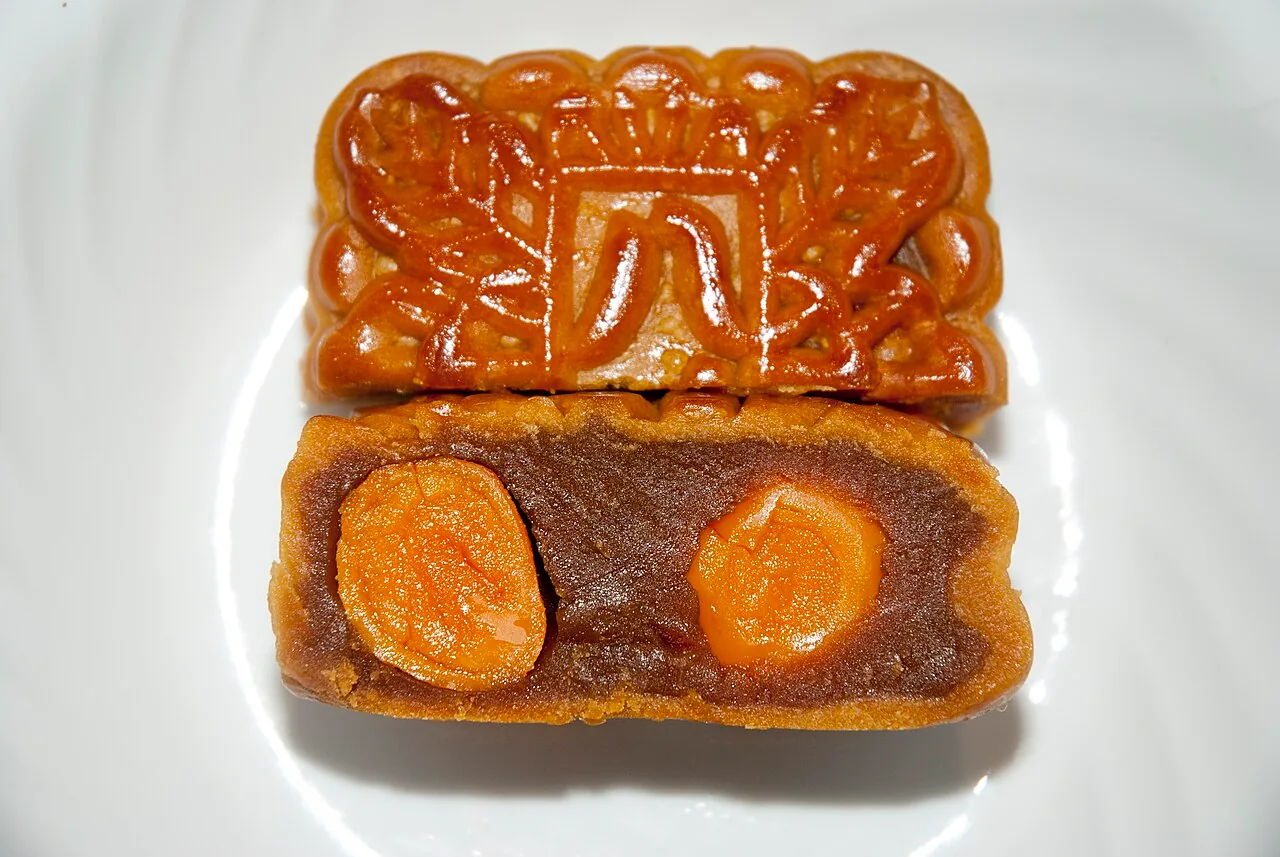
Figure 1: The dense filling and “oil-returned” crust of a traditional Cantonese Double Yolk Lotus Seed Paste mooncake.
The famous “oil-return” (hui you) process of Cantonese mooncakes relies entirely on this physical ratio. A freshly baked crust is typically dry and brittle; it requires several days for the abundant oils and inverted sugar syrups in the filling to migrate outward. This allows the flour’s protein colloids to absorb the lipids, resulting in the characteristic soft, lustrous texture.
Even in modern facilities with clean rooms and deoxidizers, drastically removing sugar and oil causes the structural integrity of the dough to collapse. The pastry becomes impossible to mold and prone to rapid cracking and pulverization within days of baking. The resistance to “healthier” recipe changes is, first and foremost, a constraint of physical material science.
II. The Metabolic Scale: Frequency vs. Dosage
A single traditional mooncake (100–150g) typically contains 400 to 800 calories—equivalent to two or three bowls of steamed rice—with fat content often exceeding 20 grams. From a pure macronutrient density perspective, it is undeniably a high-calorie food.
However, in nutritional risk assessment, measuring the harm of a single food item in isolation from consumption frequency is a logical fallacy.
From Dragon Boat Festival zongzi to Lantern Festival tangyuan and Lunar New Year cured meats, traditional seasonal foods are almost universally high in fat, sugar, or salt. These were the “caloric compensation mechanisms” of agrarian societies, designed to provide a collective energy surplus during specific nodes of the year.
For the modern individual, these foods are consumed perhaps two or three days out of the year. The human liver’s glycogen storage and lipid metabolism pathways possess significant “buffer redundancy” for short-term spikes. A few days of seasonal indulgence is insufficient to shift long-term physiological homeostasis.
The true culprits behind cardiovascular decay, insulin resistance, and visceral fat are not seasonal pastries, but the high-frequency, “invisible” intake of sugary teas, ultra-processed snacks, and high-sodium refined carbohydrates consumed during the other 360 days of the year.
Frequency determines the harm; dosage determines the systemic risk.
| Dimension | Industrial/Physical Mechanism | Metabolic/Economic Reality |
|---|---|---|
| Preservation | High osmotic pressure + lipid barrier | Essential for shelf stability without chemical preservatives |
| Metabolism | High caloric density (400-800 kcal) | Short-term “buffer redundancy” handles low-frequency intake |
| Economics | Cold chain storage costs vs. Raw material costs | Storing old fillings is more expensive than buying fresh ingredients |
| Chemistry | Lipid oxidation (rancidity) | Irreversible chemical markers (acid value) cannot be masked |
III. The “Vintage Filling” Myth: The Industrial Ledger
The urban legend of supermarkets recycling unsold mooncakes to be frozen and used as filling the following year fails when subjected to the scrutiny of modern industrial accounting and regulatory redlines.
1. Cold Chain Costs vs. Bulk Commodity Prices
Mooncake fillings are rich in moisture, sugar, and fat. To store them for a year while inhibiting mold, they must be kept in deep-freeze conditions (at or below -18°C).
When factoring in third-party cold storage rents, 24/7 electricity for compressors, handling losses, and logistics management, the marginal cost of storing one ton of filling for a year typically ranges from 2,000 to 3,500 RMB. In contrast, the bulk prices for fresh white kidney beans, lotus seeds, sugar, and vegetable oil are transparent and relatively low. From a financial perspective, buying fresh raw materials is significantly cheaper than storing old ones.
2. Irreversible Lipid Rancidity
Even in deep-freeze conditions, high-fat fillings undergo slow, continuous free-radical peroxidation and enzymatic hydrolysis. Over a year, unsaturated fatty acids irreversibly break down into aldehydes, ketones, and acids, producing a distinct, pungent “rancid” odor.
Under national food safety standards (such as GB 7099 in China), “acid value” and “peroxide value” are mandatory redline indicators for both factory exit inspections and government spot checks. The chemical degradation caused by rancidity cannot be masked by flavorings or reversed by re-baking; it simply cannot pass a laboratory clearance.
3. ERP Traceability and the Cost of Non-Compliance
Modern medium-to-large food enterprises utilize ERP (Enterprise Resource Planning) systems for strict batch-code traceability. Unsold mooncakes from legitimate retail channels are handled via formal return agreements. Most are mechanically crushed and destroyed, or sold at a steep discount to certified feed processors for animal energy feed.
Risking the permanent revocation of production licenses, punitive civil damages, and criminal liability to “save” money on fillings—when the storage costs already exceed the price of new ingredients—is a net-loss operation that no rational business would undertake.
Related Research & Topics
Tello Mobile eSIM
SafetyWing Nomad Insurance
* Disclosure: This post contains affiliate links. If you make a purchase through these links, V-G Journal may earn a small commission at no additional cost to you. We only recommend services we independently evaluate and trust.
FIRE and Golf:自由旅居之路
专注于为追求 FIRE 与品质生活的人群提供特惠打球权益与候鸟微度假。不持一砖一瓦,运营品质生活。