The Arithmetic of Austerity: Why Labor Remains the Primary Target of Corporate Cost-Cutting
An analysis of why management prioritizes cutting employee benefits even when labor represents a fraction of COGS, exploring net profit leverage, bargaining asymmetry, and the institutional logic of the 'Ratchet Effect'.

Executive Summary: In capital-intensive or R&D-heavy sectors—such as semiconductors, precision manufacturing, and industrial software—direct labor costs often account for less than 5% to 10% of the Cost of Goods Sold (COGS). Yet, when an industry enters a downturn, the first move by management is almost invariably “inward-facing”: the elimination of peripheral perks, the reduction of travel standards, and the freezing of welfare budgets. This is not irrational behavior; it is a calculated survival logic shaped by micro-financial leverage, the asymmetry of bargaining power, accounting illusions, and the short-term incentives of the principal-agent problem.

Figure 1: The accounting of human capital between COGS and SG&A in corporate financial analysis.
I. The Profit Leverage Effect: Non-Linear Gains from Marginal Cuts
Corporate decision-making is anchored to the bottom line: Net Income and Free Cash Flow.
In mature or hyper-competitive industries, while total revenue may be massive, average net profit margins often hover in the razor-thin 3% to 5% range. On such a narrow base, any minor reduction in costs creates an outsized leverage effect at the end of the income statement.
The Net Profit Leverage Calculus:
- Annual Revenue: $1.5 Billion (approx. 10B RMB);
- Baseline Net Profit Margin: 3% (yielding $45 Million in annual profit);
- Total Labor Cost: Even if labor is only 5% of total expenses ($75 Million);
- The Cut: By reducing benefits, travel, and auxiliary roles by 10% ($7.5 Million);
- The Leverage: This $7.5 Million, after minimal tax, flows directly to the bottom line. Net profit jumps from $45M to $52.5M—a 16.6% increase in net profit.
In the eyes of the board and secondary markets, this “squeezed” profit, when viewed through a Price-to-Earnings (P/E) ratio of 20x or 30x, can theoretically add $150M to $225M to the company’s market capitalization. Management targets benefits not because they are a massive cost, but because they are the most sensitive lever for Return on Equity (ROE).
II. The Asymmetry of “Negotiability”: Labor as the Softest Target
A breakdown of the Cost of Goods Sold (COGS) reveals that management holds almost zero bargaining chips against most core cost elements:
- Upstream Raw Materials: These are dictated by global commodity cycles (oil, lithium, copper) or monopolistic suppliers (lithography machines, specialized reagents). Unilateral demands for price cuts risk supply chain paralysis.
- Fixed Asset Depreciation and Rent: Sunk costs in precision machinery and industrial land are already “on the books.” Depreciation schedules follow rigid accounting standards and tax laws; they cannot be reduced by internal decree.
- Energy and Utilities: Industrial electricity and gas are usually provided by state-owned or regulated monopolies with non-negotiable pricing.
In the cost matrix, most suppliers possess strong contractual protections and legal recourse. Only the fragmented workforce, lacking a unified bargaining platform and facing a surplus of external replacements, occupies a position of systemic disadvantage. Reducing coffee perks or downgrading hotel stays requires no negotiation with a powerful vendor and carries negligible legal risk. It is the path of least resistance for an immediate quarterly cash flow “shock absorber.”
III. The Accounting Illusion: The Shift from COGS to SG&A
The premise that “labor cost is a low percentage of COGS” is often a byproduct of accounting categorization.
In standard financial reporting, COGS is strictly limited to Direct Labor—the workers on the assembly line. However, in modern high-tech, biotech, or software firms, the center of gravity has shifted away from the factory floor:
- Direct Production Labor: Thanks to automation, shop-floor wages may indeed be as low as 3%–8% of COGS.
- Operating Expenses (OPEX): The massive payrolls for R&D engineers, algorithm teams, marketing, sales, HR, and management are categorized under SG&A (Selling, General, and Administrative) and R&D Expenses.
In knowledge-intensive firms, total compensation often accounts for 40% to 70% of SG&A. When revenue slows, management isn’t just cutting the meager wages of the shop floor; they are targeting the massive overhead embedded in the middle and back-office functions.
IV. Institutional Defense and Short-Termism: The Ratchet Effect
Beyond the balance sheet, cutting benefits serves two hidden psychological and governance functions.
1. Breaking the “Ratchet Effect”
In human resource management, benefits exhibit a “Ratchet Effect”—they are easy to increase but nearly impossible to decrease without backlash. Over time, employees internalize perks (free meals, premium gyms, generous leave) as “basic rights.” Once established, their marginal utility for motivation drops to zero, but they remain fixed liabilities on the balance sheet. Management uses downturns to artificially break these expectations, forcing the organization to shift from fixed costs to flexible, performance-based compensation.
2. The Moral Hazard of Professional Managers
In the modern corporate structure, the interests of professional managers (CEOs/CFOs) rarely align perfectly with the long-term health of the firm.
- Short-term Gain: A manager’s bonus and promotion are tied to quarterly or annual net profit. Cutting insurance or travel budgets reflects immediately on the next report, securing their bonus today.
- Delayed Backlash: The erosion of morale, loss of core talent, and the collapse of corporate culture usually take 1 to 3 years to manifest in product quality or market reputation. By then, the executive who made the cut has often moved on to a higher position or a different firm, leaving the long-term shareholders to pay the “reconstruction cost.”
V. The Market’s Invisible Backlash: Four Channels of Retribution
The market is not a moral court, but it is a precision scale that reacts to economic laws. Exploiting labor is not a one-way arbitrage; it triggers systemic backlash through four primary channels.
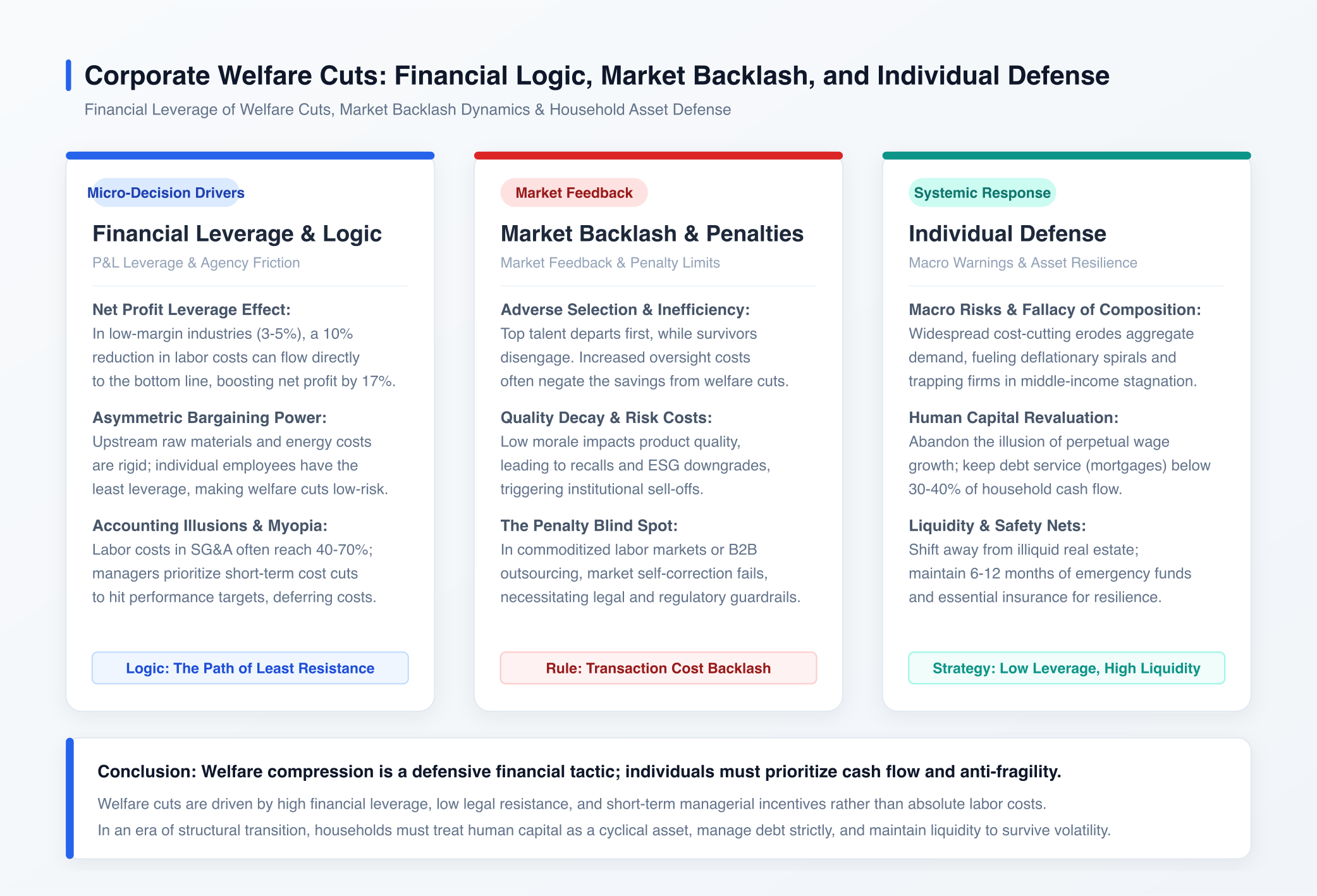
Figure 2: The Panorama of Corporate Calculation, Market Backlash, and Individual Defense.
1. Adverse Selection and Monitoring Costs
According to Efficiency Wage Theory, benefits are not just costs; they are screening mechanisms.
- Gresham’s Law of Talent: When benefits are slashed, the most competitive “A-players” with external options leave first. Those who stay are often those with the fewest alternatives, leading to a collapse in talent density.
- Quiet Quitting: Remaining employees rationally adjust their labor supply to match the lower “price.” To combat this, companies often hire more middle managers and implement intrusive monitoring (KPIs, tracking software), effectively spending the “saved” benefit money on internal bureaucracy.
2. Quality and Customer Value Erosion
Employee resentment eventually bleeds into the product. In precision manufacturing, fatigue and lack of belonging lead to exponential increases in defect rates. In service sectors, frontline staff with low morale cannot provide high-quality delivery, leading to a spike in the Churn Rate of high-value clients.
3. The ESG Discount
Modern sovereign wealth funds and pension funds treat the “S” (Social) in ESG as a hard metric. Companies known for systemic labor disputes or extreme austerity face “ESG Discounts” in their valuations and higher interest rates on international bond markets.
4. Why the Market Sometimes Fails to Punish
In certain environments, the backlash is muted. This occurs when:
- Labor Oversupply: When unemployment is high, employees have no “exit” option, giving the employer a monopsony.
- Extreme Modularization: If a job can be learned in hours, the cost of turnover is lower than the cost of benefits.
- Race to the Bottom: If every competitor is cutting benefits simultaneously, there is no “better” employer for the talent to flee to.
VI. Macro Implications: The Fallacy of Composition
When individual firms cut labor costs to survive, they may inadvertently trigger a macro-economic “Fallacy of Composition.”
- The Deflationary Spiral: Labor income is the “terminal demand” of society. When the household sector expects lower income and fewer benefits, they increase precautionary savings and slash consumption. This leads to overcapacity, further price wars, and more corporate cost-cutting—a negative feedback loop.
- The Middle-Income Trap: Competing on “cheapness” is a dead end. Emerging economies in Southeast Asia and South Asia will always have lower nominal labor costs. To move up the value chain, a nation needs high-level creativity and precision—elements that cannot be coerced or “squeezed” out of an exhausted workforce.
- Generational Depletion: When the workplace becomes hostile to family life and stability, the younger generation “votes with their feet” by delaying or forgoing marriage and childbirth. This over-extraction of the “demographic dividend” accelerates aging and destabilizes the future industrial base.
VII. The Individual’s Defensive Ledger: From Offense to Anti-Fragility
In an era of corporate austerity, the middle-class playbook of “leveraging up for real estate based on rising income” is obsolete. Personal financial philosophy must shift from “aggressive growth” to “liquidity and anti-fragility.”
1. Re-Pricing Human Capital
Do not view your salary as a “risk-free bond.” In the current climate, human capital has transformed into a high-volatility cyclical stock. When calculating debt capacity, perform a stress test: can your household survive a 20% pay cut or a 6-month gap in employment?
2. Rigid Deleveraging
In a low-inflation/deflationary environment, debt becomes heavier in real terms even if the nominal amount stays the same.
- Target the Safety Zone: Keep total debt service (mortgage, car, etc.) below 30%–40% of disposable income.
- Eliminate High-Interest Debt: Prioritize paying off any consumer credit or installments with an effective APR above 4%.
3. Liquidity Over “Bricks”
The era of real estate as a wealth multiplier is ending. Having 80% of your net worth in illiquid property is a structural vulnerability.
- Increase Cash Cushions: Move from a 3-month emergency fund to a 12-month reserve.
- Diversify into Liquid Assets: Prioritize high-grade bonds, cash equivalents, and global equities over aging, non-core real estate.
4. Identifying “Exploitative” Investments
When investing in the stock market, use a company’s treatment of labor as a filter. Companies whose only competitive advantage is “squeezing the workforce” lack true moats. They are vulnerable to regulatory shifts, talent drain, and quality scandals. Seek companies with “pricing power”—those whose customers must buy their product, allowing them to pay for top-tier talent.
5. Investing in the “Internal Welfare Net”
As employer-provided benefits shrink, individuals must build their own:
- Pure Protection Insurance: Use a limited budget for high-leverage medical and term-life insurance to prevent a health crisis from bankrupting the family.
- Health as an Asset: In a high-pressure cycle, physical and mental health are the most defensive investments you can make.
In the face of institutionalized austerity, the only way to preserve dignity and wealth is to see through the accounting tricks, abandon the illusion of linear growth, and build a fortress of liquidity and personal competence.
Related Research & Topics
The Impending Monetization of UU Remote: The Inevitable Betrayal of Free SaaS and the Arbitrage of Self-Hosted Mesh VPNs
Geographic Arbitrage at 31: The True Cost and Hidden Frictions of Ecuador's Dollarized Economy
Tello Mobile eSIM
SafetyWing Nomad Insurance
* Disclosure: This post contains affiliate links. If you make a purchase through these links, V-G Journal may earn a small commission at no additional cost to you. We only recommend services we independently evaluate and trust.
FIRE and Golf:自由旅居之路
专注于为追求 FIRE 与品质生活的人群提供特惠打球权益与候鸟微度假。不持一砖一瓦,运营品质生活。