The Nomad’s Safe-Haven Paradox: Physical Customs Friction, Offshore Vaults, and Tiered Allocation in a Post-Fiat World
As spot gold breaches historic highs, digital nomads face a critical paradox: carrying physical bullion across borders exposes travelers to strict customs levies, severe bid-ask spreads, and zero-yield cash flow drain. Real sovereign hedging demands offshore allocated vaulting and structured FIRE asset tiering.


Figure 1: Navigating cross-border defensive equilibrium: physical investment-grade bullion versus multi-currency asset portfolios amid historic precious metal volatility.
In early 2026, spot gold surged to a record high above $5,595 per ounce before establishing a wide, high-volatility consolidation range above the $4,000 threshold. World Gold Council (WGC) data revealed a staggering 42% year-on-year increase in quarterly central bank net purchases, reaching 321 tonnes.
Against a backdrop of eroding fiat purchasing power and accelerating cross-currency inflation, many digital nomads and international location-independent professionals felt an intuitive urge to carry physical bullion as an ultimate mobile insurance policy.
Yet, carrying physical gold within a migratory lifestyle reveals a stark paradox. Transnational mobility transforms physical gold into a logistical nightmare: travelers face mandatory customs declarations and import duties on quantities over 50 grams entering China, Central Bank clearance requirements for outbound transport, and strict €10,000 anti-money laundering thresholds across the European Union. Furthermore, liquidating physical bars in foreign jurisdictions subjects investors to punitive bid-ask spreads of 3% to 8%. Over-allocating to this non-yielding asset starves the cash flow engines required to sustain a 4% Safe Withdrawal Rate (SWR).
Sovereign De-Dollarization vs. Retail Delusions
The vertical repricing of gold from multi-thousand-dollar baselines to historic peaks is not driven by retail jewelry consumption or individual coin hoarding. It represents a systemic, structural re-architecting of sovereign central bank balance sheets. According to the WGC Q3 2026 Gold Demand Trends report, central banks dramatically accelerated their accumulation, absorbing 321 tonnes of net official reserves in a single quarter. The National Bank of Poland (NBP), following aggressive multi-year purchases, formally established a 20% target allocation for gold within its foreign exchange reserves, while the People’s Bank of China (PBoC) and the National Bank of Kazakhstan sustained consistent net-buying trajectories.
The underlying rationale for sovereign institutions is absolute: amid fragmenting geopolitical alliances and heightened scrutiny over reserve asset security, gold remains the sole asset in the international monetary architecture operating entirely free from sovereign credit risk, default mechanisms, or counterparty vulnerability.
However, retail investors and global nomads frequently commit a grave strategic error when observing this macro trend. Central banks build strategic gold reserves by leveraging deep, state-level vaulting infrastructure, sovereign immunity, and institutional clearing mechanisms. When an individual attempts to mirror macro sovereign strategy by stuffing physical gold bars into a backpack to navigate global borders, they immediately collide with the uncompromising frictions of physical border enforcement. As detailed in our analysis of central bank counter-cyclical foreign exchange toolkits, macroeconomic liquidity management and micro-level risk mitigation operate on fundamentally different tracks; confusing the two introduces catastrophic structural friction.
The Three Paradoxes of Mobile Bullion
For digital nomads seeking location independence and geographic arbitrage, carrying physical gold across borders does not confer seamless protection. Instead, it creates three severe operational paradoxes.
Paradox I: Customs Red Lines and Regulatory Friction
Physical borders remain strictly enforced sovereign check-points. Under joint regulations enforced by China Customs and the PBoC (Measures for the Control of Gold and Silver Entering or Leaving the Territory):
- Inbound Controls: Quantities for personal use under 50 grams are exempt from duties. Any gold or bullion products exceeding 50 grams must be formally declared in writing. Customs treats these items as commercial cargo, subjecting them to import tariffs and Value Added Tax (VAT), resulting in effective tax burdens ranging between 13% and 20%.
- Outbound Controls: Passengers carrying gold exceeding 50 grams must present an official export permit issued by the PBoC or its authorized branches. Attempting to exit without permit documentation or failing to declare excess gold violates customs regulations; severe violations are prosecuted under criminal smuggling statutes.
International jurisdictions enforce equally rigid boundaries. European Union regulations require travelers carrying cash or liquid assets—explicitly including gold—valued at €10,000 or more to submit formal anti-money laundering declarations upon entry or exit.
At airport security checkpoints, gold’s high atomic number ($Z = 79$) and extreme physical density produce dark, opaque signatures under X-ray baggage scanners, instantly triggering manual inspection. For a nomad routinely crossing international borders, the cumulative burden of customs interrogations, confiscation risks, and compliance paperwork completely dismantles the freedom of global mobility.
Paradox II: Security Fractures in a Mobile Lifestyle
The modern nomad prioritizes light travel, frequently transitioning between short-term rental apartments, co-living hubs, and boutique hotels. This lifestyle inherently lacks access to heavy physical safes, monitored vaulting, or private security infrastructure.
Because physical gold is high-value, anonymous, and untraceable, carrying it in luggage exposes the holder to elevated risks of theft, robbery, or accidental loss during transit. The psychological burden of safeguarding physical bullion while navigating train stations and international airports fundamentally undermines the mental tranquility that geographic arbitrage is meant to provide.
Paradox III: Foreign Discounting and Liquidity Spreads
Retail investors often assume that gold possesses absolute, instant liquidity at spot prices anywhere on Earth. In reality, physical gold secondary markets are fragmented by regional standards, local preferences, and dealer markups.
Consider a traveler attempting to liquidate bullion along Yaowarat Road in Bangkok’s Chinatown. The local market standard centers on 96.5% purity Thai gold jewelry and bars. Standard 99.5% or 99.99% investment bars produced by Swiss refiners (e.g., Argor-Heraeus) or national mints are routinely discounted by small local dealers, who demand destructive fire-assaying or spectroscopic verification fees. Retail OTC transactions carry bid-ask spreads ranging from 3% to 8%.
Liquidating a gold bar to cover an unexpected travel expense erases months of inflation-hedging gains in a single transaction. As highlighted in our study on illiquid asset realization traps, an asset detached from low-friction market-making facilities cannot provide reliable purchasing power during liquidity shocks, regardless of its nominal spot valuation.
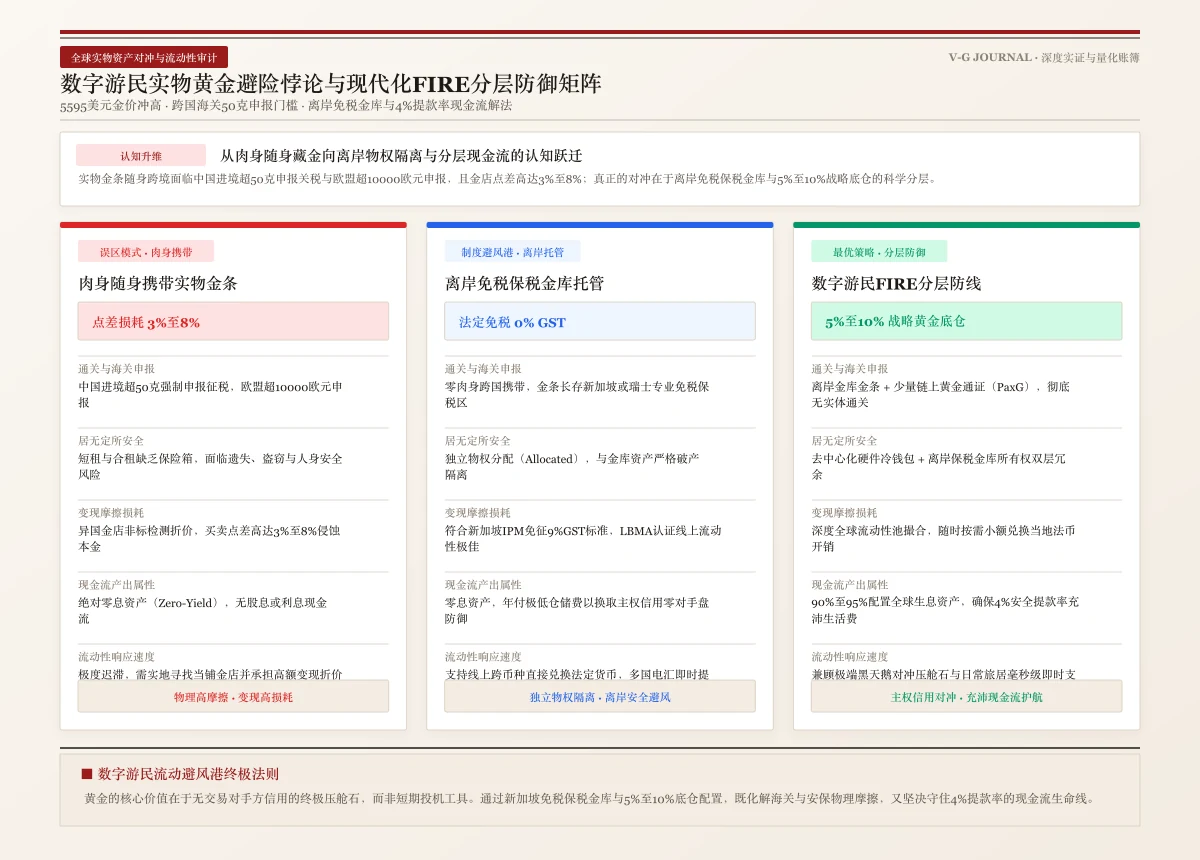
Figure 2: A comparative topology of physical transport friction, offshore bonded vaulting, and FIRE cash-flow preservation.
Modern Safe-Haven Architecture: Offshore Vaults and On-Chain Assets
Resolving the physical friction of gold does not require abandoning the asset altogether. Rather, it demands an upgrade from primitive self-custody to modern institutional storage and sovereign jurisdiction selection.
Architecture I: Singapore Investment Precious Metals (IPM) Tax-Exempt Storage
Institutional wealth managers secure physical gold within neutral, highly secure jurisdictions. Singapore provides one of the world’s most sophisticated legal frameworks for precious metal custody.
Since 2012, the Inland Revenue Authority of Singapore (IRAS) has administered the Investment Precious Metals (IPM) tax exemption framework. Under current tax codes, qualifying investment gold bars with a purity of at least 99.5% minted by London Bullion Market Association (LBMA) accredited refiners—alongside official tender bullion coins like the Canadian Gold Maple Leaf or Chinese Gold Panda—are 100% exempt from Singapore’s 9% Goods and Services Tax (GST) upon import, trade, and storage.
Through facilities at Singapore Le Freeport or established custodians (such as BullionStar or The Safe House), nomads can establish Allocated & Segregated Bullion Accounts:
- Absolute Title Isolation: Each purchased bar bears a unique serial number and assay certificate registered directly in the client’s legal name. The asset resides strictly off the custodian’s balance sheet, ensuring legal segregation and bankruptcy remoteness if the operating entity liquidates.
- Zero Border Crossing: Bullion remains securely stored within high-security, bomb-proof vaults situated within the Changi Airport Free-Trade Zone. Investors buy, sell, or settle across fiat currencies via digital portals, entirely avoiding personal customs declarations.
- Institutional Liquidity: Liquidations settle directly against live LBMA spot market depth, compressing bid-ask spreads down to 0.5%–1.0%, avoiding the predatory haircuts of retail pawnshops.
Architecture II: On-Chain Tokenized Bullion for Tactical Mobility
For nomads heavily integrated into Web3 ecosystems and requiring rapid global mobility across multiple continents, tokenized real-world assets (RWAs) like Pax Gold (PAXG) or Tether Gold (XAUt) offer a lightweight solution.
Pax Gold, for example, represents physical ownership of one fine troy ounce of a 450-ounce London Good Delivery gold bar stored in Brink’s specialized London vaults. Regulated by the New York State Department of Financial Services (NYDFS) and backed by monthly third-party audit reports, PAXG permits holders to retain private key custody on hardware wallets while maintaining immediate spot price exposure. This structure enables instant, global transfers across the Ethereum network without physical border friction. Combined with structured sovereign tax strategies, such as tax residency structuring in Thailand, tokenized gold allows investors to maintain portfolio liquidity without breaching international customs limits.
The FIRE Allocation Rule: Gold within the 4% Withdrawal Framework
Once custody and logistics are optimized, the core strategic question becomes allocation size. Gold is fundamentally a zero-yield asset: it produces no corporate earnings, pays no coupons, generates no rental income, and incurs storage costs over time.
In Financial Independence, Retire Early (FIRE) models, portfolio longevity relies on the standard 4% Safe Withdrawal Rate (SWR). If a retiree converts a major portion of their balance sheet into physical bullion seeking absolute protection, the portfolio’s net cash-flow generation collapses. The investor is then forced to liquidate principal during market downturns to cover living expenses—a trajectory that severely exposes the portfolio to sequence-of-returns risk and long-term inflationary decay.
Historical asset-class backtests provide clear guidance on gold’s role within a diversified portfolio:
- Harry Browne Permanent Portfolio: Allocates equal 25% quarters across Equities, Long-Term Treasury Bonds, Cash, and Gold. Gold functions exclusively as a shock absorber against severe inflation and sovereign debt distress.
- Ray Dalio All-Weather Strategy: Maintains a ~7.5% gold weight, capturing non-correlation with equities and credit to damp maximum drawdowns.
| Allocation Dimension | Physical Self-Custody (Naïve) | Offshore Bonded Vaulting | Nomadic FIRE Tiered Model |
|---|---|---|---|
| Customs & Declarations | Subject to China >50g duties & EU €10k threshold | Zero border transport; Singapore 0% GST exempt | Offshore vaulting + PAXG; complete bypass of physical customs |
| Title & Security | High risk of theft/loss in short-term rentals | Allocated serial numbers; 100% bankruptcy-remote | Dual redundancy: Decentralized cold keys + Offshore vaults |
| Liquidity & Spread | Destructive assaying; local spreads of 3%–8% | Institutional LBMA market depth; spreads ~0.5%–1% | Deep global liquidity pools; seamless fiat conversion |
| Cash-Flow Efficiency | Zero yield; forced liquidation erodes principal | Zero yield; incurs minor annual vault storage fees | 5%–10% Gold Core; 90%–95% productive assets drive 4% SWR |
| Strategic Profile | High physical friction · Severe capital friction | Sovereign asset isolation · Offshore tax efficiency | Fiat systemic hedge · Cash-flow optimized |
For the international nomad, the mathematically sound strategy is to maintain a 5% to 10% strategic gold floor:
- Strategic Core (5%–10%): Held predominantly via tax-exempt allocated vaulting in Singapore, supplemented by tokenized gold (PAXG) for immediate liquidity. This position is not traded for short-term speculation; it serves as a counterparty-free emergency reserve designed to withstand tail-risk events and systemic banking shocks.
- Yield Engine (90%–95%): Consists of global equity index funds (broad-market equities across developed and emerging markets) alongside high-liquidity, short-duration cash equivalents. This active balance sheet powers the portfolio, generating consistent dividends and yields required to fund the 4% Safe Withdrawal Rate indefinitely.
When gold surges toward historic highs, market narratives often skew toward apocalyptic fear. A mature global investor, however, does not regress to carrying physical metal in a backpack, nor do they allow non-yielding assets to compromise their cash flow architecture. By utilizing neutral offshore legal jurisdictions to insulate physical assets and locking gold strictly within a 5% to 10% portfolio boundary, nomads preserve both financial durability and true physical mobility.
Related Research & Topics
Tello Mobile eSIM
SafetyWing Nomad Insurance
* Disclosure: This post contains affiliate links. If you make a purchase through these links, V-G Journal may earn a small commission at no additional cost to you. We only recommend services we independently evaluate and trust.
FIRE and Golf:自由旅居之路
专注于为追求 FIRE 与品质生活的人群提供特惠打球权益与候鸟微度假。不持一砖一瓦,运营品质生活。