Estimating China's True Urban Housing Vacancy Rate: Trillions in Sunk Costs and Global Disposal Experiences
Through academic sampling, smart meter data, and micro-big data cross-validation, this analysis systematically estimates China's urban housing vacancy rate and its differentiated characteristics. It dissects the economic ledger of trillions in sunk capital, idle municipal infrastructure, and balance sheet erosion, while examining disposal experiences from Western and Japanese economies to chart China's path forward.

Executive Summary: Within the current official statistical framework, the publicly disclosed metric is primarily the “area of completed but unsold commodity housing” held by developers (typically 700-800 million square meters). However, “existing vacant homes”—those already sold to households, with clear title but long-term non-occupancy—have remained a blind spot in macroeconomic statistics. Yet, cross-validation from multi-dimensional micro-big data indicates that the comprehensive vacancy rate of existing urban housing nationwide is approaching or even exceeding international warning levels. This represents not just idle physical space, but a resource depletion ledger where vast national savings, real credit, and municipal infrastructure are permanently solidified in concrete.
I. Statistical Blind Spots and the Calculation of True Vacancy Rates
When assessing the health of a nation’s real estate market, the vacancy rate often serves as the most critical barometer of supply-side conditions. International experience suggests a reasonable housing vacancy rate typically falls between 5% and 10% (primarily accounting for frictional vacancies during tenant transitions, property transactions, and renovations). Once the vacancy rate exceeds 10%, it indicates moderate oversupply; exceeding 15% signifies severe structural oversupply.
Due to the lack of normalized public disclosure of comprehensive housing censuses and vacancy registrations, academia and industry primarily rely on multi-source cross-validation through academic sampling, listings on secondary market platforms, smart electricity meters, and nighttime light remote sensing.

Figure 1: A real scene of a deserted public square in a typical expanding new city with clusters of silent high-rise residential buildings in the distance
1. Core Calculation Metrics and Data Slices
Empirical studies from various perspectives reveal a clear evolutionary trajectory and differentiated characteristics in China’s urban housing vacancy rates:
- Academic Institution Sampling Surveys (Broad Scope) The Survey and Research Center for China Household Finance (CHFS) at Southwestern University of Finance and Economics has long tracked micro-level urban housing samples. Its public reports indicate that China’s urban household housing vacancy rate climbed from 18.4% in 2011 to 22.4% in 2013, stabilizing around 21.4% by 2017. Extrapolating this proportion suggests over 65 million vacant housing units nationwide, with third-tier cities exhibiting the highest vacancy rates (around 21.8%), second-tier cities at approximately 22.2%, and first-tier cities at about 16.8%.
- Circulation Listings and Transaction Big Data (Narrow Scope) A report by Beike Research Institute, “Housing Vacancy Rate Survey in 28 Large and Medium-sized Cities,” based on on-site inspections of hundreds of thousands of units, calculated an average vacancy rate of 12.1% in key cities. First-tier cities showed resilience (Shenzhen 5.3%, Beijing 6.0%, Shanghai 7.0%), while second and third-tier cities and outer suburban areas generally saw rates surge to high levels (Nanchang 19.9%, Langfang 19.0%, Foshan 15.3%, Wuhan 14.5%). Research by CICC also estimates that the broad and narrow urban housing vacancy rates fall within the moderately oversupplied range of 12%–13%.
- Smart Meter and Water Meter “Darkness Rate” Calculations Data from the State Grid and smart municipal public utility systems provide more direct micro-level evidence: defining “zero-electricity vacant households” as those with less than 1 kWh or 10 kWh of electricity consumption for six consecutive months, this proportion in peripheral new districts of non-core provincial capitals and third and fourth-tier cities generally ranges between 25% and 35%. In some tourist developments, seaside properties, and resource-depleted counties, the year-round “darkness rate” even exceeds 50%.
2. Overall Stock Assessment: Tens of Millions of Dormant Residences
Combining data from the Seventh National Population Census and the Ministry of Housing and Urban-Rural Development’s comprehensive risk survey of natural disasters, China’s total stock of urban housing is estimated to be between 350 million and 400 million units.
Using the academically recognized conservative comprehensive vacancy rate of 15%–20% for interval estimation:
- The stock of vacant urban housing nationwide is conservatively estimated to be between 60 million and 80 million units.
- Assuming an average urban household size of 2.5 people, these dormant concrete spaces could theoretically accommodate the daily living needs of 150 million to 200 million people.
- Extreme Spatial Disparity: Housing resources in the core areas of first-tier cities and high-net-worth industrial clusters are in a state of low vacancy and tight balance (5%–9%). In contrast, the vast majority of cities experiencing net population outflow, non-core new towns, and large suburban developments are mired in severe structural overstock.
II. The “Five Dimensions of Economic Accounting” for Housing Vacancy Resource Waste
From an economic perspective, vacancy is far more than a trivial matter of “a few rooms without lights on.” Housing construction consumes irreversible capital, credit, energy, and land. When a large number of completed homes remain unused for extended periods, society bears a heavy and persistent hidden cost of friction.
Synthesizing micro-financial, municipal operations, and macro-elemental allocation, the cost of housing vacancy can be categorized into five dimensions:
【Comprehensive Loss Accounting Dimensions for Housing Vacancy】
Total Societal Economic Loss = Physical Asset Depreciation + Capital Sunk Opportunity Cost + Lost Potential Housing Utility + Municipal Infrastructure Operational Deficit + Balance Sheet Erosion
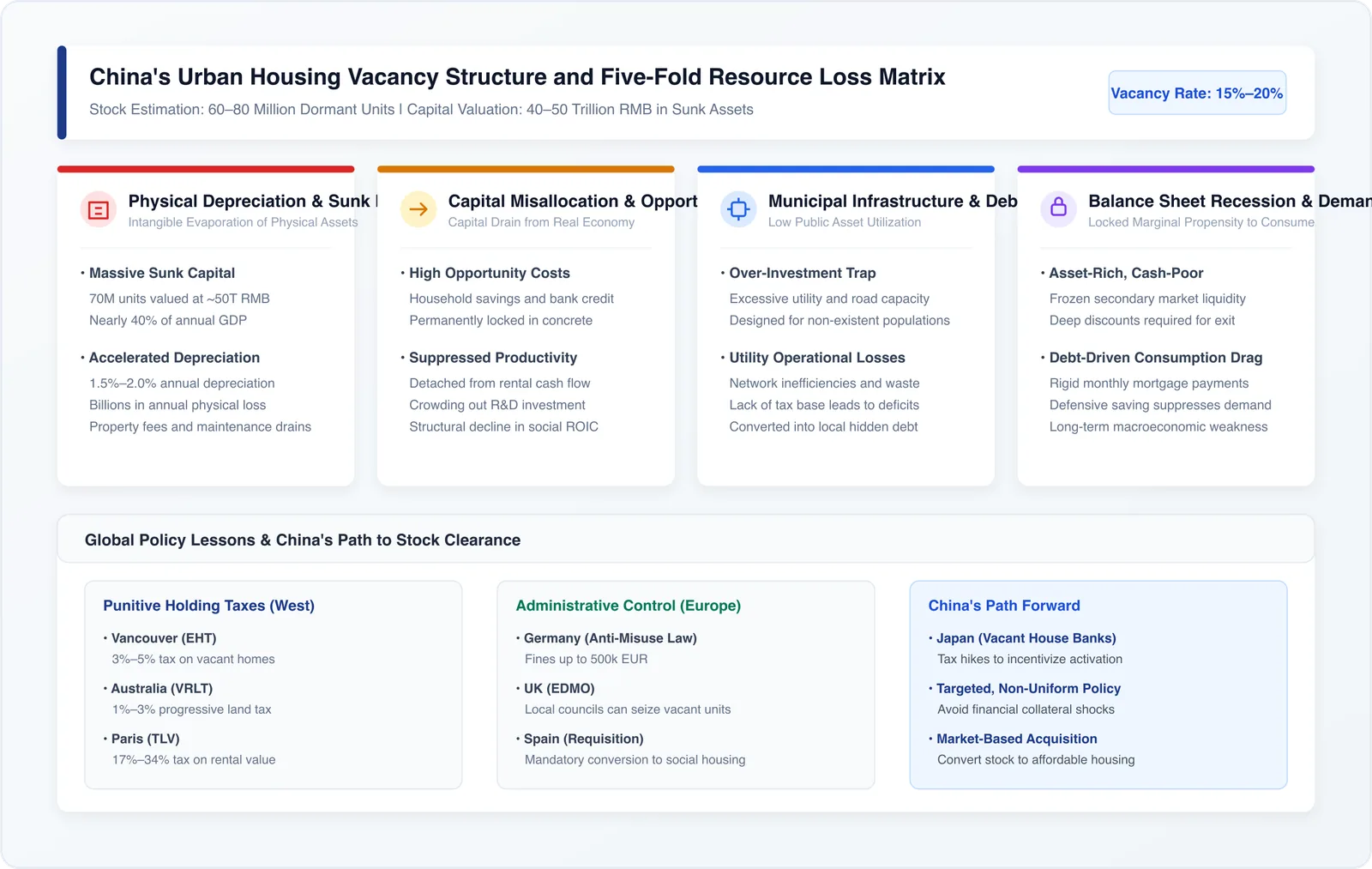
Figure 2: Matrix for accounting the structural characteristics of China's existing housing vacancy and multi-dimensional resource losses
Ledger 1: Physical Asset Depreciation and Rigid Maintenance Fund Sinking
Steel-reinforced concrete buildings are not perpetual assets. Their design lifespan is typically 50-70 years, with an annual physical and functional depreciation rate of 1.5%-2.0%.
- Net Asset Loss: Estimating 70 million vacant units at a conservative average value of 700,000 yuan per unit, the total book value of solidified assets ranges from 45 to 50 trillion yuan, nearly 40% of annual GDP. At a 1.5% annual physical depreciation rate, the value lost annually due to weathering and aging amounts to approximately 700 billion yuan.
- Accelerated Decay Due to Lack of Maintenance: Long-term unoccupied homes lack air circulation and pipe maintenance, leading to faster deterioration of waterproofing membranes, rusting pipes, and wall damage compared to occupied homes.
- Cash Flow Consumption for Maintaining Empty Shells: Even without occupancy, owners must still pay property management fees for vacant units and contribute to public repair funds. The annual cost of maintaining these static physical shells nationwide is in the hundreds of billions of yuan.
Ledger 2: Capital Misallocation and “Blood Loss” from Real Industries
The core engine of economic growth is the sustained improvement of Total Factor Productivity (TFP). The return on investment (ROIC) of capital allocated to different factors of production directly determines the macroeconomic potential growth rate.
Over the past two decades of a one-sided real estate boom, tens of trillions of yuan, in the form of lifelong savings and commercial bank mortgages, have been continuously solidified in real estate. Following the unfolding mechanism of Negative Household Credit Growth and Balance Sheet Recession, these concrete assets, detached from real production and dividend generation, can no longer contribute to increased labor productivity. High-quality factors that should have been invested in productive real sectors like cutting-edge chip research, precision manufacturing equipment upgrades, and modern biomedicine are locked up in illiquid buildings, creating an irrecoverable opportunity cost.
Ledger 3: Zero Potential Housing Service Utility and Evaporation of Virtual Rent
In the National Economic Accounting (GDP) system, international practice typically uses the “Owner-Occupied Housing Imputed Rent” method to account for the value added by housing services from owner-occupied homes.
Based on the intrinsic logic of asset and cash flow pricing, the intrinsic fair value of housing is fundamentally determined by the present value of future rents it can generate, as elucidated in Systematic Calibration of Price-to-Rent Ratio and Rental Yield. If a property remains vacant long-term, neither rented out nor owner-occupied, its contribution to housing service value added in macroeconomic accounting becomes zero. Estimating 60 million vacant units with a conservative nominal monthly rent of 1,200 yuan, the annual loss of potential rental utility exceeds 800 billion yuan. This real utility, which could have supported the flow of the service sector and met the housing needs of migrant workers, has failed to play any substantive role in the economic cycle.
Ledger 4: Operational Losses from Municipal Infrastructure’s “Big Horse Pulling a Small Cart”
Real estate development is never an isolated construction of individual communities; it is accompanied by significant upfront investment in municipal roads, power substations, underground utility tunnels, central heating and water supply networks, rail transit, and public schools and hospitals.
| Accounting Dimension | Full Occupancy State | High Vacancy State (30%-50% Vacancy Rate) | Economic Cost Incurred |
|---|---|---|---|
| Potable and Recycled Water Networks | Normal water flow, water quality maintained, stable pressure | Increased stagnant water sections, accumulation of precipitates at the end, higher risk of pipe bursts | Frequent pipe flushing and maintenance, significantly increased marginal costs for water operations |
| Central Heating Systems | Balanced thermal load, stable indoor heat resistance and conduction | “Sandwiched vacancies” lead to heat dissipation, drastic drop in heating efficiency | Heating companies operate inefficiently, massive energy waste and fiscal subsidies to compensate |
| Public Transportation and Micro-circulation | High passenger flow, fares and surrounding commercial activity subsidize operations | Buses run empty, stations have sparse passenger flow, service frequency significantly reduced | Municipalities bear significant annual losses and subsidies for public transport |
| Community Schools and Healthcare | Full capacity operation of classrooms, intensive allocation of medical resources | Shrinking class sizes, idle teaching staff, high depreciation costs for hardware | Fiscal public service funds fail to achieve expected agglomeration effects |
In environments lacking stable resident populations to provide living consumption and tax base support, new district utility operations fall into a vicious cycle of long-term reliance on fiscal subsidies, ultimately exacerbating local hidden debt.
Ledger 5: Balance Sheet Recession and the Strangulation of Domestic Demand
Owners of vacant housing are typically urban middle-class families and investors holding multiple properties. On the surface, their assets still record values in the millions or even tens of millions of yuan. However, during a downturn with lengthening secondary market transaction cycles and high transaction friction costs, these vacant assets in non-core areas have extremely poor liquidity, representing classic “asset-rich, cash-poor” individuals.
To maintain these assets, which provide no stable net rental cash flow, households must still make rigid monthly mortgage payments of thousands to tens of thousands of yuan. The interplay between rigid debt and illiquid assets forces households to adopt self-protective measures such as reducing daily consumption and increasing precautionary savings, which manifests macroeconomically as persistent weakness in effective aggregate demand.
III. Disposal of Vacant Properties in Major Global Economies and Institutional Lessons
In mature international markets, housing possesses a dual characteristic: it is both “private property” and a “social public resource.” Countries, based on the core nature of their domestic housing challenges—whether “shortage in central urban areas” or “aging and shrinking decline”—have developed different disposal paradigms.
1. Tiered Punitive Holding Taxes: Raising the Cost of Idleness (North American and Oceanian Model)
The core mechanism of this model is to apply precise pressure through high taxes and fees, completely eliminating the space for speculators to “hoard at low cost,” forcing them to choose between “listing at a reduced price for sale” or “listing at a reduced price for long-term rental.”
- Canada (Multi-tiered Progressive Vacancy Tax) Vancouver pioneered the Empty Homes Tax (EHT) in 2017, imposing a property tax on non-principal residences that are not self-occupied or rented out for at least six months annually. The tax rate has escalated from an initial 1% to the current 3%-5% (based on the latest assessed market value). A home valued at C$1 million requires an annual tax payment of C$30,000-C$50,000 (approximately RMB 160,000-260,000) out of pocket. At the federal level, the Underutilized Housing Tax (UHT) was introduced, imposing a 1% special tax annually on vacant homes owned by non-resident foreigners.
- Australia (Victoria’s VRLT) Victoria, where Melbourne is located, implements the Vacant Residential Land Tax (VRLT). If a property remains vacant for more than six months in a year, the tax is levied at 1% of the Capital Improved Value (CIV) in the first year, rising to 2% in the second year, and 3% in the third year and beyond, using a tiered progressive mechanism to force property circulation.
- France (Tax on Unoccupied Housing, TLV) In cities designated as “tense zones” (Zones Tendues) with high demand and short supply, such as Greater Paris, unoccupied housing vacant for over a year is subject to the Tax on Unoccupied Housing. The tax rate is 17% of the nominal rental value in the first year, significantly increasing to 34% in the second year and thereafter.
- United Kingdom (Council Tax Premium Penalty) UK local councils have discretion over the Council Tax Empty Homes Premium for long-term vacant properties. For homes vacant for 2, 5, or 10 years or more, the Council Tax collection rate can be increased to 200%, 300%, or even 400% of the normal rate, respectively.
2. Administrative Intervention and Compulsory Leasing: Countering Speculation and Managing Properties (Continental European Model)
Some European countries consider housing accessibility a fundamental bottom line for people’s livelihoods, granting public authorities deeper administrative intervention powers.
- Germany’s “Prohibition of Housing Misuse” Law (Zweckentfremdungsverbot) Key cities like Berlin, Hamburg, and Munich enforce strict regulations stipulating that urban housing can generally only be used for normal residential purposes. Without legal renovation approval or force majeure, leaving a property vacant for more than three months without renting it out is illegal, carrying a hefty administrative fine of up to €500,000. For properties maliciously and persistently left vacant without rectification, local governments have the right to appoint a temporary custodian to forcibly list them for rent.
- UK Empty Dwelling Management Orders (EDMO) Under the UK’s Housing Act 2004, if a private dwelling has been vacant for over two years and poses a risk of disrepair or public safety issues, local councils can apply to the court for an Empty Dwelling Management Order (EDMO). Without expropriating the original title, the government forcibly takes control of the property, uses public funds for renovation and refurbishment, and then rents it out to residents on the public housing waiting list. The rent, after deducting renovation and operating costs, is returned to the owner, who loses the actual use and rental pricing rights during the management period.
- Spanish Temporary Expropriation Mechanism The Autonomous Community of Catalonia and the Barcelona City Council have implemented strong measures against accumulated vacant stock held by banks and large investment funds. If a property owned by a commercial entity remains vacant for over two years, the government has the right to initiate a compulsory temporary expropriation for a period of 4 to 10 years, directly converting it into social housing for low-income families.
3. Clearing and Acquisition in the Face of Population Decline: Land Banks and Tax Levers (Japanese and American Model)
Facing irreversible negative population growth, aging, and regional contraction, the focus in some areas of Japan and the US has shifted from “preventing speculation” to “preventing abandonment and decay.”
- Japan’s “Special Measures Act for Akiya (Vacant Houses)” Faced with a national stock of over 9 million vacant houses (Akiya), early Japanese laws allowed for a reduction in property tax on land beneath buildings to one-sixth, leading many owners to let old houses rot in place rather than demolish them. The Special Measures Act, enacted in 2015 and subsequently amended, completely closed this loophole: “Specified vacant houses” or “poorly managed vacant houses” identified as posing a risk of collapse or damaging the cityscape are stripped of tax benefits, causing their land property tax to skyrocket sixfold. If owners refuse to dispose of them, the government can implement administrative execution (forced demolition) and fully recover demolition costs. Complementary “Akiya Banks” (Vacant House Banks) transfer titles at symbolic, extremely low prices (even free of charge) to young people relocating to the area.
- US “Land Banks” in Rust Belt Cities In deindustrializing cities like Detroit and Cleveland, governments have established quasi-public “Land Banks” to rapidly complete foreclosure and title acquisition of vacant, dilapidated homes with long-term delinquent property taxes and substantial owner abandonment. Land Banks categorize the stock for disposal: properties with repair value are sold at a discount to community families for self-occupancy; dilapidated homes with no residential value are demolished, and the land is leveled for community agriculture or ecological corridors, preventing vacant derelict properties from becoming crime hotspots that drag down the overall asset value of surrounding neighborhoods.
IV. Underlying Paradoxes and Realistic Paths for China’s Stock Resolution
Comparing the governance toolkits of mature global economies, there are often calls to “immediately emulate Canada’s punitive vacancy tax.” However, from the perspective of macroeconomic financial stability and spatial distribution, China cannot simply mechanically adopt a single tax penalty.
1. Why China Cannot Aggressively Adopt a Single Vacancy Tax?
- Collateral Safety and Stampede Risk: At a critical juncture where land transfer revenue is declining and financial institutions are focused on systemic risk prevention on the asset side, the core credit assets of commercial banks and the collateral of local government financing vehicles are highly anchored to real estate valuations. Imposing a severe punitive vacancy tax at this time would inevitably trigger a large-scale panic listing of existing second-hand homes in the short term. The irrational selling of the second-hand housing market would rapidly breach the value floor of collateral, triggering a chain reaction in the credit system.
- “Ineffective Dead Supply” Amidst Spatial Mismatch: The effectiveness of taxes in Vancouver, Sydney, or Paris relies on the strong rental demand in their core urban areas; the tax merely breaks the speculative psychology of landlords “hoarding for price increases.” A significant portion of China’s tens of millions of vacant homes are not located in first-tier core areas with strong industrial absorption capacity but are concentrated in new towns or large suburban developments in third, fourth, and fifth-tier cities lacking industrial support and experiencing net population outflow. In these areas, even if landlords are willing to offer rent-free periods or even subsidize property management fees, there are simply not enough young workers to fill the space. Imposing heavy taxes on such “ineffective dead supply” would neither stimulate rental utility nor directly destroy the liquidity defenses of individual households.
- Realistic Obstacles to Underlying Data Integration: The technical prerequisite for imposing a vacancy tax is the nationwide unified registration and networking of real estate, clear and transparent tracing of individual property rights, and system-level integration of energy consumption data for water, electricity, gas, and heating. In the game of interests redistribution and transparency of gray assets, refining the data foundation still requires time.
2. Exploring Paths for Resolution in the Stock Era
To escape the quagmire of solidified concrete resources, a balanced approach is needed that considers financial stability, market laws, and social security, progressively promoting stock clearance in a phased manner:
| Energy Level and Classification | Core Disposal Strategy | Implementation Path |
|---|---|---|
| High Energy Level Core Areas | Guiding Revitalization: Tax Optimization to Promote Renting | Standardizing long-term rental intermediaries, tax incentives to guide into affordable rental housing |
| Weak Energy Level Shrinking Areas | Strict Control of New Supply: Natural Depreciation and Clearance | Reducing new residential land quotas, promoting return of land to agriculture and ecological greening |
| Existing Unsold Stock | Acquisition Instead of Construction: Market-based Discounted Purchase | Local state-owned enterprises acquire and convert into affordable housing at market-based rental yields |
- City-Specific Policies: Energy Level Differentiation and Categorized Governance
- In high energy level and population-inflow core cities (Beijing, Shanghai, Guangzhou, Shenzhen, and core provincial capitals): Supply is generally tight, and policy focus should shift to unblocking rental bottlenecks. Through mechanisms like individual income tax deductions for long-term rental contracts, standardizing professional housing rental operations, and exploring voluntary entry into affordable rental housing reserves, market-based approaches can guide vacant properties into effective rental supply.
- In population net-outflow shrinking areas and county peripheries: Firmly halt blind expansion of new towns and completely abandon the incremental mindset. For areas already experiencing high vacancy rates, frankly accept the process of natural market depreciation and clearance. Gradually reduce residential land quotas in urban planning, return land to agriculture or green spaces, and curb the disorderly expansion of municipal networks and public debt.
- “Acquisition Instead of Construction” and Market-Based Stock Acquisition: Explore local state-owned enterprises acquiring completed but unsold commodity housing at a discount as affordable housing, consistent with the logic of “public funds acquiring depreciated assets” internationally. The core principle here is adherence to market-oriented and legal principles; the acquisition price must be strictly matched with future affordable housing rental yields to prevent moral hazard and fiscal bailouts.
- Solidify the Underlying Data Foundation for Real Estate: Building upon the national unified real estate registration, gradually integrate micro-level data maps of water, electricity, gas, heating consumption readings, social security and individual income tax payments, and property ownership. Only by understanding the true structural picture and physical distribution of vacancies can future macroeconomic regulation and stock asset revitalization be based on a scientific and rigorous decision-making foundation.
Conclusion
After decades of credit expansion and a frenzy of urbanization, tens of millions of silent vacant homes across China have fulfilled their historical mission as investment vehicles and credit leverage.
However, physical and economic laws do not shift with human will. As the total population irreversibly enters a contractionary phase, concrete shells lacking cash flow support are shedding their aura as financial assets, transforming into a heavy burden that continuously incurs physical depreciation, consumes liquidity, and leaves imprints on micro-balance sheets. Managing this long and prudent process of asset depreciation and clearance will be the most challenging systemic engineering task for macroeconomic governance in the coming decades.
Related Research & Topics
Tello Mobile eSIM
SafetyWing Nomad Insurance
* Disclosure: This post contains affiliate links. If you make a purchase through these links, V-G Journal may earn a small commission at no additional cost to you. We only recommend services we independently evaluate and trust.
FIRE and Golf:自由旅居之路
专注于为追求 FIRE 与品质生活的人群提供特惠打球权益与候鸟微度假。不持一砖一瓦,运营品质生活。