The Burden of Proof: Bureaucratic Walls, Obfuscated Persecution, and Taiwan’s Asylum Paradox
The forced deportation of former CCTV presenter Cheng Wanjun at Taoyuan Airport highlights the systemic traps facing mainland dissidents: authoritarian legal reclassification that erases evidence of persecution, juxtaposed against Taiwan's hardened anti-infiltration border policies.

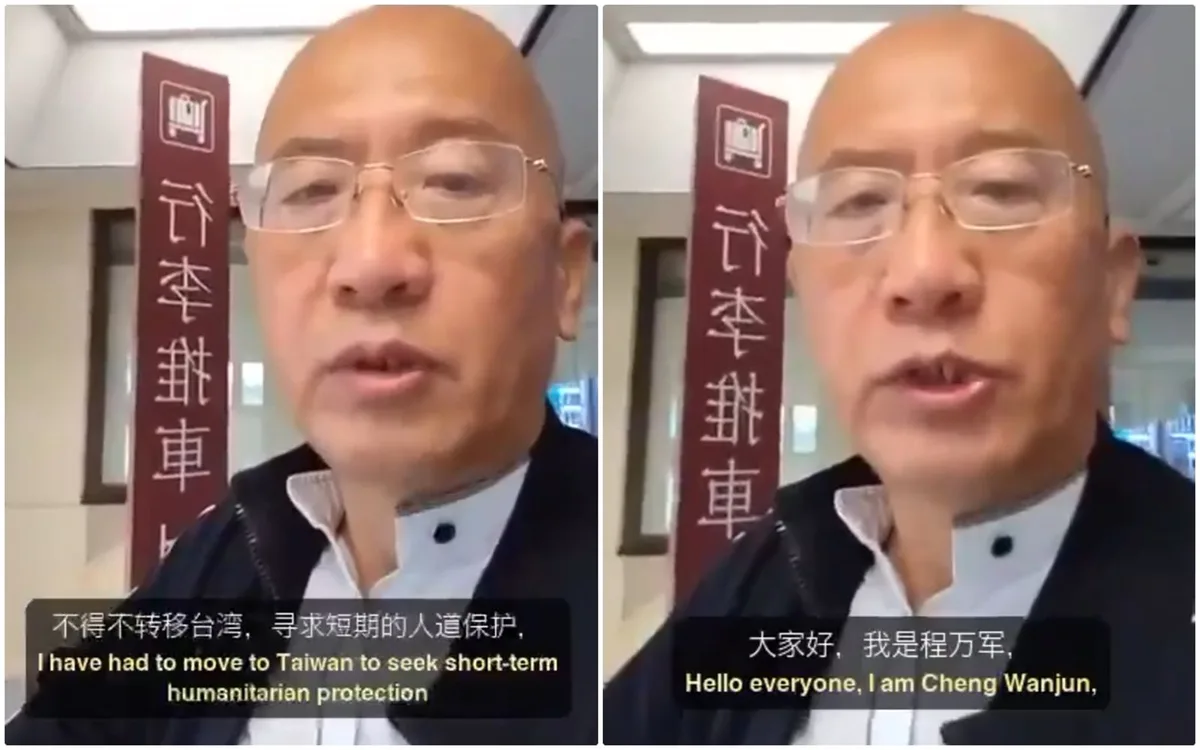
Figure 1: Veteran Chinese journalist, historical essayist, and former CCTV presenter Cheng Wanjun.
On November 2, 2026, Cheng Wanjun—a veteran Chinese media figure, former host of CCTV’s Legal Report, and former executive editor-in-chief of the Ministry of Justice’s Law and Life magazine—staged a layover asylum plea (“airport jump”) at Taiwan’s Taoyuan International Airport while transiting from Bangkok to Beijing. He publicly appealed to the Taiwanese government for temporary humanitarian protection while seeking resettlement in Europe or North America.
Within forty-eight hours, Taiwan’s National Immigration Agency (NIA), acting in concert with the Mainland Affairs Council (MAC), rejected his request and forcibly repatriated him to Bangkok under the Immigration Act. The official rationale cited a lack of verifiable third-party evidence of persecution, valid Chinese transit credentials without entry authorization, and an uncompromised departure from his home country. Beyond the specifics of the case lies a deeper structural conflict: the deliberate opacity of authoritarian judicial machinery colliding head-on with Taiwan’s security-driven, anti-infiltration border regime.
From Institutional Intellectual to Persona Non Grata: The Fall of a Moderate
Cheng Wanjun was never a radical street activist. Public records show he was born in Inner Mongolia in 1968 and graduated from the Department of Foreign Languages at Jilin University in 1991. He spent decades working within state-affiliated media, publishing historical commentaries such as Who Rules East Asia and Inverse Selection, while eventually serving as executive editor-in-chief for the Ministry of Justice’s flagship publication and presenting on CCTV. Political commentator Mo Zhixu, a former colleague at China Business Times, recalled Cheng as a mild-mannered scholar with deep essayistic craft—hardly the archetype of a political exile.
The trajectory altered fundamentally in 2019. According to Cheng’s self-published accounts on overseas media platforms, internal commentary he delivered during institutional staff meetings was secretly recorded by colleagues across hundreds of audio files and submitted to security authorities. Following high-level directives, his department underwent an aggressive political purge, culminating in Cheng’s arrest at Beijing Capital International Airport in November 2019.
When state prosecutors moved forward, they eschewed political charges such as incitement or subversion. Instead, they deployed the regime’s preferred catch-all offense: “illegal business operations.” Cheng was sentenced to six years in prison.
This tactic represents a standard play in modern authoritarian statecraft. By reclassifying ideological dissent as a technical economic crime, the state neutralizes international human rights scrutiny while effectively purging the individual’s political footprint from public court databases. When law becomes an asymmetric tool of state governance, those who complete their sentences emerge without an official judicial document capable of proving they were imprisoned for political speech. This deliberate evidentiary vacuum creates a fatal vulnerability when navigating foreign asylum processes.
Forty-Eight Hours in Taoyuan: Why the MAC Built an Evidentiary Wall
Following his release in 2025, realizing his prison manuscripts could never see public light within mainland China, Cheng used a valid passport to depart legally for Bangkok in October 2026. Although he registered an asylum claim with the United Nations High Commissioner for Refugees (UNHCR) office in Thailand, the geopolitical environment in Southeast Asia offered little security. Haunted by the threat of transnational abduction or extrajudicial rendition, he purchased a transit ticket to Beijing via Taipei, choosing the controlled transit area of Taoyuan Airport to record a public video pleading for emergency intervention.
Taiwan’s administrative apparatus reacted with immediate caution. On November 4, MAC Deputy Minister and Spokesperson Liang Wen-jie, alongside the NIA, announced the formal rejection of Cheng’s request for temporary detention and ordered his return to his point of embarkation. The decision rested on three core determinations:
- Absence of Objective Third-Party Proof: The MAC emphasized that apart from Cheng’s personal testimony, official channels could locate no corroborating third-party documentation—such as public indictments, arrest warrants, or verified international NGO dossiers—confirming active political persecution.
- Unrestricted Physical Freedom and Travel Credentials: Cheng traveled on an active, unrevoked Chinese passport, had departed through official border control, and possessed no record of post-release travel restrictions, failing to meet the administrative threshold of an “imminent and direct threat to life.”
- Border Defense and Anti-Infiltration Priorities: Taoyuan Airport sees multiple unsanctioned transit asylum attempts annually. Granting entry or extended stay without prior third-country guarantees would, in the view of Taiwanese authorities, compromise the integrity of the island’s border defense.
| Audit Dimension | Case Fact Pattern (Cheng Wanjun) | Administrative Standard (MAC / NIA) | Fact-Checking & Structural Paradox |
|---|---|---|---|
| Evidence of Persecution | Convicted in 2019 under “illegal business operations” following internal speech reports; 6-year sentence unlisted in public databases. | Mandates official court judgments, detention notices, or verified documentation from recognized international bodies. | Authoritarian criminalization of dissent as economic fraud leaves victims unable to fulfill foreign evidentiary burdens. |
| Travel Credentials | Departed legally using a valid standard Chinese passport without triggering domestic border control flags. | Unrestricted travel documents indicate a lack of immediate, active physical persecution by home authorities. | Successful departure without triggering border flags is interpreted by foreign inspectors as evidence of safety. |
| Transit Node | Asylum application filed with UNHCR Bangkok; Thailand is non-signatory to the 1951 Refugee Convention. | Ineligible for entry; subject to Article 50 of the Immigration Act, requiring return to the immediate port of embarkation. | Creates a legal vacuum between non-signatory regional hubs and strict transit border protocols. |
| Third-Country Guarantee | No pre-arranged acceptance or humanitarian visa commitments from Western nations prior to arrival. | High risk of prolonged illegal stay; inability to absorb open-ended national security verification costs. | Lacks the structural guarantees seen in successful cases (e.g., Chen Siming), which relied on pre-coordinated diplomatic backing. |
The deportation process exposed severe friction. The NIA reported that Cheng became highly combative and engaged in self-harm behaviors, forcing officers to employ physical restraints to maintain flight safety. Cheng subsequently released video statements condemning the enforcement measures as excessive, asserting physical and psychological harm, and declaring his intention to lodge a formal complaint with Taiwan’s Control Yuan.
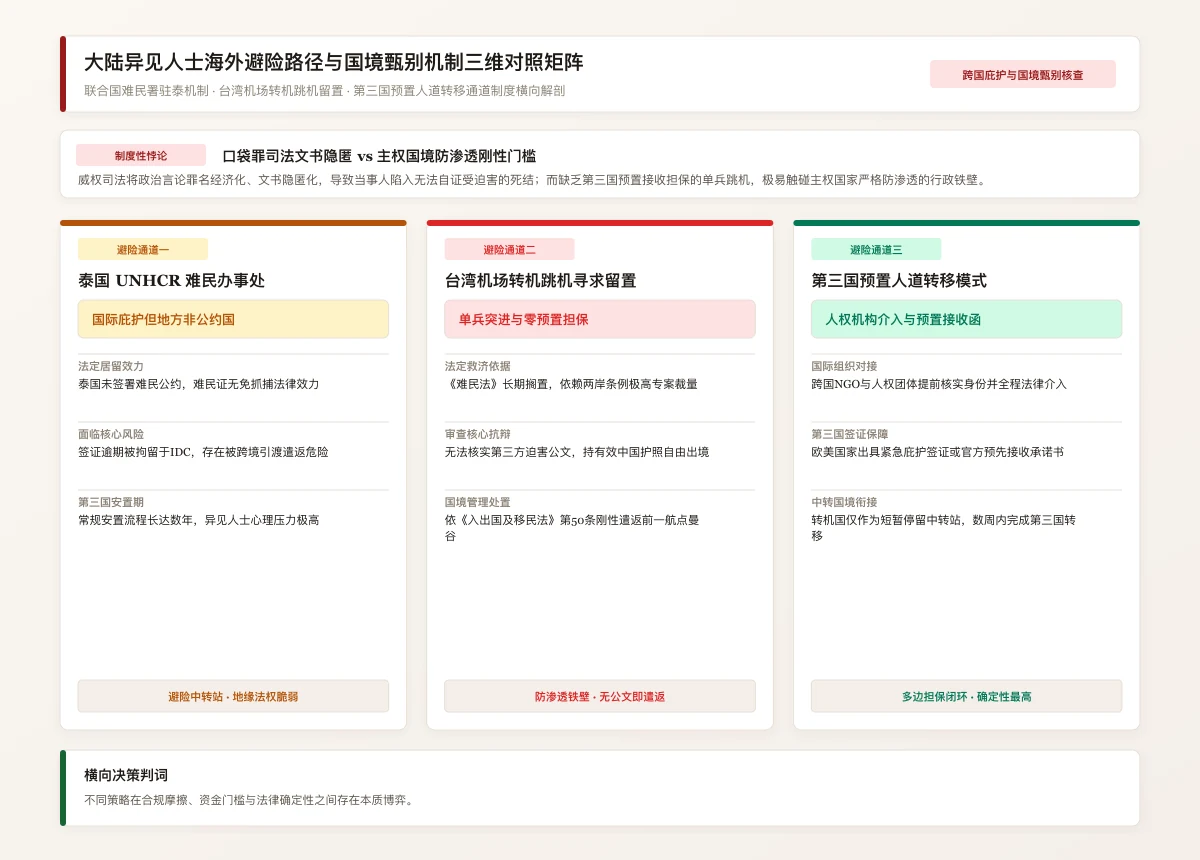
Figure 2: Multi-dimensional comparison of cross-border humanitarian protection channels and verification thresholds.
Institutional Reefs: The Frozen Refugee Act and Sovereign Ambiguity
Cheng’s case brings back into focus a structural reality that contrasts sharping with popular perceptions of Taiwan as an unconditional humanitarian sanctuary: Taiwan has no codified Refugee Act.
Legislative efforts to enact a formal framework have remained stalled for nearly two decades. The core bottleneck is constitutional and geopolitical. Incorporating mainland Chinese citizens into a generic refugee law framework implies recognizing cross-strait relations as an inter-state (nation-to-nation) dynamic, triggering delicate sovereignty concerns. Conversely, explicitly excluding mainland residents exposes the legal framework to critiques of human rights asymmetry. Compounding these legal dilemmas is the posture of Taiwan’s national security apparatus, which remains vigilant against the risk of intelligence penetration concealed within asymmetric asylum flows.
In the absence of a dedicated legal pathway, Taiwan processes mainland dissidents through ad-hoc mechanisms anchored in Article 17 of the Act Governing Relations between the People of the Taiwan Area and the Mainland Area, enforcing exceptionally high administrative thresholds.
A comparison with the case of Hunan dissident Chen Siming in 2023 illustrates this divergence. Chen’s successful transition through Taoyuan Airport to Canada was not achieved through unilateral Taiwanese authorization. Rather, it relied on pre-arranged intervention by international human rights organizations, which secured emergency asylum visas and travel guarantees from the Canadian government prior to his movement. Cheng Wanjun, attempting an uncoordinated maneuver without third-country documentation, ran directly into the hard perimeter of Taiwan’s border controls.
The Trap of Non-Signatory Transit in Southeast Asia
Repatriation to Bangkok returns Cheng to an environment defined by deep legal ambiguity. While many seeking exit view Southeast Asia as an accessible first step, the operational realities detailed in gray-zone residency dynamics in Southeast Asia highlight a crucial vulnerability: Thailand is not a signatory to the 1951 UN Refugee Convention.
Although the UNHCR maintains a regional presence in Bangkok and issues refugee status documentation, local law enforcement does not recognize these documents as legal authorization to reside. Once immigration visas expire, dissidents are classified as undocumented migrants, subjecting them to detention within the Immigration Detention Center (IDC). Precedent shows that protection status does not fully shield individuals from extraterritorial law enforcement or state-level extradition requests. This vulnerability often drives individuals to attempt high-risk transit maneuvers in international airports.
Cheng Wanjun’s journey—from a state broadcaster and legal editor to a six-year prisoner, and ultimately to a restrained detainee deported from Taoyuan—strips away romantic assumptions regarding international political asylum. It leaves a stark administrative reality: without verifiable documentation, institutional backing, and explicit third-country commitments, moral appeals alone struggle to breach modern state security architectures. Left navigating the gaps between cross-strait legal complexities and non-signatory transit zones, individual dissidents bear the full weight of citizens navigating state machinery and border barriers.
Related Research & Topics
Tello Mobile eSIM
SafetyWing Nomad Insurance
* Disclosure: This post contains affiliate links. If you make a purchase through these links, V-G Journal may earn a small commission at no additional cost to you. We only recommend services we independently evaluate and trust.
FIRE and Golf:自由旅居之路
专注于为追求 FIRE 与品质生活的人群提供特惠打球权益与候鸟微度假。不持一砖一瓦,运营品质生活。