Unveiling the Infrastructure Nexus: Policy Banks, State Capital, and the Penetrating Audit
The simultaneous investigations of two senior officials from China Development Bank and a provincial state-owned asset manager signal a systemic crackdown. This essay dissects how policy bank lending and local state capital project allocation formed a rent-seeking nexus, now being dismantled by penetrating audits and lifetime accountability mechanisms.

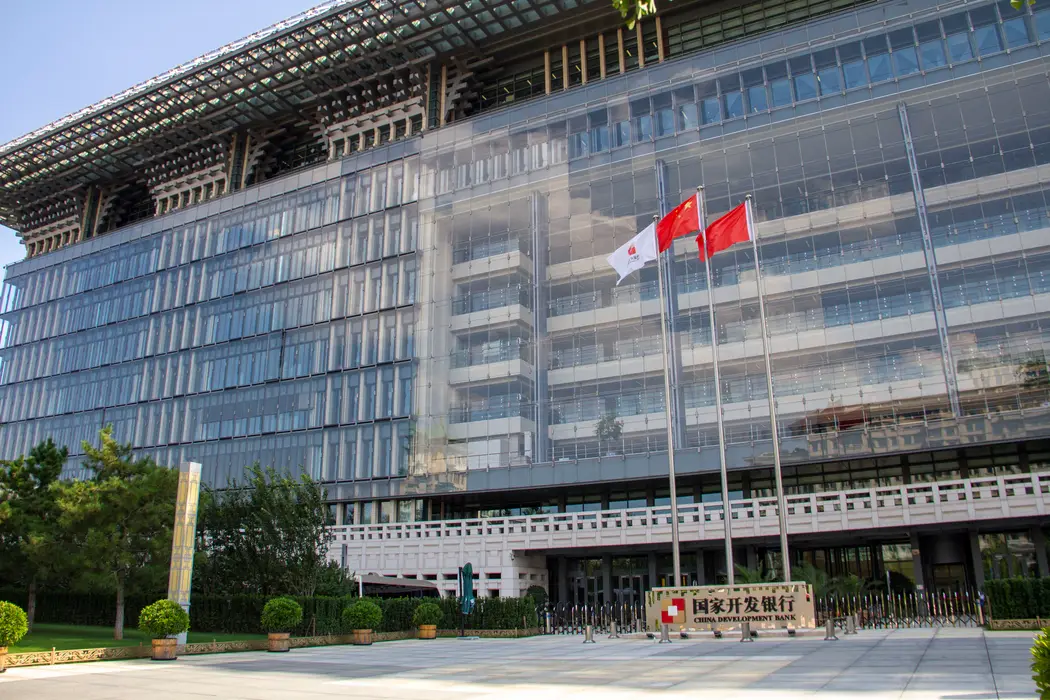
Figure 1: The China Development Bank’s Beijing Headquarters. On November 5, 2026, the Central Commission for Discipline Inspection (CCDI) and the National Supervisory Commission (NSC) announced that Li Jingbo, former Senior Expert at the CDB Liaoning Branch, was under investigation. This coincided with the fall of Cheng Guoxun, former Chairman of Qinghai State-owned Asset Investment Management Co., Ltd., signaling a deepening anti-corruption drive within both the financial sector and local state-owned enterprises.
On November 5, 2026, the Central Commission for Discipline Inspection (CCDI) and the National Supervisory Commission (NSC) issued an authoritative statement: Li Jingbo, former Senior Expert at the China Development Bank (CDB) Liaoning Branch, was under investigation for severe disciplinary violations by the CCDI’s disciplinary inspection and supervision group stationed at CDB, in conjunction with the Panjin City Supervisory Commission in Liaoning Province. Concurrently, the Qinghai Provincial Commission for Discipline Inspection and Supervisory Commission announced that Cheng Guoxun, former Party Secretary and Chairman of Qinghai State-owned Asset Investment Management Co., Ltd. (Qinghai Guotou), was also under investigation for severe disciplinary violations.
The simultaneous probes into two long-serving officials—one from the north, one from the west—both deeply entrenched in critical roles within infrastructure finance and state-owned asset management, are not isolated, localized incidents. Rather, they signal a systemic reckoning: a penetrating audit and a lifetime accountability mechanism now dismantling the deeply intertwined nexus of policy bank lending authority and local state-owned enterprise (SOE) project allocation power, a system forged over more than a decade.
Opaque Policy Finance and Expert Endorsement: The Logic of Cross-Jurisdictional Investigation Under Lending Authority
During the expansionary cycle when development finance broadly underpinned shantytown redevelopment and urban infrastructure construction, the China Development Bank, as the nation’s largest provider of medium-to-long-term infrastructure credit, saw its provincial branch heads and executive vice presidents control the flow of tens of billions in capital. Public records show Li Jingbo’s long tenure at the CDB Liaoning Branch, where he served as Vice President and concurrently as Deputy Director of the Joint Working Office for Credit Construction between the Liaoning Provincial Government and CDB, as well as Deputy Head of the Shenyang Development Finance Cooperation Leading Group. From massive special loans for shantytown redevelopment to syndicated credit lines for key heavy industries and municipal road networks, branch principals wielded immense administrative discretion over project approval and loan authorization.
Notably, after stepping down from his administrative role as Vice President, Li Jingbo transitioned to a “Senior Expert” position at the CDB Liaoning Branch. Within the professional hierarchy of central financial enterprises, while a Senior Expert nominally exits direct administrative management and approval sequences, in practice, they often attend major project review committees and undertake expert review and deliberation duties for key credit proposals. This institutional arrangement—“exiting the administrative frontline while retaining professional authority”—can easily breed covert “endorsement-for-rent” channels in areas with relatively weak oversight. Such channels allow individuals to exert implicit influence by “greeting” former subordinates or participating in project reviews, or by acting as credit lobbyists for specific urban investment projects or private partners, securing substantial consulting fees or kickbacks.
The investigation into Li Jingbo adopted a joint operational model: “CCDI’s Disciplinary Inspection and Supervision Group stationed at CDB + Panjin City Supervisory Commission in Liaoning Province.” This jurisdictional structure, led by the disciplinary body embedded within the central financial enterprise and coordinating cross-jurisdictional investigations with local supervisory commissions, effectively severs the complex networks of personal connections and favors that financial system cadres cultivate over decades in their local domains. It breaks through local protectionism, providing a rigid institutional guarantee for thoroughly investigating historical irregularities in lending and opaque transactions.
Local SOE Platforms and the Failure of the Firewall: LGFV Debt Pools and the “First-in-Command” Rent-Seeking Blind Spot
At the other end of the infrastructure finance chain are local state-owned asset investment and financing platforms, exemplified by Qinghai State-owned Asset Investment Management Co., Ltd. (Qinghai Guotou). Cheng Guoxun, whose downfall was announced on the same day, is a certified public accountant who held key positions in major Qinghai SOEs for an extended period. He served as Deputy General Manager and Chief Accountant, General Manager, and Chairman of Qinghai Provincial Investment Group Co., Ltd., and concurrently as Chairman of the listed company Jinrui Mining for many years. In March 2022, he became Party Secretary and Chairman of Qinghai Guotou, a position he held until his removal in February 2024.
As Qinghai’s core provincial state capital operating company and a major shareholder in financial institutions like Bank of Qinghai, Qinghai Guotou plays an irreplaceable role as a credit circulation hub for strategic emerging industries, mineral and chemical investments, and major infrastructure financing across the province. In traditional local SOE operating models, local governments often attempt to package urban investment platforms or state-owned asset operating entities as independent, self-sustaining corporate bodies, thereby establishing a “governance firewall” between fiscal and financial debt.
However, in practice, this firewall often proves illusory in the face of highly concentrated power wielded by the SOE’s “first-in-command.” Because the initiation, financing, and contracting of key local projects are highly dependent on the will of the leadership, external oversight mechanisms like boards of directors and supervisory boards can be rendered ineffective. SOE leaders can not only control the non-standard allocation and inter-company lending of low-cost bank loans across various sub-sectors but also, in areas such as land transfers, general contracting, bulk material procurement, and supply chain finance operations, establish external shell companies to funnel public capital into private benefit pipelines. When local SOE platforms lack genuine market-based hard constraints from capital providers, the vast infrastructure capital pool can easily become a private preserve for a few powerful individuals.
Penetrating the Full Infrastructure Chain: Funding, Platform, and Construction Ends
The simultaneous investigations of Li Jingbo and Cheng Guoxun resonate deeply with the previously announced probe into Li Xinglong, former Vice President of China Railway Construction Corp., and the governance of engineering bidding. This paints a comprehensive picture. Over the past two decades of China’s rapid, large-scale urbanization, the infrastructure sector effectively formed a tightly integrated, three-pronged rent-seeking closed loop:
- Funding Supply End (Policy Banks & Major Commercial Banks): Centered around the management and credit experts of CDB’s provincial branches, controlling policy-oriented medium-to-long-term credit approvals, shantytown redevelopment special loan authorizations, and development finance quotas, determining who gains access to capital.
- Receiving & Circulation End (Local SOE Operating Companies & LGFV Platforms): Centered around provincial platforms like Qinghai Guotou, receiving massive bank credit lines and bond financing, monopolizing local land consolidation, concession rights, and key project allocation.
- Engineering & Construction End (Central SOE Contractors & Subcontractors): Centered around general contractors and private subcontractors, responsible for specific project execution, and monetizing credit funds through design changes, inflated work volumes, or material price differentials.
In this three-dimensional chain, a failure in any single link quickly transmits upstream and downstream. Lax credit approval by policy banks provided an uncosted source of funds for local platforms’ reckless borrowing. Imbalanced governance of local SOE platforms, in turn, created fertile ground for contractors to engage in opaque bid-rigging and multi-layered subcontracting.
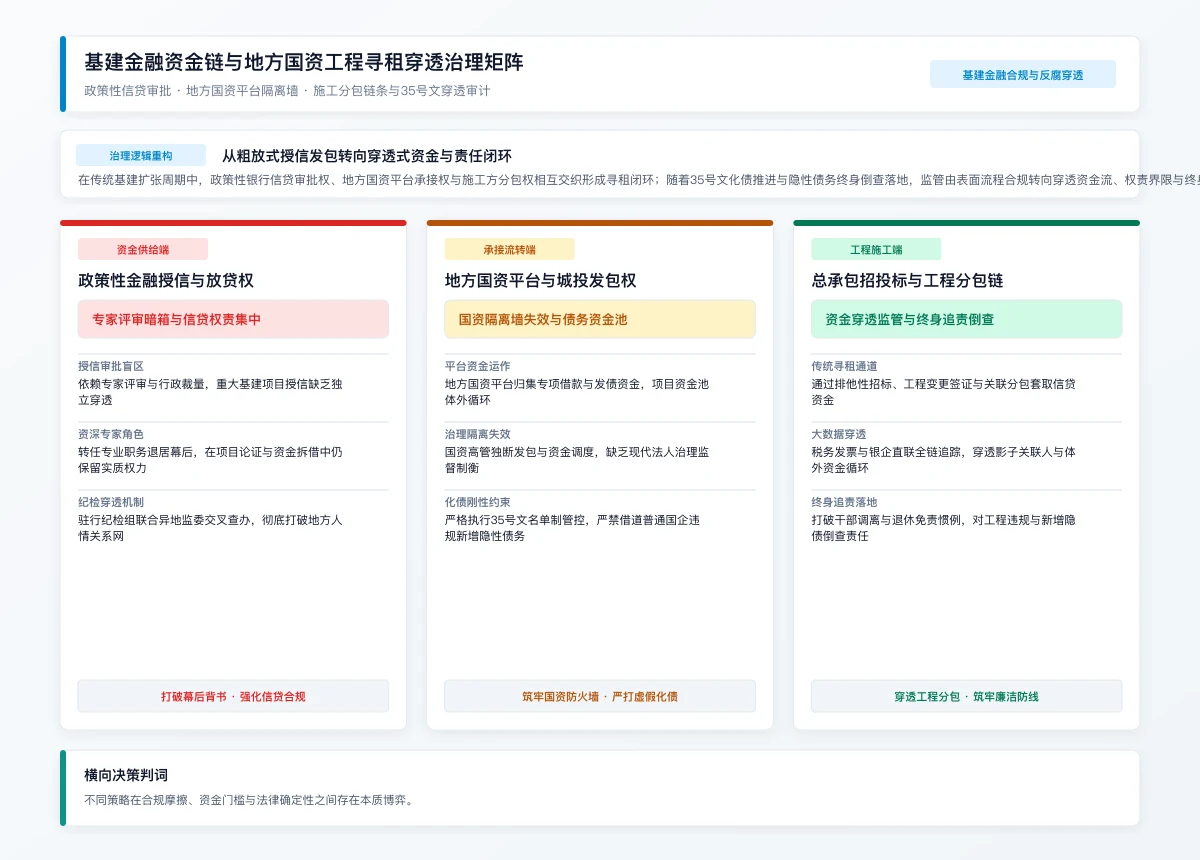
Figure 2: A three-dimensional matrix illustrating the penetrating governance mechanisms across the funding supply, local SOE platform, and engineering construction ends of infrastructure finance.
To disrupt this full-chain rent-seeking corruption, modern regulation is implementing systematic penetrating audits. Disciplinary and supervisory bodies, in conjunction with tax authorities and bank-enterprise direct connection systems, are no longer content with merely reviewing the superficial compliance of project bidding and loan contracts. Instead, they conduct multi-dimensional penetration along underlying capital flows, invoice vouchers, and actual beneficiary networks, leaving no hidden interest chain, concealed behind multiple layers of subcontracting and external associated companies, unaccounted for.
The “Document 35” Debt Firewall and Retrospective Accountability: From Incremental Sprawl to Stock Compliance Audits
Macro-level financial regulatory reforms are fundamentally draining the institutional soil that nourished infrastructure finance rent-seeking. During pro-cyclical phases, local urban investment platforms could mask past investment decision errors and capital leakage through continuous “borrowing new to repay old” and asset expansion. However, with the comprehensive implementation of the State Council General Office’s Guobanfa [2023] No. 35 document, “Guidance on Financial Support for Resolving Local Debt Risks,” preventing and resolving local debt risks has entered an unprecedented phase of rigid institutional constraints.
Document 35 explicitly mandates strict whitelist management for financing platforms in key provinces, strictly prohibiting financial institutions from providing new working capital loans to platforms in violation of regulations, and resolutely curbing the increase in hidden debt. Coupled with the financial prudential firewall demonstrated by the PBOC’s counter-cyclical adjustment toolkit and macro-liquidity management, financial institutions must strictly implement penetrating reviews when supporting local infrastructure, prohibiting local platforms from engaging in hidden borrowing through “nominal withdrawal but actual non-withdrawal” or by channeling funds through ordinary non-platform SOEs.
Even more critical is the rigid establishment of a “lifetime accountability, retrospective responsibility” mechanism. According to the work requirements of the Ministry of Finance and the CCDI and supervisory departments, local government debt risk prevention implements full-lifecycle responsibility locking. This means that the unwritten rules—that transfer or promotion absolved responsibility, that transitioning to a “senior expert” role provided a soft landing, or even that retirement guaranteed immunity—have been definitively terminated. Regardless of how many years have passed, any responsible individual who, during their tenure, spearheaded illicit borrowing, approved large loans in violation of regulations, blindly expanded projects causing significant asset losses, or engaged in power-for-rent schemes, will face full-chain retrospective accountability.
The simultaneous investigations of Li Jingbo and Cheng Guoxun clearly send a resolute signal from regulators to rectify the infrastructure finance ecosystem: policy lending is not a “Tang Monk’s flesh” for illicit gain, nor are local SOE platforms independent kingdoms beyond the reach of law. Only by placing financial lending authority, state-owned asset allocation power, and engineering construction rights under comprehensive penetrating supervision and lifetime accountability can the opaque mechanisms of rent-seeking be thoroughly dismantled, thereby fortifying national asset security and the stable development of the macroeconomy.
Related Research & Topics
Tello Mobile eSIM
SafetyWing Nomad Insurance
* Disclosure: This post contains affiliate links. If you make a purchase through these links, V-G Journal may earn a small commission at no additional cost to you. We only recommend services we independently evaluate and trust.
FIRE and Golf:自由旅居之路
专注于为追求 FIRE 与品质生活的人群提供特惠打球权益与候鸟微度假。不持一砖一瓦,运营品质生活。