The Sovereign Ledger of Tropical Relocation: Visa Hierarchies and Hidden Costs Across Asia's Nomad Hubs
Behind the glossy veneer of tropical geo-arbitrage lies a complex web of legal friction, the 183-day tax residency trap, and ecological trade-offs. We break down the real visa mechanics, living costs, and offshore architecture across Asia's top digital nomad destinations.


Figure 1: Remote cross-border collaboration from a tropical Southeast Asian courtyard.
On social media, the visual shorthand for modern geo-arbitrage has been reduced to an effortless formula: an iced Americano beside a laptop, lush palm fronds shading a communal table, and a monthly burn rate floating comfortably below $1,500. For desk-bound professionals burned out by corporate regimentation, flying out to the tropics with a MacBook appears to be the cleanest exit strategy available.
Yet relocating your workstation does not alter the fundamental rules of engagement. For those navigating the structural divide between digital nomadism and true FIRE, the initial euphoria eventually gives way to an unyielding reality. The long-term viability of location independence is never determined by a cafe’s download speeds; it hinges entirely on jurisdictional certainty, compliant residency channels, tax residency thresholds, and the hidden environmental liabilities of living abroad.
Asia remains the primary proving ground for the global remote workforce. Over the past two years, the continent’s regulatory landscape has undergone an aggressive restructuring—from Thailand’s game-changing DTV visa and Malaysia’s expanding DE Rantau ecosystem to Japan’s restrictive entry scheme. Behind these policy shifts lie radically diverging sovereign interests.
1. Five Core Asian Destinations: Legal Ladders and Entry Barriers
The era of perpetual visa runs—backpackers drifting across borders on tourist stamps within legal grey zones—is coming to a close. Cross-border migration in Asia has shifted into a sovereign filtering mechanism designed to attract mobile capital while siphoning out non-accredited labor.
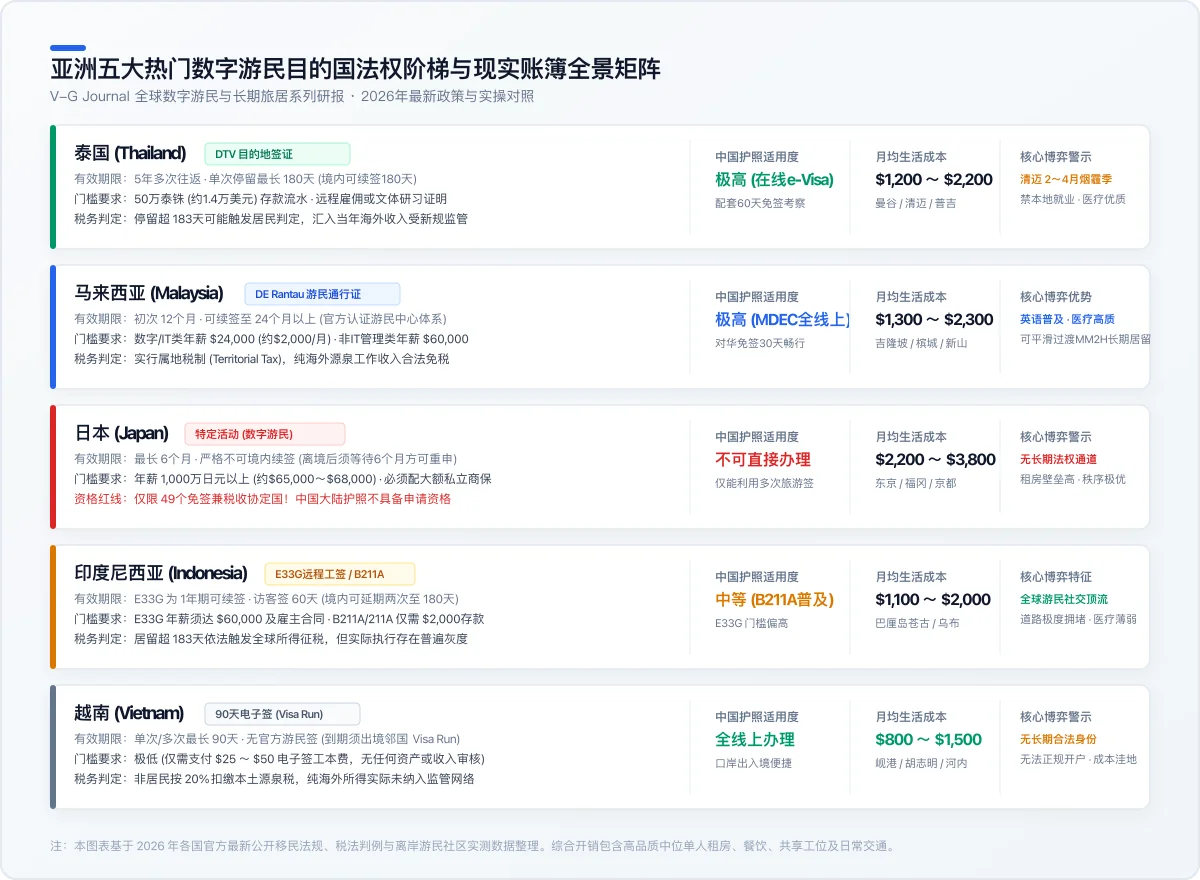
Figure 2: The regulatory landscape and true burn rates across Asia’s five major remote hubs.
1. Thailand: The DTV Paradigm Shift
Launched in late 2024, the Destination Thailand Visa (DTV) reshaped the geography of Southeast Asian nomadism. Previously, staying long-term in Thailand meant shelling out hundreds of thousands of baht for an Elite Visa, qualifying for the stringent $80,000 annual income floor of the Long-Term Resident (LTR) visa, or cycling indefinitely through 60-day tourist entries and language-school visas.
The DTV dismantled this binary:
- Residency Terms: A five-year multi-entry visa permitting stays of up to 180 days per entry, with the option to apply for a one-time 180-day extension at domestic immigration without leaving the country. In practice, a single entry can stretch to nearly a full year.
- Financial Threshold: Proof of at least 500,000 THB (approximately $14,000 to $15,000 USD) in bank savings. The bar is remarkably low compared to regional alternatives.
- Eligible Tracks: “Workcation” (remote employment or freelance portfolios servicing overseas clients) and “Thai Soft Power” activities (certified Muay Thai training, culinary arts, or documented medical treatments).
- Friction Level: Low. The process runs entirely online via the official Thai e-Visa portal, with average processing timelines hovering between two to four weeks.
2. Malaysia: DE Rantau and the Territorial Tax Advantage
Managed by the Malaysia Digital Economy Corporation (MDEC), the DE Rantau Nomad Pass represents one of the most mature, institutionalized remote work frameworks in Asia:
- Duration: Initial validity ranges from 3 to 12 months, renewable up to 24 months, with ongoing policy discussions exploring a four-year horizon.
- Tiered Income Thresholds: Professionals in tech, digital marketing, and content creation require an annual income of $24,000 USD (~$2,000/month). Non-tech professionals—such as corporate executives, legal counsel, and business consultants—must demonstrate an annual income of at least $60,000 USD.
- The Tax Shield: Malaysia operates on a strict territorial tax system. Income generated from clients or employers located outside Malaysia while residing on a DE Rantau Pass is legally exempt from local taxation.
- Strategic Continuity: For individuals looking to transition from nomadic drifting to fixed real estate or family relocation, the DE Rantau acts as an ideal trial period before escalating to structured residence schemes like Malaysia’s MM2H program and the Forest City arbitrage play.
3. Japan: High Thresholds and Structural Exclusion
Japan’s introduction of a dedicated digital nomad visa under its “Designated Activities” category in April 2024 generated considerable press. However, beneath the marketing lies an exceptionally restrictive framework:
- Bilateral Pre-requisites: Eligibility is strictly confined to nationals of 49 countries and regions that hold both visa-waiver status and bilateral double taxation agreements with Japan (primarily Western developed nations and Singapore). Passports outside this network, including Mainland Chinese passports, are entirely excluded.
- Income and Insurance Mandates: Applicants must prove an annual income of at least 10 million JPY (~$65,000 to $68,000 USD) and carry private health insurance with massive liability coverage.
- The Non-Renewable Trap: The visa allows a maximum stay of six months with an absolute prohibition on domestic extensions. Once it expires, holders must leave Japan and wait a full six months abroad before submitting another application.
- The Realistic Workaround: Those excluded from the scheme must rely on standard multi-entry tourist visas (allowing 30- to 90-day stays, capped at 180 days per calendar year) or pursue a full Business Manager Visa. Japan has designed this policy for short-term corporate executive tourism, not sustainable nomadism.
4. Indonesia: Bali’s Social Hub and the B211A Grey Zone
Canggu and Ubud remain central nodes in global nomad culture. While the Indonesian government introduced the E33G Remote Worker Visa, its steep $60,000 annual income requirement and cumbersome corporate guarantor mandates lead most nomads to fall back on pragmatic workarounds:
- B211A Visitor Visa: Grants an initial 60-day stay, extendable twice online for 60 days each, yielding a contiguous 180-day stay.
- Ecosystem Advantage: Bali offers what is arguably the world’s densest concentration of Web3, AI, and independent bootstrapper networks, backed by world-class coworking infrastructure and daily networking events.
- Operational Vulnerabilities: Relying on tourist-adjacent visas invites systematic scrutiny. Indonesian immigration conducts regular audits of coworking spaces to target improper remote work. Compounding this, Bali’s municipal infrastructure is buckling under traffic congestion, and local healthcare is limited; acute emergencies frequently require medical evacuation to Singapore or Jakarta.
5. Vietnam: Sub-Floor Costs on a Visa-Run Carousel
Vietnam has yet to launch an official digital nomad visa. Despite this, cities like Da Nang and Ho Chi Minh City draw an endless stream of self-directed operators through sheer cost-to-performance ratio:
- The 90-Day E-Visa Cycle: Foreign nationals can secure a 90-day single or multi-entry e-visa online for $25 to $50 USD.
- The Visa Run Circuit: As the 90-day mark approaches, operators make overland hops to the Lao or Cambodian borders, or take budget flights to Bangkok or Kuala Lumpur for a same-day turnaround to reset the clock.
- Legal Fragility: While local enforcement operates with tacit tolerance, the absence of an official residency status bars foreigners from opening domestic bank accounts. Leases remain tied to private, informal contracts, leaving residents highly exposed to arbitrary regulatory shifts or border scrutiny.
2. Piercing the Cost-of-Living Illusion: The Hidden Balance Sheet
Online nomad communities consistently emphasize cheap street food and ocean-view rentals while systematically ignoring the operational costs required to maintain productivity and physical health. True geo-arbitrage is not simply price deflation; it is a complex system involving environmental compromises, digital security, and transit redundancies.
1. The Real Monthly Cost Comparison (Mid-to-High Quality of Life, Single Person)
| City & Country | Studio / 1BR Apt (Incl. Utilities & Fiber) | Dining & Specialty Coffee | Coworking Space & Data SIM | Health, Fitness & Incidentals | Total Realistic Monthly Burn |
|---|---|---|---|---|---|
| Chiang Mai (Thailand) | $400 – $700 | $350 – $550 | $120 – $180 | $150 – $300 | $1,020 – $1,730 |
| Bangkok (Thailand) | $650 – $1,200 | $450 – $750 | $150 – $250 | $250 – $500 | $1,500 – $2,700 |
| Penang / KL (Malaysia) | $500 – $900 | $400 – $650 | $130 – $200 | $200 – $450 | $1,230 – $2,200 |
| Canggu / Bali (Indonesia) | $550 – $1,100 | $400 – $700 | $180 – $280 | $200 – $450 | $1,330 – $2,530 |
| Da Nang (Vietnam) | $300 – $600 | $250 – $450 | $90 – $150 | $120 – $250 | $760 – $1,450 |
| Fukuoka / Tokyo (Japan) | $900 – $1,800 | $650 – $1,100 | $180 – $300 | $400 – $800 | $2,130 – $4,000 |
In Southeast Asia, a budget of $1,200 to $2,000 per month secures a quality of life and prime real estate that would cost triple in Tier-1 global metropolises. But viewed over a multi-year horizon, two major cost centers inevitably balance the books: environmental health liabilities and border mobility overhead.
2. The Unavoidable Environmental Tax
- The Northern Thailand Burning Season (February to April): Agricultural burning and forest fires across Northern Thailand routinely push Chiang Mai’s AQI into the hazardous 200–300+ range. Air quality becomes toxic, and hospital respiratory wards hit capacity. Experienced nomads treat relocation as non-negotiable, fleeing to Phuket, Krabi, or Penang by early February. This seasonal evacuation instantly erodes the cost savings of a long-term lease.
- Tropical Pathogens and Water Safety: In Bali and Vietnam, municipal tap water is fundamentally unpotable. Gastrointestinal disruptions (“Bali Belly”) routinely derail engineering sprints. Persistent tropical heat and high humidity also impose an unquantified toll on cardiovascular and cognitive reserves over prolonged stretches.
- Fragmented Healthcare Quality: World-class private hospitals—such as Bangkok’s Bumrungrad or Samitivej—offer exceptional care matching Western standards, but an unexpected hospitalization without high-limit global insurance can wipe out thousands of dollars overnight.
3. Flight Redundancy as a Strategic Shock Absorber
For location-independent professionals, global mobility cannot be decoupled from their home jurisdictions. Family emergencies, institutional banking errands, or corporate meetings require immediate travel access:
- Bangkok and Kuala Lumpur: As the region’s premier aviation hubs, both host round-the-clock direct flights to key financial and regional centers. Flight times rarely exceed four hours, with one-way fares averaging $100 to $250 USD. They provide instant, reliable connectivity.
- Bali and Da Nang: Direct long-haul or regional trunk routes are scarce. Most travel mandates layovers through Jakarta, Kuala Lumpur, or Singapore, stretching transit times to 8 to 12 hours and undermining your ability to react swiftly to sudden emergencies.
3. Offshore Banking and Compliance: The Hidden Regulatory Redlines
Novice nomads often assume a domestic debit card and a couple of credit cards are sufficient to operate overseas. In reality, once you cross borders, you step onto a field of anti-money laundering (AML) surveillance, multi-factor authentication fragility, and tax residency triggers.
1. The 183-Day Physical Presence Rule and CRS Scrutiny
In international taxation, physical presence remains the dominant trigger for tax liability.
- The 183-Day Standard: Most sovereign jurisdictions apply the 183-day rule. Spending an aggregate of 183 days within a calendar or tax year inside their borders automatically classifies you as a tax resident, exposing your global income to local reporting requirements.
- Thailand’s 2024 Tax Reform: Effective January 1, 2024, the Thai Revenue Department closed a long-standing loophole. Any individual residing in Thailand for 180 days or more in a calendar year who remits foreign-sourced income into Thailand during that year must declare and pay personal income tax on those funds. While administrative clarity around non-local corporate income under the DTV is still evolving, transferring large sums directly into Thai bank accounts now carries clear audit risks.
- Malaysia’s Safe Harbor: Because Malaysia excludes foreign-sourced income from domestic taxation, it remains one of the safest financial clearinghouses in Asia for nomadic cross-border income.
Location-independent operators generating revenue through passive assets, digital products, or remote contracts must understand the data exchange mechanisms governing international accounts. A solid grounding in financial privacy—detailed in our analysis of offshore structures and CRS data sharing—is essential to prevent double taxation and avoid aggressive residency claims.
2. The Offshore Operational Stack
Sustaining continuous remote operations requires three non-negotiable infrastructure components:
[The Three Pillars of Cross-Border Infrastructure]
- Independent Multi-Currency Debit Rails ➔ Secure an international debit card (such as a Wise card or an international brokerage debit card) that supports real-time multi-currency conversion. This bypasses the sudden anti-fraud account freezes triggered by repeated foreign ATM withdrawals on domestic cards.
- Dedicated Native Telecom Channels ➔ Maintain a native overseas cellular line (such as an unthrottled US or European eSIM via a dedicated overseas carrier roaming setup). This ensures unbroken, instantaneous 2FA SMS verification for institutional accounts, banking portals, and code repositories, shielding you from domestic carrier lockouts.
- A Compliant Offshore Invoicing Entity ➔ Route client billings through an independent offshore entity or formal cross-border freelance service agreement. Every incoming wire from Western or regional clients must be backed by an executed contract and invoicing trail to satisfy banking compliance.
4. From Aimless Drifting to Capital Compounding
Nomadism is an exploratory phase, not a lifetime occupation. After two or three years of transience, the novelty inevitably fades, replaced by the mental friction of unstable housing, transactional relationships, and physical fatigue.
Drifting from one tropical beach to the next without a long-term plan yields little more than low-cost, precarious freedom. The real purpose of geo-arbitrage is to channel the surplus cash flow generated by low-cost living into productive, compounding assets. Only then does an individual graduate from selling remote labor across borders to buying back their permanent time.
Navigating Asia’s diverse jurisdictions calls for a dynamic defense posture rather than a hunt for a nonexistent utopia:
- Leverage Thailand’s DTV for its five-year multi-entry flexibility, low capital barrier, and world-class healthcare, using it as a low-cost launchpad while routinely vacating the country during the February–April burning season.
- Rely on Malaysia’s DE Rantau Pass for legal certainty, an English-speaking environment, and a territorial tax framework, serving as a dependable anchor for cross-border banking.
- Treat Japan and Indonesia with structural pragmatism: use Japan on standard tourist visas for high-culture, seasonal resets, and use Bali as a targeted networking ground for Web3, AI, and startup ecosystems.
- Track the 183-day tax threshold rigorously and reinforce your offshore financial stack. Within the boundaries of sovereign law and capital flows, true independence is not found by running away, but by building an unshakeable operational base.
Related Research & Topics
Tello Mobile eSIM
SafetyWing Nomad Insurance
* Disclosure: This post contains affiliate links. If you make a purchase through these links, V-G Journal may earn a small commission at no additional cost to you. We only recommend services we independently evaluate and trust.
FIRE and Golf:自由旅居之路
专注于为追求 FIRE 与品质生活的人群提供特惠打球权益与候鸟微度假。不持一砖一瓦,运营品质生活。