The Engineering Reckoning: Huawei’s Software Hegemony Meets the Law of Large Numbers
An investigative autopsy of the October 2026 Maextro V800 brake fracture and the fatal Aito crash in Shenmu. We dissect the structural liabilities of Huawei’s HIMA model—where asset-light software claims credit while outsourced manufacturing absorbs the physical fallout.

Executive Summary:
In October 2026, Huawei’s Harmony Intelligent Mobility Alliance (HIMA) confronted two PR and operational shocks along the exact same timeline. First, the Maextro V800—a million-yuan luxury MPV co-developed with state-owned JAC to rival Rolls-Royce—snapped its brake pedal bracket during a public deceleration test, prompting an unprecedented joint investigation by China’s Ministry of Industry and Information Technology (MIIT), the Cyberspace Administration (CAC), and the State Administration for Market Regulation (SAMR). Simultaneously, an Aito SUV slammed into a traffic pylon at 139.1 km/h in Shenmu, Shaanxi, erupting into flames and killing the driver. Aito immediately published black-box logs demonstrating manual driver control, gross speeding, and an engine-bay fluid fire—clearing both its ADAS algorithms and battery cells of fault.
As the public retreated into superstitious debates over “bad corporate luck” or “ruined feng shui,” the underlying reality remained purely physical. This crisis marks the inevitable structural collision between an asset-light, software-centric branding playbook and the unforgiving mechanics of heavy industrial manufacturing. The so-called bad luck is nothing more than the Law of Large Numbers collecting past-due debts from compressed engineering cycles.
1. Dissecting the Two Incidents: The Factual Record
Before linking Maextro and Aito under the same analytical framework, we must separate their legal and mechanical boundaries based strictly on regulatory filings and hard test telemetry:
| Analytical Dimension | Maextro V800 Brake Pedal Fracture | Aito High-Speed Collision & Fire (Shenmu) |
|---|---|---|
| Vehicle & Market Position | Flagship MPV co-developed by Huawei and JAC; priced between ¥766,000 and ¥1,016,000. | Premium intelligent luxury SUV family co-developed by Huawei and Seres. |
| The Factual Baseline | On October 8, 2026, independent testers subjected three production units to consecutive 100–0 km/h emergency braking; all three suffered catastrophic one-way mechanical fractures of the pedal arm bracket. JAC’s market cap plunged billions in hours. | Late on October 17, 2026, an Aito traversed an intersection (posted limit: 50 km/h) at 139.1 km/h, striking a square steel pylon. The front bulkhead disintegrated, catching fire and fatally injuring the driver. |
| Regulatory & Official Posture | On October 15, a joint task force (MIIT, CAC, SAMR) entered JAC/Huawei facilities. State media declared: “A brake pedal must never fracture under human operation.” | On October 21, traffic police and telemetry confirmed a single-vehicle accident. The vehicle was under manual control; extreme impact severed high-voltage wiring and ruptured hydraulic fluid lines. |
| Core Technical Dispute | The glass-fiber-reinforced plastic (PP+GF40) pivot bracket utilized a single-wall design at the stress concentration zone. Independent testers alleged deficient safety margins; the brand claimed non-standard lateral pedal force before submitting a 3,000N re-test report. | Speculation initially centered on ADAS failure or catastrophic battery thermal runaway. Telemetry proved ADAS was disengaged; the structural battery pack remained intact without thermal runaway. |
| Remediation Strategy | Maextro promised free pedal assembly upgrades for initial owners starting November, while evading a formal statutory safety recall. | Traffic authorities finalized the accident investigation; the OEM cleared misinformation via forensic data logs. |
The physical realities of these two events could not be more divergent. The Shenmu crash is an open-and-shut case of extreme speeding under manual control; the battery pack survived severe kinetic impact without thermal runaway. Conversely, the Maextro episode is an undeniable mechanical failure of a primary safety-critical component under predictable, if severe, operating conditions.
Yet under HIMA’s tightly orchestrated brand architecture, the public fused the two into a single crisis. Clear telemetry failed to quell growing skepticism; instead, it accelerated an ecosystem-wide crisis of confidence across Huawei’s automotive network.
2. The Architectural Fault Line: Software Divination vs. Heavy Industrial Substrates
To diagnose HIMA’s vulnerability, one must deconstruct its unique commercial architecture. Huawei pioneered an unprecedented power structure in automotive history: it demands total sovereignty over product definition, software architectures, user experience, and margin capture, while erecting legal and balance-sheet firewalls behind the mantra: “Huawei does not build cars.”
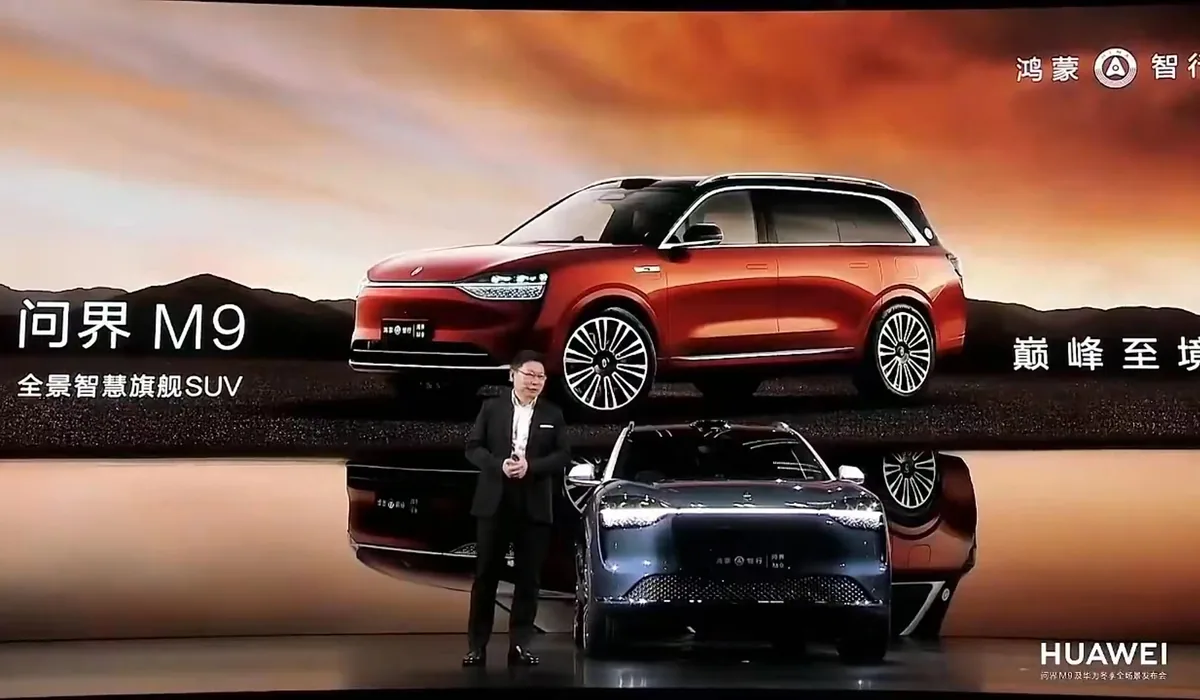
Figure 1: Richard Yu onstage at a HIMA launch event. By coupling personal brand equity with cutting-edge ADAS software, Huawei extracted tech-tier software margins from automobiles—yet the physical ceiling of vehicle safety remains anchored to heavy industrial manufacturing.
During periods of market expansion, this model operates like an economic flywheel:
- The Margin Siphon: Powered by Richard Yu’s combative salesmanship and the tailwinds of technological self-reliance, rhetoric like “miles ahead” (遥遥领先), “mobile fortresses,” and “eclipsing Maybach” became consumer gospel. Shoppers entered Huawei flagship stores buying into the infallibility of a national tech champion, allowing Huawei to extract fat licensing fees and channel margins.
- The Industrial Substrate: Wheels, however, still meet asphalt. Structural chassis integrity, body-in-white stamping, robotic welding, sub-tier supplier audits, and final assembly quality control remained the responsibility of legacy state-owned or secondary automakers: Seres, JAC, Chery, and BAIC.
The snapped brake pedal on the million-yuan Maextro is the inevitable structural consequence of this split-brain architecture.
Across a century of automotive engineering, the brake pedal assembly has been regarded as a foundational failsafe—a mechanically conservative component designed with redundant factors of safety. Strikingly, identical bracket designs under HIMA’s cheaper sub-brands (Aito and Luxeed) utilized multi-layer structural reinforcement ribs. Yet the flagship Maextro V800—the heaviest, most expensive model in the lineup—relied on a cost-optimized, single-walled pivot structure at the point of peak mechanical stress.
Legacy automakers historically spent years validating mechanical fatigue across millions of operating cycles. When automotive development schedules are compressed to mimic smartphone release rhythms, structural validation is inevitably compromised. Code can be patched over the air in two weeks; material fatigue, polymer injection inconsistencies, and stress concentrations do not yield to PowerPoint marketing.
3. The Black Box Defense: Clinical Self-Absolution and Consumer Alienation
Following the fatal crash in Shenmu, Aito’s customer response team deployed clinical, high-grade legal and crisis communications. The official dispatch established three incontrovertible defensive pillars:
- Impact Speed of 139.1 km/h: Driving nearly triple the 50 km/h speed limit established gross driver negligence;
- Manual Driving Mode: Advanced driving systems were disengaged, legally insulating algorithmic code and sensor compute from liability;
- Engine-Bay Fire Origin: Forensic data proved the fire originated from severed high-voltage wiring and atomized hydraulic fluids, shielding the traction battery’s reputation from the stigma of thermal runaway.
Legally and tactically, it was a masterclass in risk isolation. Emotionally and reputationally, it backfired.
The backlash stems from the radical asymmetry between pre-sale marketing promises and post-crash accountability:
The Structural Narrative Paradox
- The Pre-Sale Myth of Omniscience: Marketing materials and influencer ecosystems persistently package the vehicle’s active safety suite as an omnipotent shield—capable of catching every blind-spot pedestrian, executing multi-directional collision avoidance, and outperforming seasoned human drivers.
- The Post-Crash Telemetry Dump: When a fatal collision occurs, the OEM leverages its monopoly over cloud telemetry to release millisecond-precision logs proving driver error: excess speed, missing takeover handoffs, or pedal misapplication.
This dynamic breeds profound alienation. The automaker acts simultaneously as a party to the incident, the sole gatekeeper of the black-box data, and the final arbiter of truth. The dead driver cannot testify; the remote cloud servers cleanly exonerate the tech giant.
As examined in our previous assessments of automotive media testing censorship and consumer oversight dilemmas and Richard Yu’s moral framing around the Maextro brake crisis, an impenetrable legal firewall does not preserve consumer goodwill. It merely accelerates the depletion of the brand equity originally purchased through nationalistic affinity.
4. The Myth of Bad Luck: The Retribution of the Law of Large Numbers
Attributing these consecutive crises to “bad luck” or “ruined feng shui” is an intellectual evasion. The modern industrial machine does not run on mysticism. Examining the incentives reveals that no stakeholder in this ecosystem is entirely blameless:
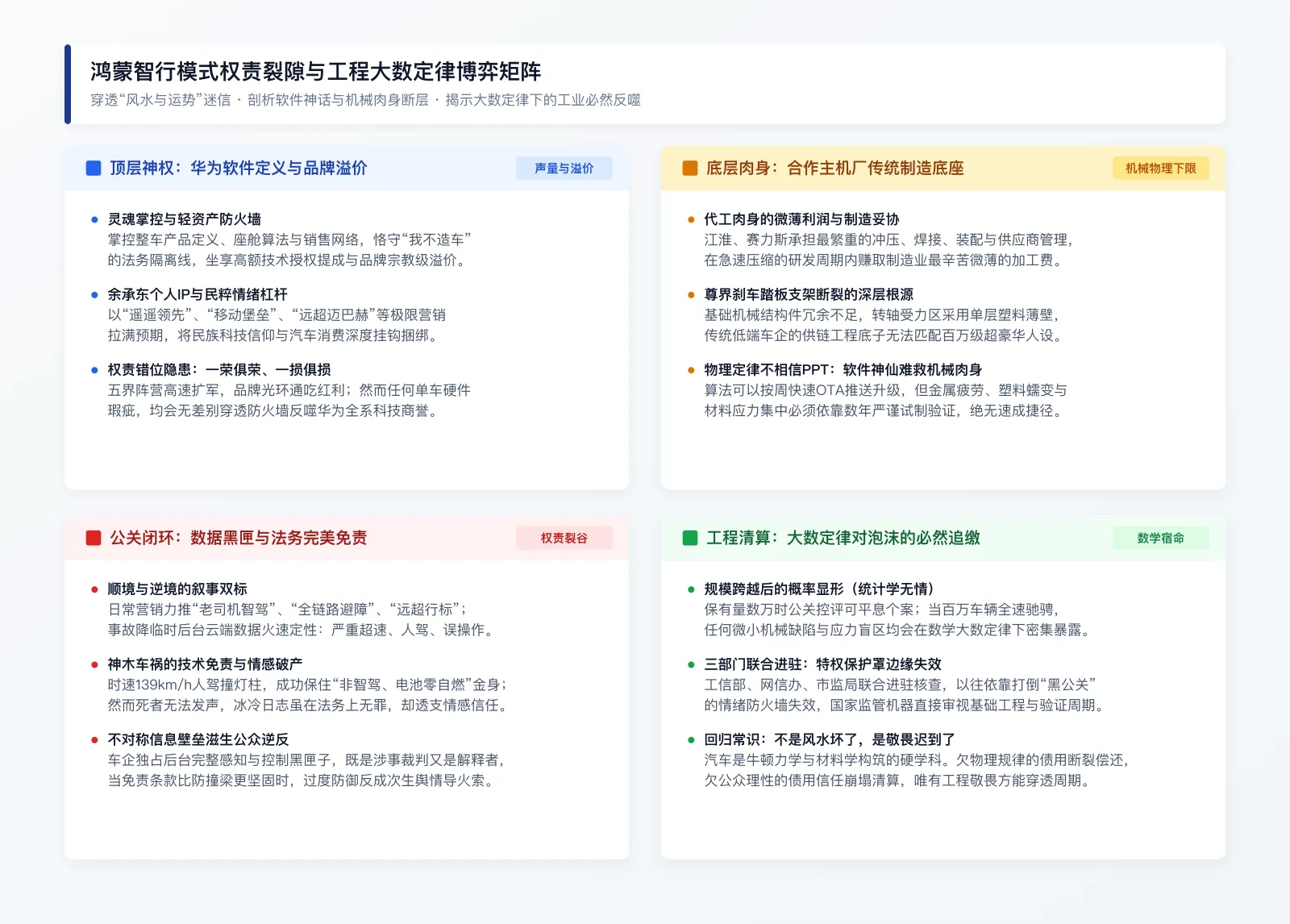
Figure 2: The structural governance matrix of the HIMA ecosystem. The divergence between top-tier brand premiums and lower-tier mechanical execution faces mathematical retribution as deliveries scale past critical thresholds.
1. Are the Manufacturing Partners at Fault?
Legacy manufacturers like JAC and Seres surrendered product definitions and retail networks to Huawei, reducing themselves to industrial foundries capturing thin contract margins. While their engineering DNA historically lacked the precision required for ultra-luxury performance, blaming factory workers for an under-designed plastic bracket ignores the pervasive authority Huawei exerts over vehicle architectures and component sourcing.
2. Is Richard Yu’s Playbook at Fault?
Richard Yu’s hyper-aggressive marketing pulled Aito from obscurity, engineering an unprecedented commercial trajectory for Chinese premium new energy vehicles. But this zero-sum style—relentlessly disparaging legacy competitors while making sweeping claims about active safety—inflated consumer expectations beyond reasonable engineering tolerance. When regulators stepped in over the Maextro brake scandal, his defiant declaration that “Justice may be delayed, but it will never be denied” attempted to deflect an empirical engineering flaw with moral melodrama, deepening the rift with rational observers.
3. Is Huawei’s Structural Model at Fault?
Huawei delivers elite electric drive units, high-level ADAS, and smart cockpit stacks. Yet its architectural choice—reaping high-margin software revenues while delegating ultimate safety liability to contract manufacturing partners—builds a systemic misalignment between control and consequence. Taking software-tier profit margins while leaving industrial risks to contract assemblers is a model that faces mathematical limits once vehicle fleets scale.
4. Statistics Ignores Brand Mythology
For years, the HIMA camp capitalized on deep national sentiment. Within tribal social media echo chambers, technical critique of its suspension tuning, braking hardware, or quality control was quickly smeared as coordinated sabotage.
Once fleet deliveries scaled from tens of thousands to hundreds of thousands, the Law of Large Numbers asserted its authority:
- With millions of vehicles operating across diverse real-world conditions, a one-in-a-hundred-thousand component flaw, structural tolerance failure, or algorithmic edge case transforms from a theoretical risk into a physical certainty.
- The joint intervention of the MIIT, CAC, and SAMR shattered the digital narrative control previously maintained by PR channels and fanbases. State regulators focus on physical manufacturing metrics, engineering verification cycles, and public safety.
This is not bad luck; it is empirical reality reclaiming its dues. Debts owed to mechanical engineering must ultimately be settled in structural fractures; debts owed to public trust must ultimately be paid in brand devaluation.
5. Structural Verdicts and Final Assessment
Forensic Summary
- Verdict 1 (The Shenmu Fatal Crash: Extreme Driver Negligence): Telemetry and surveillance confirm manual vehicle operation at 139.1 km/h in a 50 km/h zone. The fire resulted from blunt-force destruction of front-end wiring harnesses and hydraulic lines, not ADAS malfunction or traction battery thermal runaway. The incident does not invalidate the structural safety of the battery pack.
- Verdict 2 (The Maextro Brake Failure: Systematic Mechanical Under-Engineering): The fracture of the V800 brake pedal arm under repeated emergency deceleration traces back to stress concentration defects in a single-wall composite component. The joint ministerial investigation and subsequent hardware remediation confirm that this critical component lacked the structural safety margins required of a flagship vehicle, exposing the perils of compressed R&D cycles.
- Verdict 3 (The Systemic Crisis: Retribution of the Law of Large Numbers): HIMA’s woes stem from structural design, not corporate bad luck. The asymmetric governance model—capturing value through software and brand while offloading manufacturing risk to partners—collapses under the statistical reality of mass-market scale.
Automotive manufacturing remains a brutal discipline governed by Newtonian mechanics, metallurgy, and margins of human safety. In this domain, no asset-light corporate structure can override physical constraints, and no algorithmic narrative can excuse a compromised structural bracket.
When market euphoria recedes, the survival of an automaker is never decided by keynote theatrics. It rests entirely on the unglamorous integrity of the chassis—and whether the bolts, brackets, and sheet metal were engineered with genuine respect for the physical world.
Related Research & Topics
Tello Mobile eSIM
SafetyWing Nomad Insurance
* Disclosure: This post contains affiliate links. If you make a purchase through these links, V-G Journal may earn a small commission at no additional cost to you. We only recommend services we independently evaluate and trust.
FIRE and Golf:自由旅居之路
专注于为追求 FIRE 与品质生活的人群提供特惠打球权益与候鸟微度假。不持一砖一瓦,运营品质生活。