The Noise and the Silence: Why Chinese Tennis Captures the Zeitgeist While Golf Remains Enclosed
In October 2026, home victories by Zheng Qinwen and Yin Ruoning highlighted a profound structural divergence in Chinese sports. An analysis of attention economics, capital allocation, and spatial realities.

Executive Summary: In October 2026, two standard-bearers of Chinese athletics—both born in 2002—hoisted premier trophies on home soil within one week of each other. On October 11, Zheng Qinwen claimed the China Open women’s singles title, becoming the first domestic champion in the tournament’s 20-year history and capturing her maiden WTA 1000 crown. On October 18, Yin Ruoning staged a final-round comeback to defend her title at the Buick LPGA Shanghai, securing her seventh LPGA victory. Yet beneath these twin triumphs lies a striking asymmetry: tennis has crossed into mass consumer culture and viral social dialogue, while professional golf remains largely sequestered within high-net-worth circles and muted public discourse.
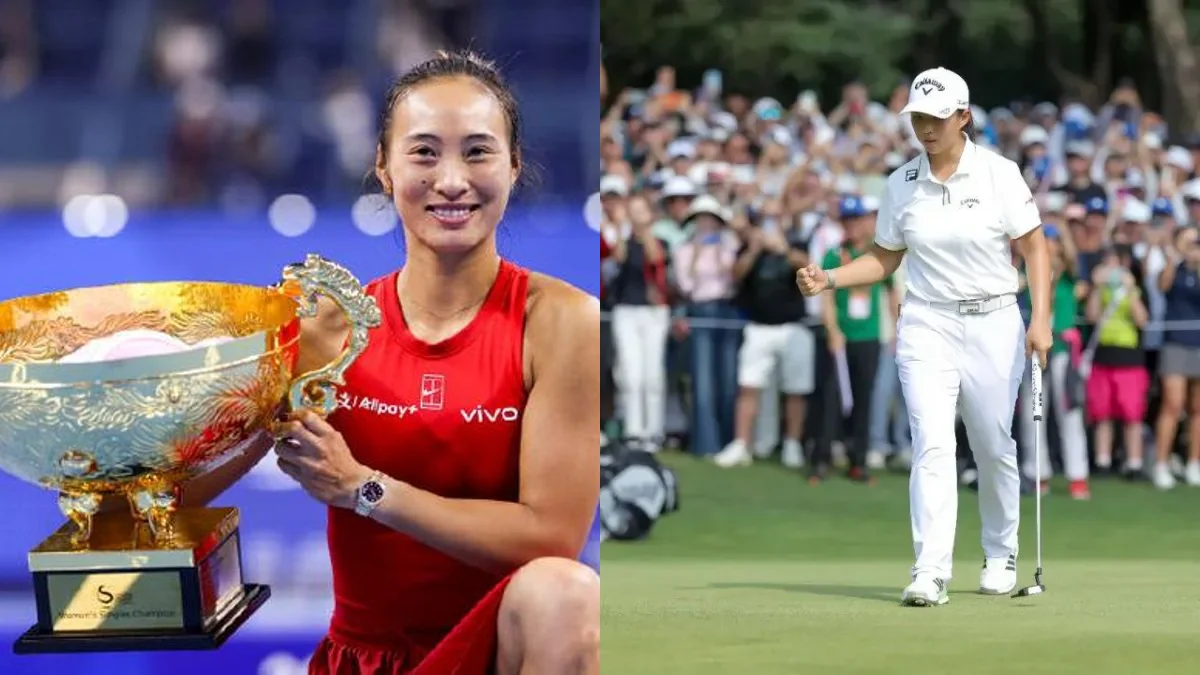
Figure 1: Twin home victories in October 2026—Zheng Qinwen at the China Open and Yin Ruoning at the Buick LPGA.
Though both victories occurred on Chinese soil in the same autumn month, the societal reverberations generated by the tennis court and the golf green could not be more distinct.
At Beijing’s Diamond Court, Zheng Qinwen dispatched her opponent in straight sets to capture the China Open. The scene was cinematic: roar from a packed stadium, a week-long takeover of trending social media topics, and overnight retail activations across major cities offering buy-one-get-one promotions tied to her sponsor network.
Seven days later at Shanghai Sheshan International Golf Club, Yin Ruoning delivered a masterclass in final-round composure, mounting a dramatic surge to defend her Buick LPGA Championship title. In elite golfing circles, it was an indisputable display of competitive mastery. Across the broader public domain, however, it unfolded almost in silent mode—a high-stakes spectacle consumed primarily by an initiated few.
When asked after her round about the disparity in public attention between the two sports, Yin offered a clear-eyed assessment:
“I don’t compare myself to anyone else; I am simply who I am. But for golf to break into broader public consciousness in China, a single Yin Ruoning is not enough. It requires collective momentum—more players achieving higher honors—before the sport can truly transcend its boundaries.”
This divide reflects far more than a simple gap in individual name recognition between two exceptional athletes. It highlights a structural divergence in how two western-born, highly professionalized individual sports interact with contemporary Chinese capital, municipal space, and consumer behavior.
I. Comparative Metrics: The Dual-Track Matrix
To understand the mechanics governing both sports, we must first examine their structural reality across key operational and commercial metrics:
| Comparative Dimension | Chinese Tennis (Sample: Zheng Qinwen & China Open) | Chinese Golf (Sample: Yin Ruoning & Buick LPGA) |
|---|---|---|
| Home Event & Purse | 2026 China Open (WTA 1000) Champion. Winner’s purse: $1.15M (~7.71M RMB). | 2026 Buick LPGA Champion. Total purse: $3.2M; Winner’s share: $480,000. |
| Marquee Athlete Value | Total annual income ~$22.6M (>150M RMB), >97% off-court; 14+ crossover endorsements. | World No. 1 and Major winner before 21; endorsements focused on Rolex, Callaway, Buick, and private wealth channels. |
| Event Attendance & Gate | 450,000+ total park entries; 132M RMB ticket revenue (+48% YoY); 2.59B RMB indirect economic impact. | ~25,000 spectators; focused on Songjiang regional place-making, urban branding, and luxury hospitality. |
| Domestic Player Base | ~25.19M tennis participants (47% female); 506,000+ registered junior competitors. | ~5.4M overall golf participants; ~720,000 core players (4:1 male-to-female ratio); ~141,000 registered juniors. |
| Infrastructure & Access | 53,805 courts nationwide; accessible pay-per-play entry; “Tenniscore” seamlessly integrated into urban street wear. | ~335 operating courses (avg. tier-1 green fee: ~750 RMB/round); 2,000+ indoor simulators; junior elite path exceeds 500,000 RMB/year. |
| Industry Market Size | ~48B RMB total market; the domestic “China Swing” directly/indirectly drives over 16B RMB in annual consumer spend. | ~15.19B RMB total economic size (including facilities, simulators, events, and instruction). |
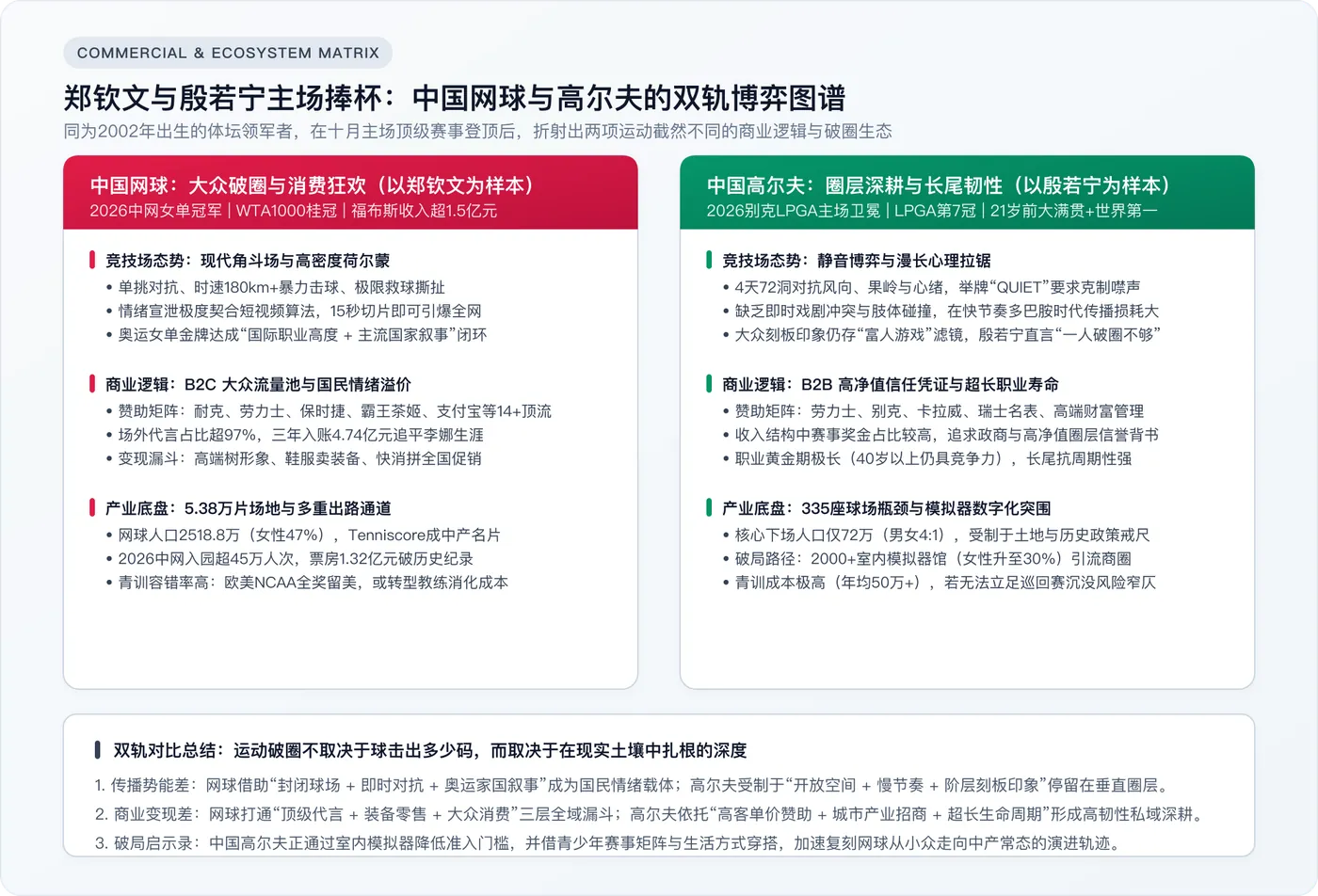
Figure 2: Strategic matrix comparing Chinese tennis and golf across competition dynamics, commercial logic, and infrastructural base.
II. Attention Economics: The Arena versus the Sanctuary
The disparity in media resonance between tennis and golf stems first from the physical mechanics of viewership and the intensity of their respective competitive formats.
1. Tennis as an Algorithmic Spectacle
Tennis operates as a natural engine for viral engagement. A bounded rectangular court, visceral head-to-head confrontation, serve speeds topping 180 km/h, sliding baseline recoveries, and vocal physical exertion combine to create immediate kinetic drama. Even casual viewers with no technical grasp of the sport can be gripped by a 15-second clip showing a high-stakes point.
This high-density sensory payload aligns seamlessly with the distribution logic of modern short-form video algorithms. Furthermore, the scoring architecture of tennis—punctuated by tiebreaks and sudden momentum swings—generates high-frequency narrative tension that readily sparks mainstream social dialogue.
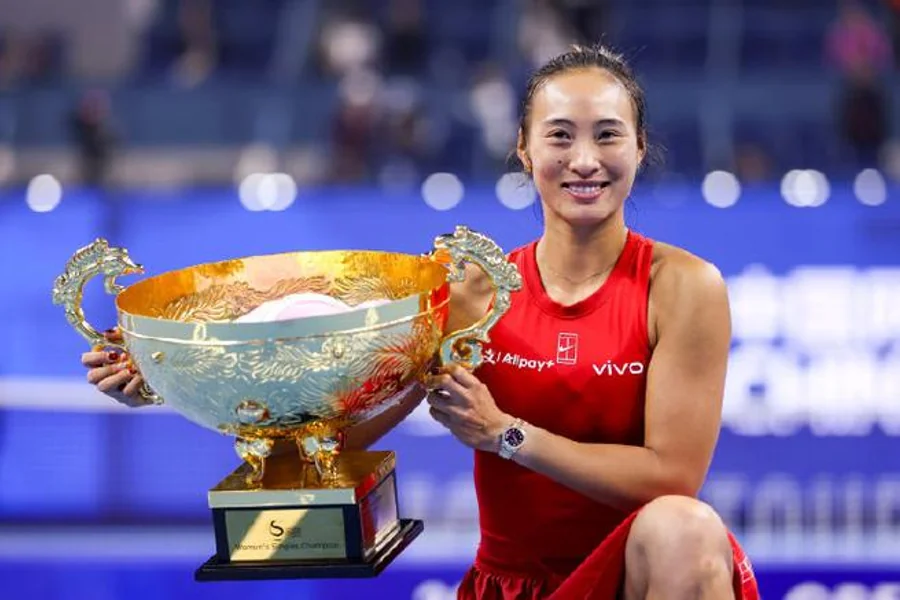
Figure 3: Zheng Qinwen raises the trophy at the 2026 China Open, becoming the tournament's first native women's singles champion.
2. Golf and the Paradox of Restraint
Golf relies on sustained, counter-intuitive emotional containment. Played across hundreds of thousands of square meters over four days and 72 holes, the golfer’s primary opponent is rarely the person standing nearby; it is wind velocity, green topography, turf grain, and internal psychological fluctuation.
The primary court etiquette of golf is silence. When marshals raise signs bearing the word “QUIET,” tens of thousands of spectators must instantly freeze. This understated discipline—devoid of direct physical impact or explosive emotional release—suffers significant attenuation when mediated through algorithm-driven, dopamine-focused content feeds. Even as Yin Ruoning led the Chinese women’s team to historical Asian Games gold and subsequently defended her Buick LPGA title, the general public’s lack of familiarity with the game’s nuance dampens spontaneous emotional resonance.
3. Civic Identity versus Legacy Perception
The divergence deepens when looking at societal symbolism. Zheng Qinwen holds top-tier professional credentials—Grand Slam finalist, WTA 1000 champion—alongside a Olympic singles gold medal. This combination allows her to bridge high-stakes international professionalism with broad national prestige. The public can embrace her as a modern athletic icon in the mold of Li Na without cultural hesitation.
Golf, by contrast, retains legacy public associations with corporate networking and elite private leisure, despite its Olympic status and Asian Games achievements. Even with Yin Ruoning reaching World No. 1 and winning a Major before the age of 21, casual observers struggle to identify with a sport they may never have played and view as socially distant.
III. Commercial Architecture: B2C Mass Funnels vs. B2B Trust Collateral
While public discussion often zeroes in on gross income rankings published by media outlets, it frequently overlooks the reality that the commercial engines of these two sports belong to fundamentally different corporate ecosystems.
1. The Divergence in Sponsorship Priorities
The commercialization strategies of tennis and golf demonstrate a clear split between mass-market consumer penetration and private, high-net-worth relationship building:
- The Consumer Funnel of Elite Tennis: Zheng Qinwen’s endorsement portfolio includes Nike, Rolex, Porsche, Lancôme, Chagee, and Alipay, spanning 14 major global and domestic brands. These partners seek brand prestige, lifestyle authority, and immediate consumer conversion. Tennis attire (pleated skirts, visors, performance footwear) transitions easily from the court into everyday urban fashion. The synchronized retail activations launched by her sponsors immediately following her Beijing victory converted spectator enthusiasm into direct retail foot traffic, illustrating a complete funnel: high-end brand equity at the top, performance apparel in the middle, and fast-moving consumer goods at the retail base.
- The Trust Network of Professional Golf: Yin Ruoning’s endorsement footprint, alongside other premier golfers, is anchored by Buick, equipment manufacturers (Callaway, TaylorMade), Swiss watchmakers, and private wealth institutions. These entities do not rely on high-volume viral campaigns on social platforms. Instead, they seek explicit institutional trust among corporate executives, founders, and ultra-high-net-worth audiences. As noted in analyses of the history and corporate contract dynamics of golf, sponsorships in golf function as long-term investments in high-ticket, hyper-vertical trust networks.
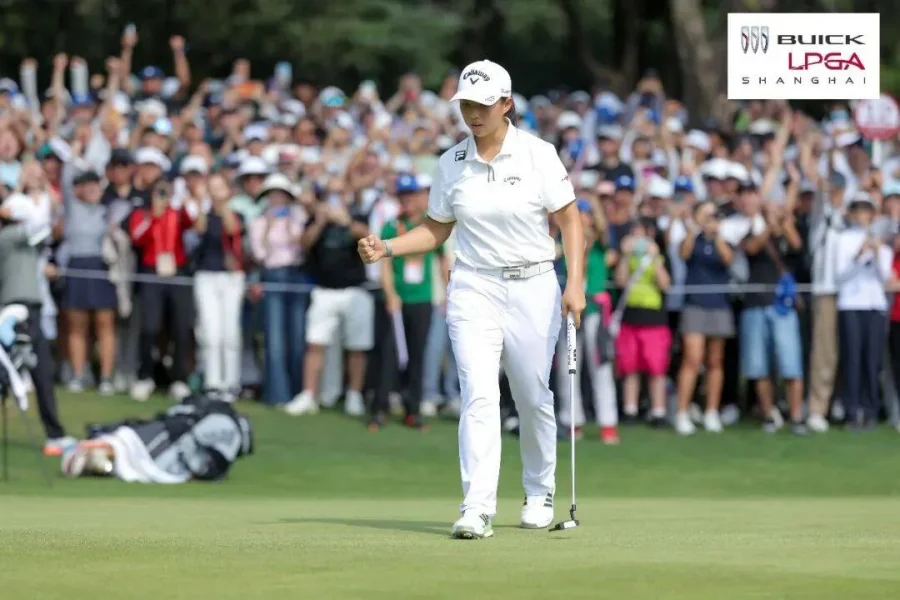
Figure 4: Yin Ruoning celebrates after securing her victory on the 18th hole at Shanghai Sheshan, claiming her seventh LPGA Tour title. (Source: Buick LPGA Official Photography)
2. Earnings Lifespans and Athletic Depreciation
The two sports present contrasting economic lifecycles regarding competitive longevity and career capitalization:
- Tennis: High Intensity and Physical Depreciation: The peak earning window for a professional tennis player is intensely compressed. While annual earnings at the top are substantial, the career is subject to physical wear and high injury risk. Sustaining a top-10 ranking requires non-stop international travel and extreme physical exertion; major joint or tendon injuries can rapidly alter a player’s trajectory.
- Golf: Longevity and Anti-Cyclic Resilience: Golf places far less demand on absolute explosive power than tennis. Its core technical requirements center on spatial management, green reading, and mechanical consistency under pressure. Golfers frequently remain competitive into their late 30s and 40s, with the Champions Tour providing an extended professional platform past age 50. While a top golfer’s single-year earnings spike may not match that of an elite tennis star during a breakout season, their career value offers exceptional multi-decade stability.
IV. Spatial Constraints and Institutional Pathways
The contrasting public footprints of these two athletes reflect broader differences in how tennis and golf interact with Chinese urban planning and institutional policy.
1. Land Use and Municipal Integration
- Golf’s Spatial and Regulatory Boundaries: Golf in China has long navigated strict regulatory oversight regarding land development, water usage, and environmental protection. Since the 2004 national ban on new course construction, the industry has undergone multiple consolidation phases. The national course count has stabilized at roughly 335 facilities. High green fees and geographic separation from urban centers impose structural limits on mass participation.
- Tennis and Urban Efficiency: A standard tennis court requires approximately 650 square meters, making it well-suited for integration into public sports parks, educational institutions, and residential communities. With over 53,000 courts distributed nationally, tennis is readily accessible to urban professionals in tier-1 and tier-2 cities, providing the infrastructural foundation required to convert general interest into active participation.
2. Elite Youth Pathways and Financial Risk Management
Both Zheng Qinwen and Yin Ruoning represent a modern paradigm in Chinese athletics: shifting away from traditional state-funded academy models toward family-funded capital, private international coaching teams, and early integration into global tour circuits. Yet, as explored in the analysis of Yin Ruoning’s developmental trajectory, the two sports offer very different risk profiles at the junior level:
- Tennis Exit Options: Junior tennis players who do not reach the top 100 of the WTA or ATP rankings retain viable educational and professional alternatives. They can leverage junior international rankings to secure full athletic scholarships at major NCAA Division I universities in North America, or return to join the domestic coaching market. Strong demand for instruction among urban families allows junior tennis investments to be hedged through multiple professional avenues.
- Golf’s Capital Requirements: Elite junior golf training frequently requires annual expenditures between $70,000 and $140,000. If an athlete falls short of qualifying for primary tours like the LPGA or PGA, the options to offset that initial capital investment are comparatively limited, given the smaller overall pool of local courses and active players.
V. Strategic Adaptation: Golf’s Emerging Growth Vectors
Despite structural limits on traditional course development, the golf sector in China is cultivating new avenues for growth:
1. Indoor Simulators and Lowered Barriers to Entry
The number of indoor golf simulator venues in China has surpassed 2,000, with total round volume expanding steadily. Simulators reduce the cost of a round from several hundred dollars to a accessible fee, while bringing the sport directly into central business districts and retail hubs. Female participation in simulator venues has reached over 30%, compared to roughly 20% on traditional courses. This digital, location-flexible format is becoming a key driver for expanding the player base.
2. Junior Tour Ecosystems and Athleisure Integration
Proprietary tournament series, such as the Buick Junior Golf Circuit and the FILA Kids Junior Championship, are building structured competitive pipelines for young talent. Concurrently, apparel brands like lululemon, Descente, and Malbon are incorporating tailored golf elements into everyday urban wardrobes. By mirroring how tennis leverage “Tenniscore” as a social and stylistic marker, golf apparel is starting to transition from a strict dress code into a broader lifestyle aesthetic.
VI. Conclusion
Zheng Qinwen and Yin Ruoning embody two distinct expressions of modern athletic excellence:
- Zheng Qinwen thrives in a high-intensity, widely broadcast arena, serving as a focal point for contemporary lifestyle culture, modern urban identity, and broad national engagement.
- Yin Ruoning commands a discipline built on quiet focus, building a record of success across world tour events through precise technical execution and steady consistency.
Yin’s reflection that “a single Yin Ruoning is not enough” points to a foundational reality of sports economics: the degree to which a sport captures the public imagination depends less on how far an athlete can strike a ball, and more on how deeply the sport is permitted to take root in the physical and cultural fabric of society.
Tennis has integrated into the lifestyle framework of urban China. For golf to expand its reach beyond its current footprint, its future will depend on lower entry barriers via digital simulators, flexible urban spaces, and broader youth pathways that make the sport accessible to a new generation.
Related Research & Topics
Tello Mobile eSIM
SafetyWing Nomad Insurance
* Disclosure: This post contains affiliate links. If you make a purchase through these links, V-G Journal may earn a small commission at no additional cost to you. We only recommend services we independently evaluate and trust.
FIRE and Golf:自由旅居之路
专注于为追求 FIRE 与品质生活的人群提供特惠打球权益与候鸟微度假。不持一砖一瓦,运营品质生活。