The Depreciation of Cultural Capital: Yuan Tengfei, Negative Liberty, and the Ledger of Midlife Migration
When celebrated Chinese historian Yuan Tengfei lamented the friction of his new American life—from school-zone speeding tickets to uninsured ER bills—critics branded him hypocritical for clinging to his domestic comfort zone. Beyond the online polemics lies a deeper socioeconomic reality: the severe physical depreciation of humanistic cultural capital and the uncompromising transaction costs of negative liberty.

Executive Summary: In late 2026, celebrated Chinese history lecturer Yuan Tengfei shared candid reflections on his social feeds regarding the daily frictions of relocating to the United States: an unexpected speeding ticket in a school zone, followed by an astronomical emergency room bill incurred before his commercial health insurance took effect. His remarks triggered a polarized trial across Chinese cyberspace. Commentators swiftly denounced him as a hypocrite who “professes to love what he cannot endure,” accusing him of refusing to leave his domestic comfort zone and “wasting a coveted green card.” Reducing a midlife intellectual’s transitional shock to bourgeois indulgence reveals a persistent pathology within the Sinophone discourse: the sanctification of cross-border emigration and legal residency. By examining the cold transaction costs of negative liberty, the symbiotic paradox between cultural capital and its native soil, and the restructuring of personal defensive perimeters, this essay deconstructs the myths surrounding immigration and social status.
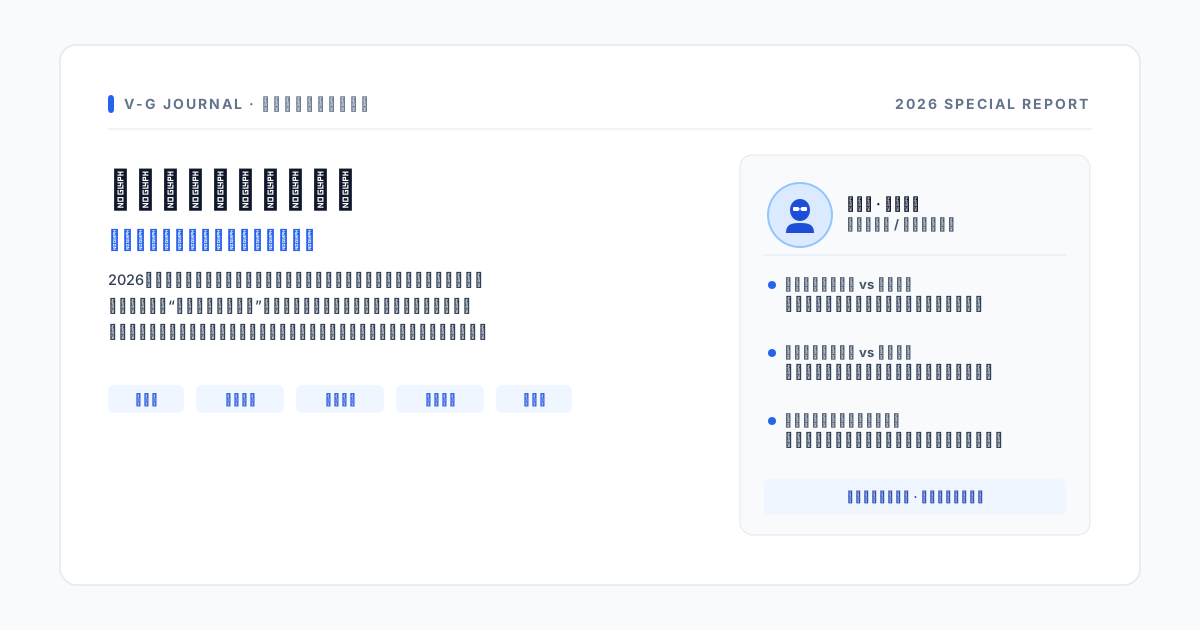
Figure 1: Special Report Cover on Yuan Tengfei’s Midlife Relocation
1. Access vs. Salvation: The Sanctification of the Green Card
Amid escalating structural anxiety across the Chinese internet, “getting a green card” and “fleeing abroad” (run) have acquired an almost religious aura of secular salvation. In the prevailing public imagination, possessing a card embossed with an American eagle and crossing the Pacific dissolves past grievances, systemic constraints, and psychological exhaustion overnight.
The mechanics of the physical world, however, remain ruthlessly unsentimental. Framing the frustration of adjusting to life abroad as “wasting an opportunity” commits a fundamental category error: mistaking the ticket for the destination, and confusing access with redemption.
The Asymmetry of Negative Liberty
At an institutional and constitutional level, a United States permanent resident card delivers negative liberty: the procedural guarantee that an individual is insulated from arbitrary sovereign overreach and protected by predictable due process. For an intellectual historically constrained by speech boundaries and sudden digital erasure, this baseline provides genuine, irreplaceable security.
Yet negative liberty makes no promises of domestic comfort, communal warmth, or psychological ease:
- A Rigid Contractual and Credit Architecture: The host society interfaces with newcomers through impersonal abstractions: Social Security Numbers, credit ratings, dense tax filings (W-2s, 1099s), and non-negotiable liability waivers. Without established credit histories, immigrants face punishing deposits, heightened verification hurdles, and structural distrust;
- The Absence of Subsidized Labor: The hyper-convenient lifestyle native to urban China—sustained by dense demographic dividends offering cheap domestic labor, instantaneous food delivery, and responsive municipal services—does not exist in North America. Home repairs, vehicle maintenance, landscaping, and manual hauling carry steep labor premiums or demand unglamorous, manual self-reliance from newcomers well past their youth;
- Inflexible Rule Enforcement: Consider Yuan Tengfei’s public complaint regarding a school-zone speeding citation. Exceeding the speed limit by five miles per hour during designated school hours generates mandatory multi-hundred-dollar fines and license penalty points. There is no informal room for relational bargaining, social status posturing, or private negotiation.
The Maze of Tiered Healthcare
Among the many frictions of assimilation, the institutional chasm between healthcare models represents the most jarring point of contact.
In metropolitan China, despite crowded public hospitals, educated urbanites are accustomed to direct, low-friction access: walking in, securing same-day outpatient consultations, and collecting state-subsidized medication within hours. The North American model operates on hyper-specialized stratification, dividing care across Primary Care Physicians (PCPs), Urgent Care clinics, and Emergency Rooms (ERs), each governed by distinct billing structures and clinical mandates.
When a newly arrived immigrant encounters acute physical distress before formalizing comprehensive commercial health insurance, heading straight to a hospital emergency room produces immediate fiscal shock. Routine blood panels and basic observation trigger separate, unbundled invoices from the facility, the attending physician, and the pathology laboratory—frequently totaling thousands of dollars. While veteran residents understand the procedural gamesmanship of debt reconciliation—requesting itemized bills, applying for institutional financial aid, or disputing billing codes—the immediate bureaucratic shock to a first-generation intellectual creates profound cognitive exhaustion.
2. The Symbiotic Paradox: The Physical Depreciation of Cultural Capital
Navigating foreign administrative labyrinths is the universal toll paid by all newcomers. For the humanistic intellectual, however, midlife emigration presents an existential crisis: the instantaneous depreciation and physical decoupling of their cultural capital from productive output.

Figure 2: Matrix of Cultural Capital Depreciation vs. Systems Friction for Midlife Emigrants
The Domestic Origin of Commercial Premiums
Yuan Tengfei’s two-decade career and public influence were anchored entirely in a hyper-specific linguistic and historical ecosystem:
- Northern Vernacular and Comedic Delivery: His signature style drew heavily on the cadence of Beijing storytelling (pingshu), working-class comedic banter, and the irreverent dismantling of imperial figures into street-level gossip;
- Historical Allegory as Catharsis: His audience gravitated toward him not merely for historical pedagogy, but for his oblique critiques and black humor delivered from within the tight margins of state censorship. He articulated the shared grievances of the Chinese intellectual class with calculated rhetorical defiance.
This created a brutal paradox: while domestic censorship repeatedly suppressed his digital platform, that very repression granted his speech its acute commercial scarcity and the aura of secular martyrdom.
Within his native ecosystem, bans only amplified his status. In private salons, dinner clubs, and exclusive educational tours, audiences paid handsome premiums to hear him speak. His commercial value was an explicit derivative of pricing “calculated risk” against state orthodoxy.
The Productivity Vacuum Beyond the Native Echo Chamber
Transplanted into an alien suburban community in North America, this narrative machinery encounters complete operational obsolescence:
- The Divide Between Technical and Cultural Assets: For software engineers, biomedical researchers, or semiconductor specialists, functional code and empirical math serve as globally fungible currencies. Crossing borders merely re-indexes their labor. For a public historian whose sole instrument is the rhythmic nuance of his native tongue, skills are non-transferable;
- The Vanishing Echo Chamber: At a suburban supermarket, a shooting range, or a neighborhood barbecue in Texas or California, the surrounding population has no cultural investment in the inner-court intrigues of the Ming Dynasty, the calligraphy of Emperor Huizong, or the late-Qing Self-Strengthening Movement. They cannot decode the subversive satire embedded in his phrasing.
Divorced from a shared collective memory and an attentive audience, a lifetime of accumulated historical wit ceases to function as economic capital. Descending from an iconic intellectual to an uninitiated beginner struggling with municipal codes creates a psychological void that a permanent resident card cannot resolve.
3. Rethinking the “Comfort Zone”: A Defensive Perimeter, Not a Geolocation
The most superficial critique circulating online attacks Yuan for failing to “break out of his domestic comfort zone.” This framing reduces complex social ecosystems to simple geography.
Comfort Zones as Shock Absorbers
As explored in our analysis on workplace comfort zones and survival perimeters, a comfort zone is not a den of moral complacency; it is a laboriously constructed survival perimeter, a system of shock absorption, and a sustainable network of energy exchange.
For a man in his fifties who has spent half a century immersed in the Chinese linguistic landscape, his longstanding peer group, familiar professional disciples, accessible medical networks, and native linguistic reflexes form an organic buffer. Within that perimeter, self-esteem and social equilibrium are maintained with minimal psychological friction.
A common fallacy assumes that a long-haul transpacific flight triggers immediate cognitive decoupling and status transfer. Crossing a border takes fifteen hours; restructuring an individual’s operating system and psychological baseline demands years of compounding friction.
The Toll of Defensive Relocation
Yuan Tengfei’s migration to the United States was never a starry-eyed quest for a secular paradise; it was a textbook case of defensive asset restructuring, trading accumulated social capital for an institutional security floor.
As discussed in our work on human energy depreciation and strategic career exits, when an individual’s operational environment faces structural contraction, tactical withdrawal is rational risk management. Yet liquidating humanistic capital always incurs punishing discounts.
Yuan’s irritation over municipal fines and medical overhead is the expected physiological response of a human being experiencing institutional dislocation. One can relocate the physical body, but the old ecosystem that nurtured, contextualized, and monetized that identity remains etched into the nervous system. Missing familiar conveniences while chafing against mechanical foreign codes reflects human nature, not the squandering of an opportunity.
4. The Balance Sheet of Midlife Migration: From Salvation to Structural Realism
Stepping back from the discourse surrounding Yuan Tengfei, the incident offers a practical risk-management framework for anyone evaluating global mobility and personal relocation:
1. Decouple Legal Residency from Psychological Salvation
A green card or permanent residency is strictly a legal operating license. It is neither a wealth multiplier nor a sanctuary for mental health. It establishes a structural floor against specific sovereign risks, but it offers zero relief from the micro-frictions of daily survival. Romanticizing cross-border mobility invariably shatters upon contact with the first disputed ambulance bill or municipal summons.
2. Balance Cultural Capital and Asset Allocation
| Relocation Metric | Romantic Assumption | Reality and Defensive Playbook |
|---|---|---|
| Capital Type | Assuming domestic social status translates globally | Account for Cultural Depreciation: Acknowledge the localized nature of humanistic assets; anticipate immediate social status resets. |
| Systemic Adaptation | Assuming open societies operate without friction | Front-Load Rule Literacy: Abandon habits of relational negotiation; treat traffic codes, credit ratings, and tax regimes as fixed operational costs. |
| Healthcare Risk | Expecting comprehensive social safety nets automatically | Secure Immediate Coverage: Purchase compliant private/ACA health coverage on day one; eliminate any uninsured transitional window. |
| Expectation Management | Expecting geographic relocation to cure existential angst | Rebuild Micro-Anchors: Locate psychological equilibrium in manual self-reliance, domestic maintenance, and local civic participation. |
3. Move Beyond Moralizing and Reclaim Realism
Projecting ideological righteousness onto a newcomer’s early transitional friction is pure spectator delusion. In an era defined by macro volatility, both paths carry heavy ledgers: remaining in one’s native environment to defend personal dignity within shrinking spaces, or liquidating a lifetime of accumulated social capital to rebuild in an unfamiliar institutional landscape.
Recognizing the strict limits of legal status, confronting the sharp physical depreciation of humanistic capital, and extending basic empathy to the friction of human adaptation are essential steps. They move beyond the spectacle of a famous lecturer’s dislocation and illuminate the trade-offs modern actors must navigate to anchor their physical and intellectual lives in an unstable world.
Related Research & Topics
Tello Mobile eSIM
SafetyWing Nomad Insurance
* Disclosure: This post contains affiliate links. If you make a purchase through these links, V-G Journal may earn a small commission at no additional cost to you. We only recommend services we independently evaluate and trust.
FIRE and Golf:自由旅居之路
专注于为追求 FIRE 与品质生活的人群提供特惠打球权益与候鸟微度假。不持一砖一瓦,运营品质生活。