The Calculus of Corruption: Decoding the Indictment of Yi Huiman
As the Supreme People's Procuratorate indicts the former CSRC Chairman for 'exceptionally large' bribes, we examine the legal thresholds of Chinese sentencing and the structural differences between regulatory rent-seeking and direct asset looting.

Executive Summary: On September 30, 2026, the Supreme People’s Procuratorate announced the formal indictment of Yi Huiman—former Chairman of the China Securities Regulatory Commission (CSRC) and former head of ICBC. Charged with accepting “exceptionally large” bribes, Yi’s case has reignited public debate over two questions: Why does the official brief omit a specific dollar amount? And what does “exceptionally large” actually mean in the cold calculus of the law? This analysis deconstructs the three-tier sentencing framework of Chinese criminal law, the procedural logic of “trial-centered” disclosure, and the fundamental differences in rent-seeking patterns between regulatory gatekeepers and asset managers.
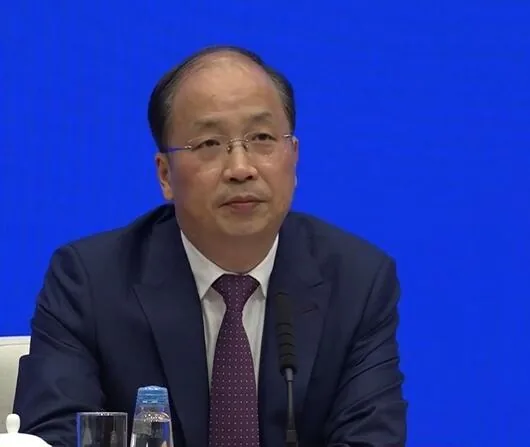
Yi Huiman at a State Council Information Office press conference
I. “Exceptionally Large” is a Legal Grade, Not a Descriptive Adjective
In common parlance, “exceptionally large” sounds like a subjective descriptor used by investigators to convey shock. In the Chinese judicial system, however, it is a rigid, statutory classification with specific sentencing implications.
1. The Three-Tier Statutory Framework
According to Article 383 of the Criminal Law of the PRC and the 2016 judicial interpretations by the Supreme People’s Court and the Supreme People’s Procuratorate, the prosecution of embezzlement and bribery follows a strict three-tier hierarchy:
| Statutory Grade | Monetary Threshold (RMB) | Base Sentencing Range |
|---|---|---|
| Large Amount | 30,000 – 200,000 | Up to 3 years imprisonment |
| Enormous Amount | 200,000 – 3,000,000 | 3 to 10 years imprisonment |
| Exceptionally Large Amount | Over 3,000,000 | 10 years to Life Imprisonment, or Death |
The legal “ceiling” for these categories is hit at the 3-million-yuan mark. In official indictments, prosecutors must use this precise terminology. Whether the amount in question is 3.1 million or 3 billion, the formal charge remains “exceptionally large.” This linguistic restraint is a requirement of legal protocol, not an attempt at ambiguity.
2. The Reality of Financial Anti-Corruption
While 3 million RMB is the entry point for the highest sentencing tier, the reality of high-level financial corruption is often orders of magnitude higher. Yi Huiman’s career spanned decades at the Industrial and Commercial Bank of China (ICBC) and the CSRC. In recent precedents involving “Central-Managed Officials” (中管干部) in the financial sector, the actual sums proven in court typically range from tens of millions to several billion yuan.
II. The Logic of Non-Disclosure at the Indictment Phase
The absence of a specific figure in the initial announcement is often misinterpreted as a lack of transparency. In reality, it reflects the evolution of “trial-centered” procedural justice.
1. Allegations Are Not Verdicts
Under the current judicial structure, the indictment represents the prosecution’s claim. While the internal case files contain precise figures down to the cent, these numbers have not yet been tested in court. Disclosing them prematurely would bypass the judicial process where evidence must be cross-examined and verified by a collegial panel.
2. Preventing “Trial by Media”
Releasing a specific, astronomical figure at the moment of indictment would trigger an immediate public consensus of guilt. This “pre-judgment” by public opinion can exert undue pressure on the court and potentially infringe upon the defendant’s right to a legal defense. By sticking to the statutory phrase “exceptionally large,” the judiciary maintains a level of procedural sobriety.
3. The Rhythm of Disclosure
The specific amount will be made public at two distinct milestones:
- The First Instance Trial: When the Qingdao Intermediate People’s Court opens the case, the prosecution will read the formal charges, including the total alleged bribe amount.
- The Verdict: Upon sentencing, the court will release a detailed breakdown of the proven amounts, the specific prison term, and the status of asset recovery.
III. The Sentencing Matrix: Distinguishing 3 Million from 3 Billion
If both 3 million and 3 billion fall under the same “exceptionally large” label, how does the law ensure the punishment fits the crime?
The statutory grade merely sets the entry into the maximum sentencing range. Once inside that range, judges exercise wide discretion based on the “severity of circumstances.”
| Amount Range | Typical Sentencing Outcome (Without Mitigating Factors) | Legal Mechanism |
|---|---|---|
| Near 3 Million | 10 to 15 years imprisonment | Standard application of the base sentencing range. |
| Tens of Millions | 15 years to Life Imprisonment | Escalation based on the scale of illicit gain and societal harm. |
| Hundreds of Millions | Life Imprisonment or Death with Reprieve (2-year stay) | Reserved for cases with “extremely grave” impact. |
| Billions + Massive Loss | Life Imprisonment without Parole or Death Penalty | Under Article 383, Clause 4, a death sentence commuted to life can be mandated as “permanent incarceration” with no possibility of reduction or parole. |
IV. Regulatory Gatekeeping vs. Asset Looting: Will Yi Break the Record?
In the history of Chinese financial crime, two names stand as benchmarks:
- Lai Xiaomin (1.788 Billion RMB): The former Chairman of Huarong, executed in 2021. His bribes were often direct, cash-heavy, and tied to specific fund allocations.
- Li Jianping (3.069 Billion RMB): A local official whose total crimes (embezzlement + bribery) set the absolute record.
Will Yi Huiman approach these figures? An analysis of the mechanics of power suggests otherwise.
1. Direct Fund Control vs. Macro-Administrative Approval
The nature of a financial official’s “rent” depends on their proximity to the cash.
- Lai Xiaomin (Asset Management): Huarong was a fund-heavy platform. Lai had near-absolute authority over the direct movement of billions in distressed assets and equity investments. His rent-seeking was “crude”—taking a percentage of the funds he authorized, often in literal suitcases of cash.
- Yi Huiman (CSRC): The CSRC is a regulatory body. Its power lies in gatekeeping: IPO approvals, refinancing permits, and licensing. A regulator does not “move” money; they “allow” money to be raised.
2. The “Option-Based” Nature of Regulatory Corruption
Corruption in the securities regulatory system is often “invisible” and deferred:
- Pre-IPO Shadow Shares: Using “white gloves” (proxies) to buy shares at low prices before an IPO approval, then exiting after the lock-up period.
- Offshore Options: Benefits held in offshore trusts or private equity funds, realized years after the official leaves office.
- Deferred Compensation: Providing favorable policies to a firm, then joining that firm as a high-paid “consultant” or partner after retirement.
These methods are fragmented and harder to quantify as a single “bribe” compared to the direct cash-for-loans model seen in asset management firms.
3. The Institutional Firewalls of Big Banks
While Yi also led ICBC, large state-owned commercial banks have more robust “collective decision-making” firewalls than non-bank financial institutions like Huarong. Even a Chairman finds it difficult to bypass the credit risk committees to move billions for personal gain without triggering systemic alarms.
4. Historical Benchmarks for Regulators
Recent cases of high-level financial regulators provide a more realistic reference point:
- Fan Yifei (Former PBOC Deputy Governor): ~386 million RMB.
- Zhu Congjiu (Former CSRC Assistant Chairman): ~105 million RMB.
- Yao Gang (Former CSRC Vice Chairman): ~69 million RMB.
While Yi’s status as a full ministerial-level official suggests a severe outcome, the structural constraints of regulatory power make it unlikely he will surpass the “Lai Xiaomin Record.”
V. Conclusion: The Rationality of the System
The prosecution of Yi Huiman marks a deep-water phase in the cleanup of China’s financial markets. The use of standardized legal terminology like “exceptionally large” is not a sign of obfuscation, but of a system adhering to its own internal logic—prioritizing the integrity of the trial over the hunger for headlines.
The final number will not be decided by public speculation, but by a chain of evidence that will be laid bare in the Qingdao courtroom. For the “Future of Work” and the macro-economy, the significance lies not in the number of zeros, but in the signal that the “gatekeepers” of capital are no longer beyond the reach of the law.
Related Research & Topics
Tello Mobile eSIM
SafetyWing Nomad Insurance
* Disclosure: This post contains affiliate links. If you make a purchase through these links, V-G Journal may earn a small commission at no additional cost to you. We only recommend services we independently evaluate and trust.
FIRE and Golf:自由旅居之路
专注于为追求 FIRE 与品质生活的人群提供特惠打球权益与候鸟微度假。不持一砖一瓦,运营品质生活。